
Mercedes V2G: Making Money with the GLC and C-Class
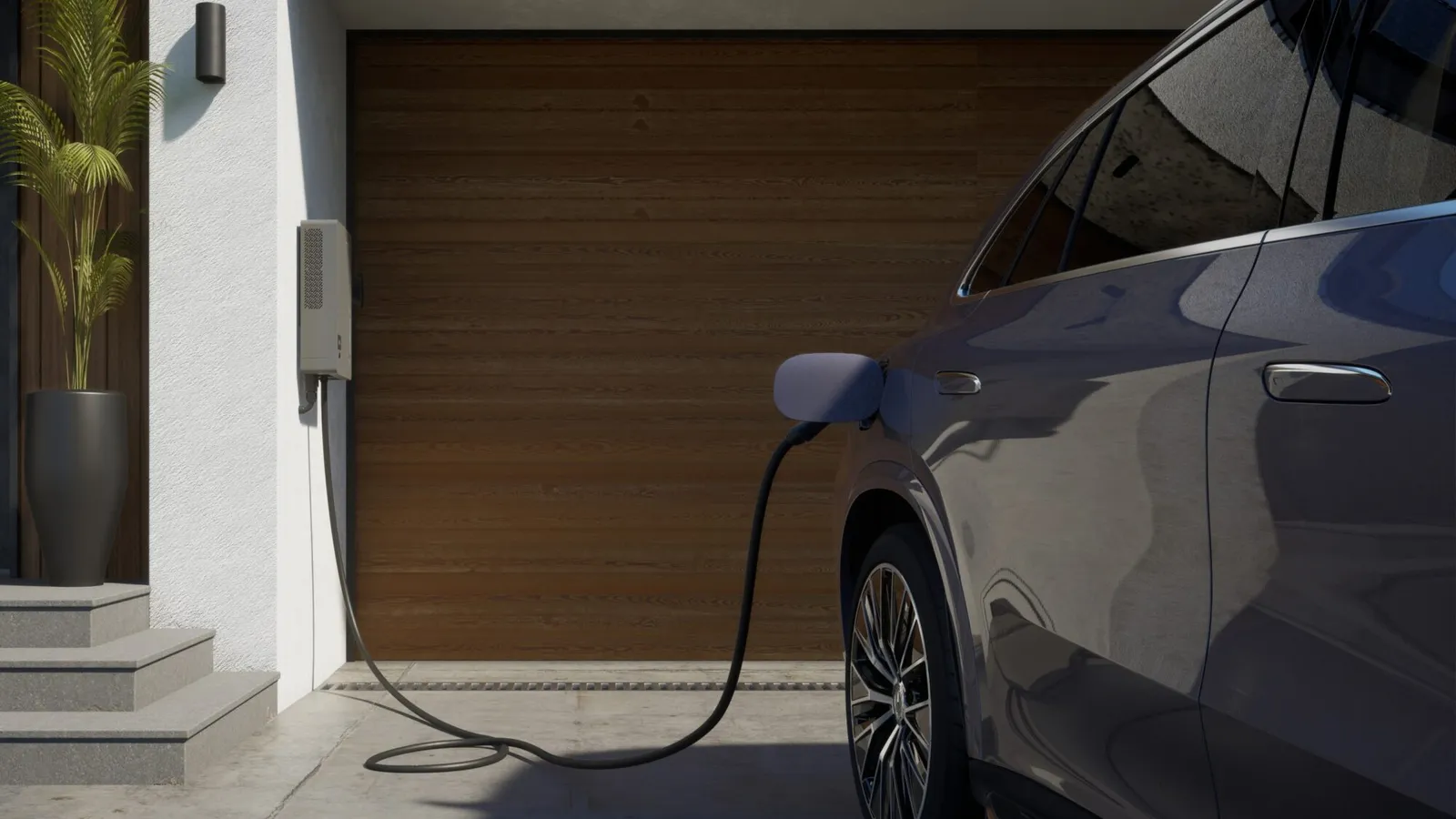
Mercedes-Benz and The Mobility House Energy are offering a V2G package for home use in Germany, initially available for the GLC and C-Class models. Payment is made for each hour the car is connected to a 11-kW DC wall charger – Mercedes claims this can generate over 500 euros per year.
Advertisement
Mercedes-Benz is now offering a complete package for home two-way charging in Germany. In collaboration with The Mobility House Energy, a subsidiary of Munich-based The Mobility House AG, the manufacturer has developed a solution called MB.CHARGE Home Pro Intelligent that aims to integrate electric vehicles into the power grid as energy storage. Owners can use this service not only to charge their cars but also to earn money by selling the vehicle’s battery. Initially, this option is available for the all-electric GLC and the new C-Class.
Wallbox, tariff, and app as a package
The offer consists of three interconnected components: a bidirectional DC wallbox, the Mercedes-Benz Intelligent Pro Eco electricity tariff, and the Mercedes-Benz Charge Home app. Through this app, users can view when charging and energy return occurred, as well as any credits generated from it.
The marketing of battery capacity is handled by The Mobility House Energy. This company has been active in storage aggregation since 2016 and claims to currently market more than 1 GW of storage capacity in Europe. The optimization and trading technologies used there are now being applied to electric vehicles. The company has already gained experience with Vehicle-to-Grid (V2G) in its client operations: in 2024, it launched a commercial V2G product in France.
Advertisement
Introductory Offer and Incentives
A limited-time introductory offer valid until the end of March 2027 is available for the first 500 customers in Germany. The Wallbox ChargeLine Bidi from The Mobility House will then cost 1,990 euros instead of the regular price of 2,990 euros. Additionally, a 250 euro voucher is provided for public charging via MB.CHARGE Public.
The compensation model is noteworthy: payment is made for each hour the vehicle is connected to the wallbox at home, regardless of whether it is charging, discharging, or in pause mode. According to Mercedes, there are no daily, monthly, or annual limits. Those who keep their car plugged in for an average of twelve hours a day are expected to receive more than 500 euros in bonuses per year. With regular use, the wallbox can recoup its cost within four years.
This quote is valid only under the current conditions. The actual bonus amount depends on the charging time, and after the introductory offer ends, the compensation will be based on the then-applicable terms. It remains unclear how these terms will evolve.
11 kW DC and Open Standards
The bidirectional wallbox operates with direct current at a power output of 11 kW. It is designed for home use and can charge all electric vehicles with 400- or 800-Volt systems, not just Mercedes-Benz vehicles. New technical requirements are intended to be added via over-the-air updates.
For communication between vehicles and wall chargers, Mercedes relies on open standards, particularly ISO 15118-20. The manufacturer aims for the highest possible compatibility among vehicles, wall chargers, and energy management systems from other suppliers. Mercedes claims to be the first automaker in the world to offer a market-ready bidirectional solution based on open standards in Germany.
Advertisement
Models and Requirements
Following the GLC and C-Class, the offering is set to be expanded soon to additional electric models, including the VLE, GLA, EQS, CLA, CLA Shooting Brake, and GLB. Depending on the model, this feature will be enabled after launch via an over-the-air update. To do this, the Digital Extra “Vorrüstung für MB.CHARGE Home Pro” must be activated. Additional selected markets are planned to follow.
The list of requirements is quite long: in addition to a Wallbox and an Intelligent-Pro-Eco tariff, Digital Extras such as MB.CHARGE Home Pro, a smart meter, and a Mercedes me ID linked to a vehicle are necessary. These Digital Extras are only available for a limited time and must be renewed at a cost afterward, provided they are still offered for the specific vehicle. Mercedes also notes that usage may depend on legal requirements and energy provider specifications. For a voucher at public charging stations, a separate charging contract with a third-party provider is required as well.
Jörg Bartels, Mercedes’ head of powertrain development, sees two-way charging as the next step toward transforming cars from mere electricity consumers into part of the energy system. Thomas Raffeiner, CEO of The Mobility House, emphasizes not only the benefits for customers but also the reduction in strain on the power grid.
A joint analysis by both companies concludes that two million vehicles capable of two-way charging in Germany could prevent nearly half of today’s curtailments of wind and solar power. This could reduce the costs of the electricity system by hundreds of millions. However, the market is still far from reaching this level.
Advertisement