
Mate Rimac, CEO of Bugatti Rimac, warns European brands: "Do not try to imitate the Chinese; they are unbeatable.
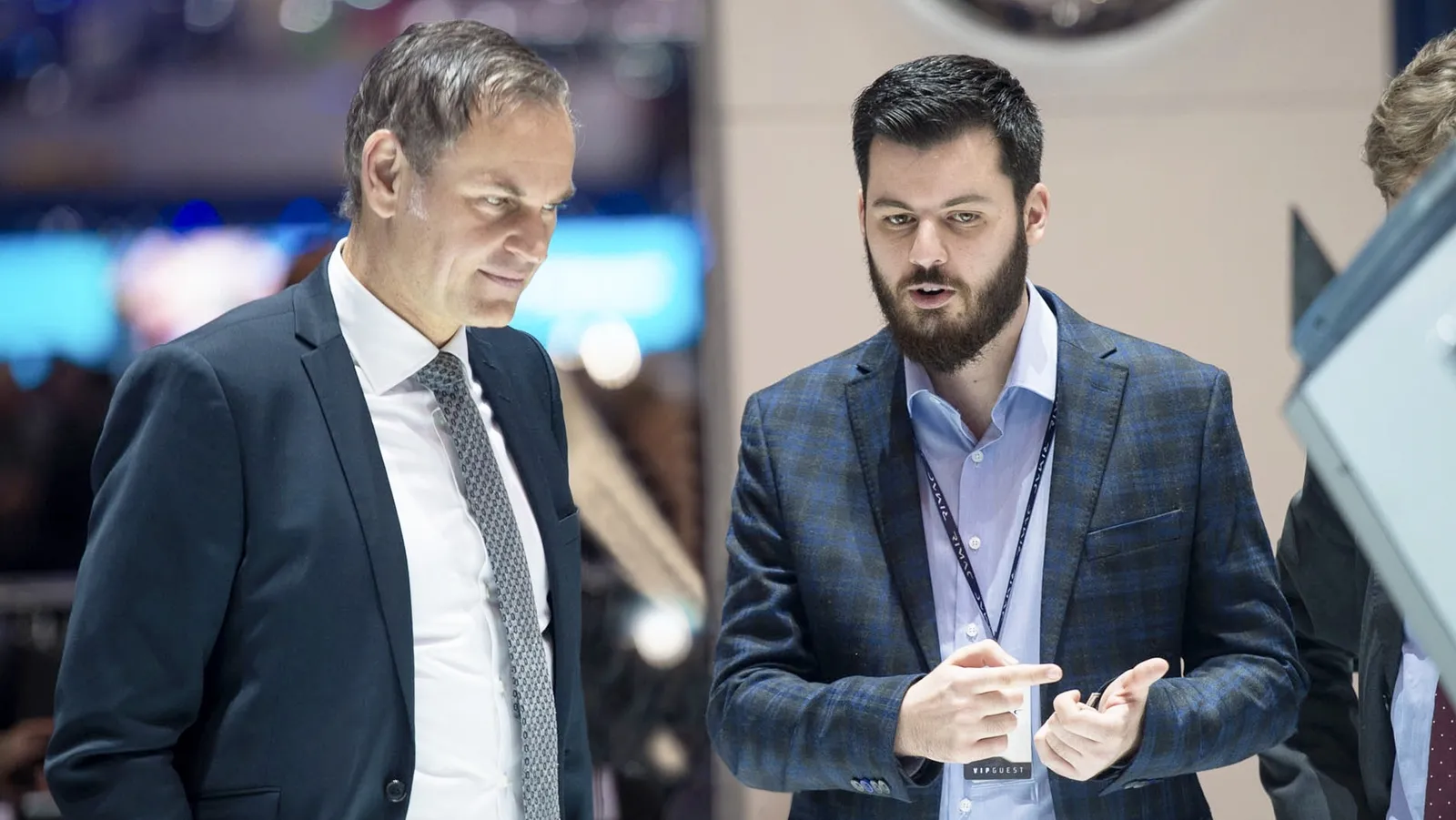
The European automotive industry has long been searching for a way to counter the rapid growth of Chinese manufacturers. New brands from this Asian giant have managed to offer electric cars equipped with advanced technology, shorter charging times, and highly competitive prices, forcing traditional manufacturers to reconsider their strategies.
Mate Rimac, founder and CEO of Rimac Group and head of Bugatti Rimac, believes that some in the industry are taking the wrong path. In a video posted on his personal Instagram account, the Croatian entrepreneur sent a clear message to European manufacturers: trying to defeat their Chinese competitors by doing exactly what they do will likely not succeed.

"The Chinese are practically unbeatable."
"The European automotive industry is in trouble, and now they’re spending tens or hundreds of millions on consultants to get out of this situation," Rimac begins in his video. The entrepreneur even mocks the money spent on finding a solution: "I’ll save them that money."
His recommendation is quite simple: "What they shouldn’t do is try not to imitate others, especially in areas where Chinese companies are practically unbeatable: larger screens, fewer buttons, and faster charging times. Don’t do that," he says. Rimac believes attempting to surpass Chinese companies precisely in the features that have formed much of their competitive advantage is not the right strategy for Europe.
Instead of pursuing that technological race in which Europe seems to have little role, Rimac proposes restoring some of the attributes traditionally associated with European cars. In the video, it uses the interior of a Rolls-Royce as a reference to explain its approach: “Think about leather, authentic materials, real things.” Its idea isn’t just to add features, but to create products whose uniqueness is hard to replicate through a competition of specifications.
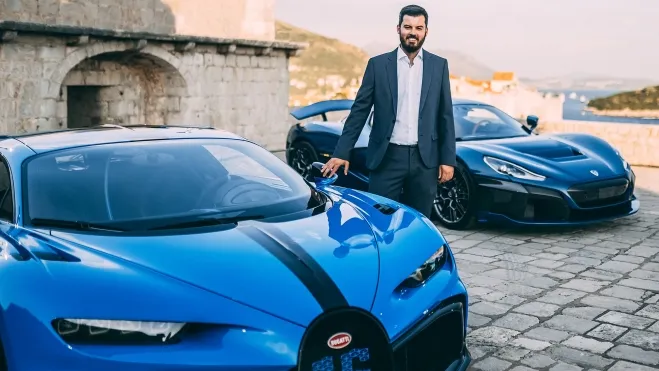
Mate Rimac cites Swiss watches as an example
The entrepreneur himself anticipates one of the main criticisms his proposal might face. Focusing on more exclusive cars may work for luxury brands, but it hardly seems like a sufficient solution for manufacturers who need to sell hundreds of thousands or even millions of vehicles each year.
"And yes, one could say: 'Well, it’s a luxury car, it’s not for everyone. They need to make a car for everyone.' That’s where we disagree," responds Rimac. To support his position, he turns to another European industry that has managed to maintain significant international relevance despite accounting for only a small portion of global production, such as Swiss watchmaking.
"They don’t produce watches for everyone, but that’s where most of the profits are concentrated." According to figures cited by Rimac, Swiss manufacturers produce only about 5% of the watches sold worldwide, yet they account for roughly 90% of the profits generated by this industry. It’s worth noting that Mate Rimac is a great enthusiast of watchmaking. In fact, the new Bugatti Tourbillon refers to a type of mechanism considered the most elite in existence."
Europe must find something China cannot easily copy
Through this comparison, Rimac aims to help the average consumer as well as top European brands understand this perspective. Its approach is not necessarily that all European manufacturers must become luxury brands, but rather to avoid competition based solely on specifications, where Chinese companies can develop products quickly and offer them at lower costs.
Your message is particularly relevant at a time when many European manufacturers are introducing larger screens, reducing physical controls, and accelerating the development of new electrical architectures in an effort to match their competitors’ technological capabilities. All of this is done to make their vehicles comparable to Chinese ones. Therefore, Rimac proposes the exact opposite approach: restoring identity, materials, design, and those features that can add a distinct value to European products. “Do not try to imitate” is, in essence, the core of their recommendation.
The recipe hardly can be applied in the same way to all companies, especially those whose business relies on high-volume vehicles. But Rimac knows clearly what the wrong approach should be: trying to compete with Chinese manufacturers by copying exactly what they can develop more quickly and, in many cases, produce at lower cost.
