
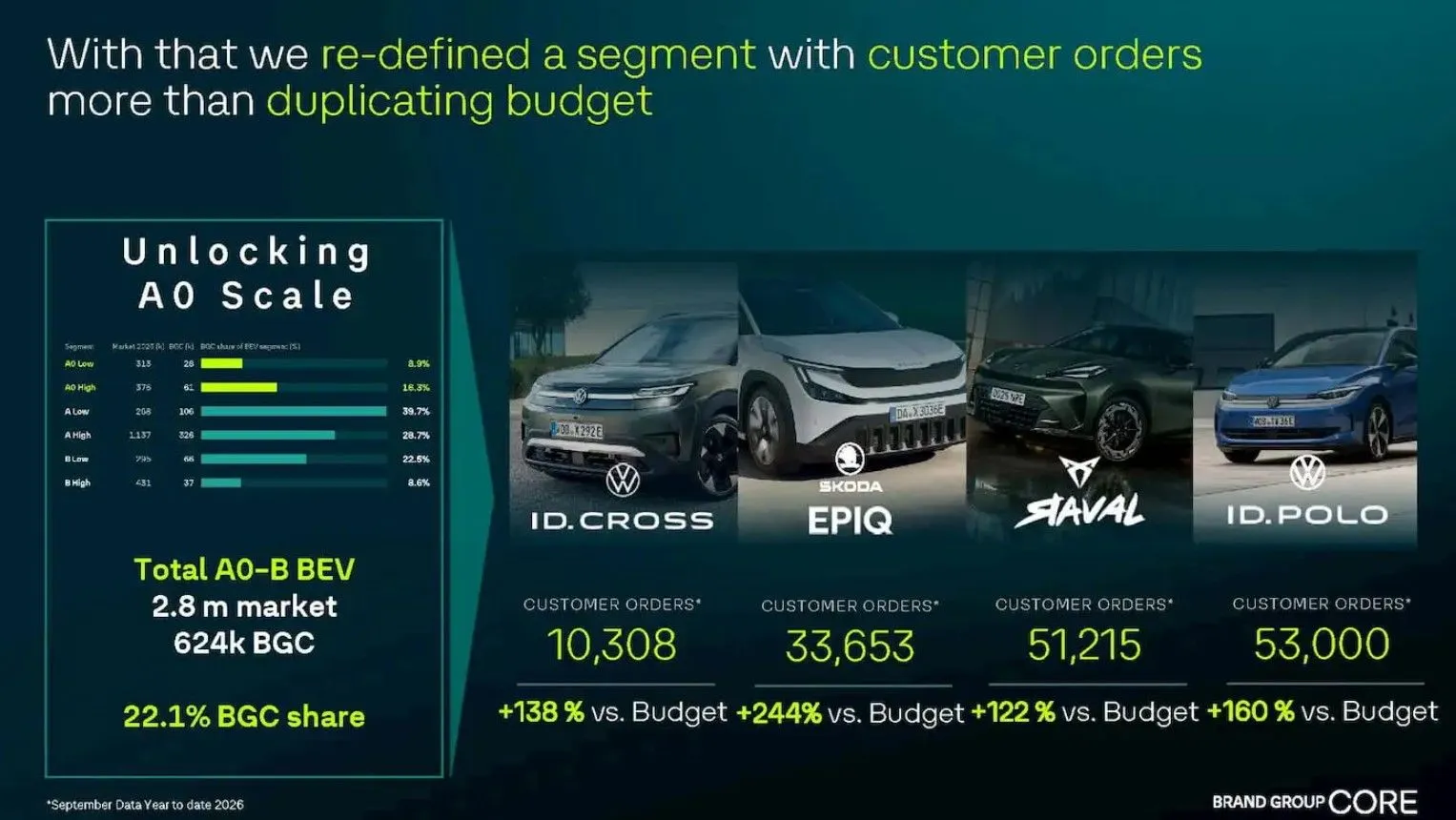
The new Volkswagen ID. Polo, ID. Cross, Cupra Raval, and Skoda Epiq have received 150,000 orders.
Volkswagen is beginning to reap the benefits of its focus on smaller, more affordable electric cars. The German brand needs to catch up with Chinese manufacturers, which have gained prominence thanks to an increasingly broad and competitive product range. To achieve this, the company has launched a new family of models aimed at bringing electric mobility to a much wider audience.
The interest in this new generation of electric cars is particularly evident in Europe, where Volkswagen indicated in its third-quarter results report that demand is growing strongly. The combination of more affordable entry prices and rising fuel costs is prompting more buyers to consider switching to an electric car, a trend that is beginning to show up in the company’s orders.
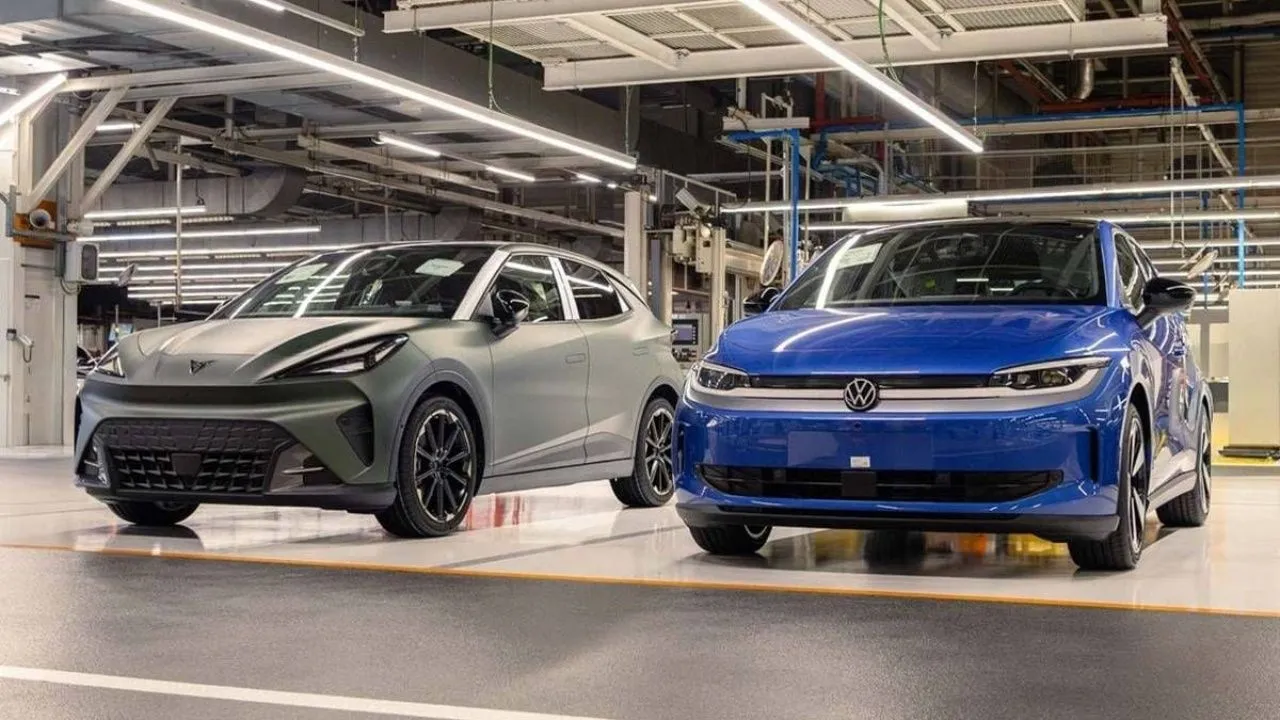
Volkswagen Group’s new urban electric vehicle lineup has already received nearly 150,000 orders since mass production began last June. The range includes the Volkswagen ID. Polo and ID. Cross, as well as the Cupra Raval and Skoda Epiq. These four models share a common technical platform and constitute an important part of the group’s strategy to compete in high-volume segments, with all being manufactured in Spain.
Europe responds, but global figures remain weak
Martin Sander, head of sales at Volkswagen Group, explained that the company is observing a significant acceleration in demand for electric cars in Germany. There, orders for electric models have already surpassed those for vehicles with internal combustion engines, a notable trend for a manufacturer that has long relied heavily on its traditional models.
Third-quarter figures also point in that direction. According to Volkswagen, one in five vehicles delivered in Europe between July and September was fully electric, while the proportion of orders for this technology was around 40%. The difference between these two figures shows that demand for electric cars is growing faster than deliveries, though it remains to be seen how long this trend will continue in the coming months.
Between July and September, the group delivered 209,100 electric cars in Europe, 20% more than in the same period of 2025. Orders for such vehicles increased by 60% year-on-year. As of September, deliveries reached 586,100 units in the European market, 12% more than during the first nine months of last year.
This surge in demand is even forcing Volkswagen to adjust its manufacturing capacity. The German newspaper Automobilwoche reported last month that the company is tweaking production at several plants to meet orders for electric vehicles that exceed expectations. This situation contrasts with the difficulties the company still faces in other markets.
Despite this, Volkswagen Group saw a 5.4% decline in its global electric vehicle deliveries during the first nine months of 2026. From January to September, it delivered 678,700 units, compared to 717,700 in the same period of 2025. The contrast between performance in Europe and globally shows that the positive reception of new models has not yet translated into widespread recovery.
China and the United States: the major challenges ahead
The situation is particularly complicated in China and the United States. In the North American market, Volkswagen delivered only 14,900 electric cars by September, compared to 68,700 during the same period last year. This represents a 78.4% decline, amid the end of a $7,500 federal tax incentive and the imposition of tariffs on imports.
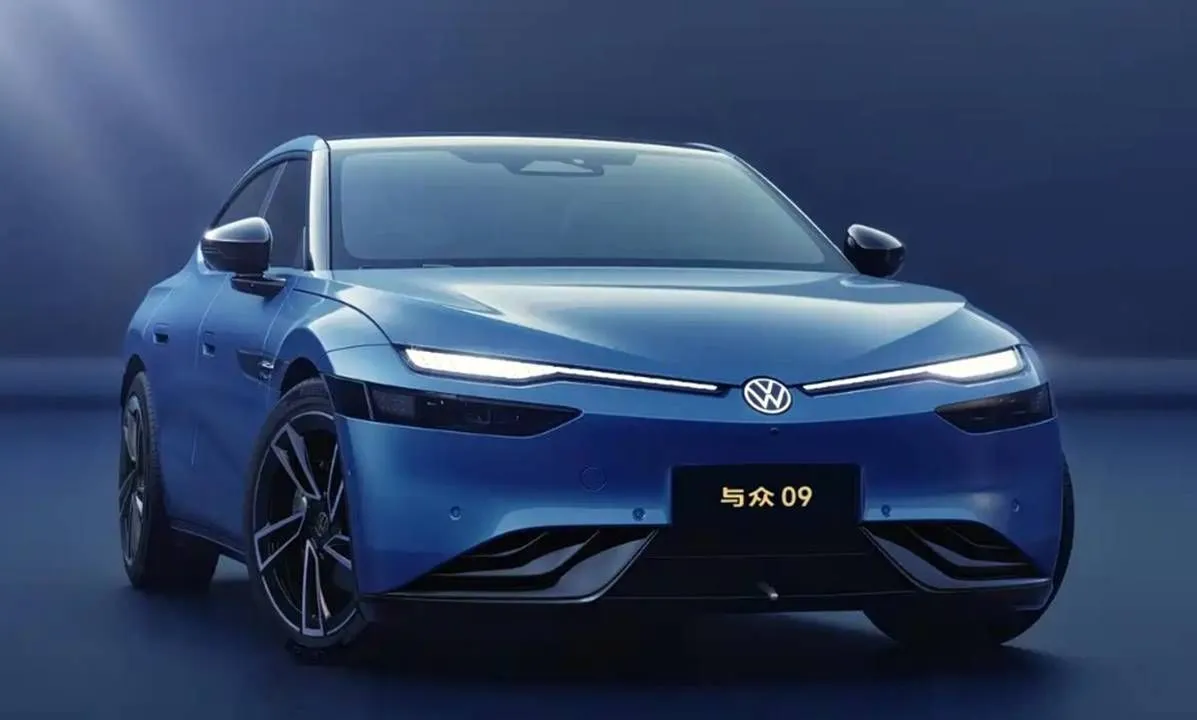
In China, the group’s electric car deliveries also dropped sharply. Volkswagen sold 48,900 units in the first nine months of the year, 42.5% less than in 2025. Martin Sander acknowledged that the contraction of the Chinese market remains a challenge for the entire industry, although he said new electric models developed specifically for that country are beginning to gain traction.
Volkswagen is trying to adapt its offerings to the specifics of the Chinese market, where local competition has accelerated technological upgrades and put pressure on prices. The group needs its new models to gain sufficient acceptance to halt its market share loss, but available data shows that recovery is still a long way off.
In the meantime, the brand is also preparing significant changes to its U.S. lineup. Volkswagen stopped manufacturing the ID.4 in the United States at the beginning of the year and is preparing to launch the ID. Tiguan, scheduled for early 2027. This model will replace the ID.4 and become part of the company’s next generation of electric vehicles. In Europe, the ID.5 will also be replaced by this new product approach.
Overall, Volkswagen Group delivered 6.01 million vehicles of all technologies from January to September, 9% less than in the first nine months of 2025. This figure indicates that the company’s problems extend beyond electric cars, although electrification has become one of the key battlegrounds against its competitors.
The nearly 150,000 orders for the new urban family represent a positive sign for Volkswagen and its Spanish plants, but they are not yet enough to resolve the issue. Europe is responding to more affordable options, while China and the United States continue to weigh on results. The real challenge will be turning those orders into consistent deliveries and ensuring that the new models not only boost sales in their home market but also help regain lost ground globally.