
Diesel futures surge in Europe, signaling further price increases at gas stations
The oil market is once again showing warning signs, and road transportation is preparing to face further cost increases. Tensions in the Middle East and doubts about international fuel supplies are complicating efforts to curb prices, especially as European economies remain dependent on energy imports.
The latest trading session saw further rises in wholesale markets, with particular concern over diesel, a crucial fuel for freight transportation, agriculture, and much of industrial activity. Although movements in futures markets do not immediately affect gas stations, they indicate a possible price increase in the coming days if this trend continues.
Markets Anticipate Further Diesel Price Rises
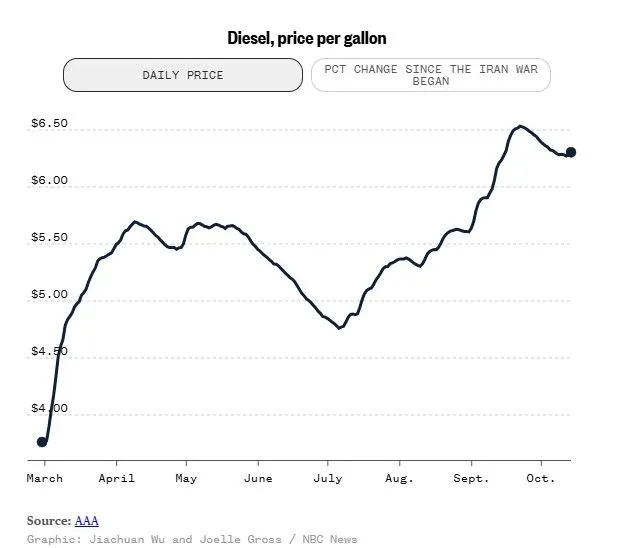
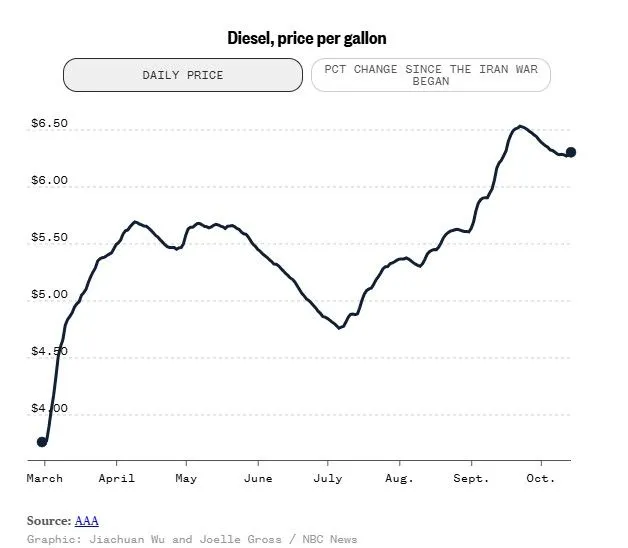
U.S. diesel futures rose by about 5% on Tuesday, October 13, reaching their highest levels in weeks. In Europe, diesel futures climbed by roughly 3.8%, while natural gas futures hit levels not seen earlier this year, according to NBC News.
These price increases come after several months of severe energy tensions due to factors such as the attacks by the United States and Israel on Iran, as well as Ukrainian attacks on Russian facilities. According to data collected by an American media outlet, the average price of diesel in the United States had risen by 70% since the attacks on Iran on February 28. Gasoline prices also increased by more than 45% during that period. Although these figures refer to the U.S. market, they reflect the scale of the energy crisis and its potential international repercussions.
Oil prices remain high as well. Brent crude was around $106 per barrel, while U.S. crude approached $95 per barrel. Both benchmarks have seen gains of nearly 70% since the beginning of the year, raising costs associated with fuel production and transportation.
The trend in futures is particularly important as it reflects traders’ expectations regarding supply and demand. This does not mean gas station prices will rise by exactly the same percentage, but it suggests that the price relief consumers hoped for might arrive later than anticipated.
In Europe, the situation is particularly concerning due to reliance on road transport and the impact that fuel has on the final price of almost any product. Trucks don’t need diesel prices to reach record highs for their services to become more expensive: a sustained increase is enough for companies to start passing some of those costs on to their customers.
The deal with Russia doesn’t convince the market
The new increase comes just days after Donald Trump announced an agreement with Vladimir Putin to boost diesel supplies in the United States by purchasing Russian reserves previously subject to sanctions. The U.S. president argued that the deal would bring millions of tons of fuel into the global market, but analysts question whether such a volume is sufficient to change the situation.
Estimates cited by NBC News suggest that those reserves would cover at most less than two weeks of U.S. demand. Market reactions indicate that traders also doubt the deal will provide significant relief in the short term.
Trump has also pressured his European allies to release more diesel reserves. The announcement on October 2 about Europe’s alleged willingness to increase fuel supply helped temporarily ease prices, but the lack of concrete action eventually reversed that effect. Later, the International Energy Agency clarified that Europe was not releasing additional new reserves but rather sticking to the commitments made in March as part of an international effort to curb rising fuel costs.
In this context, Europe faces the risk of paying more for diesel again without an immediate solution to increase supply. If oil remains expensive and geopolitical tensions disrupt deliveries, diesel prices could continue to rise in the coming weeks. In Spain, where road transport plays a crucial role in goods distribution, prices above 2 euros per liter would impose almost unbearable pressure on businesses and consumers.
The impact could also extend to the automotive market. Drivers who travel many kilometers in a diesel car would be the first to notice the increase, but those using gasoline would not be spared either if oil prices continue to rise. Meanwhile, a more expensive fuel enhances the economic appeal of electric cars for those who can charge at home or access competitive rates, though the actual difference depends on consumption, electricity prices, and the distance traveled.
Of course, the biggest beneficiary of all this will be electric vehicles, and ultimately, the transition to more sustainable mobility. Sectors such as heavy transportation were changing at a much slower pace than light transportation. But the current turmoil has heightened interest in electric trucks and vans, with China serving as a prime example, where they have reached a 30% sales share in the medium- and long-distance truck sector.
If diesel prices remain stuck at 2 euros per liter or even rise further due to shocks, there will undoubtedly be many more people willing to overcome their prejudices about electric vehicles and support a scale economy that reduces purchase costs, thereby accelerating the expansion of fast-charging networks.