
Manufacturers “filled our heads with nonsense” about lightweight assist e-bikes, and now they’re abandoning them.
Trends come and go, which is a constant in life, not just in cycling. The issue these days is that the intervals between trends are getting too short: it seems that as soon as we start to enjoy a shift in mindset, it’s quickly replaced by another that ruins everything....
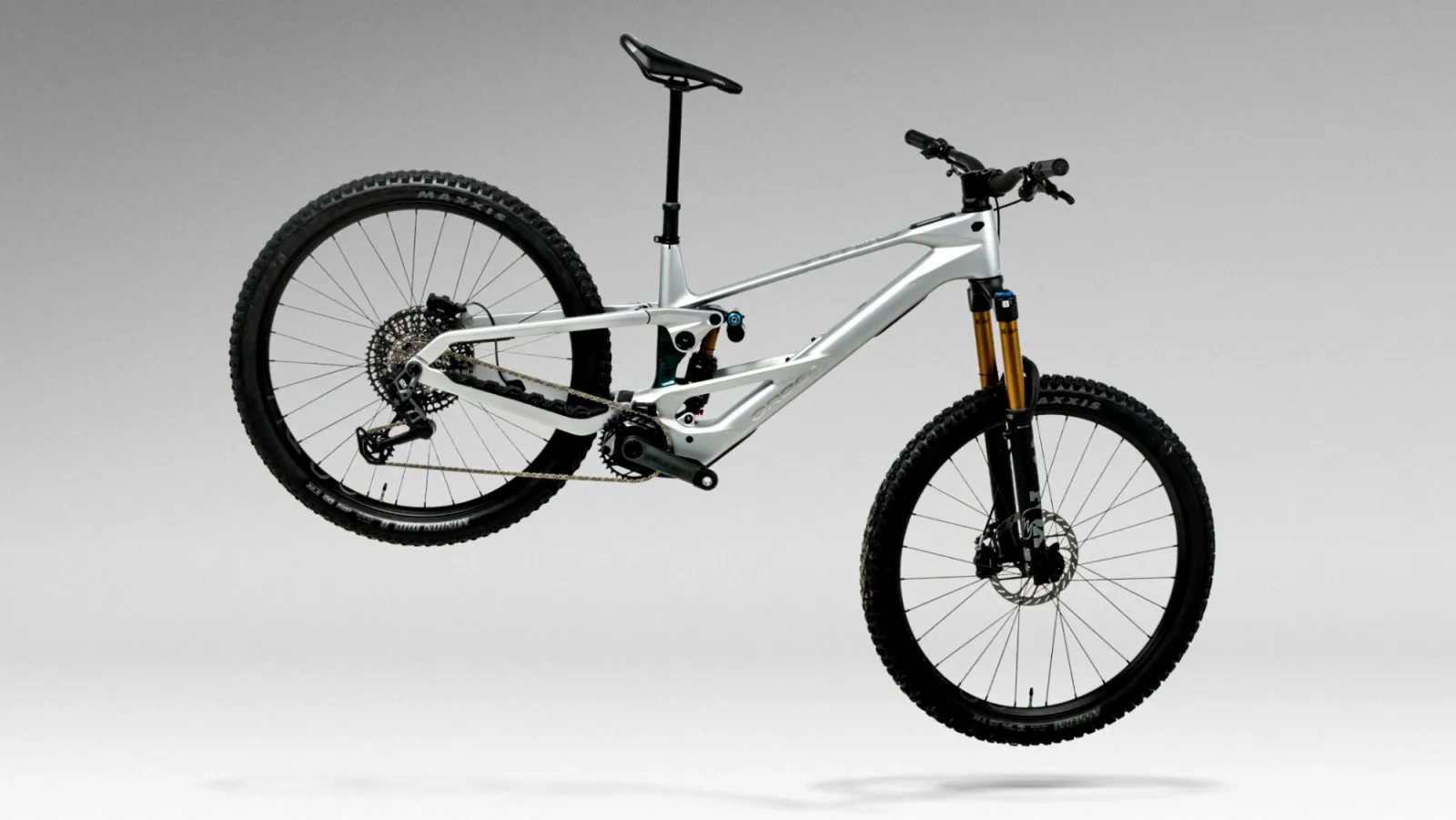
It’s been a couple of seasons (more or less) since electric bikes with mild power assistance began to emerge: in both mountain, road, and gravel models, bike manufacturers, together with engine makers, created lightweight bikes equipped with modest power levels, delivering assistance in a way that complemented the effort exerted by the rider themselves.
This was intended to attract users who weren’t fully convinced of switching from traditional bikes to electric ones, as they wanted to continue pushing themselves hard on two wheels. Moreover, for many, getting an eBike meant betraying cycling — “How can I go electric if I’m a ‘pro’ cyclist?” some of us thought....
For now, the concept of “light” electric bikes for road and gravel riding is working quite well: these models can usually reach speeds over 25 km/h in most scenarios, so the motor isn’t necessary. Additionally, since they are lightweight bikes, any reduction in weight is welcome.
However, it is in the mountain bike category where there has been a decline in new models offering light assistance, primarily due to two factors (from our perspective): on one hand, eBike users are gradually being accepted within the cycling community. Fortunately, it is now more common to see electric bikes in the mountains, especially in trail, all-mountain, and enduro disciplines, and it is no longer considered a ‘sacrilege’ or an insult to opt for an eBike over a traditional bike.
On the other hand, modern engines are increasingly managing to combine both a ‘full power’ approach and a light-assistance or ‘light’ approach. Why? Because things are getting better and better.....
What makes modern ‘full power’ engines so comprehensive?
What do Avinox, Bafang, Bosch, Mahle, Polini, Specialized, or Yamaha have in common? All of them have produced new ‘full power’ motors that are making lighter-duty motors seem less necessary in mountain electric bikes.
With ‘light’ motors, brands began creating lightweight electric bikes, some with a focus similar to Down Country riding, to attract more powerful riders. However, users of disciplines like XC or DC were reluctant to make the switch. The flow of cyclists toward electric bikes continued to come from trail models (for more advanced use), and in those categories aimed at handling steep gradients as well, motors with low power output weren’t appealing to all users.
Companies like Shimano (with its eTube Project) and Bosch (motors featuring the Smart System) are entering the race for customization: mobile apps that allow us to adjust the power output of different modes in just a minute, tailoring each one to our preferences. We could almost have a low-power motor starting from a ‘full power’ setting.
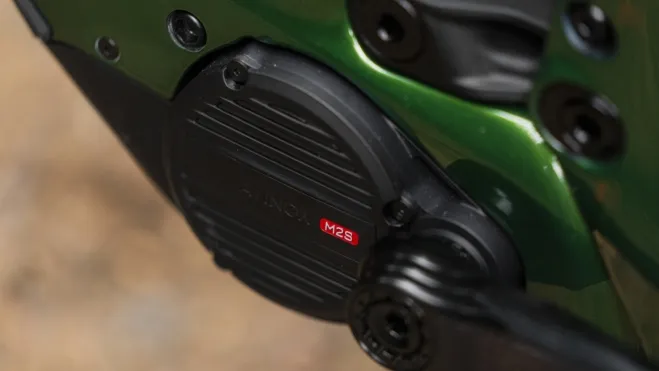
On the other hand, there’s Hurricane Avinox: it launches the M1 in 2025, featuring high power, super compact design, low weight, full customization options, and a highly competitive price. A year later, it introduces the M2 and M2S models, which are even more powerful, slightly heavier, but still compact, paired with thin-shaped batteries. The result? As we can imagine, almost every brand has released a bike equipped with some kind of Avinox engine.
What do these bikes have in common? Thanks to the engine’s compact and lightweight nature, they offer very stylish frames that resemble those of ‘light’ bikes, but with engines that give them strong performance when needed, along with high-capacity batteries. This makes traditional lightweight bikes start to lose their relevance. The other engine manufacturers are following Avinox’s lead: focusing on high power and maximum customization options.
Are there still big differences between ‘light’ and ‘full power’ bikes?
Some bike brands still include bikes of both types in their catalogs, so obviously there are some differences, though they’re becoming smaller over time. However, other brands have eliminated ‘light’ bikes altogether, focusing exclusively on high-performance ‘full power’ models with strong power output and a lightweight design.
We’ll look at two brands that initially focused on lightweight mountain bikes and still offer them in their catalogs, though there are more examples available on the market.
Orbea: we analyze the Rallon RS and Wild LT
The Basque brand has been a proponent of low-power assistance from its inception; in fact, it was the only brand to reach a partnership agreement with Shimano to create special RS (Ride Synergy) versions of the popular EP8 and EP6 models. These versions limited power output (initially, but this restriction was lifted in the latest revision) and focused on delivering performance that matched the cyclist’s pedaling. These RS models are still available in the Orbea Rise.
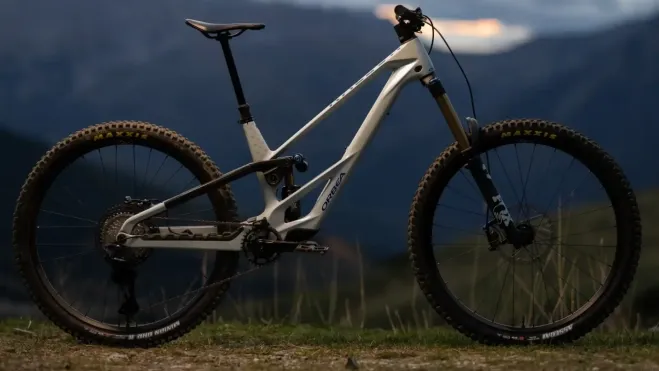
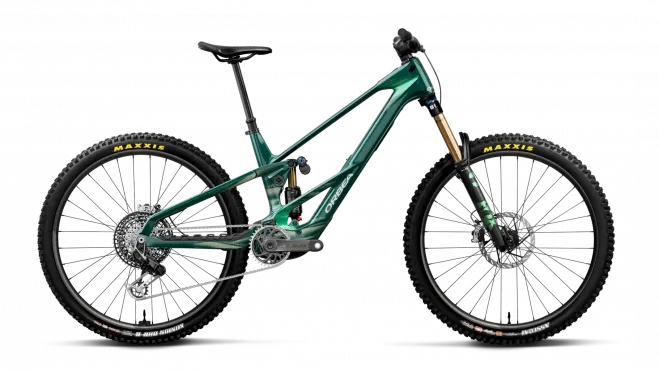
However, this year they surprised us with a bike that is even lighter than any before, pushing this concept to its limits: it’s the Rallon RS. This bike aims to be “muscular” yet with minimal assistance, setting it apart from the new Wild LT, which, as expected, is equipped with the Avinox M2S motor.
This Rallon RS is equipped with the TQ HPR40 motor (40 Nm of torque), a lightweight unit that weighs only 1,170 grams and is nearly invisible to the eye. It runs on a compact battery with just 290 Wh of capacity. This bike retains the characteristics of the motorless Rallon model, bringing its performance to the highest level possible.
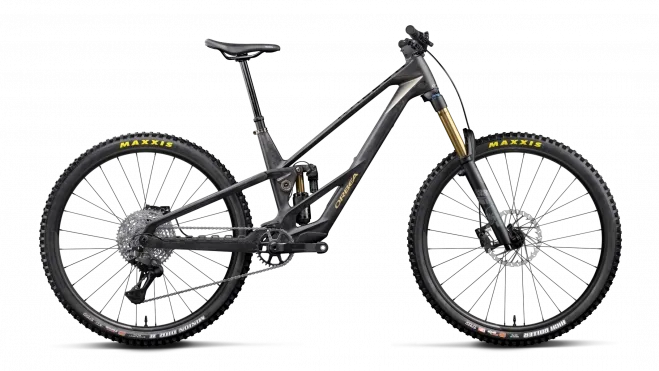
Following the Rallon RS, Orbea introduced the new Wild LT. This bike is an enduro frame that has always had a striking appearance. The new Wild LT replaced the Bosch Performance Line CX engine and its 750 Wh battery with an Avinox M2S unit along with a thinner 800 Wh battery. The result is a bike that resembles the Rallon in shape but with ample power. And that’s despite Orbea having decided to limit the M2S to 750 W....
Basic geometry specs (both models feature 29'' wheels and a ‘high’ flip-chip position)
‘Light’ model: Orbea Rallon RS (size M)
Suspension travel: 180/170 mm
Wheelbase: 1,234.78 mm
Bottom bracket distance: 445 mm
Head tube angle: 65º
Saddle angle: 73.99º
Frame reach: 448.16 mm
Frame stack height: 643.02 mm
'Full power' model: Orbea Wild LT (size M)
Suspension travel: 170/170 mm
Wheelbase: 1,258.34 mm
Bottom bracket drop: 448 mm
Head tube angle: 63.9º
Saddle angle: 74º
Frame reach: 461.24 mm
Frame stack height: 633.49 mm
We can see that both models are enduro types with very similar geometries, featuring only minor differences that, on paper, do not suggest vastly different performance. With similar frames and equal equipment (meaning the weight of the components is the same), the weight difference between the two models will mainly lie in the engine and battery: the TQ package (TQ HPR40 engine and TQ 290 Wh battery) weighs 2.63 kg.
The Avinox package (Avinox M2S motor and Avinox FS800 battery) weighs 6.33 kg, which is 3.7 kg more—a significant difference. However, Orbea offers the option to install the FS600 battery (600 Wh), which is 870 g lighter..... The power differences between the two motors are also substantial: the TQ HPR40 has a maximum power of 200 W and a torque of 40 Nm. Orbea’s Avinox M2S has its power limited to 750 W, but its torque of 130 Nm can reach up to 150 Nm in Boost mode.
These Orbea models are likely the most significant on the market, taking a lightweight frame to its limits to enable covering long distances at full power.
Mondraker: we analyze the Dune and Zendit
Both models are enduro types, featuring suspension travel of 170 mm in the front and 165 mm at the rear, so their focus remains the same. We used the Dune to incorporate another engine that was popular during the rise of lightweight high-power bikes: the Bosch Performance Line SX, which offers better performance than the TQ HPR40. In this case, the Bosch engine has a maximum power output of 600 W and a torque of 60 Nm. The battery is a 400 Wh CompactTube.
The newly released and highly anticipated Zendit is equipped with the current top-of-the-line engine, the Avinox M2S, featuring lines and a design that are almost as sleek as those of the Dune. The M2S can deliver up to 1,300 W of power, with an impressive torque of 150 Nm in Boost mode. Just as Orbea tried to create significant differences between the ‘light’ and ‘full power’ models, Mondraker maintains a smaller gap between them.
Basic specifications of the geometries (both models with ‘mullet’ wheels)
‘Light’ model: Mondraker Dune (size M)
Suspension travel: 170/165 mm
Wheelbase: 1,256 mm
Tube length: 445 mm
Steering angle: 64º
Saddle angle: 74º
Frame reach: 465 mm
Frame stack height: 630 mm
‘Full power’ model: Mondraker Zendit (size M)
Suspension travel: 170/165 mm
Wheelbase: 1,261 mm
Tube length: 450 mm
Steering angle: 63.5º
Saddle angle: 73.5º
Frame reach: 460 mm
Frame stack height: 631 mm
We once again see very similar geometries, with the Mondraker models being even more alike than the Orbea ones. The other difference, regarding the motors, is also minor: for the Bosch setup, the total weight (motor + battery) is around 4 kg. The Avinox setup weighs 6.33 kg, which is 2.33 kg more. This difference translates to the bikes as well: the most exclusive Dune model, the RR, weighs 20.5 kg, while the Zendit XR weighs 22.9 kg, exactly matching the difference in motor systems.
Are those kilograms permanent? In this case, rather than weight, we believe the different behavior of the engines will have a greater impact on range. And so too on autonomy: the battery in the Dune is half that of the Zendit. If we match power outputs, for example in Eco mode through each manufacturer’s app to achieve similar performance (or sensations), the Zendit will cover more kilometers. In the case of Mondraker, we think the new Zendit (the ‘full power’ version) has taken a significant edge over the Dune (the ‘light’ version).