
The new Citroën 2 CV is here! Here’s everything you need to know about this electric city car priced at 15,000 €.
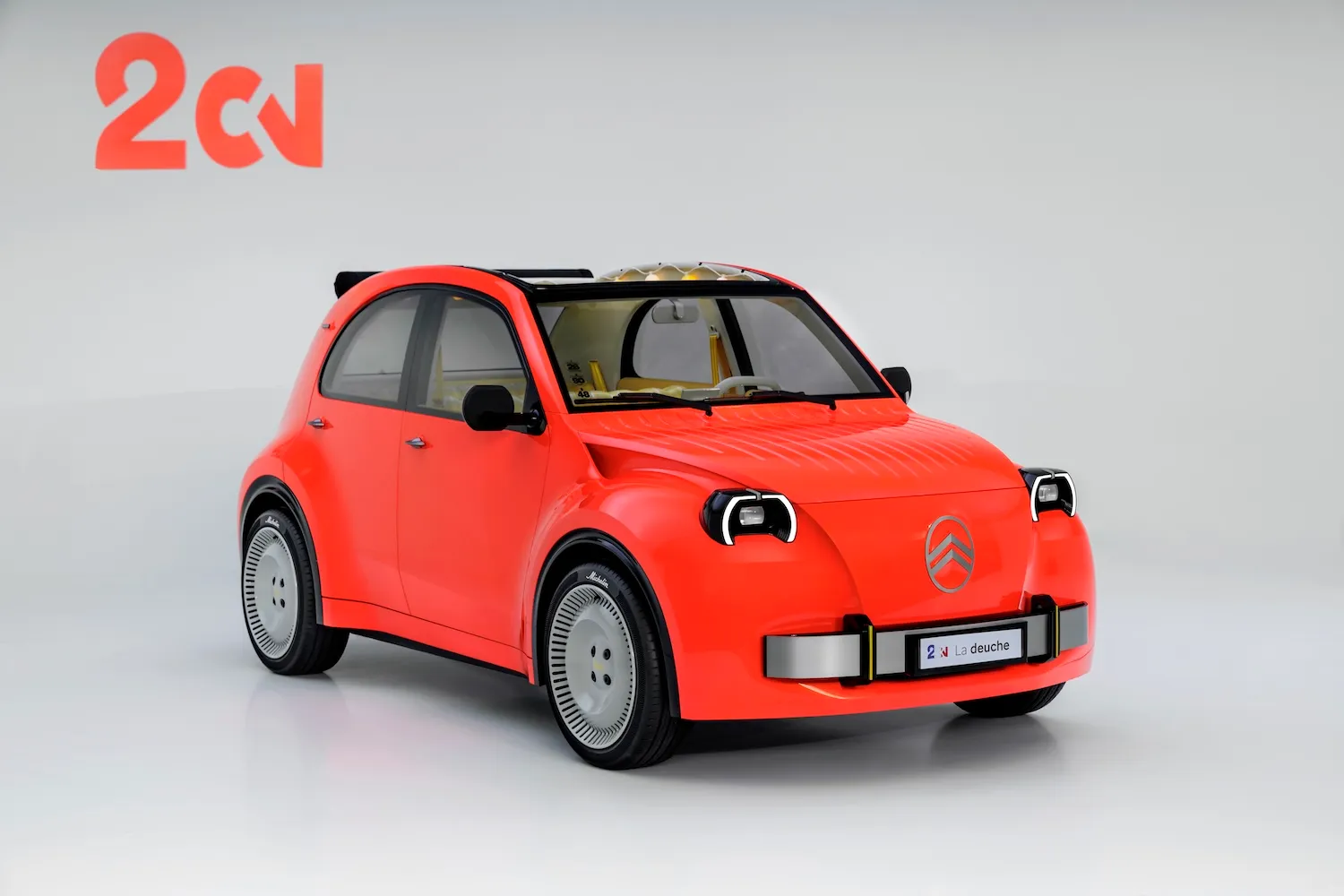
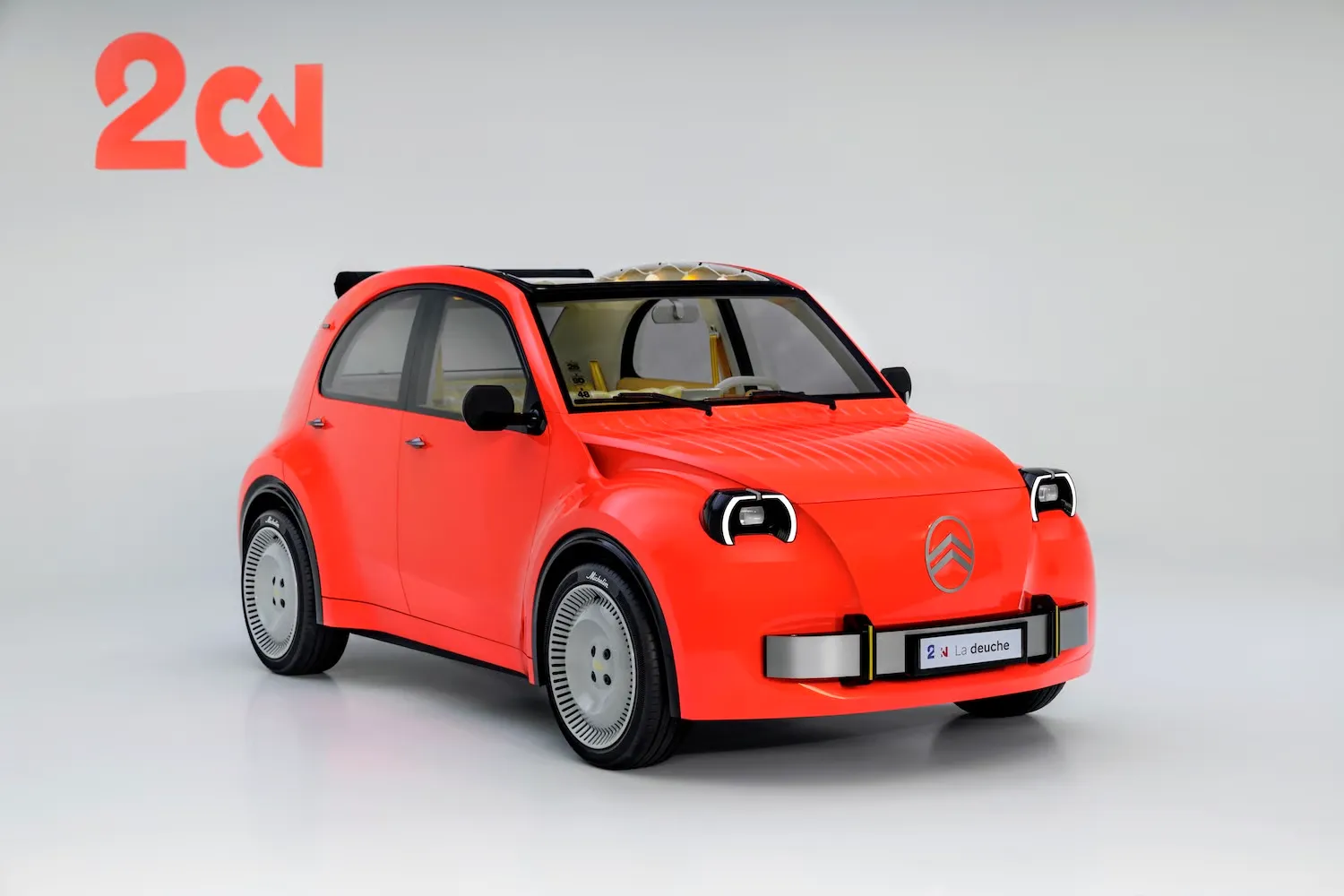
It’s the star of the International Motor Show. Here’s what the new 2 CV will look like — faithful to the original in style and spirit, but now equipped with an electric engine. We got a first look at it to reveal all its secrets to you.
After months of waiting since the project was officially announced in spring, and even years for those who longed for the return of Citroën’s most famous model, here finally is the new 2 CV. Well, almost — it’s a concept car! But a production version is in development and will be launched in 2028. The model shown at the International Motor Show gives us a good preview of it.
The manufacturer has taken on a daunting task, as the 2 CV is truly an icon. It’s actually quite old-fashioned. We recall the Revolt concept, which envisioned a modern yet stylish version of the 2 CV back in 2009. Citroën finally made the move, perhaps driven by the huge success of the R5. It might also be because they found a suitable spot for this vehicle in their lineup.
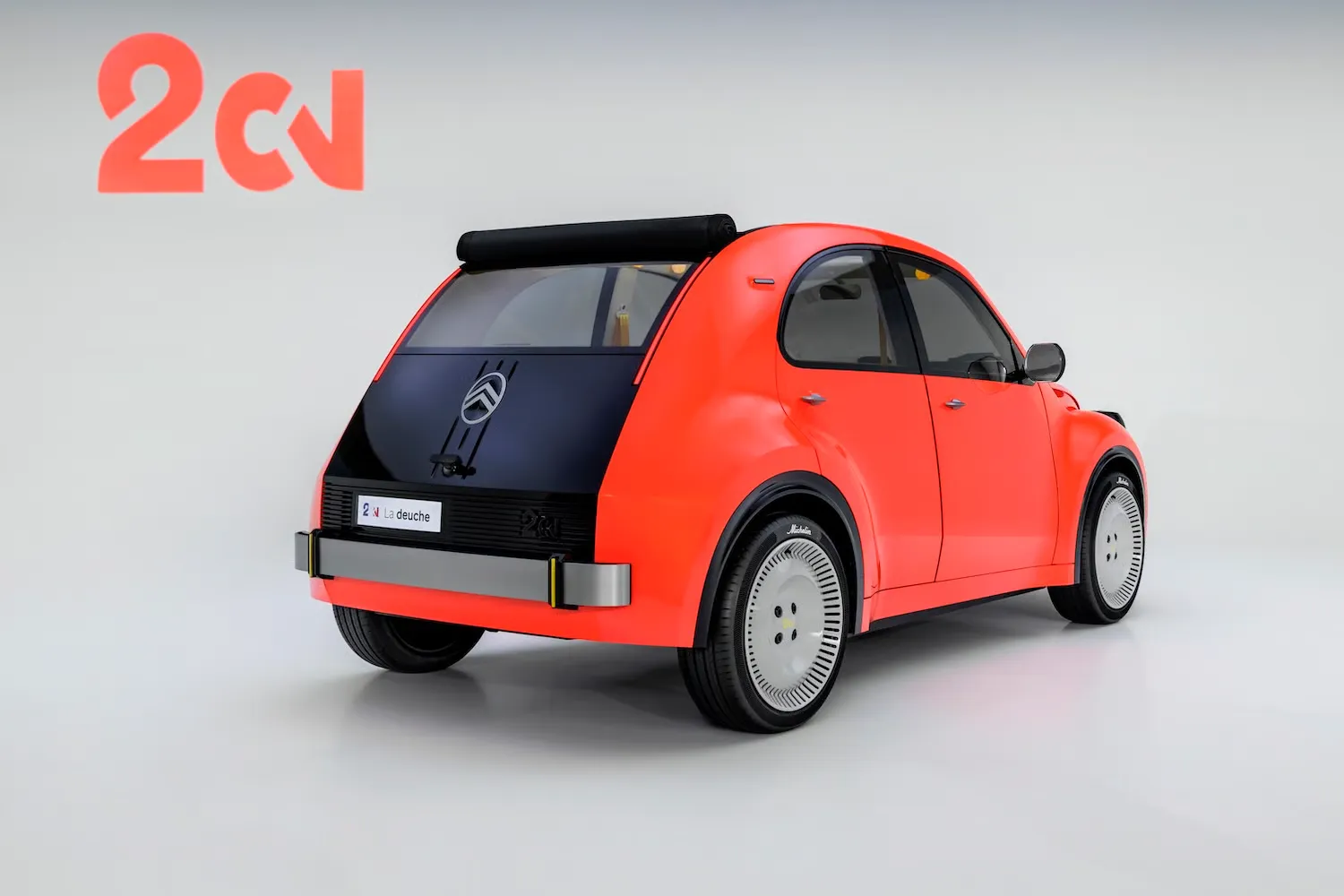
The new 2 CV will fill the gap between the Ami and the C3 with a design true to its roots: being a simple and affordable vehicle in the era of electric cars. There’s no Fiat 500-style neo-retro chic here. Citroën explains that “the starting point wasn’t to recreate a 2 CV, but to envision the small electric car of tomorrow—practical and desirable, one that brings joy to daily short trips.”
This model aims to go against the trend of increasingly larger and heavier cars. It measures only 3.76 meters in length, a size that puts it in competition with the new Renault Twingo, which is already having a strong debut, proving there is real demand for affordable small models in Europe.
Like the Renault, Citroën aims to captivate with a design that brings a smile. The distinctive double arc shape of the front section and cabin, characteristic of the Deuche, is clearly visible. The round fenders are also present. As in the past, the headlights, separate from the body, are mounted on the front fenders. However, these headlights are slightly flatter for a more modern look. There is no grille either; the large logo is directly on the body surface.
Among the nods to the original 2 CV are the stripes on the hood and the visible wipers. The designers explained that they wanted to make such technical elements visible. Like on the original model, the trunk lid is full, with a hint of the turn signal. The door handles also reinterpret those from the original model, but it’s uncertain whether such a detail will make it to production. It’s more likely that the visible trunk handle, above a strip featuring an integrated 2 CV logo, will remain. The most significant change is the headlights, which are vertical and located on either side of the trunk.
If the brand aims to eliminate unnecessary elements, it’s surprising to see the black accents around the wheels, similar to the Peugeot 208. The designers explained that this helps evoke the large wheel arches of the original 2 CV model with its wide track. However, it’s not meant to give off an SUV vibe!
Simplified interior
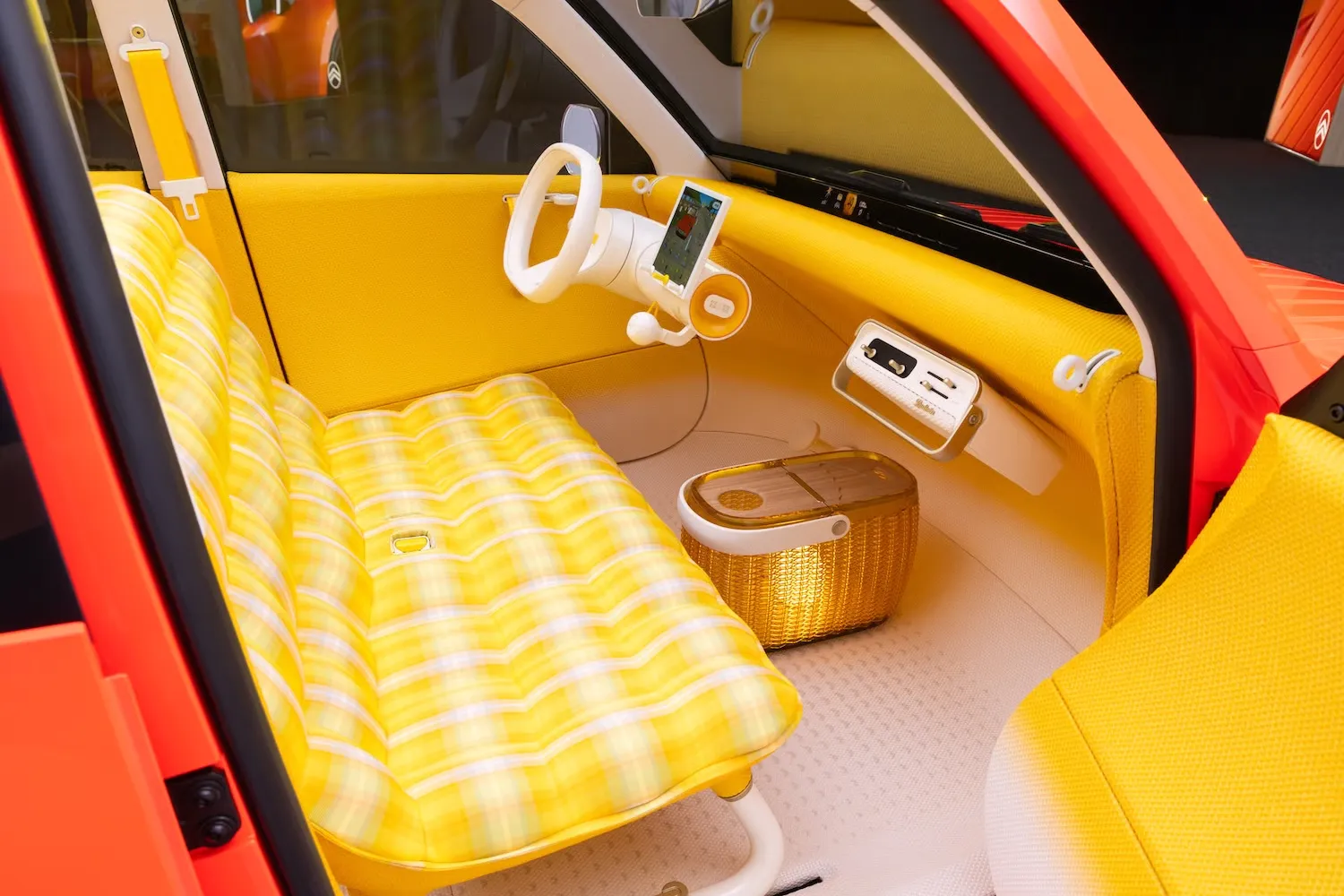
While the exterior resembles that of a regular model, the interior is different, featuring two benches with a tartan pattern. The front bench can even be removed and placed outside for picnics or similar activities! Overall, the design emphasizes simplicity by using fewer furniture pieces to create more space.
The cockpit is reduced to a single-spoke steering wheel, a control knob, an 8-inch touchscreen, and a small gear selector. The instrumentation appears as a strip at the bottom of the windshield, similar to that in the C3. There’s also the “Radioën,” a removable radio that functions as a speaker, accompanying passengers both inside and outside. On the floor, a removable storage basket serves as the center console!
Among the highly conceptual elements are the comic-book-style graphics on the central screen or the string lights reminiscent of a garden party! We also appreciate the egg storage compartments in the doors, which echo a requirement from the 2 CV’s specifications—being able to transport a basket of eggs across fields without breaking them. The concept also features digital license plates displaying the car’s various nicknames in Europe.
The canvas sunroof, a hallmark of the 2 CV, is particularly noteworthy. It opens by hand to keep things simple, lightweight, and cost-effective.
Mystery Surrounding Range
The goal is indeed ambitious, as Citroën promises a production version at 15,000 euros, which is unprecedented for an electric city car made in Europe. The brand hasn’t provided any details on the technical specifications, as it’s still too early. However, one can expect modest features, with the car aimed at short daily trips, offering a range of 150 to 200 kilometers and possibly no fast charging, at least in the base version.
Some may think this is still too expensive, but it’s already 5,000 euros cheaper than the base C3 with a 200-kilometer range. Moreover, times have changed—the production costs are different now, and cars must come equipped with more safety features.
Citroën would have liked Europe to establish a category of vehicles with reduced standards, but the Old Continent is slow to make a decision. To succeed in offering the 15,000 € model without purchase subsidies, Citroën will rely on cost sharing with Fiat and Leapmotor, which will introduce new models based on the same platform. This raises the risk that the production version of the 2 CV may deviate from the original due to the need to share components.
To achieve a competitive price, the approach is to keep things as simple as possible in terms of technology, equipment, and styling elements. This recalls the strategy Dacia adopted, though the Romanian brand may have strayed too far from it recently with its new Spring model starting at 17,900 €. The 2 CV therefore has a chance to succeed if customers are willing to return to basics.