
The most modern address in the world costs 2,975 €, it’s equipped with a Mercedes electric car and lacks a half steering wheel.
10/10/2026 14:00
Updated to
10/10/2026 14:00
Mercedes-Benz has opened global orders for the EQS with steer-by-wire steering, a system that eliminates mechanical connection between the steering wheel and the front wheels. The brand claims to be the first German manufacturer to offer this technology in a production sedan, though it is not the first in the world to do so. This feature is already available on all Mercedes EQS models sold worldwide, although we currently only know the price in Germany.
The conventional steering system of a car consists of a physical and mechanical steering column that connects the wheel to the tires. Instead of this bar transmitting rotation, the driver’s commands are sent via an electrical cable, which is why it is called “by wire.” Mercedes claims this allows for a quick and direct response, while maintaining the precise and natural feel expected from the brand’s steering system.
2,975 euros in Germany, including a steerable rear axle
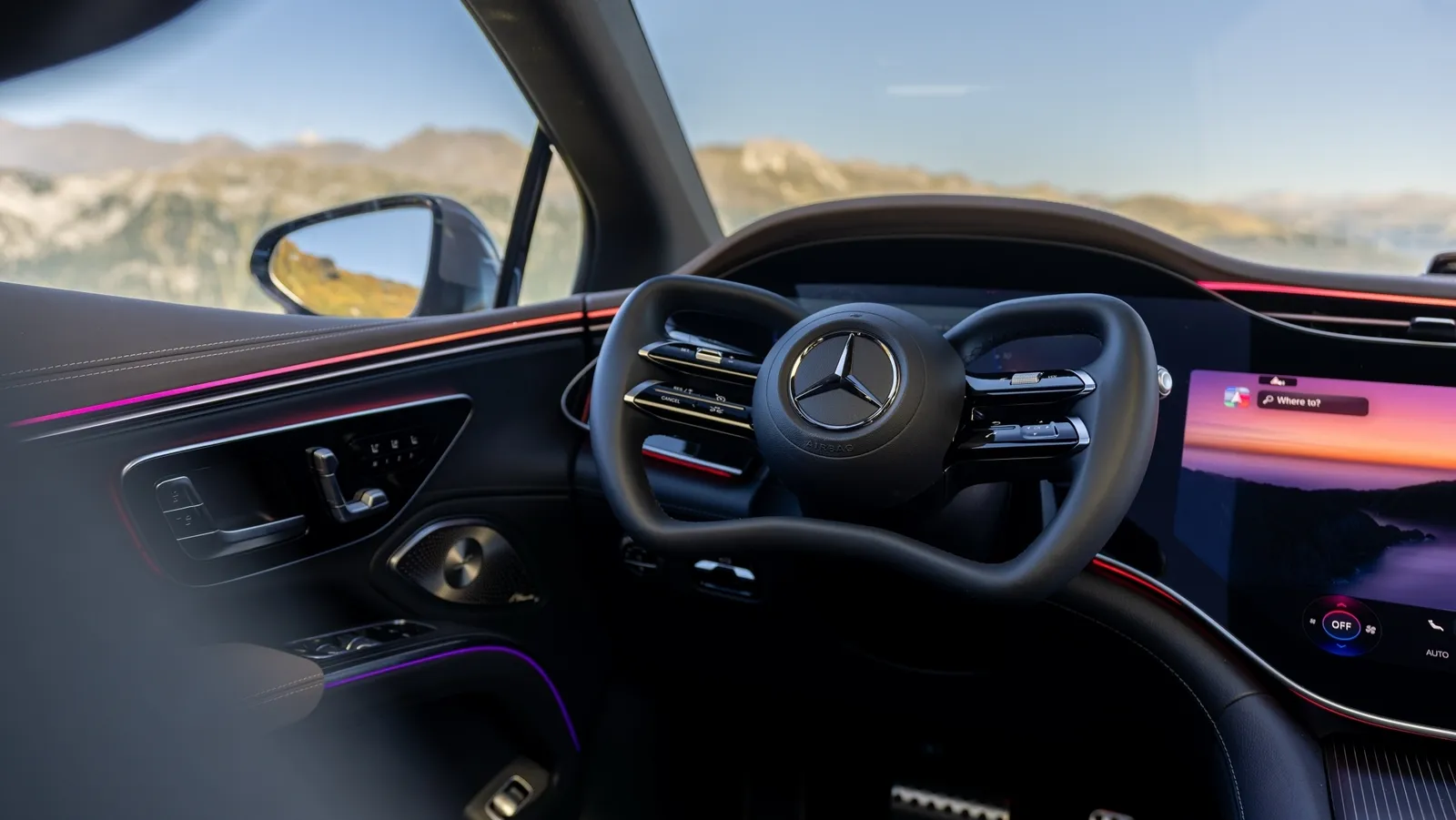
In Germany, the optional package costs 2,500 euros before VAT and 2,975 euros including VAT, without accounting for transportation or pickup costs from the factory. It is not sold alone; it includes a rear axle steering system with a turning angle of up to 10 degrees, along with a new steering wheel that is flatter and features a different airbag structure. The most noticeable advantage lies in the turning capability—only 170 degrees of steering are needed from full left to full right, which is slightly less than half a turn, so there’s no need to cross the hands.
Mercedes explains that this system significantly reduces the steering angle required, especially at low speeds, making maneuvering and parking easier. This was the issue Tesla faced when introducing the Yoke steering wheel in the Model S, which was eventually removed. Mercedes claims that this steering wheel, inspired by Formula 1, is not only more compact but also improves visibility of the digital dashboard and makes getting in and out of the car easier.
Less effort and safety in case of failures
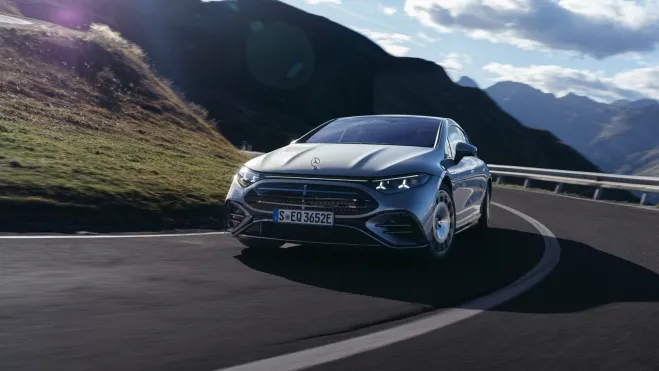
Since the system can reduce the effort required to steer, driving dynamics also improve. According to Mercedes, the EQS gains in stability and lateral agility as the steer-by-wire system works together with the rear steering. Additionally, vibrations caused by potholes that previously reached the steering wheel can be eliminated. The common issue with this type of steering is the lack of feedback transmitted to the driver. And, of course, there are potential electronic failures that may occur.
The brand has designed the system with high-precision sensors, powerful control units, and a redundant architecture featuring independent signal paths. This ensures that steering capability is maintained at all times. Even in the highly unlikely event of a total failure, the car can still steer laterally using the rear steering system and individual wheel braking via ESP.
The technical foundation of the new EQS
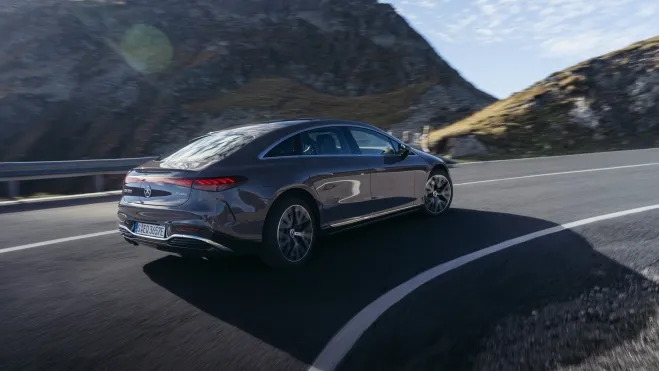
The refreshed Mercedes EQS, unveiled a few months ago, has seen more than a quarter of its components updated. It features a new-generation electric architecture with 800-volt technology, propulsion units developed by the brand itself, a two-speed transmission in the main rear axle, and larger batteries with an optimized cell chemistry. The EQS 580 4MATIC boasts a combined fuel consumption range of 16.2 to 19.5 kWh/100 km, with an official range of up to 926 kilometers according to the WLTP cycle. Mercedes introduces steer-by-wire as part of this generational leap for the model, along with its MB.OS operating system.