
The cheap batteries dominating China are now gaining interest for use in electric trucks to cut costs
12/10/2026 16:00
Updated to
12/10/2026 16:00
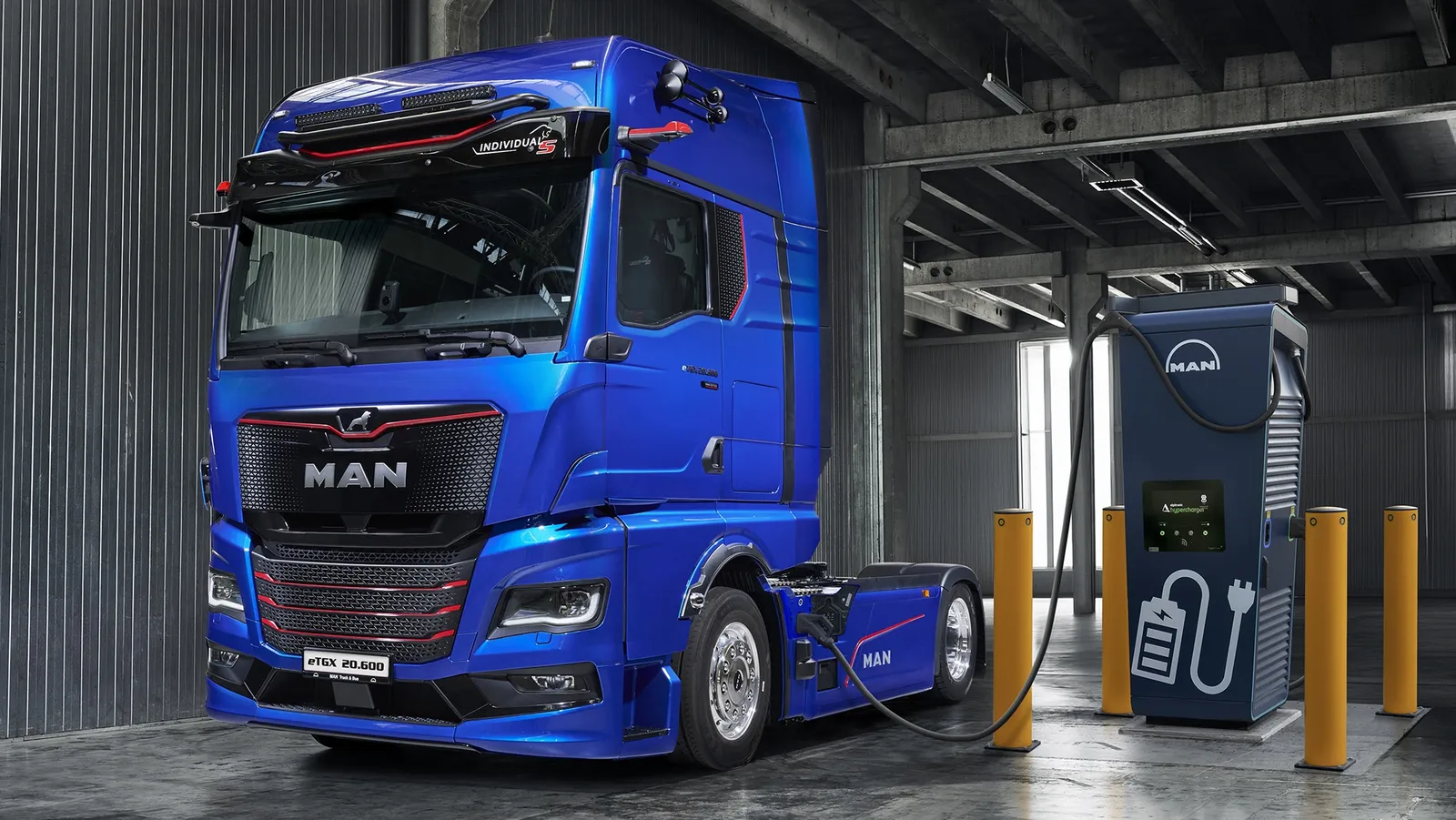
TRATON, the parent company of MAN and Scania, has confirmed that it is now developing LFP batteries for its future electric industrial vehicles, after years of focusing on NMC chemistries. This decision does not mean that upcoming trucks will immediately switch to LFP batteries, but it signals a potential major shift: LFP batteries, dominated in the industry by Chinese manufacturers, offer lower costs and higher durability at the expense of lower energy density. For trucks, where every kilogram matters but total ownership cost is also extremely important, this balance may become increasingly attractive.
The confirmation comes from Niklas Klingenberg, TRATON’s head of research and development. When directly asked whether the group is considering LFP batteries, his answer was unequivocal: “Yes, absolutely.”
He added an important nuance: “Simply changing the battery chemistry overnight would be impossible. What we can do is develop new batteries using LFP chemistry. And that’s exactly what we’re working on now.”
From NMC to a much cheaper chemistry
To date, TRATON’s development of batteries for MAN and Scania has relied primarily on NMC technology, which is based on nickel, manganese, and cobalt.
Its major advantage is its high energy density, which is particularly important for trucks because the lighter the battery, the more payload it can carry.
LFP (lithium-iron-phosphate) batteries follow a different approach. They typically store less energy per kilogram, but they eliminate the need for nickel and cobalt, offering significant advantages in cost, durability, and thermal stability.
China has made this chemistry one of the pillars of its battery industry and accounts for a large portion of global production. For a European truck manufacturer, the question is no longer merely which chemistry offers the greatest range, but which one can reduce costs per kilometer over the entire lifespan of the vehicle.
MAN and Scania Now Achieve Up to 720 Kilometers
A significant change is underway as both manufacturers are achieving ranges that seemed impossible for electric trucks just a few years ago.
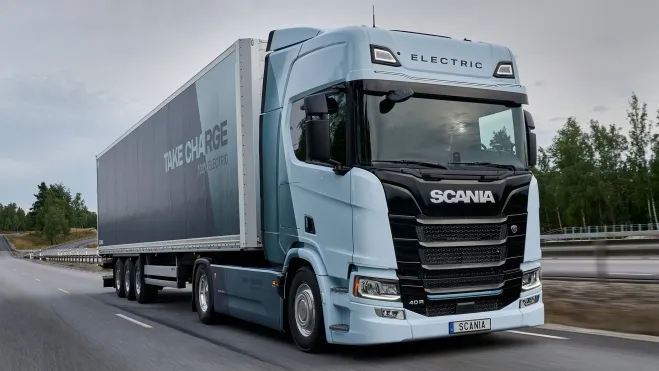
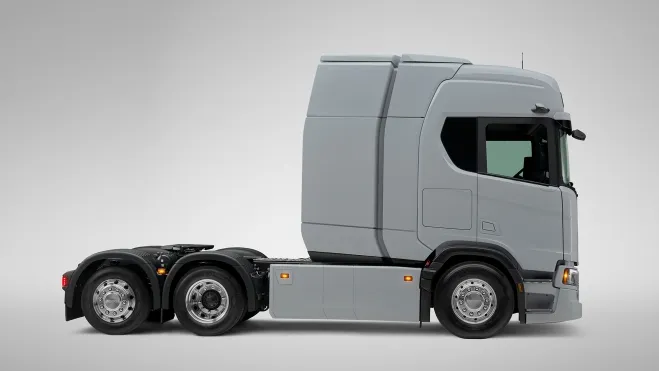
Scania has introduced long-range configurations capable of reaching up to 720 kilometers, using additional battery packs behind the cab.
MAN has announced a similar figure for certain versions of the new eTGX. Its 6x2 configuration with seven battery packs achieves a total capacity of 644 kWh and up to 720 kilometers in favorable conditions.
This shows that the challenge is no longer just about achieving sufficient range. A new race has begun: to do so with fewer batteries, lower costs, and a lifespan long enough for hundreds of thousands of kilometers.
Battery electric trucks remain the priority
TRATON continues to explore other solutions. Scania has experimented with range extenders, overhead line systems, and is also researching hydrogen. But Klingenberg clarifies the group’s technological priorities.
We are fully committed to battery electric vehicles. That is TRATON’s main focus,” says the executive. He adds that, in the long term, this technology offers the most favorable prospects both from a technical standpoint and in terms of total cost of ownership.
The introduction of LFP batteries fits perfectly into this strategy. If they can provide sufficient range at a lower cost and with longer durability, the chemistry that China has popularized in automobiles could eventually transform European heavy transport as well.