
Jaguar reveals 1,015bhp Type 01 electric GT with 400-mile range
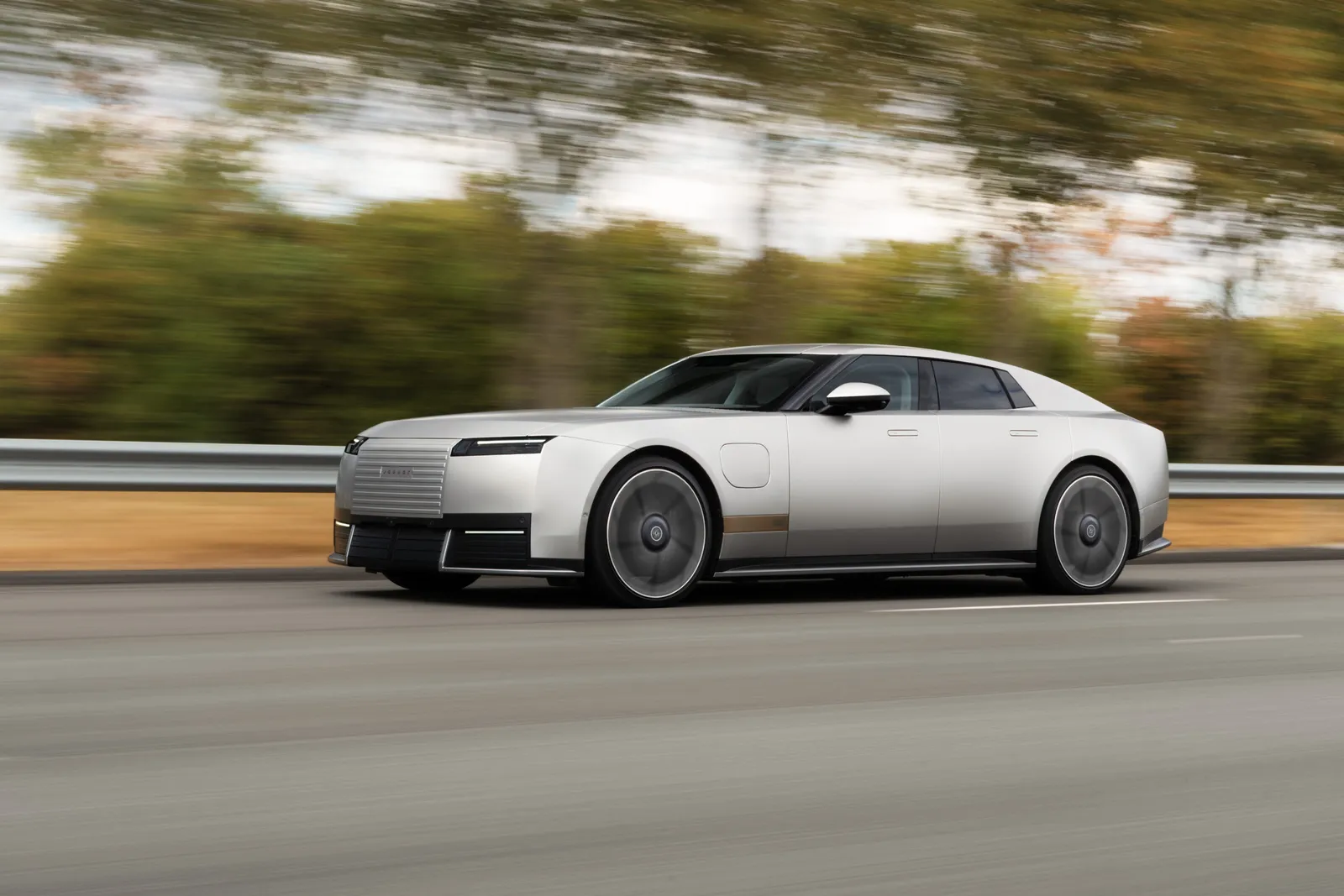
Jaguar has finally unveiled the Type 01, a 1,015bhp electric four-door grand tourer promising 400 miles of range and the ability to add 200 miles in 13 minutes, with prices starting at £130,000 in the UK. Revealed in New York, the long-awaited model leads the British marque’s transition to an all-electric luxury brand, with first deliveries expected no earlier than mid-2027.
Pre-orders follow the unveiling, although the car has not completed homologation and its specifications remain provisional. Jaguar quotes the range against the American EPA five-cycle procedure, rather than the WLTP test familiar to UK buyers. Its three motors produce 1,365Nm of torque, with a claimed 0–62mph time of 3.2 seconds.
The launch also puts detail behind a commercial gamble that has divided opinion since Jaguar announced its reinvention. Managing director Rawdon Glover said the new positioning takes prices to more than twice those of its previous cars, although £130,000 is well beyond that, considering the XF saloon started around £33,000 when it went out of production in 2024.
Glover said around 50,000 people had registered interest, with a high proportion new to Jaguar. The United States is expected to become its largest single market, explaining the choice of New York for a reveal carrying considerable significance for the company’s future.
Jaguar’s argument for such a dramatic change is financial as well as creative. Glover said its previous customer base was shrinking and ageing, while the business was not performing financially. The intention is to attract luxury buyers through distinctive design, presence and refinement, with personalisation becoming increasingly important.
Underneath the Type 01 is the Jaguar Electric Architecture, or JEA, first revealed with the Type 00 concept. Glover said the desired proportions could not be achieved using existing platforms, prompting the company to develop its own. Electric propulsion was chosen to deliver the appearance and driving characteristics Jaguar wanted, including substantial power with refinement.
Chief engineer Jon Darlington said prototypes were created early, with quality a priority throughout development. The programme has generated more than 360 patent applications. Much of the engineering effort focused on preserving the original proportions while accommodating crash protection, battery packaging and passenger space within them.
The battery has a total capacity of 120kWh, using 200 prismatic nickel-manganese-cobalt cells distributed across five packs. A split arrangement creates space for two rear passengers, while 32 cells sit ahead of the A-pillar. Jaguar has also developed seats 83mm thinner than its previous designs without, it says, sacrificing comfort.
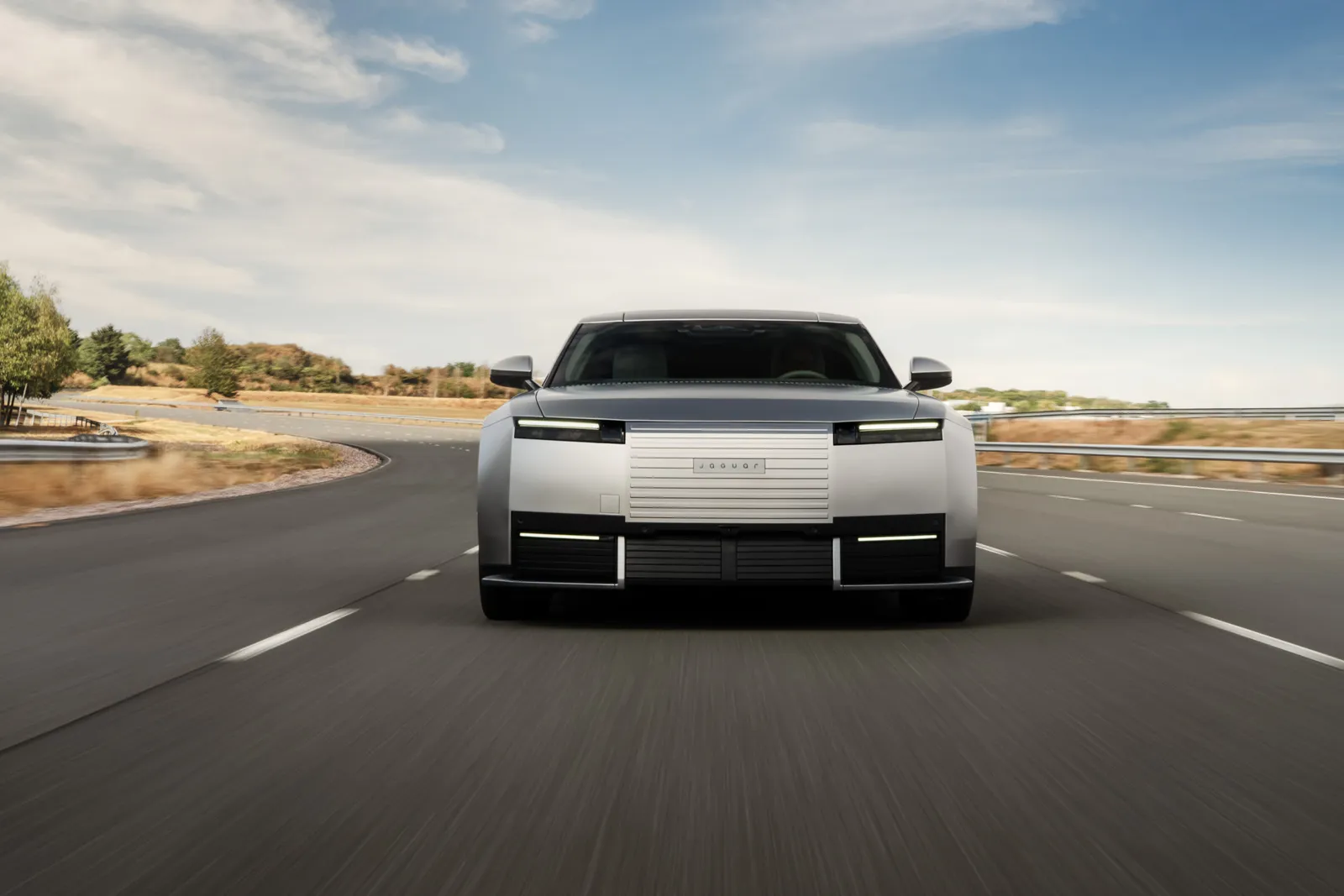
An 850V electrical system supports rapid charging, with Jaguar claiming a 200-mile range replenishment in 13 minutes on a 350kW charger. The packs can be connected in parallel for compatibility with 400V charging equipment. Charging connections are provided on both sides, and US cars receive a native NACS connection.
AC charging specifications span 7kW to 22kW, depending on configuration and market. Jaguar also credits silicon carbide inverter technology with contributing 18 miles of range. A combined thermal management system supports the battery and powertrain, while the permanent-magnet motors are claimed to achieve 95% efficiency.
The tri-motor system has a stated 30:70 front-to-rear bias, with integrated traction management and torque vectoring intended to make the output usable. Jaguar says peak power is sustained across a broad operating range, supporting its aim of delivering effortless acceleration with power in reserve at any speed.
At 5.2 metres long, 1.4 metres high and with a 3.2-metre wheelbase, the Type 01 is a substantial car. Six degrees of rear-wheel steering help reduce its turning circle to 11.5 metres. Weight distribution is close to 50:50, while the structure uses 73% aluminium.
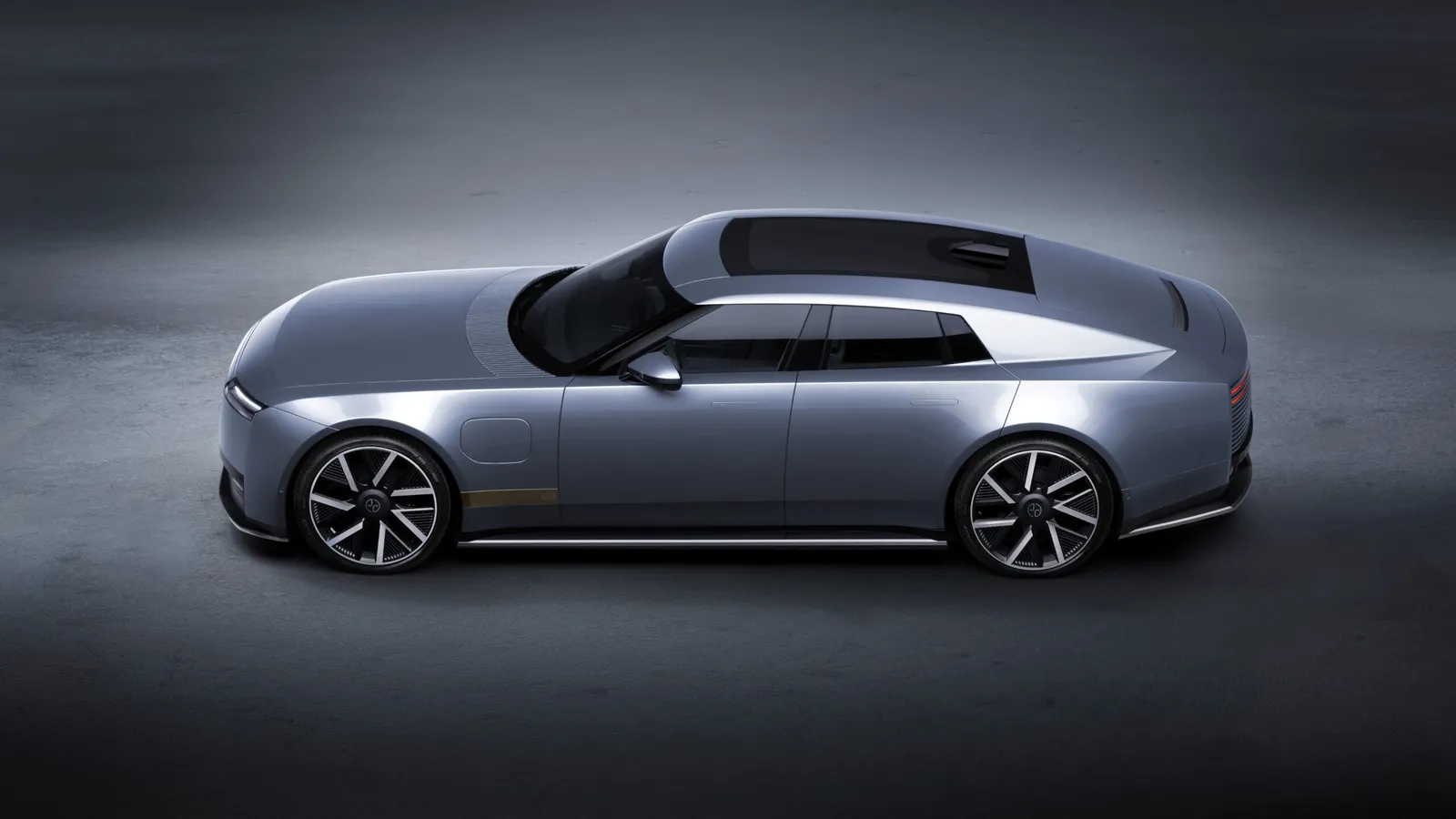
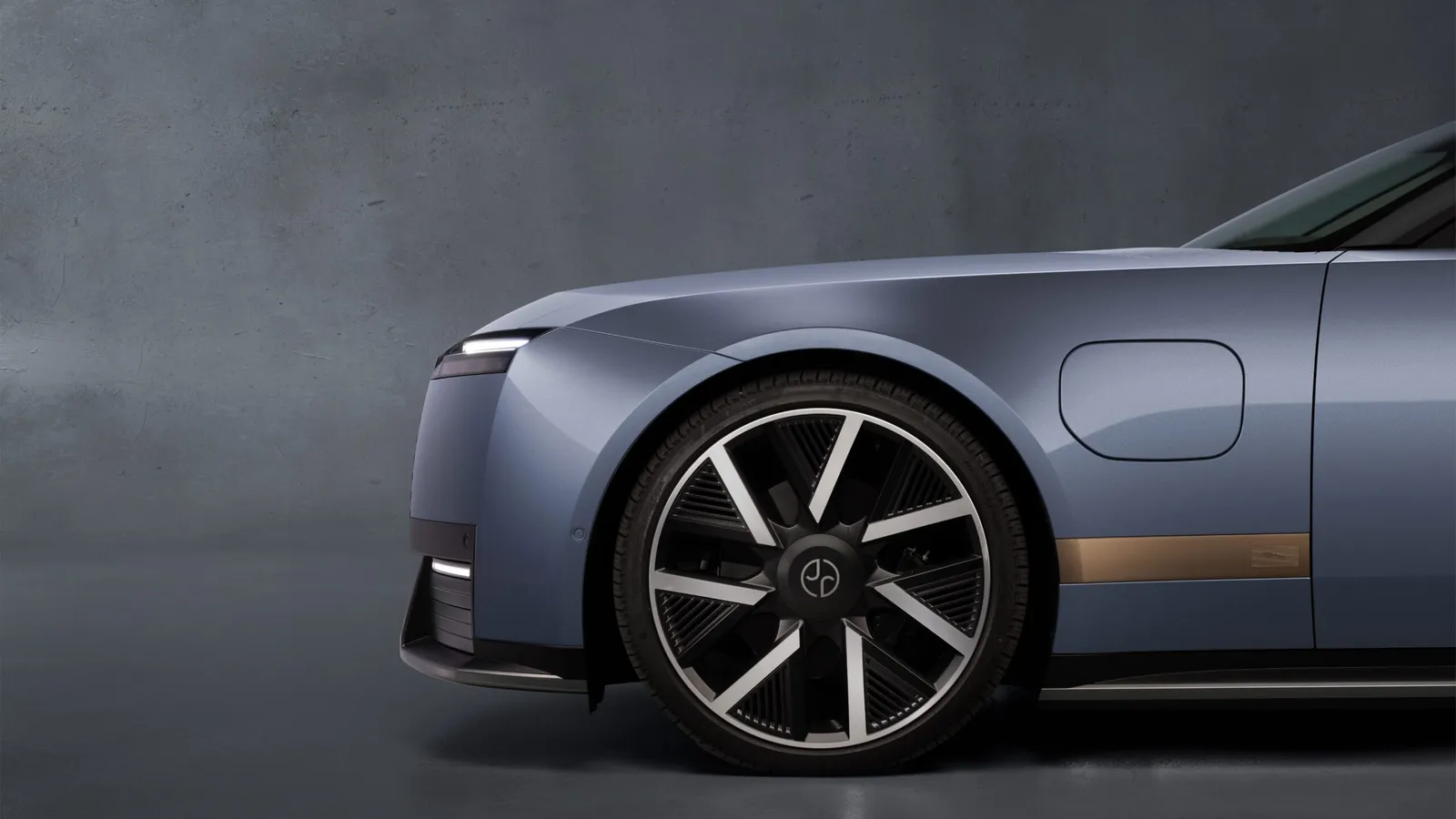
Double-wishbone front suspension, switchable dual-volume air springs and active dampers are intended to combine ride comfort with tighter body control during faster driving. Damping software operates 500 times per second. Above 65mph, the car automatically lowers by 15mm.
Four driving modes are offered: Jaguar, Dynamic, Efficient, plus Ice and Snow. A further Curated option allows customer configuration. Drivers can choose high, medium or low regenerative braking, alongside a single-pedal setting.
The engineering programme has already included Arctic winter testing, where Jaguar worked on traction, chassis control and cold-weather performance. Those earlier prototypes concealed styling that can now be seen without camouflage.
A drag coefficient of 0.23 makes this the most aerodynamic Jaguar yet, according to the company. Full-width active front vanes manage cooling for the brakes and powertrain, while an aerodynamically shaped underfloor and wheel inserts reduce resistance. Jaguar attributes 27 miles of range to the drag reduction enabled by the active front system.
A three-stage rear spoiler operates at angles between seven and 21 degrees and can generate 75kg of downforce. Lead aerodynamicist Chris Kaaria said the team carried out more than 7,000 aerodynamic tests, alongside simulation work, while keeping changes from the prototype’s surfaces within 8mm.
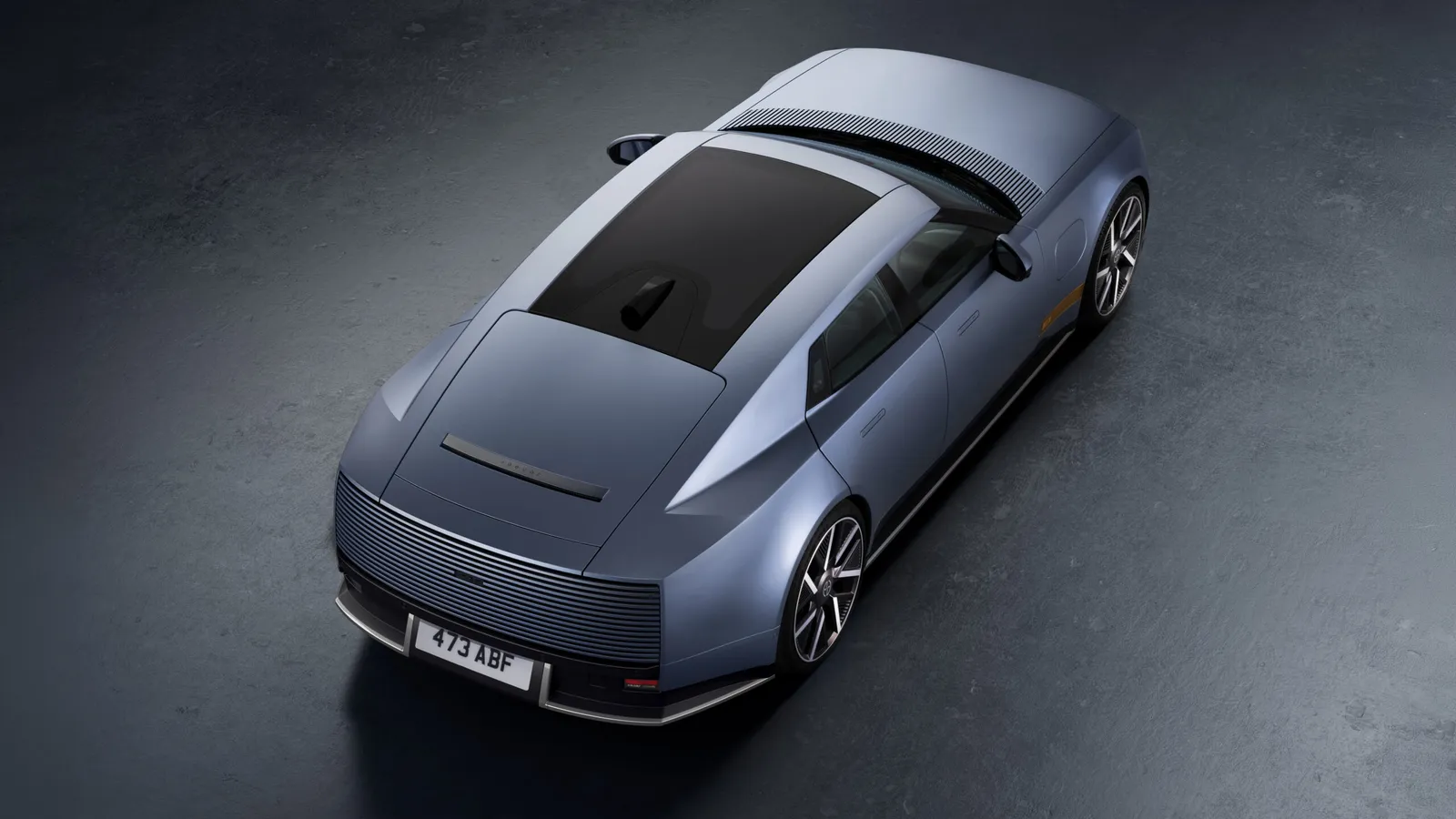
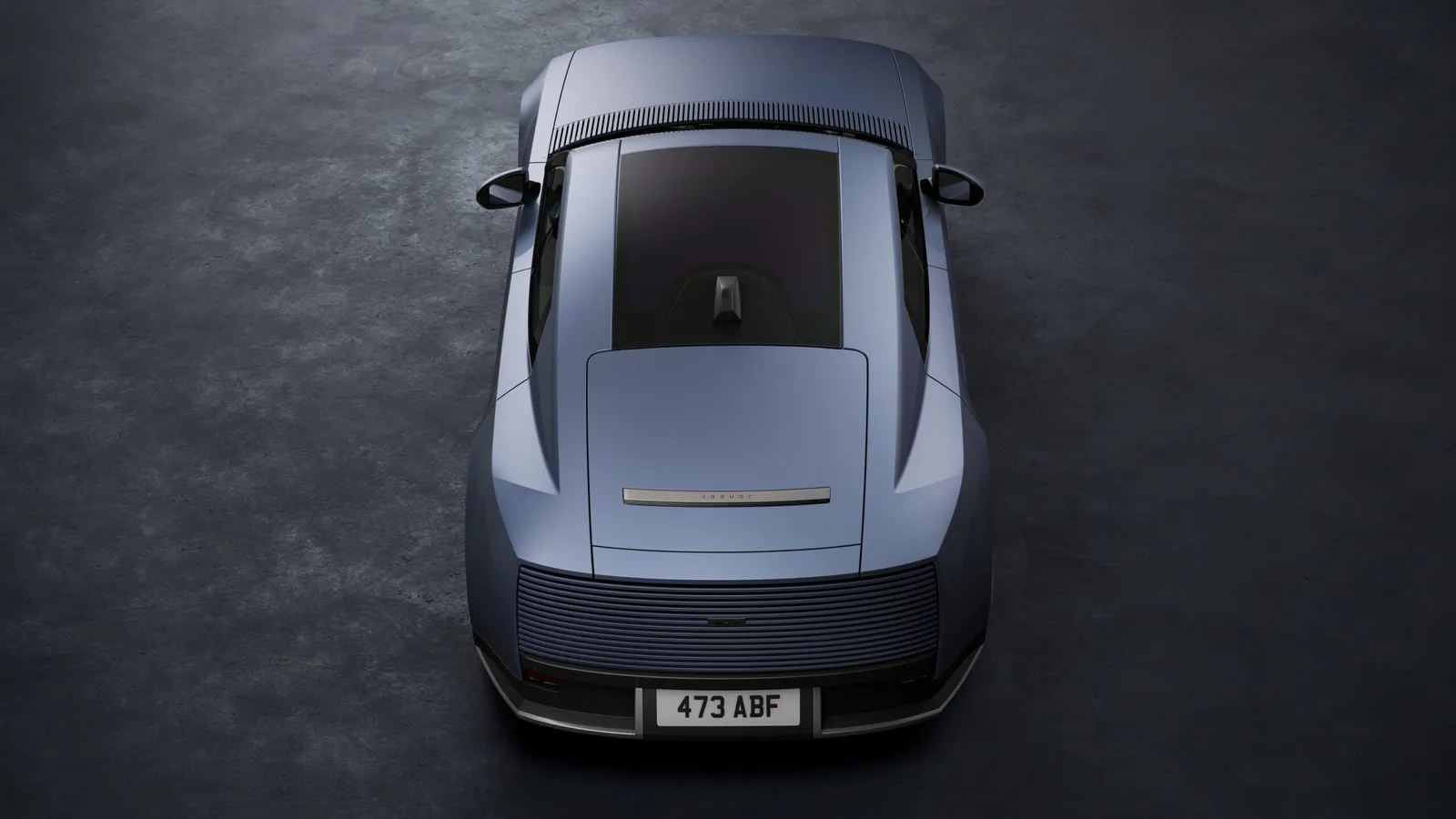
Visually, the production car develops the direction established by the Type 00 concept unveiled in 2024. A long, flat bonnet, rearward cabin and pronounced rear haunches dominate its profile, with 23-inch wheels and a short front overhang.
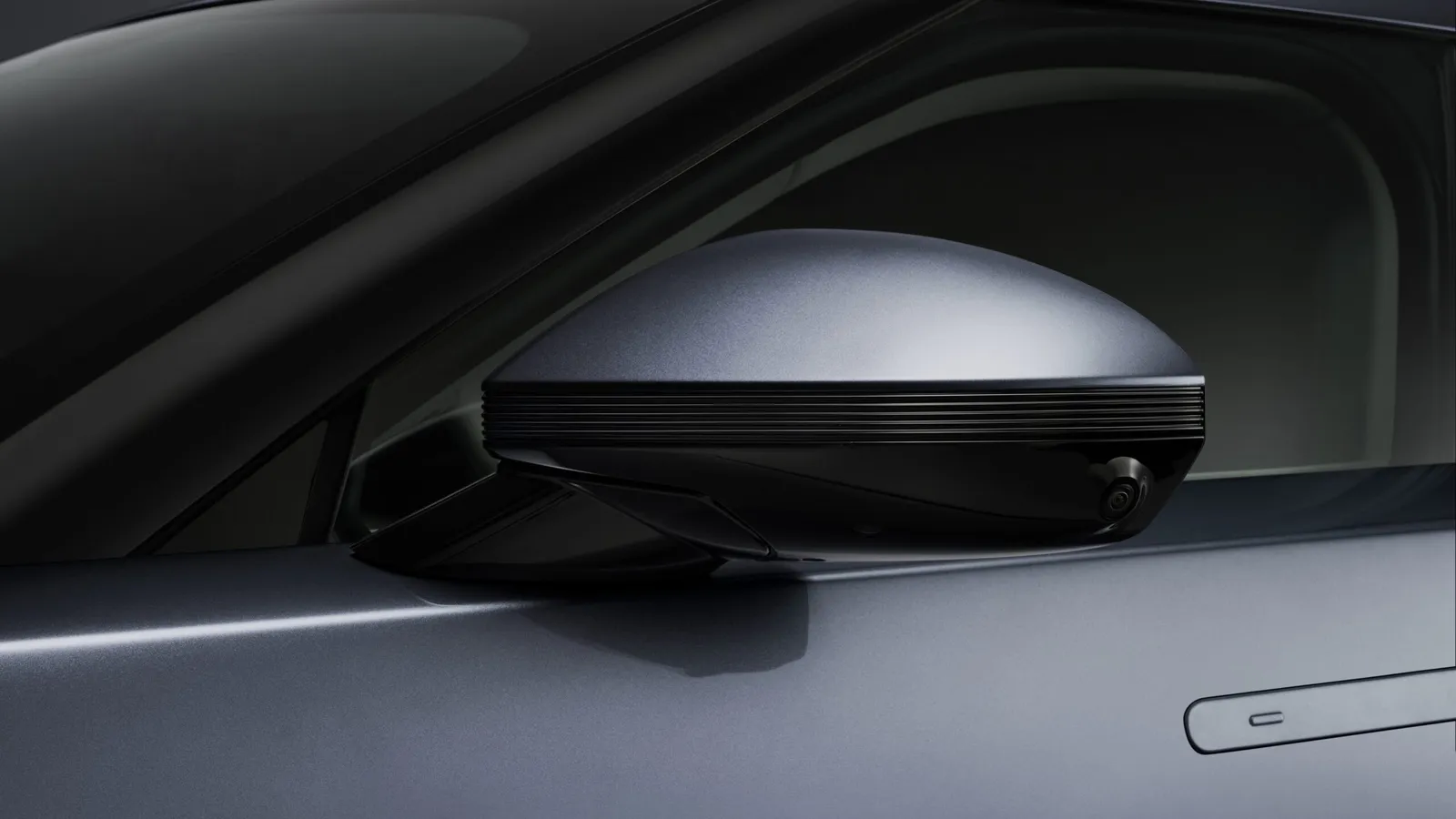
Four-line lighting signatures and a full-width rear light treatment distinguish the ends of the car. There is no rear glass, with a camera system providing rearward vision. One particularly demanding body panel stretches three metres and requires 2,500 tonnes of forming pressure, illustrating the engineering involved in retaining the design.
Inside, the central spine previewed in August remains the defining feature, separating the four seating positions and continuing into the boot. Brass detailing, a slim dashboard and a low driving position reinforce the cabin’s grand touring character.
A 24-inch glass OLED display combines instruments and infotainment, supported by a separate seven-inch screen for climate and seat controls. Voice operation is also provided. The ClearSight rear-view display sits centrally within the panoramic sound bar, lower than a conventional interior mirror. Its location is just above the dashboard rather than the top of the windscreen.
Jaguar says its electronic architecture uses NVIDIA Drive chips, offers 3.5 times the processing power and removes a kilometre of wiring than previous designs. The audio installation incorporates 13 speakers in the sound bar and 25 elsewhere, including headrests, with seat pulses adding a haptic element.
Material choices include leather, synthetic upholstery and woven textiles, alongside bespoke melange velour used on the floor and doors. Eight exterior colours and three interior choices are planned. Jaguar also outlined a Collectors offering limited to 60 cars, with red or blue colour themes.
Glover framed the design’s relationship with Jaguar history through the impact of the E-Type in 1961 and the XJS in 1975. Both represented change in their time; Jaguar wants the Type 01 to provoke a similarly strong response.
Customer research has produced low scores alongside more high scores than Jaguar had previously seen, Glover said. Like the ad campaign, the design also divides opinions, but the positives outweigh the negatives. Pre-orders will provide the next measure of whether this interest translates into demand.
