
IRU and T&E demand EU rules for semi-private truck charging infrastructure
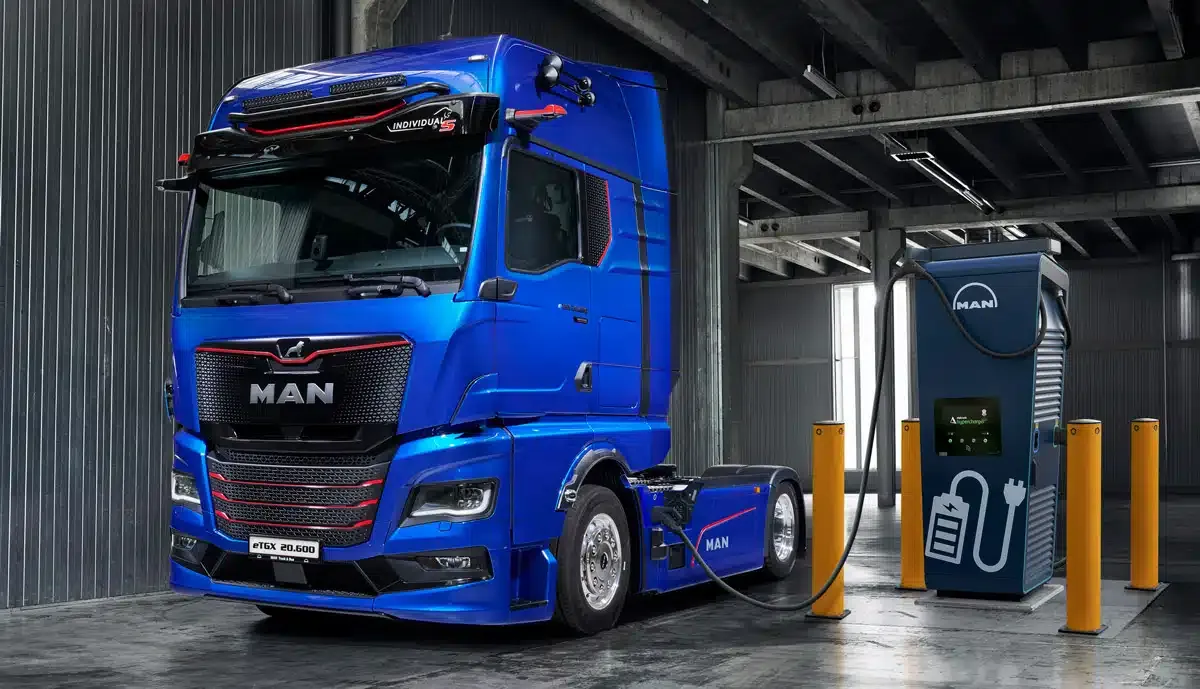
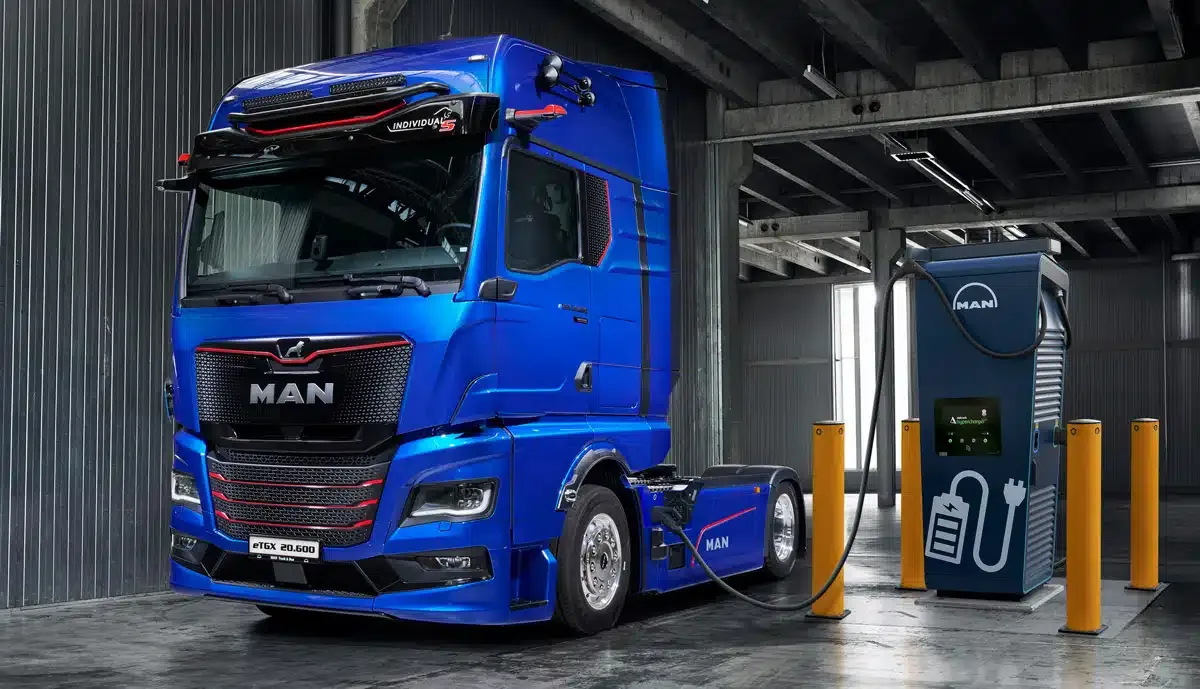
Image: MAN (illustrative)
The International Road Transport Union (IRU) and Transport & Environment (T&E) are calling for an EU regulatory framework for semi-private charging infrastructure for electric trucks. As part of the upcoming revision of the Regulation on the Development of Infrastructure for Alternative Fuels (AFIR), semi-private charging is to be recognized as a separate category alongside public and private charging options. The organizations aim to facilitate shared use of existing charging infrastructure and create additional capacity for zero-emission heavy commercial vehicles.
A significant portion of electric truck charging is likely to take place in depots and at delivery locations in the future. There, transportation companies can largely meet their energy needs, optimize overall operating costs, and reduce dependence on public charging networks. However, charging at the location where the truck is based is not sufficient, as trucks also require energy while on the road, and especially smaller companies often lack adequate space, power connections, or investment options for their own charging facilities.
The proposed model requires transportation companies, logistics service providers, and shippers to voluntarily make part of their loading infrastructure available to other businesses. Larger companies could thereby offer loading facilities at their depots, logistics centers, or loading/unloading sites to subcontractors and smaller transporters. Meanwhile, the owners are expected to retain control over access and be able to prioritize their own vehicles and operational processes.
IRU and T&E call for proportional and flexible EU rules that distinguish between semi-private charging services and public charging stations. Companies that voluntarily share their infrastructure should not be automatically classified as charging point operators or electricity suppliers. Additionally, the organizations advocate for fewer regulatory barriers in terms of permits and grid connections, as well as for including private and semi-private charging infrastructure in national infrastructure, energy, and grid planning.
The new category should also be taken into account for subsidies and government aid, particularly when revising the General Regulation on Group Exemptions (AGVO). Additionally, industry associations call for guidance on funding programs and the implementation of RED III and greenhouse gas quota regulations, so that semi-private charging stations can be included and additional benefits for using renewable electricity can be recognized. The goal is to encourage private investment in additional charging capacity without imposing new expansion or access requirements on transport companies.
Public charging stations remain essential, according to these organizations, especially along the Trans-European Transport Network (TEN-T). Semi-private charging options are intended to complement this network at strategic transport locations and enable small and medium-sized enterprises to access infrastructure they might not be able to build on their own. Public, private, and semi-private charging infrastructures should complement each other to jointly support the development of zero-emission heavy-duty vehicle fleets.
Also interesting
About the author
Thomas Langenbucher is an expert in electromobility with professional experience in the automotive industry and finance sector. Since 2011, he has been covering electric vehicles, sustainable technologies, and mobility solutions for ecomento.de. Learn more.
Reader interactions