
Thor, Voltrac’s robot equipped with 4 electric motors, has arrived in the fields.
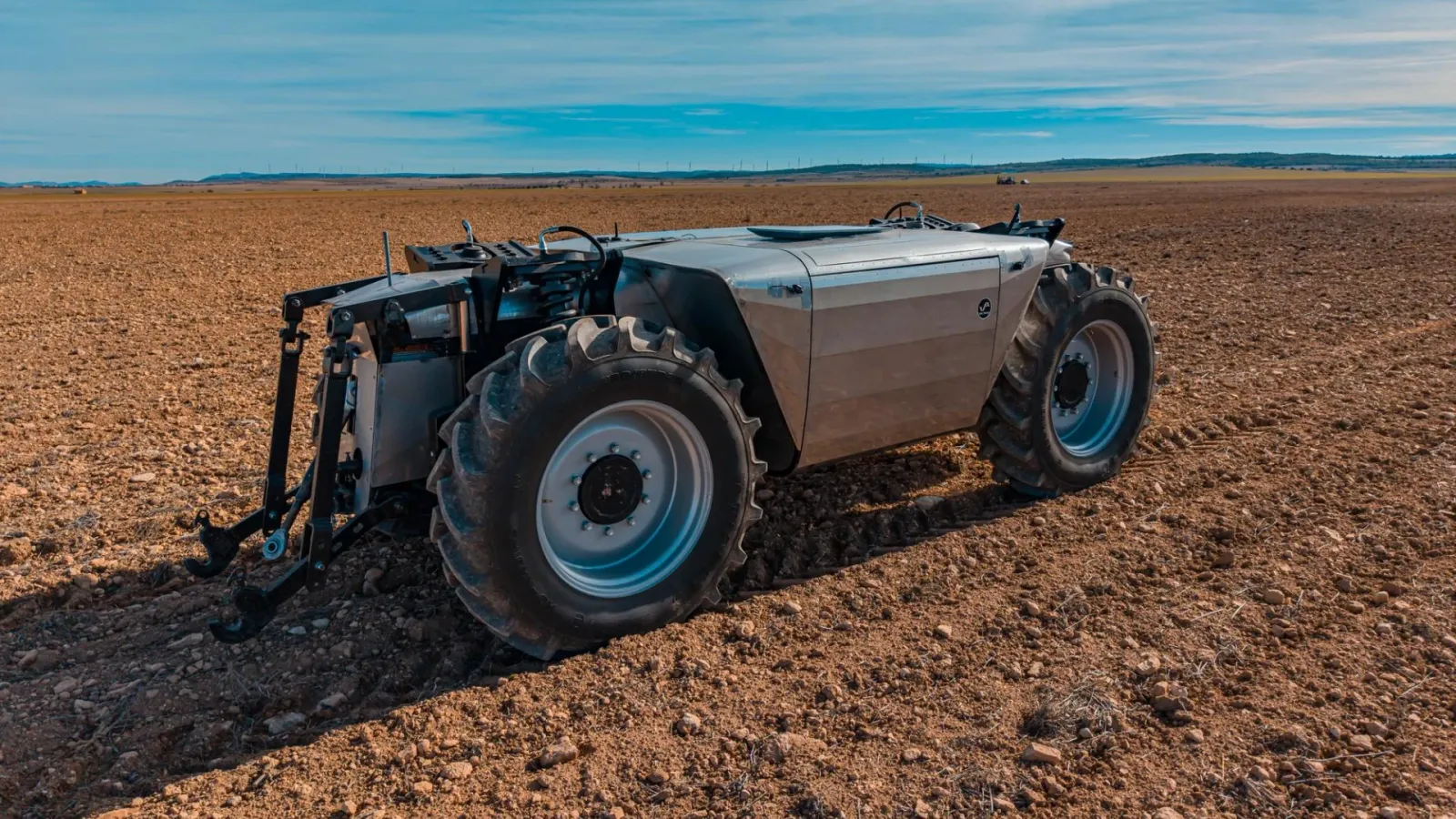
Thor, the autonomous electric robot developed by Voltrac, has officially moved from field testing to pre‑series production. The confirmation came directly from the company’s founders, who spoke at an international robotics event in Berlin. However, what is set to enter production now is a transitional model: it will be an intermediate version of Thor, designed to refine technology and processes. The real breakthrough will come with Thor 3, the first fully mature model intended for the global agricultural market.
Starting with 96 units, goal is 1000
Voltrac has outlined its development plan to meet what it calls a rapidly growing demand. The initial phase involves producing 96 units per year at the facility in Valencia, but the goal is to quickly reach 1,000 vehicles per year. These volumes reflect the trend toward agricultural robotics, driven by labor shortages and the increasing precision of robots in field operations.
The company emphasizes that Thor is not a diesel tractor converted with an electric motor installed later. It is a heavy‑duty platform designed from scratch, with range being its core principle. This choice directly impacts the economic sustainability for agricultural businesses considering investment in robotics. The system is fully electric: not only the motor but the entire architecture as well. Gearboxes, oil filters, radiators, and many other interconnected components that could cause failures and machine downtime are eliminated.
Cofounder Francisco Infante Aguirre explains that this approach results in a “machine with about 70% fewer components compared to standard agricultural equipment.”
Instead of a conventional transmission, Thor uses an electric motor for each wheel. The four independent motors, paired with dedicated reducers, generate 20,000 Nm of torque at the wheels. All-wheel drive enables extremely tight turns, a decisive advantage in orchards and vineyards where maneuvering space is limited.
In the event of a failure in one of the motors, the other three still ensure continuous operation: a crucial feature during delicate tasks such as harvesting.
Up to twenty hours of runtime with interchangeable batteries
The technical specifications page on the company’s website mentions replaceable batteries, but Voltrac clarifies that Thor uses next‑generation hot‑swappable battery packs designed to provide up to twenty hours of continuous operation. The company explains that “instead of parking the machine to recharge it in the middle of the field, operators can simply carry a second set of fully charged batteries. Empty units can be replaced in minutes, allowing operations to resume immediately.”
This approach eliminates downtime and keeps the robot operational even during the busiest days, making energy management a key factor in field productivity. Below is the page with Thor’s most important specifications:

The vehicle’s operation is fully automated. Every time Thor moves across the farm, it analyzes crop conditions in real time, detects early signs of diseases, and optimizes the application of fertilizers and chemicals. This advanced agronomic management turns the robot into a true digital supervisor for the fields.

The software platform is open to third-party developers: those who create applications can run them directly on the vehicle’s hardware, creating a true marketplace for customized agricultural tools. Continuous connectivity is ensured by dual SIMs and Starlink, which guarantees operation even in the most remote rural areas.
The ultimate goal is multi-vehicle supervision. Voltrac aims to surpass the traditional model where one operator controls a single machine, moving toward a modern system where one operator manages multiple autonomous robots working simultaneously in different fields. This transformation radically changes agricultural efficiency and human resource management.
READ ALSO: Bonus for charging stations – there’s still hope, and WATCH the video – Incentive guide
Previous Article
Electric becoming increasingly competitive over gasoline and diesel