
Hyundai IONIQ 3 driving experience: small on the outside, great in every way
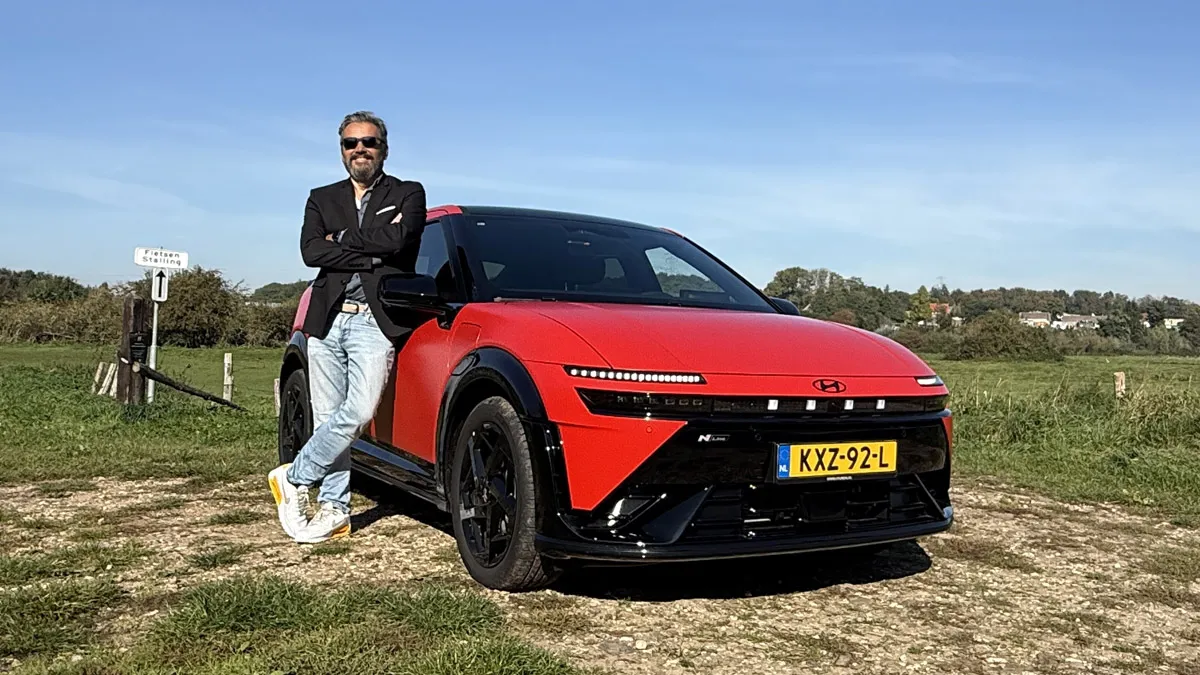
This Hyundai IONIQ 3 driving review is our first real experience behind the wheel. We had already seen it at the unveiling and learned about its relatively low price, but driving it tells a better story than just looking at it. It’s while on the road that you truly realize how far Hyundai has thought ahead with this compact EV. It’s fuel-efficient, surprisingly spacious, and handles better than we expected.
B-segment with C-segment traits
The IONIQ 3 is the kind of car that’s hard to categorize at first glance. Many people initially thought it belonged in the C-segment, but Hyundai clearly positions it in the B-segment. With a length of 4.16 meters, that makes sense, but that figure alone doesn’t tell the whole story. The wheelbase is 2.68 meters long, and Hyundai has made use of almost every available centimeter to create interior space.
The front seat provides ample space, but it’s especially in the back where you can see just how much legroom Hyundai has managed to create. The long wheelbase and flat floor clearly contribute to this, and even with four adults inside, the IONIQ 3 doesn’t feel like a small car. The trunk volume is also 441 liters, but that’s not all. There’s an impressively large additional storage area under the floor—ideal for charging cables, loose items, or luggage you want out of sight. Thanks to this, its practicality feels more akin to a C-segment car rather than a B-segment one.
That unique rear design has a reason
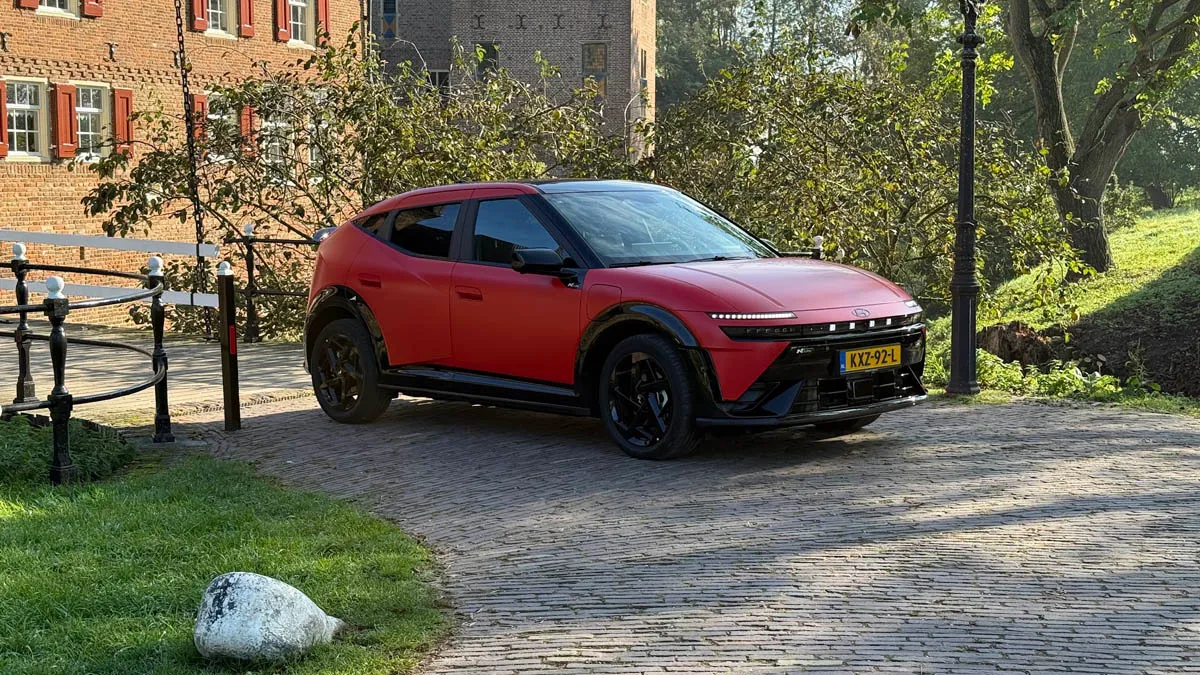
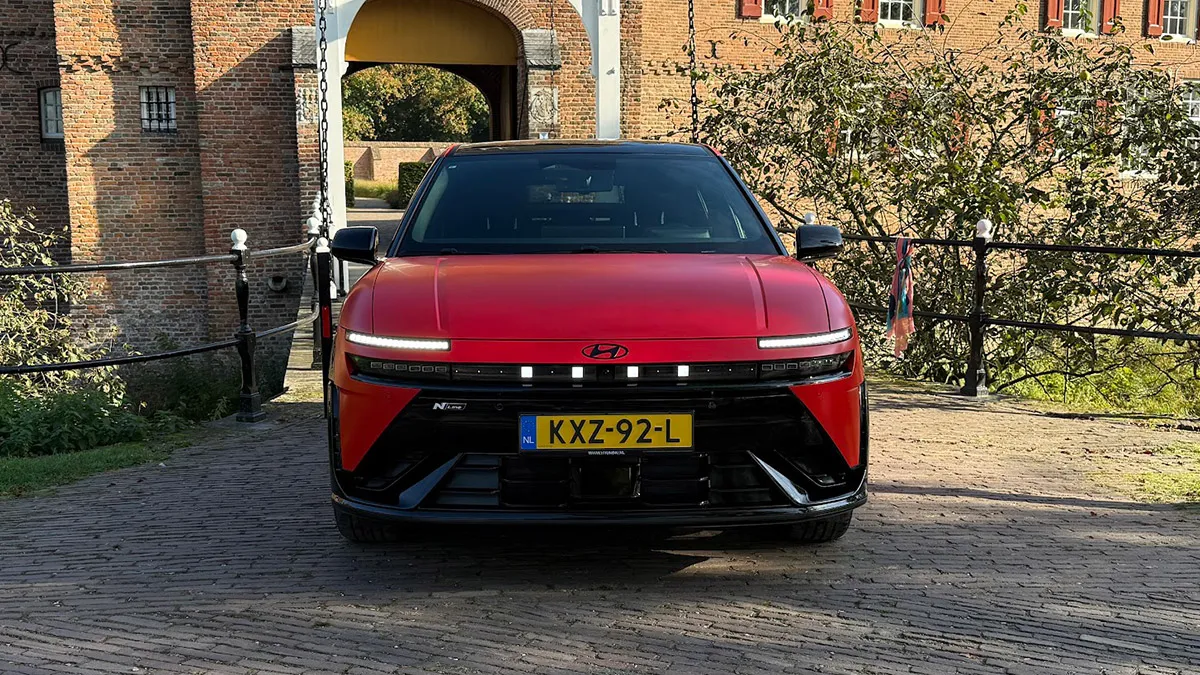
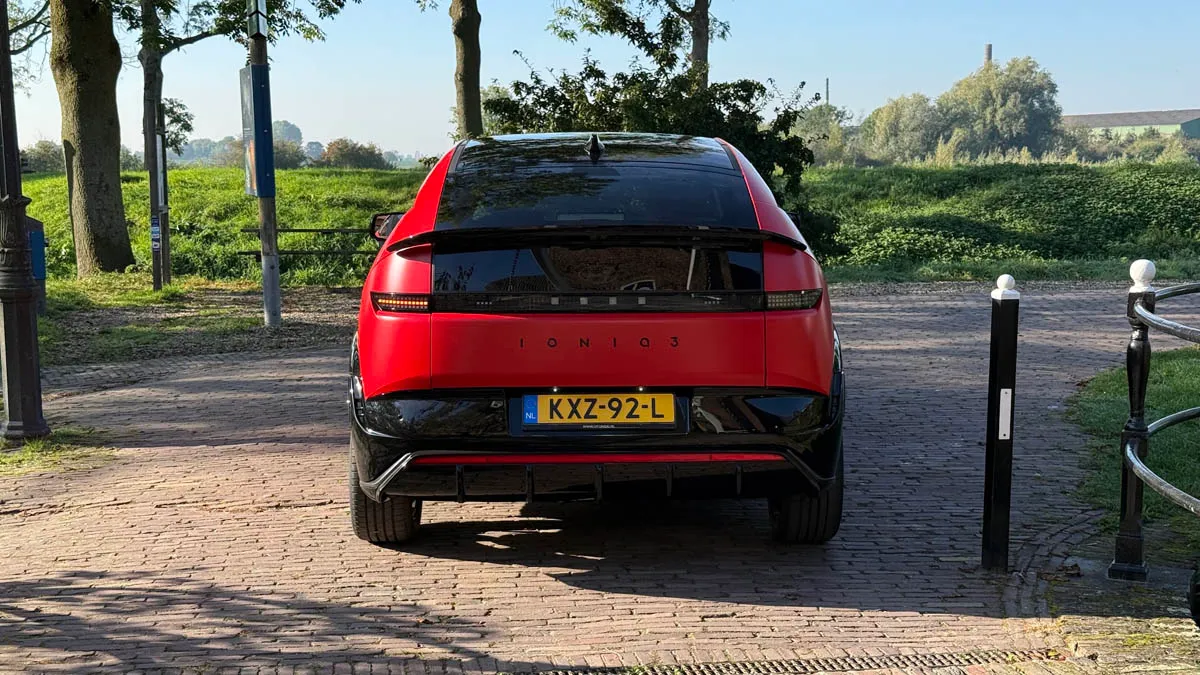
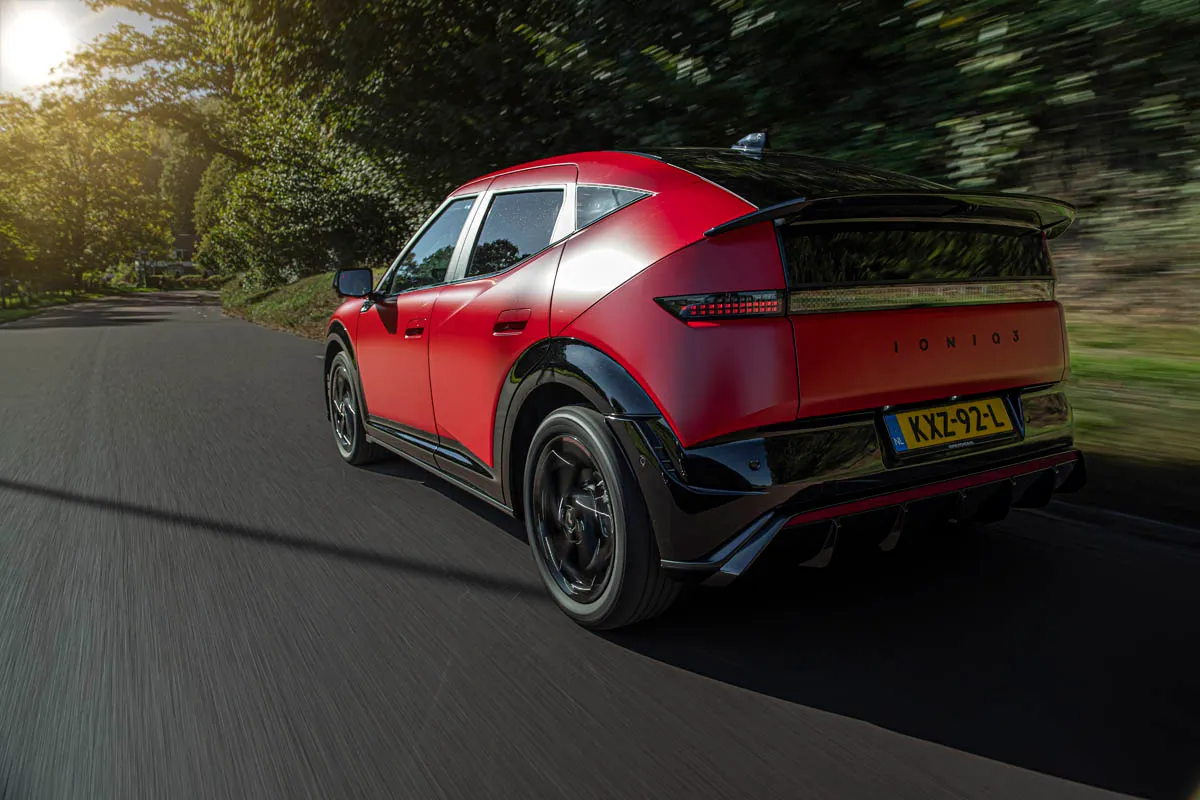
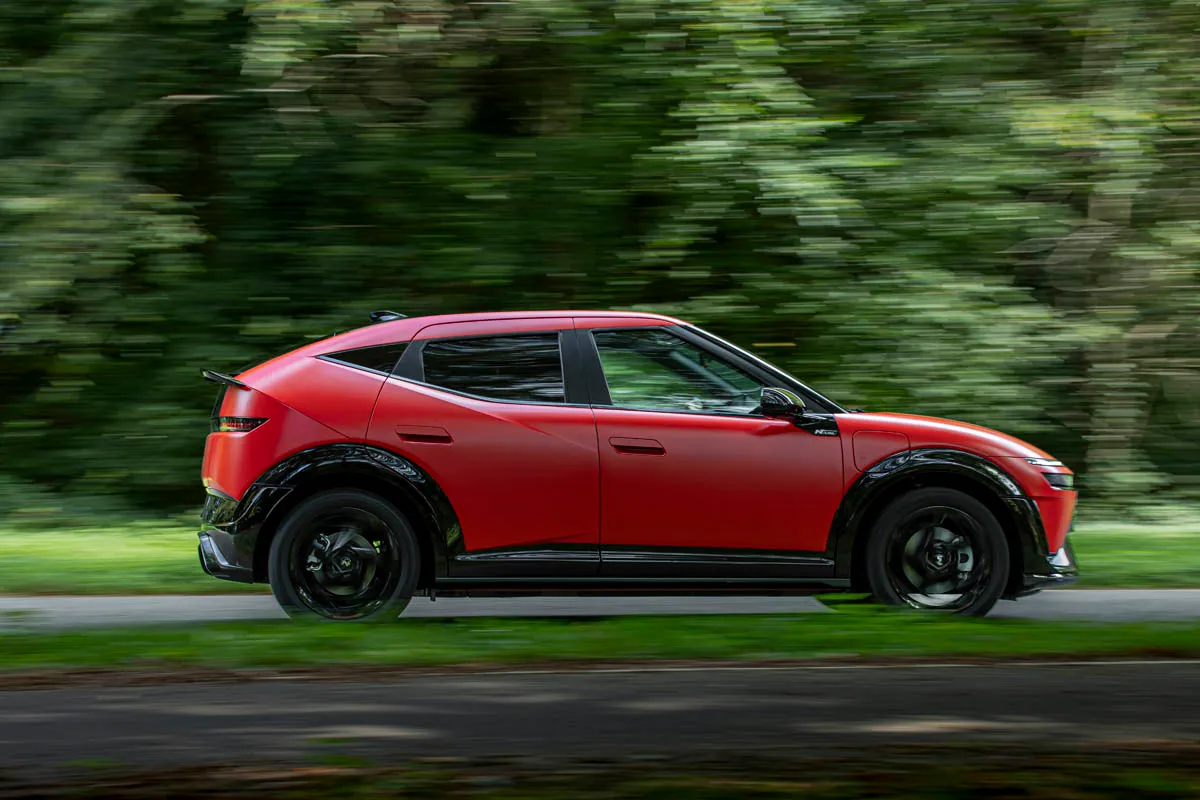
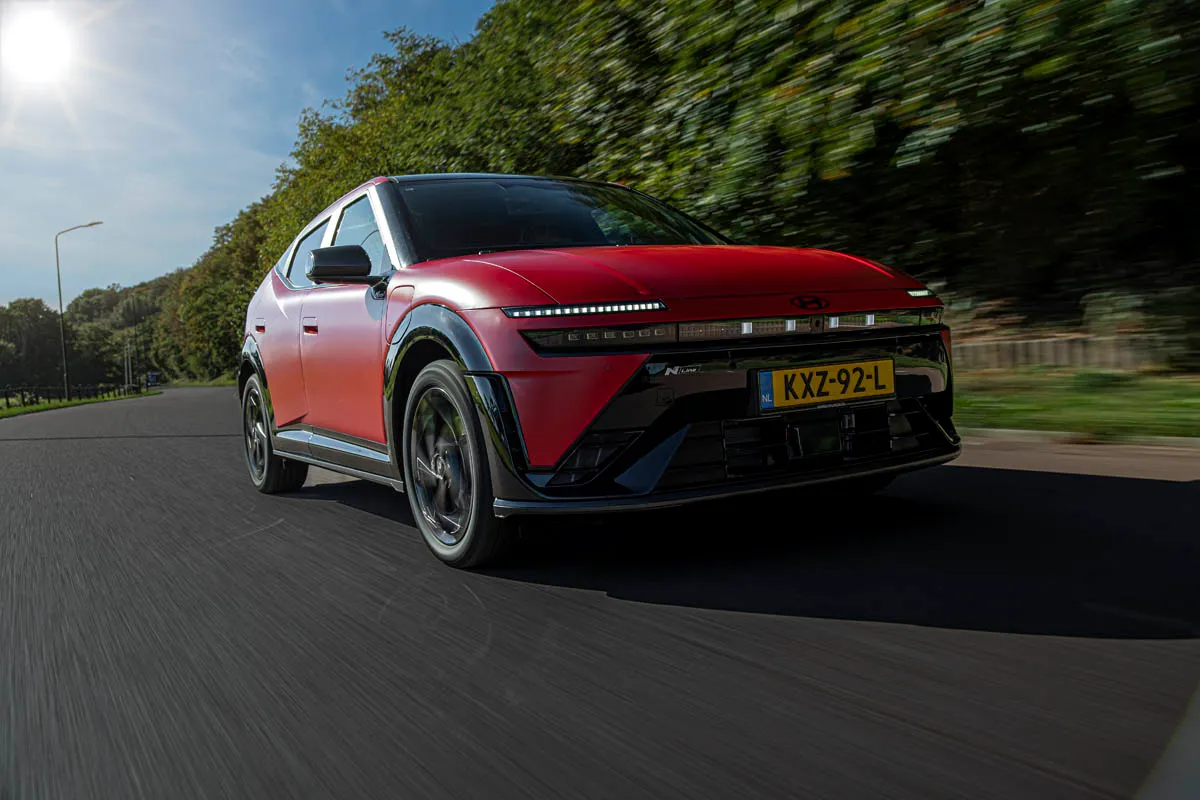
We needed some time to get used to its design. The short nose, relatively high body, and especially the roofline that extends far back with a flat rear window give the IONIQ 3 unusual proportions. From certain angles, it even resembles the new Audi A2 e-tron. Not because Hyundai copied Audi, but because both brands are trying to achieve roughly the same goal: creating a compact car that appears much larger on the inside than it looks from the outside, while also cutting through the air as efficiently as possible.
At Hyundai, this results in a Cw value of 0.263. The long roofline and flat rear window particularly help keep air resistance low, thereby contributing to range. Like the IONIQ 3, the new A2 e-tron is also much more spacious than its name and exterior dimensions would suggest. However, there is a significant price difference between the two cars. The Hyundai starts at €27,995, placing it clearly in a lower price segment.
Developed Specifically for Europe
The IONIQ 3 was also developed with Europe firmly in mind. This applies not only to the design but also to the tuning of steering, suspension, and damping. Hyundai took into account our narrower roads, variable asphalt quality, and higher speeds on highways. You can truly feel the impact of this European development approach while driving.
Production also takes place locally. The IONIQ 3 is built at Hyundai’s factory in İzmit, Turkey. This means it isn’t merely a global model later adapted for Europe, but a car designed from the start for this market.
Pleos, Gleo, and thankfully real buttons
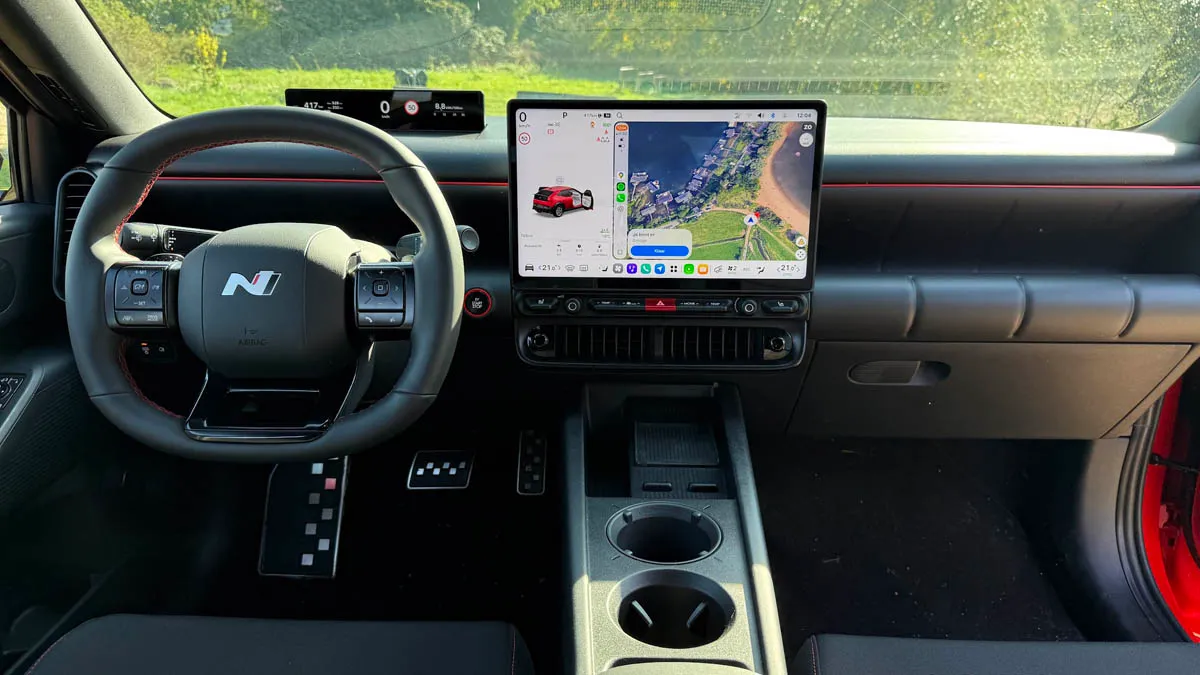
Inside, Hyundai introduces Pleos Connect, the new infotainment system based on Android Automotive. It also includes Gleo AI, which allows you to control more functions via natural speech. The idea is that you no longer need to memorize various fixed commands, but can simply talk to the car.
Fortunately, Hyundai hasn’t moved all functions to the touchscreen. Physical buttons are still available for frequently used tasks, which is simply more comfortable while driving.
It’s worth noting that the cheapest Select model comes with the central 12.9-inch screen but lacks the smaller second digital driver display seen in many photos. That feature is included starting with the Trend model. As a result, the entry-level model appears somewhat simpler behind the steering wheel, though it’s quite well-equipped for its price.
Higher trims include features like Memory Parking, which allows the car to remember and repeat a previously performed parking maneuver. This can be surprisingly handy, especially at a fixed, tight parking spot at home.
Five Trims
Trim Level
Battery Capacity
WLTP Range
Characteristics
Starting Price
Select
42.2 /
61 kWh
344 /
497 km
Comprehensive and competitively priced
€ 27,995 /
€ 31,995
Trend / Vision
42.2 /
61 kWh
344 /
497 km
More comfort and technology
€ 30,995 /
€ 34,995
Prime
61 kWh
497 km
Luxury and comfort
€ 40,995
N Line
61 kWh
497 km
Sportier appearance
€ 40,995
N Line Evo
61 kWh
497 km
Sporty top version
€ 41,995
The Select version is by no means a stripped-down model. Adaptive cruise control, dual-zone automatic climate control, front and rear parking sensors, a reverse camera, and wireless Apple CarPlay and Android Auto are all standard features.
The small steering wheel does something great
And then there’s driving. This is perhaps where the IONIQ 3 surprises the most. During this Hyundai IONIQ 3 driving experience, it’s especially noticeable how much attention Hyundai has paid to the steering wheel. The small wheel feels great in the hand, and particularly the level of feedback is impressive. You can clearly sense what the front wheels are doing, with resistance increasing naturally as needed. Fortunately, Hyundai hasn’t artificially made the steering feel heavy to suggest a sportier character.
As a result, the car is easy and precise to steer. On winding roads, it feels more agile than one would expect from such a practical EV. It’s not a hot hatch, nor does it attempt to be one, but it is indeed a car that makes you take corners with more enthusiasm. That small steering wheel definitely helps with that.
The suspension also fits well with this character. The damping is comfortable without being soft, and the chassis remains well under control. On the highway, another side of the IONIQ 3 comes to light. There it feels calm, stable, and mature, making longer distances a perfect fit for the car’s character. Here you can see that the European tuning goes beyond just a mention in the press release.
Almost 500 kilometers from 61 kWh
Hyundai clearly prioritizes efficiency in its powertrain design. This Hyundai IONIQ 3 driving experience also highlights why aerodynamics play such an important role. The IONIQ 3 responds promptly when starting from a stop, but its dynamic character comes mainly from its handling rather than excessive power output.
The official fuel consumption of around 15.5 kWh/100 km is quite good. With a 61 kWh battery pack, the IONIQ 3 achieves up to 497 kilometers of WLTP range, while the 42.2 kWh version reaches 344 kilometers. This clearly shows how much a good aerodynamic design can contribute without simply adding a huge battery pack to the vehicle.
Fast charging from 10% to 80% takes about 29 minutes under optimal conditions. Approximately 100 kilometers of range can be added in around eight minutes. Depending on the trim and package, AC charging can also reach 22 kW.
Hyundai has a very strong asset here
After our first drive, it’s especially clear just how complete the IONIQ 3 feels. It combines plenty of space with low fuel consumption, a range of nearly 500 kilometers, a comfortable suspension, and impressively good handling. Add to that its competitive price, and Hyundai has created an EV that arrives at the perfect time for a very wide range of drivers.
In the city, it benefits from its compact size; on winding roads, it offers excellent handling; and on the highway, it feels calm and mature. At the same time, it provides almost C-segment space, 441 liters of cargo space, and a range of nearly 500 kilometers thanks to its 61 kWh battery pack.
You might need some time to get used to its appearance. We did too. But the more you spend time with it, the more logical its design becomes. That’s why we’re willing to make a prediction: we’ll see a ton of Hyundai IONIQ 3s. Not because it outshines all competitors with one spectacular feature, but because space, efficiency, price, and driving performance are exceptionally well balanced here. Small on the outside, but truly great in every aspect.
Text by: Marc Verweij
