
Hyundai Bayon 2027: The compact urban SUV gets a complete redesign and goes hybrid
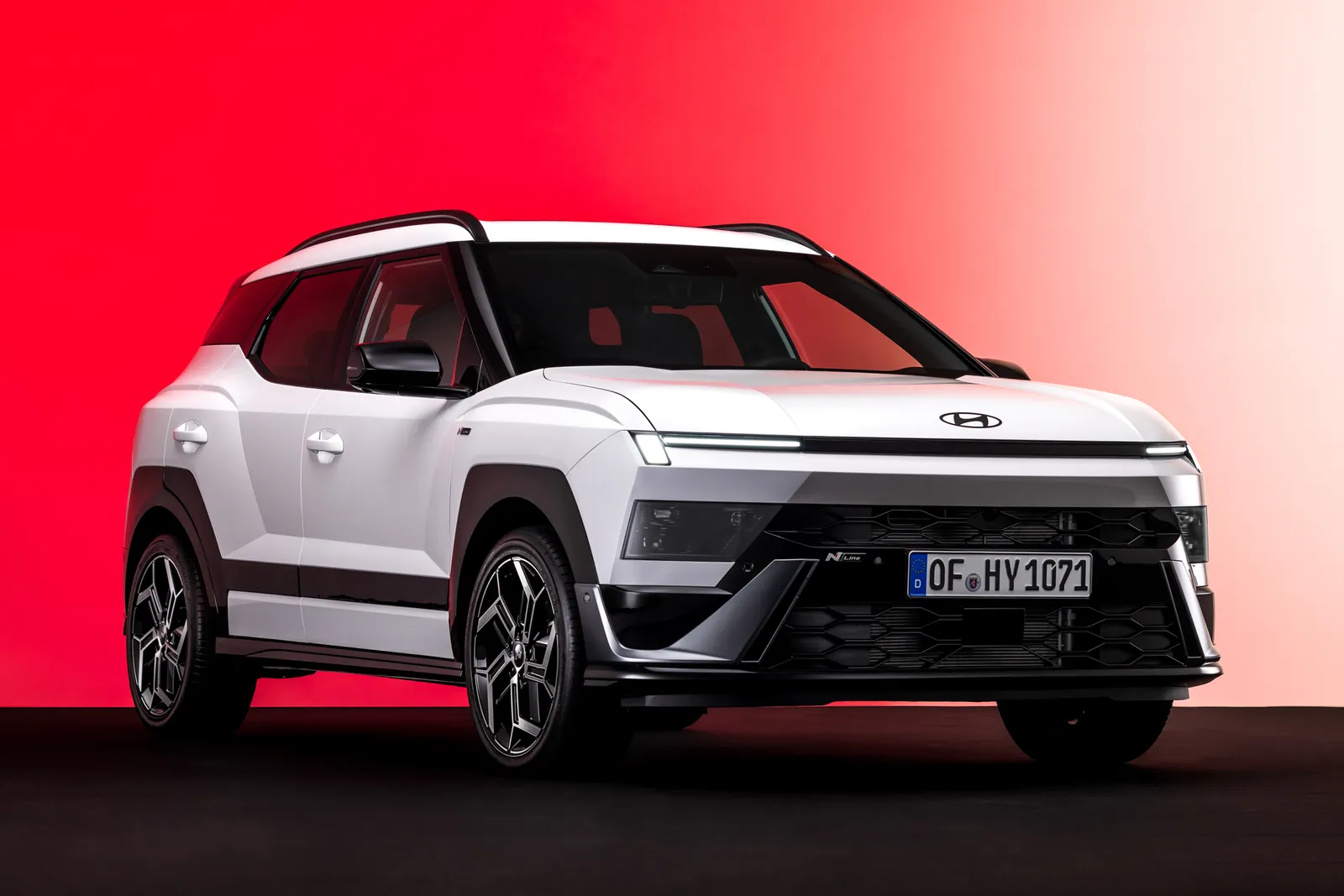
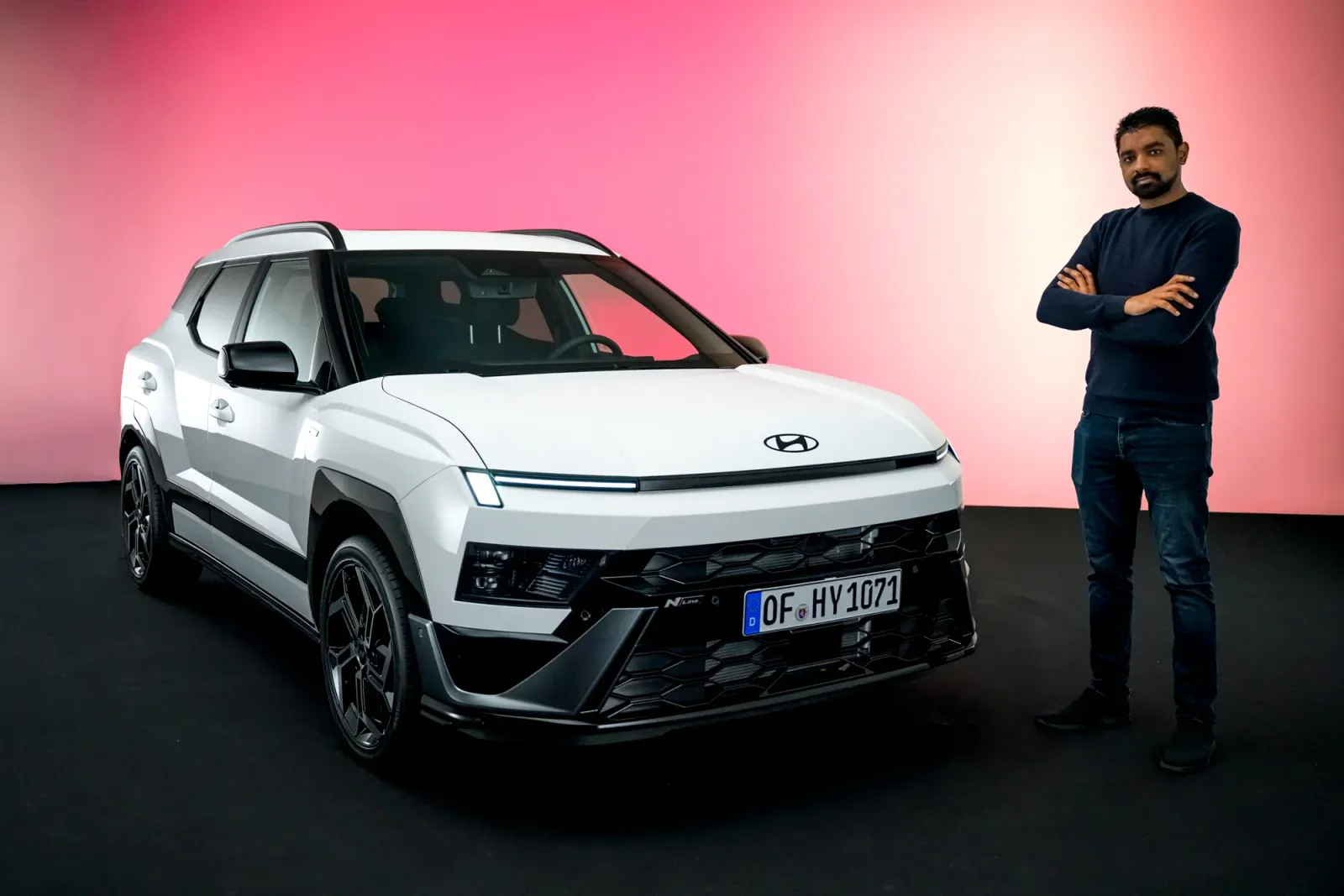
Hyundai reveals the new generation of its smallest urban SUV. Just like the Tucson, it features a complete redesign. With a radical stylistic shift and a dynamic, meticulously crafted N Line finish, the 2027 Hyundai Bayon has been given a complete makeover. Check out our images of this new model.
Following the fifth generation of the Tucson, Hyundai continues to refresh its lineup with a new version of the Bayon. Launched in 2021, this compact SUV still relies on a technical platform similar to that of the i20, but its successor bears little resemblance to the current model. The manufacturer has overhauled it significantly, featuring a more assertive design and an upgraded interior. However, the compact SUV remains a secondary model in France, accounting for about 10% of Hyundai’s sales there. Naturally, the Kona and Tucson remain the brand’s bestsellers. With this new generation, the 2027 Hyundai Bayon becomes more attractive to compete in an increasingly fierce market.
The 2027 Hyundai Bayon in terms of design: “Art of Steel” and a more muscular appearance
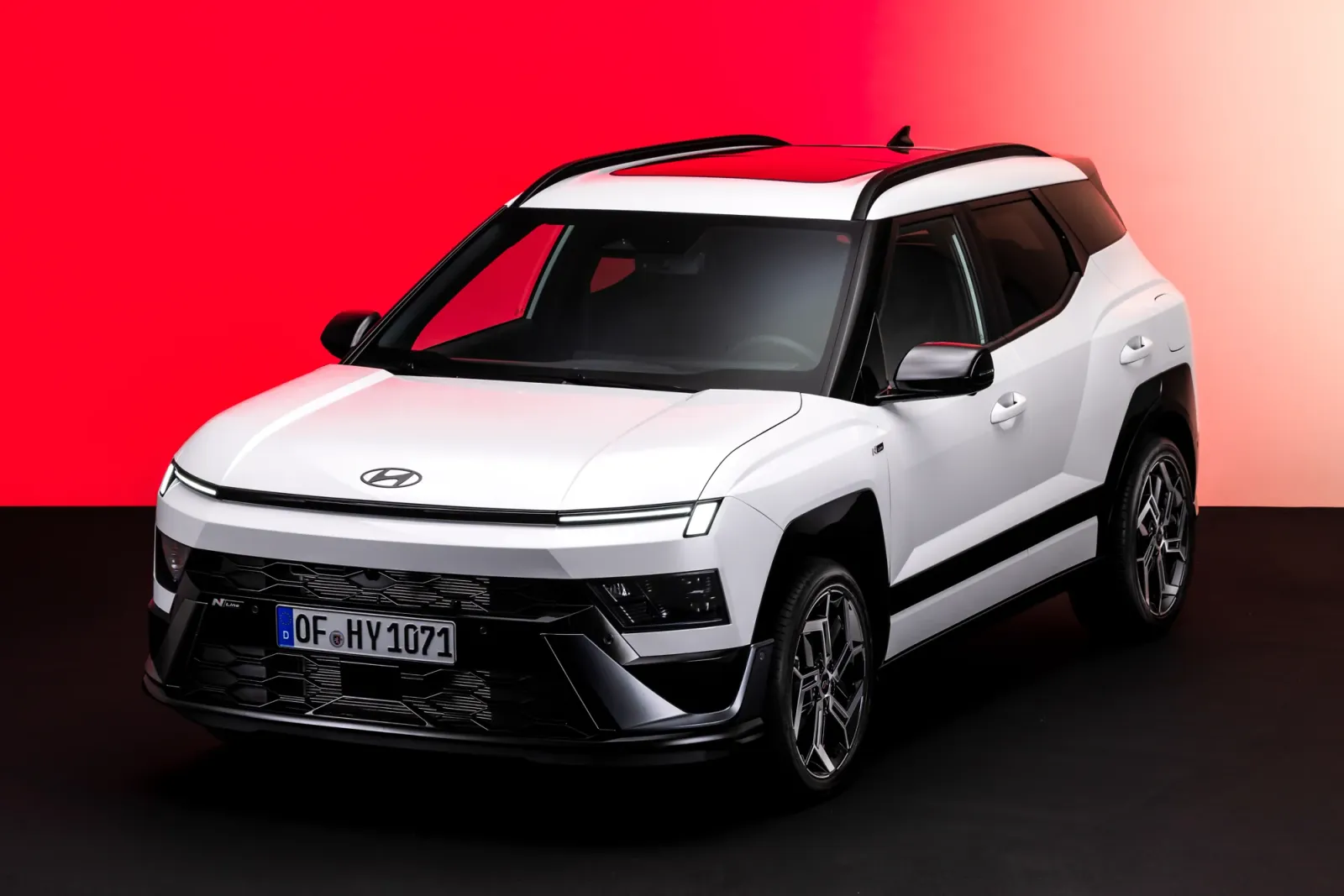
The new 2027 Hyundai Bayon is nothing like its predecessor, to say the least. The rounded shapes of the current model give way to much more geometric lines, in line with Hyundai’s “Art of Steel” styling language. The result is a more angular design with more pronounced volumes. The silhouette becomes more robust, perhaps even a bit too so in some areas (but that’s subjective).
Also read
Hyundai Ioniq 3 review: Is this truly an electric city car built for families?
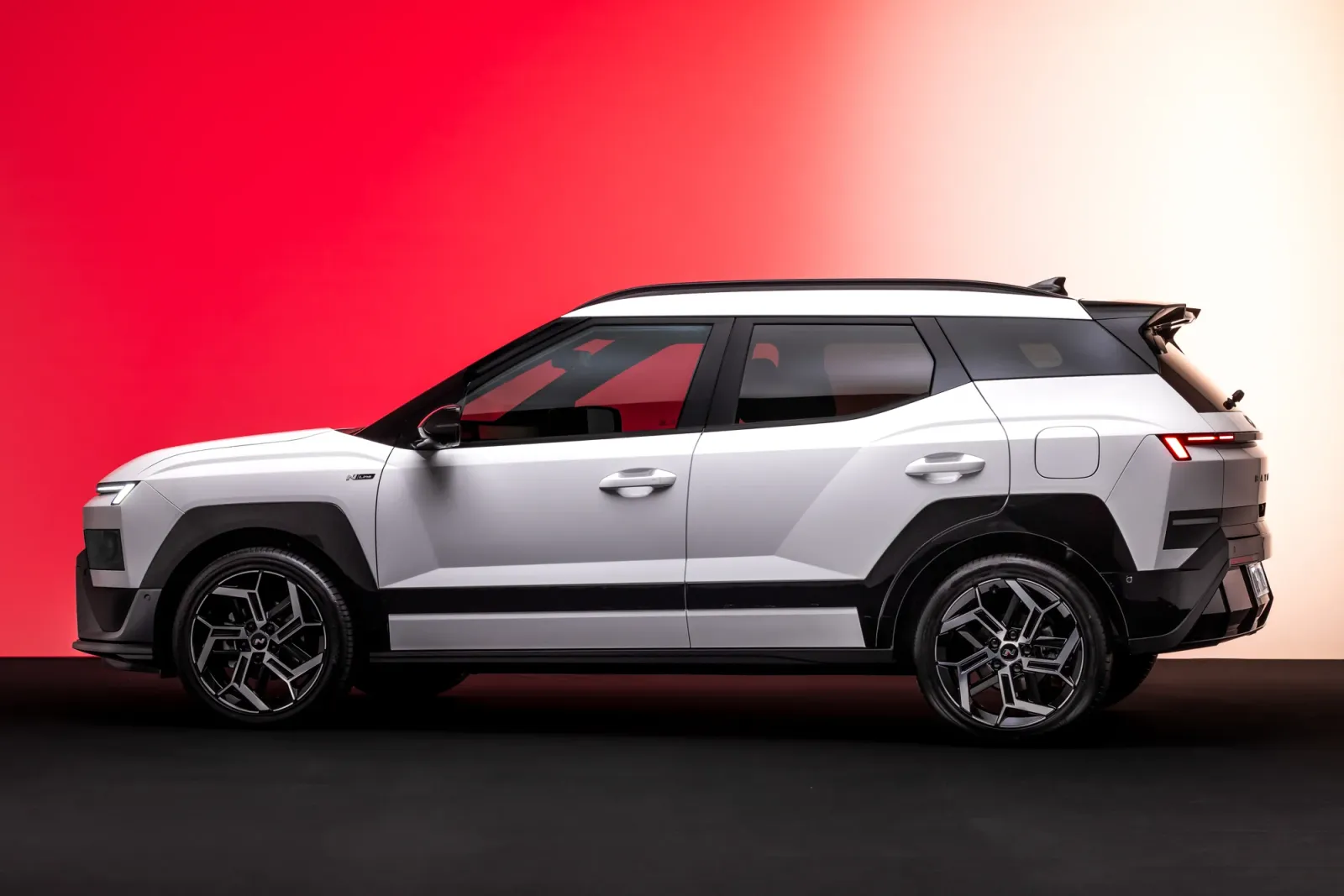
Whether viewed from the front or side, this new Bayon seems to have shifted into a different category. Its appearance actually resembles certain recent Kia models, such as the EV3, more than the small SUV it replaces. The particularly straight roof line, the geometric windshield pillars, and wheel arches all contribute to this sense of robustness. These last are quite substantial, to the point where they may seem a bit excessive in our opinion.
In the N Line trim shown, the white body color contrasted with black elements further enhances this character. It gives off a stormtrooper vibe that is full of personality. The new style of the 2027 Hyundai Bayon is accompanied by significant improvements in size. Its dimensions are 4.25 meters long, 1.81 meters wide, and 1.57 meters high—representing increases of +65 mm, +35 mm, and +70 mm respectively compared to its predecessor.
The wheelbase measures 2.60 meters, with wheels ranging from 16 to 18 inches depending on the trim level. This development follows the overall market trend, as urban SUVs continue to grow in size. Hyundai retains the technical foundation of the i20 while offering a significantly revised vehicle. It remains to be seen whether this increased size will truly benefit passenger comfort in real-world conditions. The trunk capacity is 440 liters in the gasoline version (397 liters in the hybrid), which is an impressive volume for an SUV.
Inside: familiar environment, rear comfort needs improvement?
Aboard, the Hyundai Bayon 2027 adopts a familiar design language from Hyundai. While the cockpit is modern, the technological environment also feels very recognizable. It features the usual 12.3-inch curved dual digital displays, which do not come equipped with the new PLEOS system—unlike the Tucson unveiled recently. Overall, it continues the tradition of models such as the Kona, offering an ergonomics design that should be familiar to long-time brand enthusiasts.
The N Line trim shown features a dark atmosphere, enhanced by an interior upholstery that combines fabric with synthetic suede. Red stitching and a sporty-styled steering wheel add some contrast. In the front, the seats appear comfortable, with lateral support that seems just right. The cockpit is well-organized, staying true to Hyundai’s familiar design approach. However, a road test will be needed to assess the actual comfort level.
At the back, the slight increase in dimensions benefits passengers in the side seats. However, this impression still needs to be confirmed, as this static assessment cannot yet determine the comfort under real conditions. The central seat, on the other hand, inspires much less confidence. Its seat surface is particularly bulgy and firm, coupled with a naturally stiff backrest further compromised by the central armrest. Yes, the middle seat is usually worse, but in this case, it’s truly unpromising.
Traveling in five may prove uncomfortable, even for a child. Another factor to consider is that the trunk lid and door panels rise quite high. While not reaching the level of a Toyota C-HR, this could still limit the amount of light inside the vehicle. Again, it will be necessary to check this effect outdoors under conditions different from those in a studio.
Two powertrains planned: gasoline first, hybrid later
For its European launch, the new Hyundai Bayon 2027 will initially feature a 115 hp gasoline engine. This T-GDi version will arrive in April 2027 and will be the only option available in France at first. Hyundai plans to follow up with a 138 hp hybrid version, expected by the end of 2027. This model will be powered by a 1.6-liter naturally aspirated engine paired with a 1.4 kWh battery. A 6-speed manual transmission and a 7-speed dual-clutch automatic transmission will be available for the gasoline version.
For the hybrid version, it will come equipped only with a 6-speed DCT transmission. The manufacturer has chosen to launch it in two phases. “The gasoline version will allow the new Bayon to gain recognition before the arrival of the hybrid, which is expected to become a significant option in the French market.” This strategy makes sense given the growing role of electrification in sales of compact SUVs.
It still involves an inevitable consequence: the gasoline model could face a penalty of around 2,300 euros, according to initial reports. A minor detail as mentioned, but it matters— the introduction of the hybrid will also affect the cargo capacity. The trunk volume will decrease from 440 liters in the gasoline version to 397 liters in the electrified version.
Also read
The new Hyundai Tucson: bigger, more powerful, and more electric—here’s what you need to know!
A 43 liter difference that families and drivers who value versatility should keep in mind. So it’s not negligible for some customers. We still need to know the actual fuel consumption, CO₂ emissions, and detailed specifications of each engine variant to accurately measure their differences in real use. But until then, you can see the Hyundai Bayon 2027 in person at the Auto Show!
Hyundai Bayon 2027: What will its price be?
Hyundai has not yet released the official prices for its compact urban SUV. With a launch scheduled for April 2027, it is still too early to determine its competitive positioning. For reference, the current model starts at 23,900 €. In comparison, a Renault Captur TCe 115 in a similar configuration begins at 27,300 €, or 26,800 € for the Eco-G 120 version. However, the E-Tech Full Hybrid 160 variant costs 30,500 €. Thus, the new Bayon will need to justify its stylistic and technical improvements while also addressing the potential disadvantages of its conventional engine version. The arrival of the hybrid model a few months later could prove decisive for its commercial success in France. What are your thoughts?