
Honda develops road to transport electric vehicles in operation
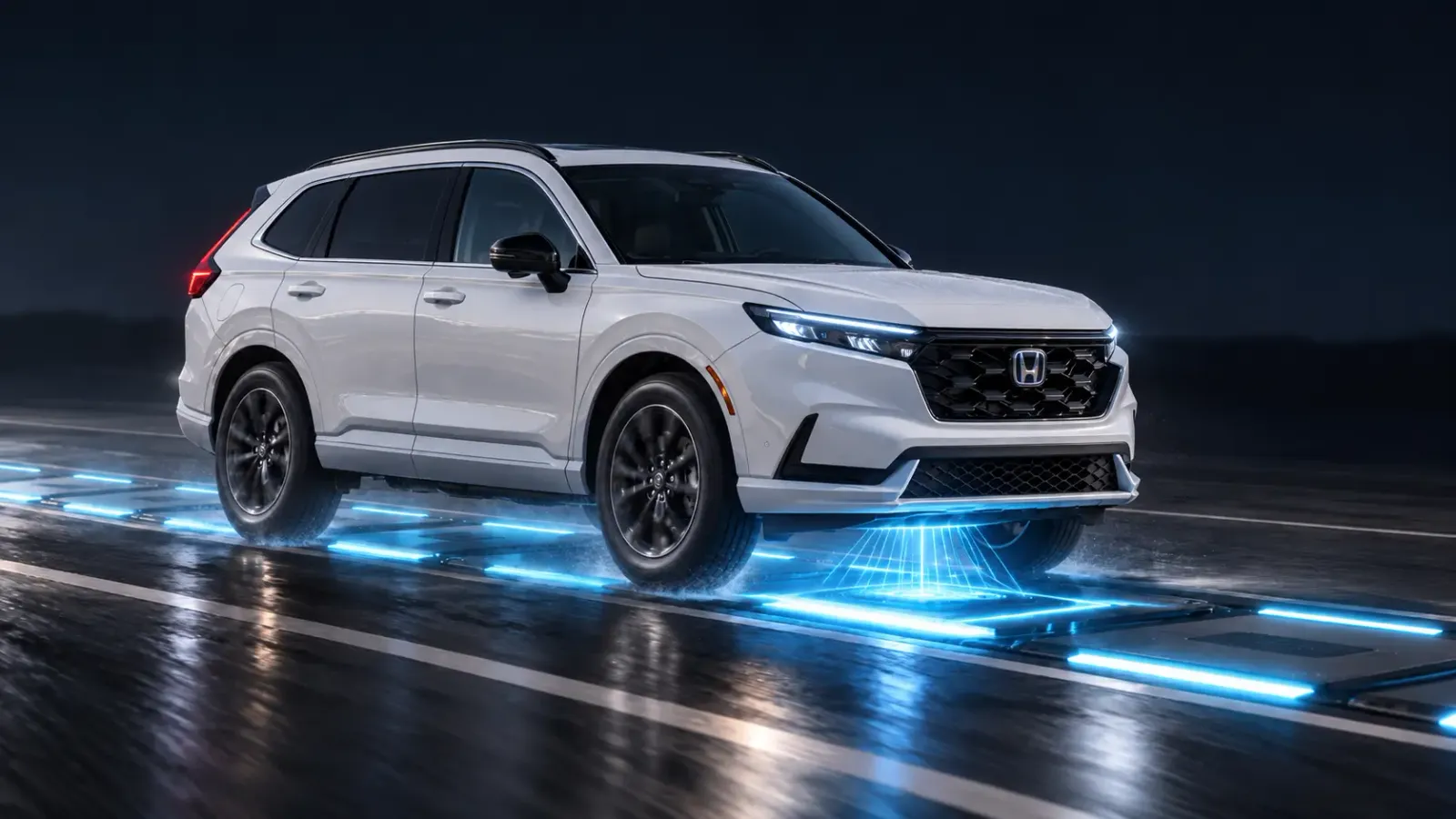
Stop to charge? Honda is developing an alternative, with the first tests on a Japanese highway scheduled for 2027.
If an electric vehicle needs energy and remains in constant contact with the road, why not turn the road into a charger? That’s what Honda is working on in partnership with Taisei Corporation and Taisei Rotec: a system capable of charging electric vehicles while they are in motion, without cables or stops. In other words, a road with the ability to charge electric cars.
The first users of this technology will be vehicles where downtime is most costly: trucks and commercial vehicles. Public road tests are planned for the Japanese fiscal year 2027, which begins on April 1 of next year, on a 300-meter section of the E14 Tateyama highway near the Japanese city of Chiba.
But before that, the system will have to withstand a series of final tests. This year, a new testing track will put the durability of the equipment and pavement to the test, as well as verify the electromagnetic safety of the equipment.
How does the road charge?
The principle is the same as we find in modern smartphones: induction charging. Coils are installed beneath the pavement to create a magnetic field. A receiver mounted on the vehicle captures this energy and converts it into electricity, allowing the battery to charge while in motion.
Honda develops the equipment on both sides of this connection: those installed on the road and those in the vehicle. According to the company, its units are the first to combine the inverter and coil into a single unit, reducing the number of components and the necessary work on the pavement.
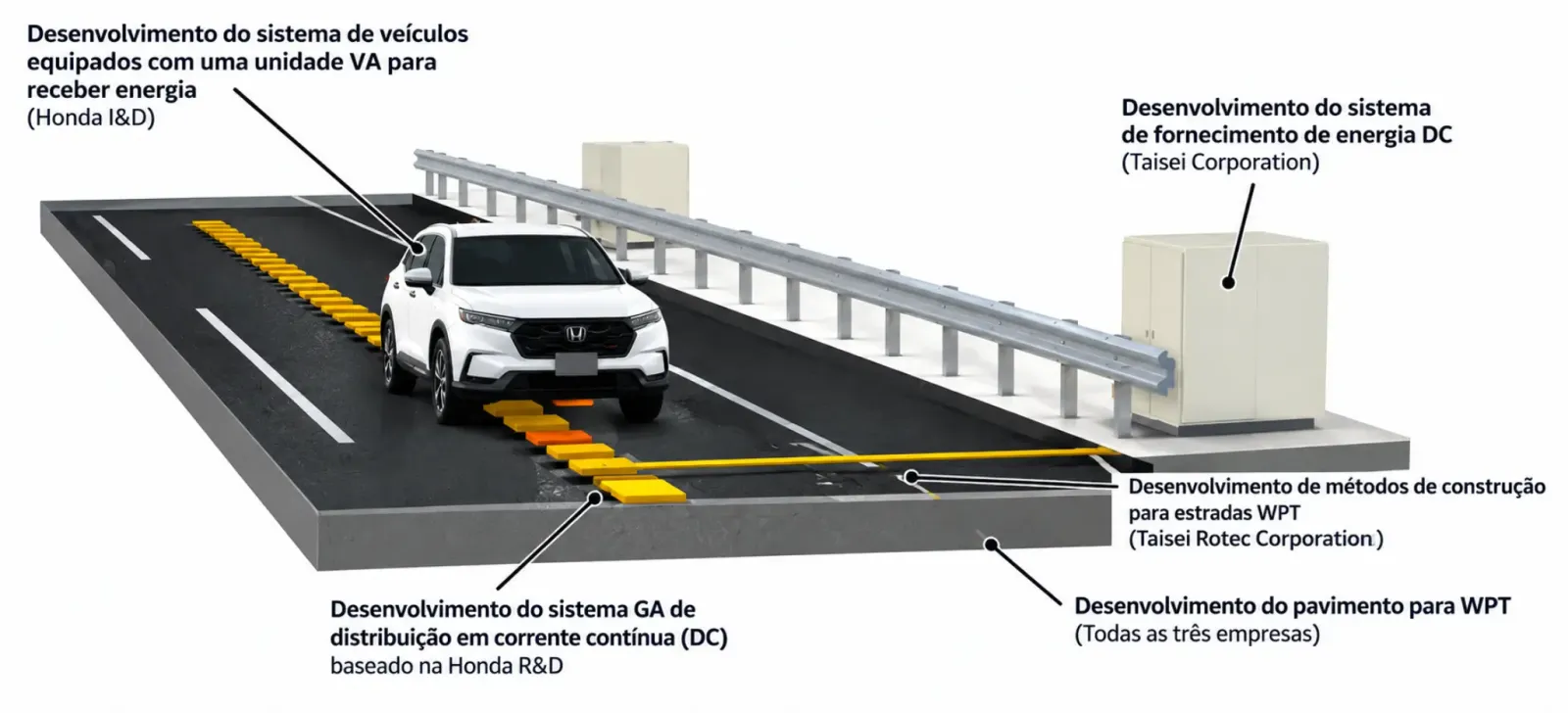
This detail has a practical consequence: it facilitates installation on existing roads. Taisei provides the DC power supply system, while Taisei Rotec develops methods to integrate the equipment without compromising the road surface’s strength.
First, surviving trucks
While charging, the road and pavement must ensure the basics: withstanding traffic. At a test track in Satte, the partners have already demonstrated that the pavement and installed units can support vehicles weighing around 20 tons.
The next phase will take place at Taisei’s T-FIELD/TAMURA facilities. The goal is to subject the system to one million load cycles, with approximately five tons per wheel, simulating in less time the wear caused by years of heavy vehicle traffic.
Electromagnetic fields outside the energy transfer zone will also be measured. Only after passing these durability and safety tests can the demonstration proceed under actual driving conditions.
Discover your next vehicle:
Up to 150 kW, but calculations are still pending
Subsequent tests are expected to raise the charging power to 150 kW for large commercial vehicles. They will also verify whether the system can maintain energy transfer at highway speeds.
It is a decisive combination. Simply charging while in motion is not enough: sufficient energy must be transferred during the time the vehicle passes over the coils. Tests will need to show whether this solution works at normal road transport speeds.
Even if the tests go well, there will be another challenge to overcome: cost. Installing the equipment beneath the asphalt and keeping it operational for years must yield a worthwhile return. Developing a sustainable business model may well be the most difficult task of all.
