
Homage to Brand Icons: Peugeot Unveils Electric-Coupe and Rally Variant
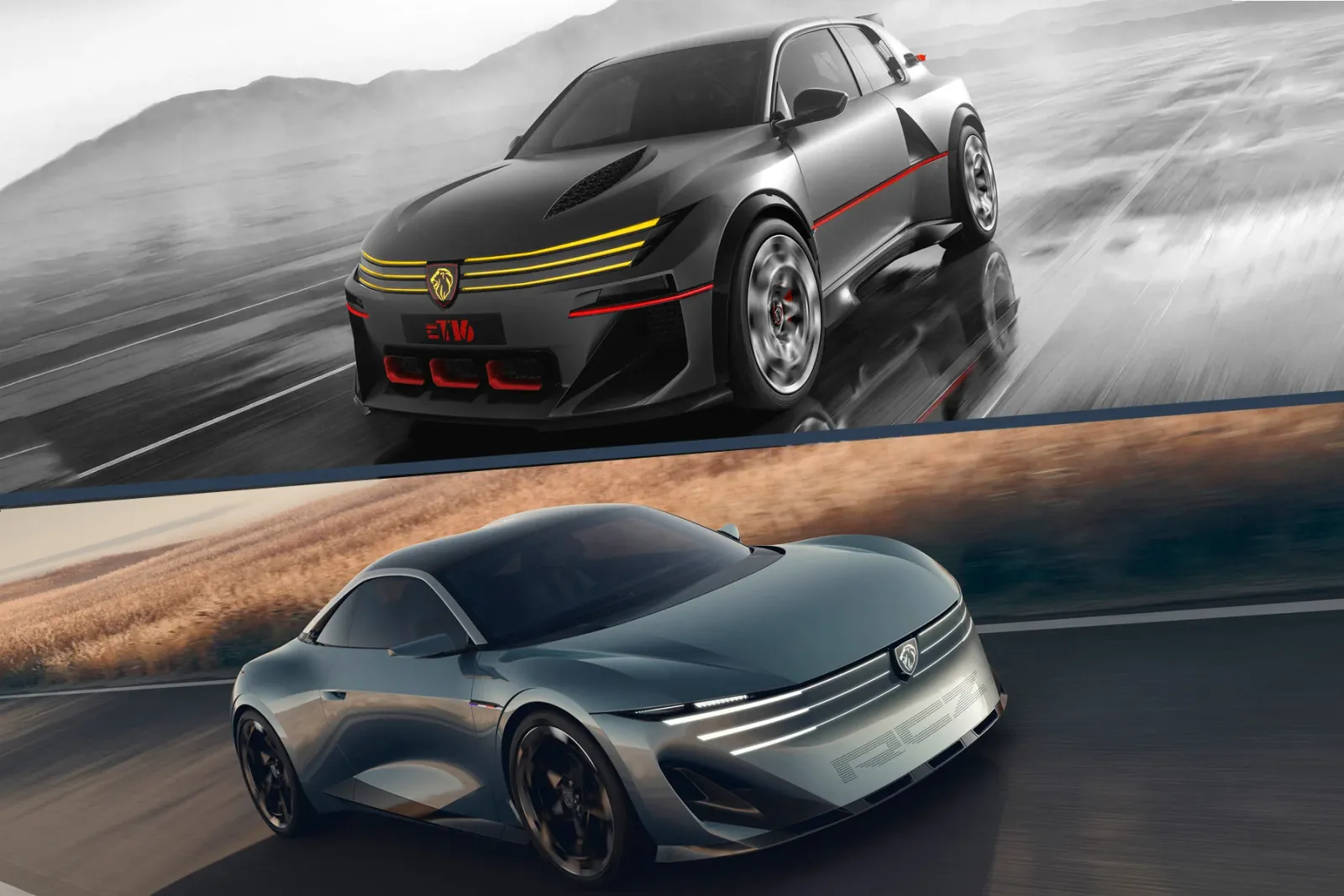
Peugeot unveils two electric concept vehicles at the Paris Auto Show: The E-T16 Concept is inspired by the rally car 205 T16 and is intended to draw partial inspiration from the interior design of the new E-208. The RCZ Vision represents an electric reinterpretation of the RCZ Coupe, featuring a solid-state battery among other innovations.
Images: Peugeot / Collage: electrive
For its debut at the Paris Motor Show, Peugeot draws heavily from its collection of icons: both the E-T16 Concept and the RCZ Coupé are based on vehicles that have shaped the brand. The former is an electric city car with 600 kW of power, designed to bring the spirit of the 205 Turbo 16 into the modern era. Forty years ago, Peugeot became double world champion with this iconic car—specifically in the Rally World Championship in 1985 and 1986. The electric reinterpretation unveiled in Paris features rally-inspired aesthetics, while also offering a first glimpse of the future E-208 inside.
The second concept car — the RCZ Vision — is presented by Peugeot as the electric successor to the RCZ coupe. The four-seater coupe was available from 2009 to 2015 and was manufactured at Magna Steyr in Austria back then. Now it returns as an electric coupe based on the STLA One platform, and as a study vehicle it features a 1,000-volt electric architecture along with a solid-state battery developed in collaboration with Factorial Energy.
Peugeot’s second-strongest model ever
That’s a brief overview for now. Let’s take a closer look at both electric concept cars. The manufacturer describes the E-T16 Concept as an electric hyperhatch, developed in collaboration with Peugeot Sport. This one-of-a-kind vehicle is equipped with three electric motors delivering a total output of 600 kW, enabling it to accelerate from 0 to 300 km/h in 16 seconds. “This makes the Peugeot E-T16 Concept one of the most powerful Peugeots ever built – only surpassed by the Peugeot 208 T16 Pikes Peak prototype, which set a record in 2013 at the Pikes Peak International Hill Climb race in Colorado, USA,” emphasize the French.
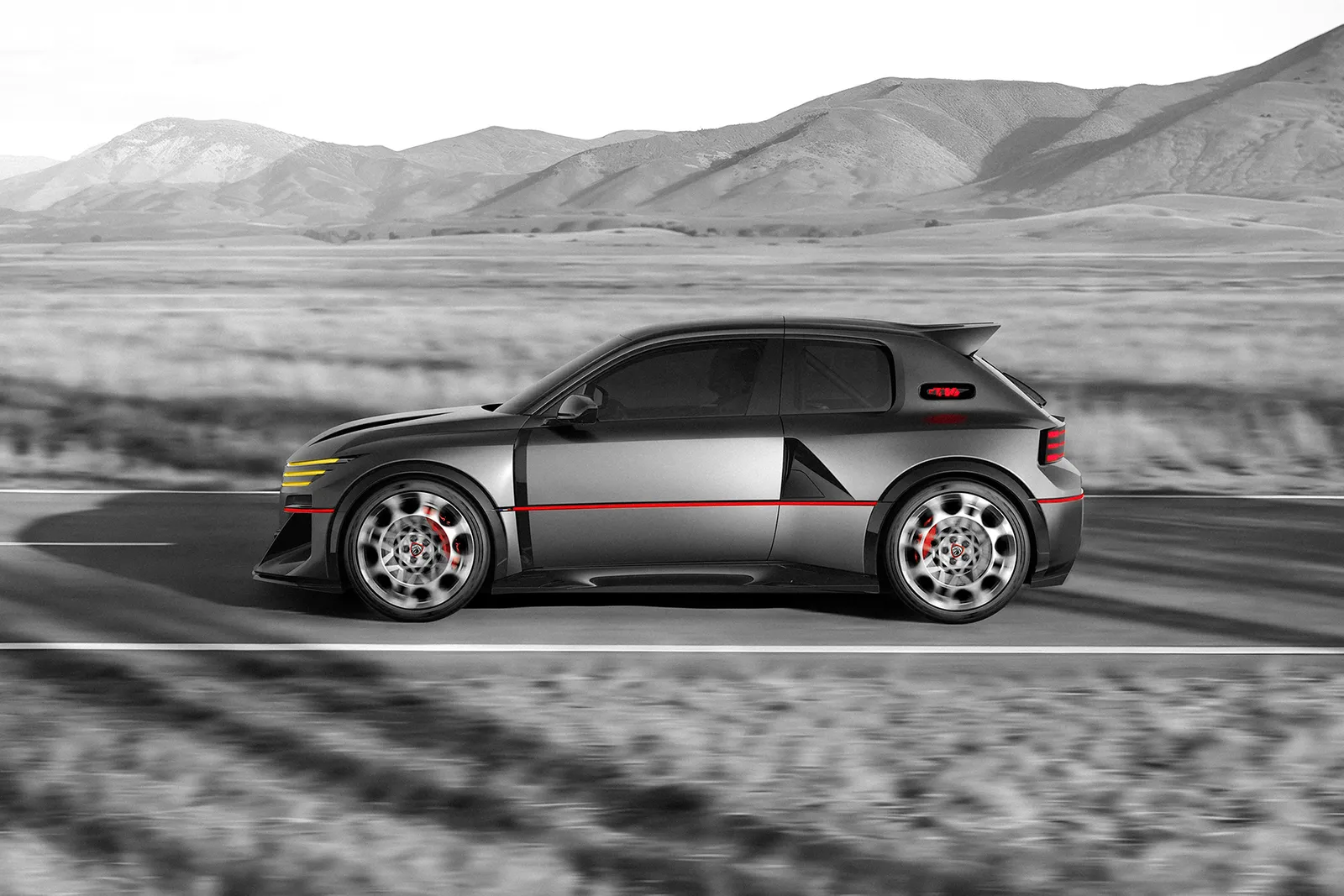
Image: Peugeot
- 1/7
- 2/7
- 3/7
- 4/7
- 5/7
- 6/7
- 7/7
In terms of technical specifications, the E-T16 Concept uses an 800-volt architecture and a battery with a capacity of 85 kWh. This battery provides a range of up to 400 km under the WLTP cycle, and according to Peugeot, it can be charged from 10% to 80% in less than 15 minutes. Thus, a certain level of everyday usability is available even in this electric sports car. The manufacturer naturally emphasizes the exceptional power output of 600 kW beneath the hood. Two electric motors are located at the rear axle, with one in the front. The car can accelerate from 0 to 100 km/h in 2.5 seconds. Peugeot states, “The driving performance remains consistently available even under heavy load.”
The developers have placed special emphasis on battery cooling “to prevent performance reduction, where output is throttled to avoid overheating,” as Peugeot puts it. For this purpose, a technology derived from motorsport (“Side Cooling”) has been used, in which the battery cells are cooled through the side walls rather than via the bottom as is usual. The result: the electric rally concept is expected to complete three laps on the Nürburgring-Nordschleife in performance mode—without any power restrictions.
Novel cube-shaped steering wheel
What else? Thanks to the torque-vectoring system, the E-T16 Concept’s electric drive distributes torque in real time between the axles and wheels. There are three driving modes that adjust power output, torque distribution between the two axles, and suspension settings, including a “Track” mode for challenging terrain. A fourth mode can be fully customized by the driver.
The vehicle is controlled via a performance-oriented steer-by-wire technology, and the E-T16 Concept features an even more innovative i-Cockpit with a cubic-shaped “Hypersquare” steering wheel. This wheel includes a configurable central display that shows information such as speed and lap times. Its unique design is intended to excel, especially in sporty driving situations. However, it remains to be seen how well the functions can actually be controlled through the steering wheel, as the most important functions are supposed to be accessible using fingertips via four cutouts on the wheel.
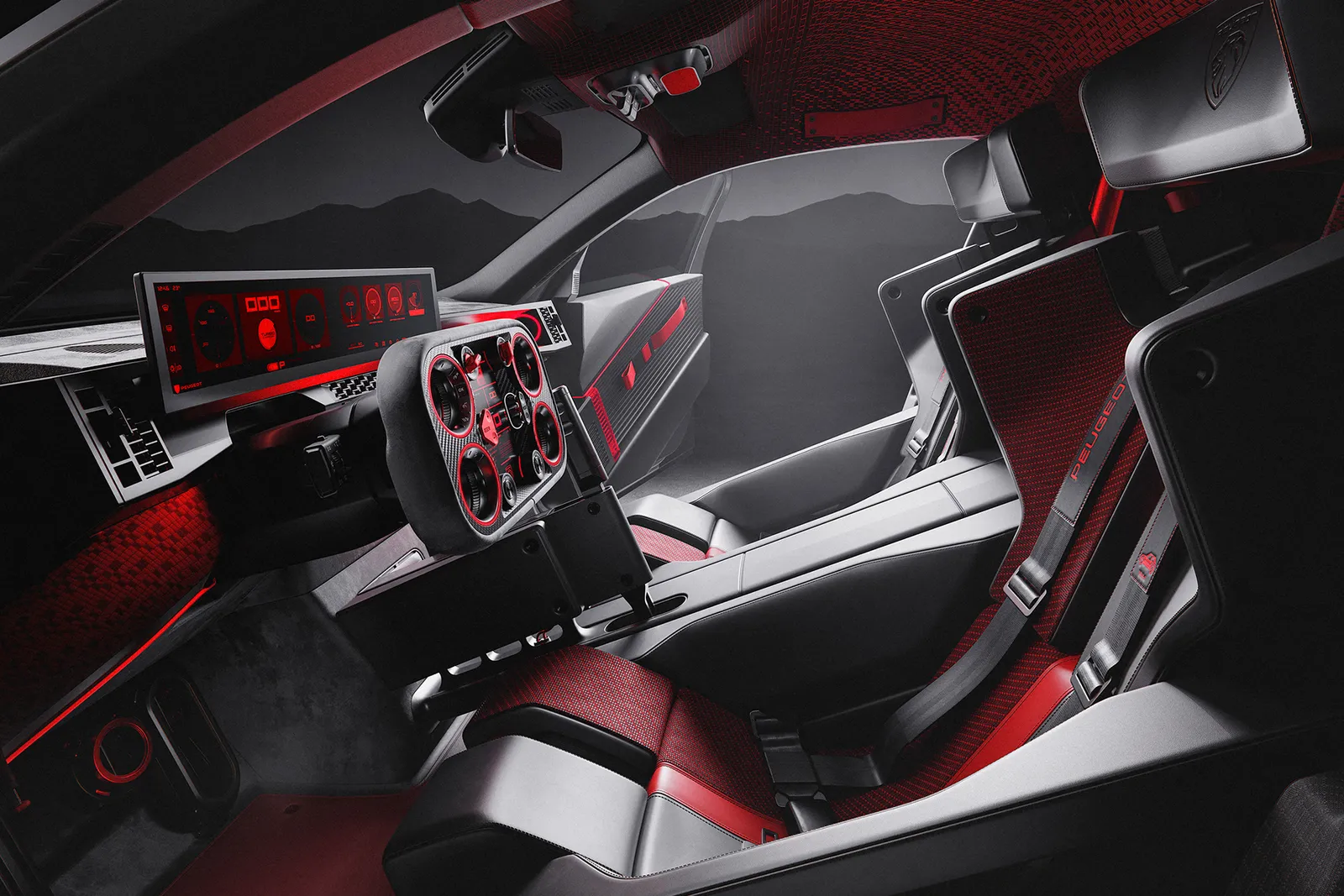
Image: Peugeot
- 1/4
- 2/4
- 3/4
- 4/4
As befits a tribute to a legendary rally car, the E-T16 Concept places design itself at the forefront, alongside all other aspects of its structure. This design draws inspiration from two sources: the 205 T16 serves as the main reference point—obviously—but Peugeot is also testing its new design language, “Feline Future,” which, along with certain cockpit features from this concept car, will make their debut in the next Peugeot E-208. Numerous elements from this concept are set to make it into production models. Peugeot describes its new design language as “wild, radical, and futuristic.”
Peugeot attempts a new interpretation of the three-claw light signature on the front and rear. The “claw pattern” now runs horizontally as three long, curved light bars. The vehicle itself exudes the desired sense of aggression and athleticism through its prominent wheel arches, large air intakes at the front, and rear wing. There are numerous references to the 205 T16, such as the floating C-pillar, the gray body color, and the red-lit line that runs around the entire vehicle. Additionally, the air intake in front of the rear wheel—which served to cool the internal combustion engine in the original model—is now home to the charging port and door opening mechanism in this concept car. Similar to the 205 T16, the entire rear body section can also be folded upward, revealing the vehicle’s tubular roll cage.
RCZ Vision Also Adopts the “Feline Future” Design Language
The second new Peugeot concept car in the Paris exhibition halls doesn’t come equipped with such a roll cage, but it shares the same design philosophy. The RCZ Vision also features the new feline-inspired design language “Feline Future,” albeit in a more elegant form. This electric coupe delivers a power output of 368 kW, suitable for series production, with a range of up to 600 kilometers. As future-oriented technical innovations, the RCZ Vision includes a 1,000-volt electric architecture and a solid-state battery. Additionally, the coupe’s energy consumption is said to be only 11.5 kWh per 100 kilometers.
It is clear that the RCZ Vision is based on the STLA One platform from Stellantis. This is a newly announced comprehensive “mega-platform” designed to integrate five existing architectures into a single system. We already know that Peugeot will be the first brand in the group to use this STLA-One platform.
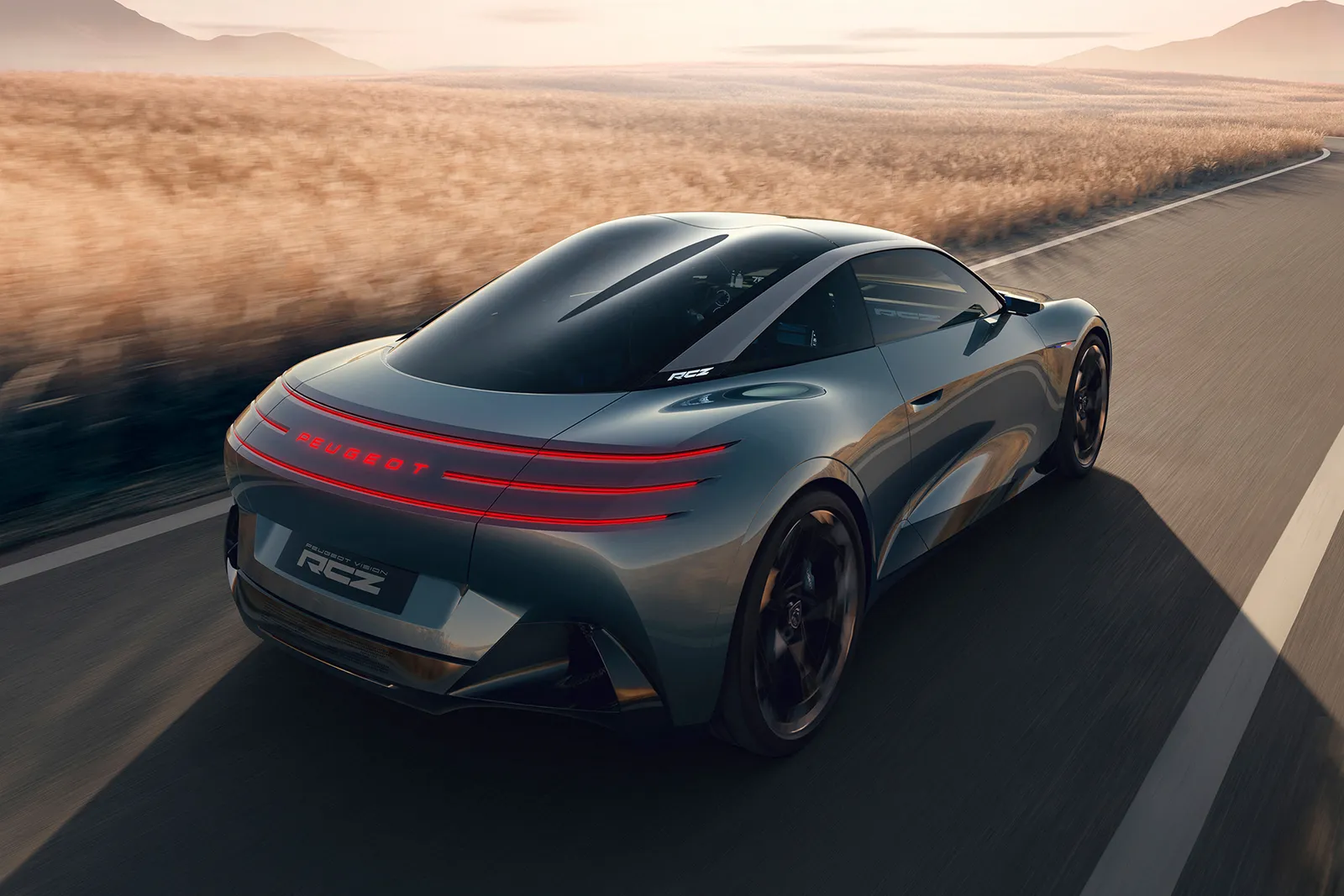
Image: Peugeot
- 1/10
- 2/10
- 3/10
- 4/10
- 5/10
- 6/10
- 7/10
- 8/10
- 9/10
- 10/10
In the RCZ Vision, this architecture merges with the legacy of the Peugeot RCZ, which was discontinued over a decade ago and defined the brand’s style with its low-slung silhouette and sporty orientation in the early 2010s. The concept car adopts the smooth line design, where the active spoiler—like on the original RCZ—remains hidden when stationary and extends only during driving. The glass bubble roof and the distinctive cockpit arches are also homages to the original RCZ, though this electric concept takes it further by extending the “bubble” from the hood to the rear of the vehicle. “This emphasizes the iconic double bubble roof to optimize space in the rear seats,” says Peugeot.
Ultra-thin battery and 1,000-volt architecture
Overall, the RCZ Vision appears wide and deeply sculpted yet remains elegant. The front and rear sections continue the horizontal “claw lines” seen in the first concept vehicle. The wheels are 21 and 22 inches in size. Its aerodynamic design is so effective that fuel consumption is said to be only 11.5 kWh per 100 kilometers. A key factor is the “ultra-thin battery with a thickness of just 110 mm,” according to Peugeot, though no further details are provided. We also do not know the capacity of the solid-state battery in this electric coupe. Only that it is a battery with high energy density, “capable of storing more electricity in a smaller space.” Peugeot states that it takes ten minutes to charge the battery from 10 percent to 80 percent.
Regarding the cockpit, the RCZ Vision also features the aforementioned next-generation i-Cockpit, combined with a “Hypersquare” steering wheel and an advanced steer-by-wire system. The concept car also provides a glimpse into level 2++ autonomous driving, which is intended to enable hands-free driving in both urban areas and on highways.
Peugeot has not commented on the production prospects of the RCZ Vision. The company describes the concept car as an “emotional manifesto of the brand,” aiming to enhance emotions and driving pleasure without compromising efficiency or comfort on board. It does not sound like an immediate production model, but rather as an inspiration for Peugeot’s future electric vehicle generation.