
"We need to look beyond the exhaust pipe": this electric vehicle isn’t only ‘zero emissions’ — it also eliminates 42% of other carcinogenic particles
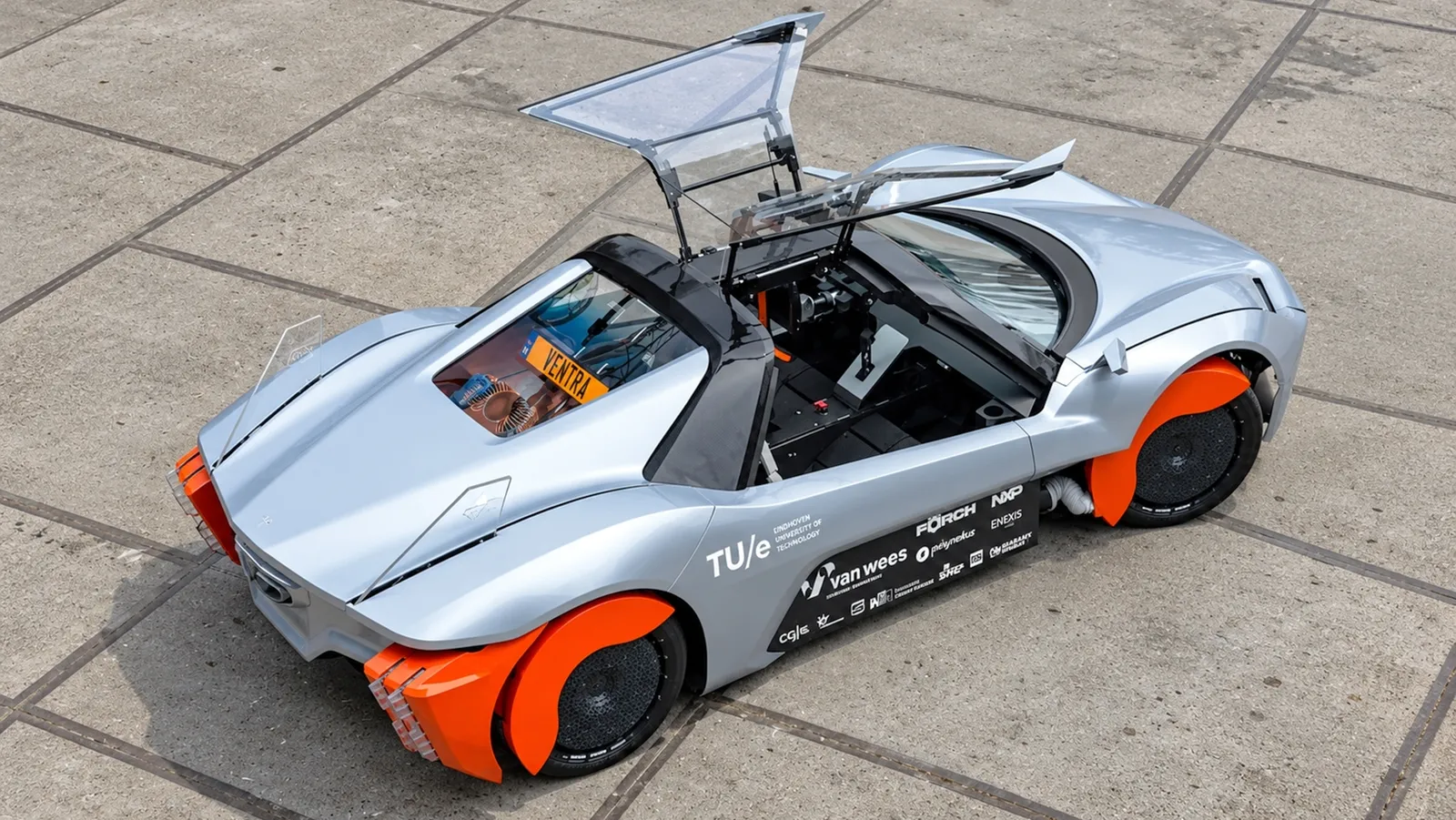
When we talk about the emissions of an electric car, we usually think of the absence of an exhaust pipe and the elimination of pollutants associated with combustion. However, there is another source of pollution that affects all vehicles, regardless of their propulsion system. It involves the small particles that are released from tires, brakes, and the road surface itself during driving.
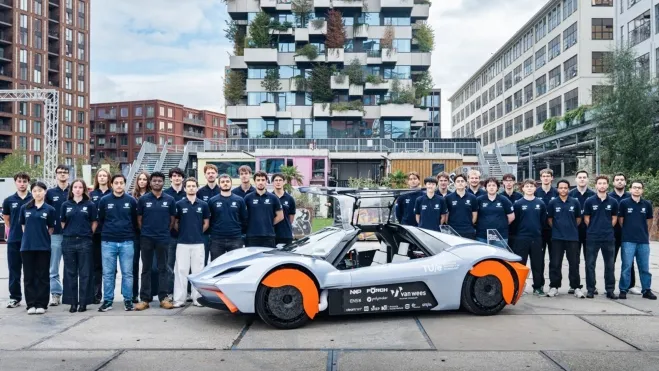
To address this issue, a group of students from Eindhoven University of Technology in the Netherlands has developed VENTRA, an electric prototype equipped with a system capable of capturing some of these particles directly in the wheel area. “The absence of exhaust emissions does not necessarily mean complete elimination of emissions,” explains Tim Spencer, head of the TU/ecomotive team, who warns that the greater weight of many electric vehicles and their instant acceleration can increase tire wear.
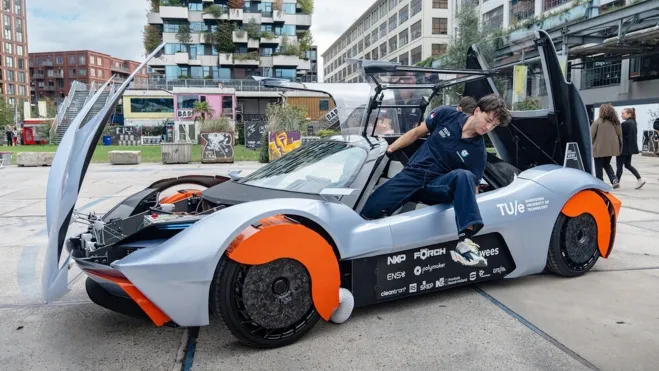
An electric car that captures up to 42% of pollutants
The main innovation of VENTRA lies in its collection system. Instead of using a conventional filter, it employs electricity to charge the particles generated during driving and attract them toward a grounded collection surface. Once attached, these particles can be removed later using a vacuum cleaner or water.
Its developers have already conducted initial simulations to assess the system’s effectiveness. According to the shared results, at speeds between 50 and 80 km/h, it can capture approximately 24% of the particles generated. However, when the vehicle travels at lower speeds, this calculated percentage rises to 42%, a figure that is particularly noteworthy given urban traffic conditions.
That said, there is still a significant limitation. These percentages come solely from simulations, and the team has not yet demonstrated that they can be replicated under real-world driving conditions. VENTRA remains an experimental vehicle, designed primarily to explore new solutions for reducing so-called non-exhaust emissions.
Nearly 100 kg less weight and an assistant that helps with driving while reducing tire wear
The students also wanted to address the problem from a different perspective. In addition to collecting particles once they are generated, VENTRA aims to reduce their production by using a chassis primarily made of lightweight thermoplastic panels reinforced with carbon fiber. According to the team, this solution allows the vehicle’s weight to be reduced by nearly 100 kg, thereby decreasing the strain on the tires and brakes.
This is complemented by Clean Drive, a system that analyzes the driver’s habits and provides recommendations through the vehicle’s screen. Its suggestions include accelerating gradually, avoiding unnecessary braking, or making smoother steering movements. The goal is to achieve driving that causes less wear and, consequently, produces fewer pollutants.
The project also envisions a possible second life for the collected waste. Instead of discarding it directly, TU/ecomotive explores its reuse and recycling. In fact, the prototype already incorporates some of this recovered material in certain components of its interior.
Europe also wants to control tire and brake particles
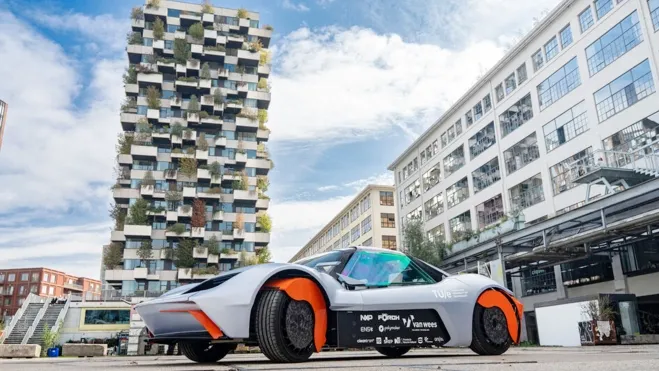
VENTRA’s presentation comes at a time when these emissions are gaining greater regulatory attention. Euro 7 standards will introduce specific requirements for the first time regarding particles from brakes and tire wear, thereby expanding environmental controls beyond gases emitted by internal combustion engines.
The concern also has a health dimension. According to the university itself, some of these particles can penetrate deep into the lungs and, depending on their size and composition, even reach the bloodstream. This exposure may increase the risk of certain cardiovascular and respiratory diseases, and they can also be potentially carcinogenic.
For now, VENTRA does not have plans for mass production. Its purpose is to demonstrate the potential of a technology that could help reduce a pollution source common to both electric and internal combustion vehicles. “With VENTRA, we want to show what solutions are possible and encourage the automotive industry to look beyond the exhaust pipe when it comes to emissions,” concludes Tim Spencer.