
I figured out what we didn’t like.
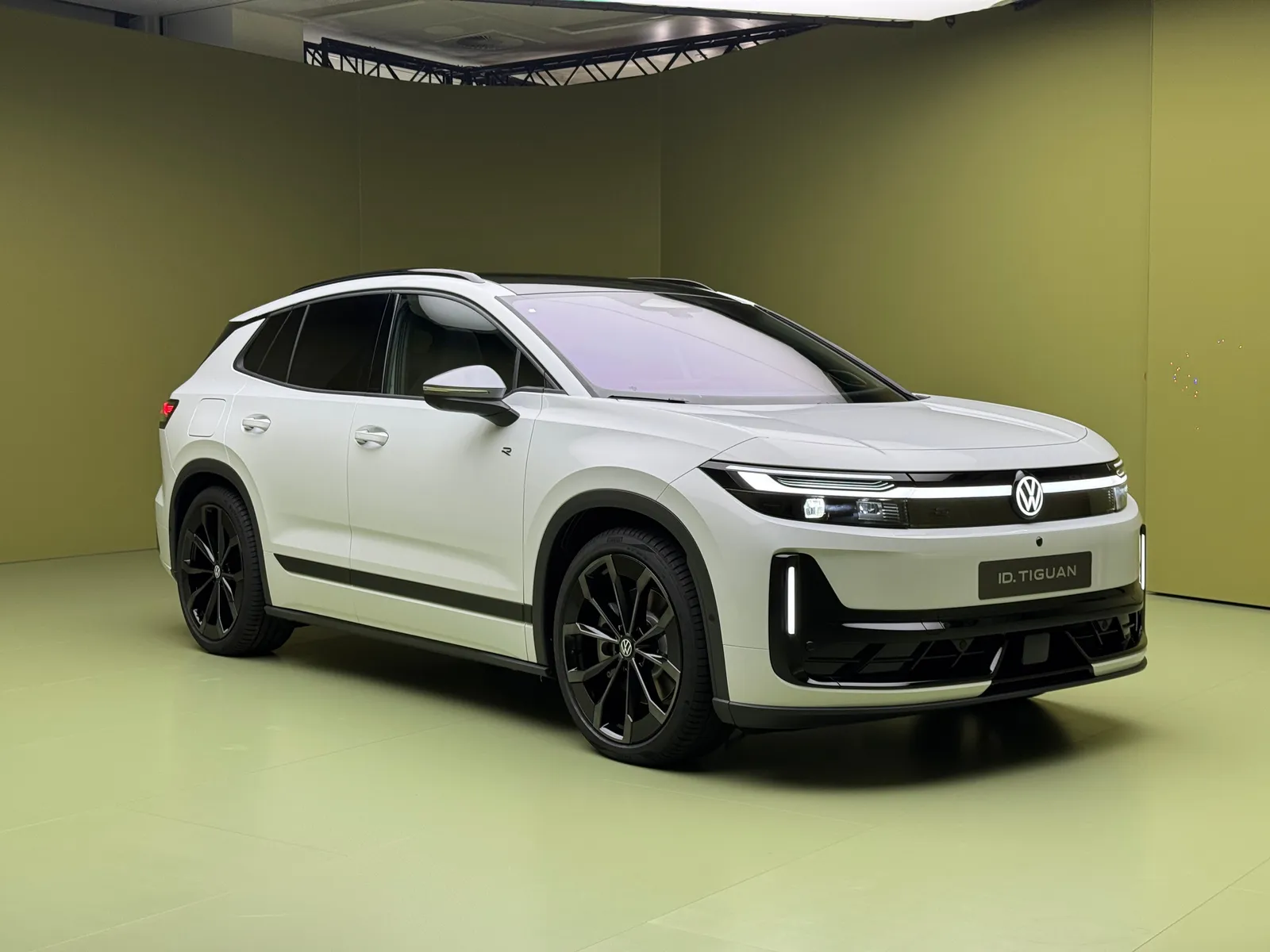
The new ID. Tiguan features a more classic Volkswagen design, improved handling, and various practical solutions. But the technology beneath the hood is very familiar.
09.10.2026 12:20 | Updated 12:21
We traveled to Vienna to take a closer look at the successor to the ID.4, namely the ID. Tiguan.
The “ID.” part of the name is retained to distinguish it from the conventional Tiguan, which is produced alongside its electric version.
In Norway, only this electric version will be sold, and the “ID.” designation is likely to fade from everyday use once the Polo, Tiguan, and all new models return to using their old names.
Completely new, but old ideas
The car is built on the same MEB platform, and although its appearance is entirely new, its structure remains the same—meaning the door openings and roof line are identical. Especially in the rear section and trunk area, it’s practically impossible to tell the difference between the new and old models in terms of space and design.
You have three options that determine range and performance.
Pure: it is the cheapest variant. It comes with a 58 kWt battery (net), rear-wheel drive with 190 hp and 350 Nm of torque, and a range of up to 450 kilometers. It accelerates from 0-100 in 8.5 seconds and has a top speed of 160 km/h. The towing capacity has increased from one ton to 1.8 tons.
The fast charging rate is 105 kW, and it takes 26 seconds to charge from 10% to 80%. It can be charged at home at up to 11 kW.
You can choose between the Trend, Life, and Style equipment packages in the Pure version, so you can get all the features if desired.
Pro: still rear-wheel drive, but now with the larger 77 kWt battery, the same as today’s ID.4.
The power increases to 286 hp and 545 Nm, with a range of around 600 kilometers. It accelerates from 0-100 km/h in 6.6 seconds, with a top speed of 180 km/h.
The charging speed is disappointingly low at only 165 kW, and it takes 29 minutes to charge from 10-80%. The towing capacity with the large battery rises to a solid two tons, which is sufficient for most situations.
The Pro is available in the Life, Style, and R-Line trims
Pro 4Motion: This is likely the model that will sell best in Norway due to its all-wheel drive. It surprisingly only has 299 hp, even though the ID.4 was previously available with 340 hp. The torque is also slightly lower than that of the rear-wheel drive version at 484 Nm.
The range of the all-wheel drive version reaches up to 560 kilometers, slightly better than the original ID.4.
It accelerates from 0-100 km/h in 6.3 seconds and has a top speed of 180 km/h.
Design – more Volkswagen
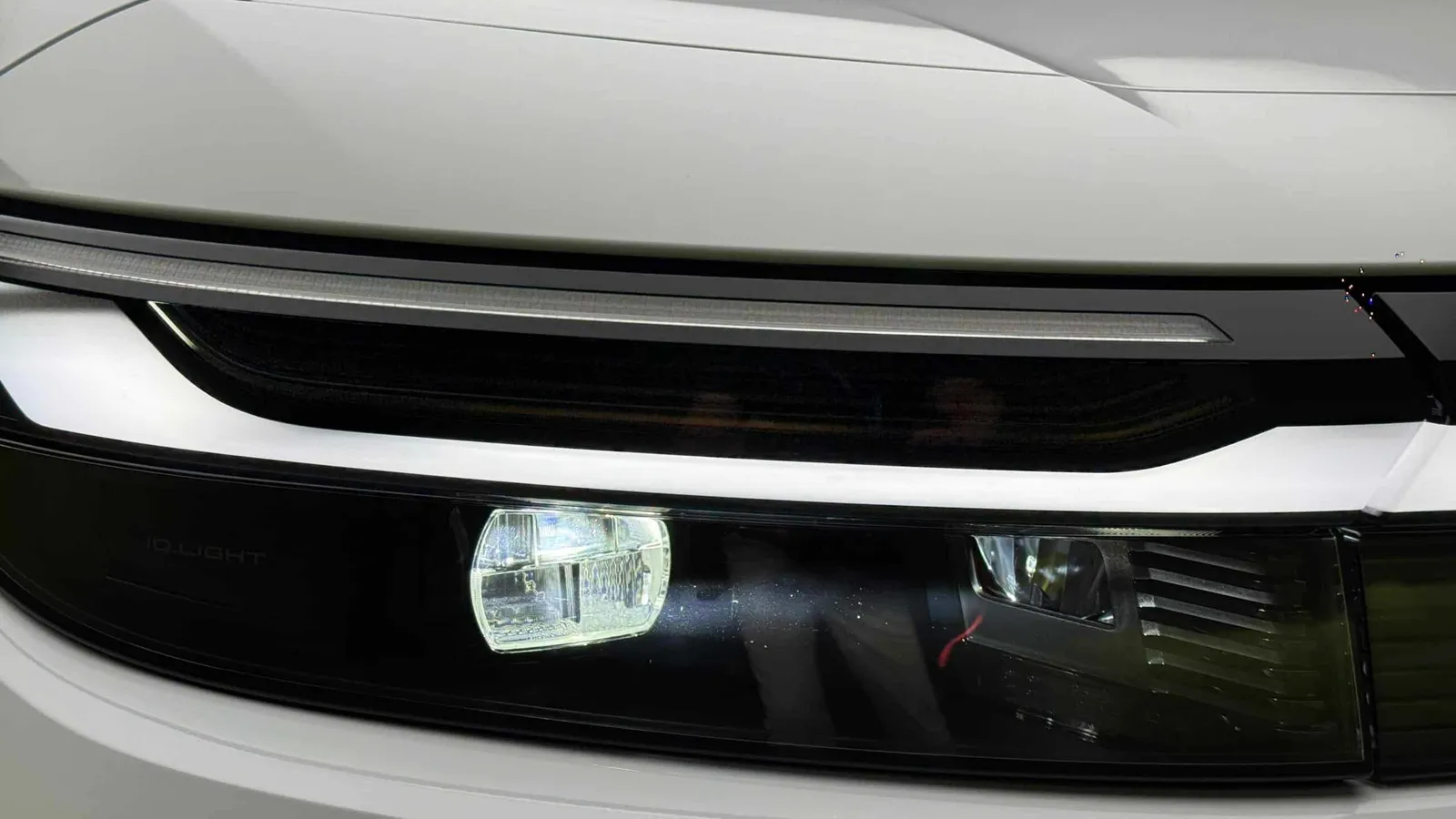
In the images you see the R-Line, as it’s the one I think looks the best. The front features some black, smooth plastic, but Volkswagen clearly aimed to make it look more upright and masculine.
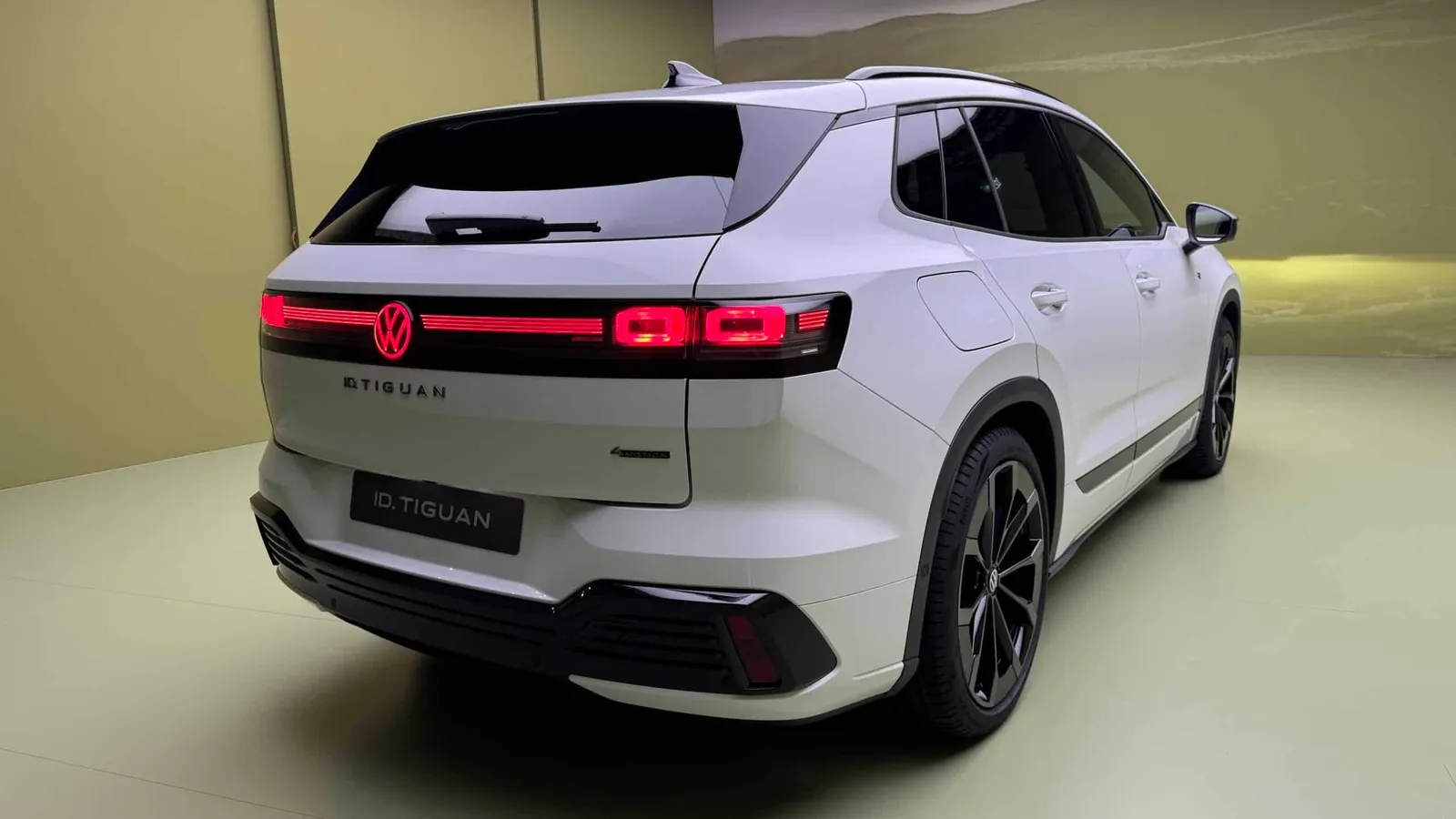
I think they’ve done even better on the back. The taillights are very cool and three-dimensional, with a light strip across them and glowing logos on the two most expensive versions.
Volkswagen has streamlined the lines significantly, especially with cleaner lines at the bottom of the windows and a neater D-pillar. This has helped bring back some of the traditional Volkswagen look.
And it now comes with powerful door handles. This makes getting into the car easier and faster.
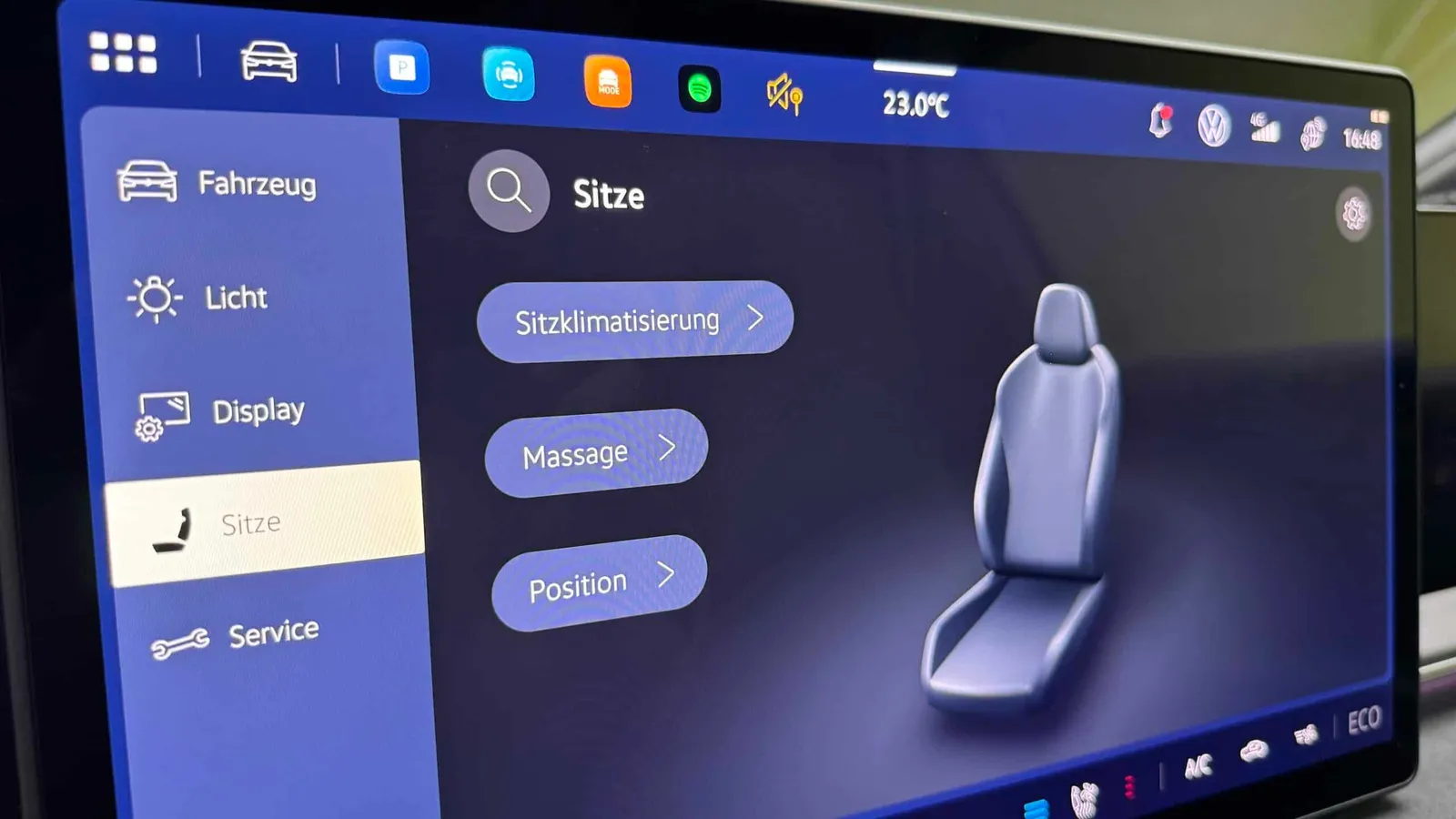
Steering wheel – as before, but with massage
The R-Line also gets the best steering wheels. They are electrically adjustable in 12 directions, with four-way lumbar support and an extendable seat cushion.
Now it also includes massage, similar to what we see in the ID.7. It only seems to work on the back, but it’s still much better than nothing.
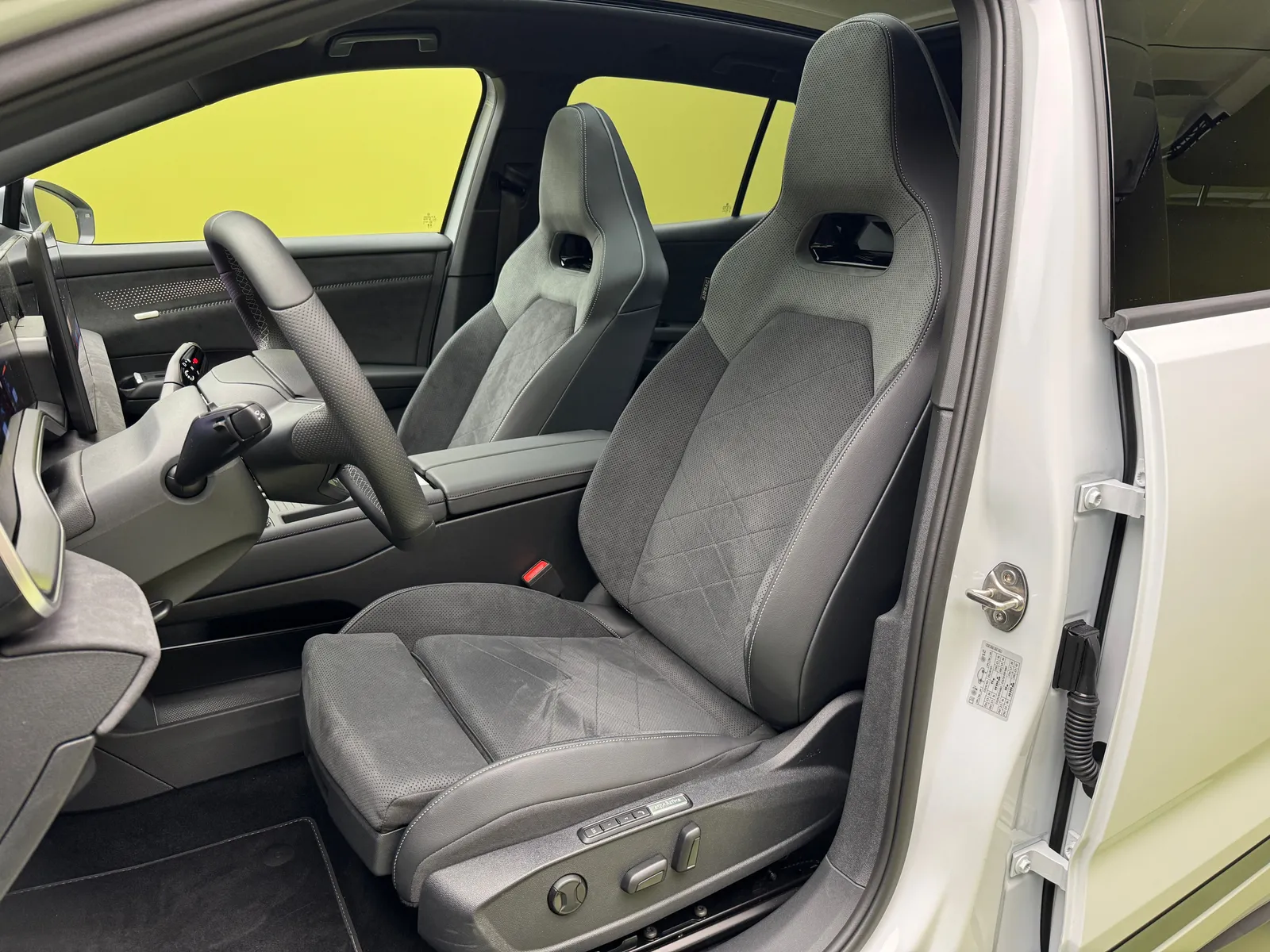
Generally speaking, there’s not much to criticize about the ergonomics in the Volkswagen. I could have used a bit more forward tilt in the seat, but it can be adjusted well toward the driver.
The R-Line steering wheel has a small R-logo and centering mark on top, which gives it a slightly more rugged look.
Interior – the buttons are back
In recent years, the Skoda Enyaq has felt more premium inside than the ID.4. Now Volkswagen has made significant improvements. The screens are better integrated into a standard dashboard, with material choices that enhance the premium feel.
The instrument panel is 10.25 inches large, and you can choose a rearview mirror inspired by the fourth generation Golf, the first to feature blue displays. Fun.
You can also opt for more conventional displays, including a trip computer and maps.
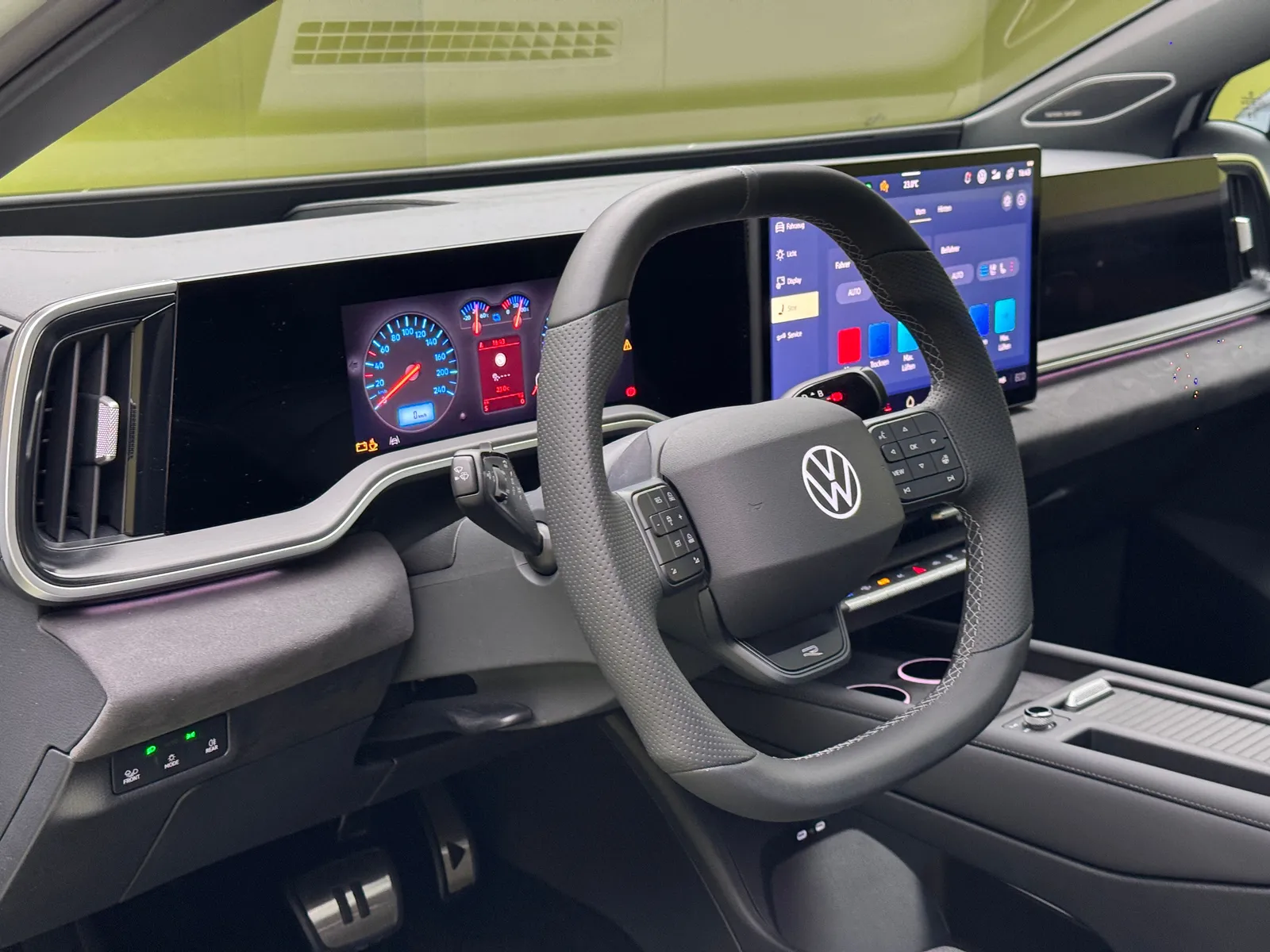
The main screen has grown to 15.4 inches. Here too, you can choose a retro version with an old-fashioned radio, maps, charging functions, and a trip computer. You can tap directly on the various elements to access their functions.
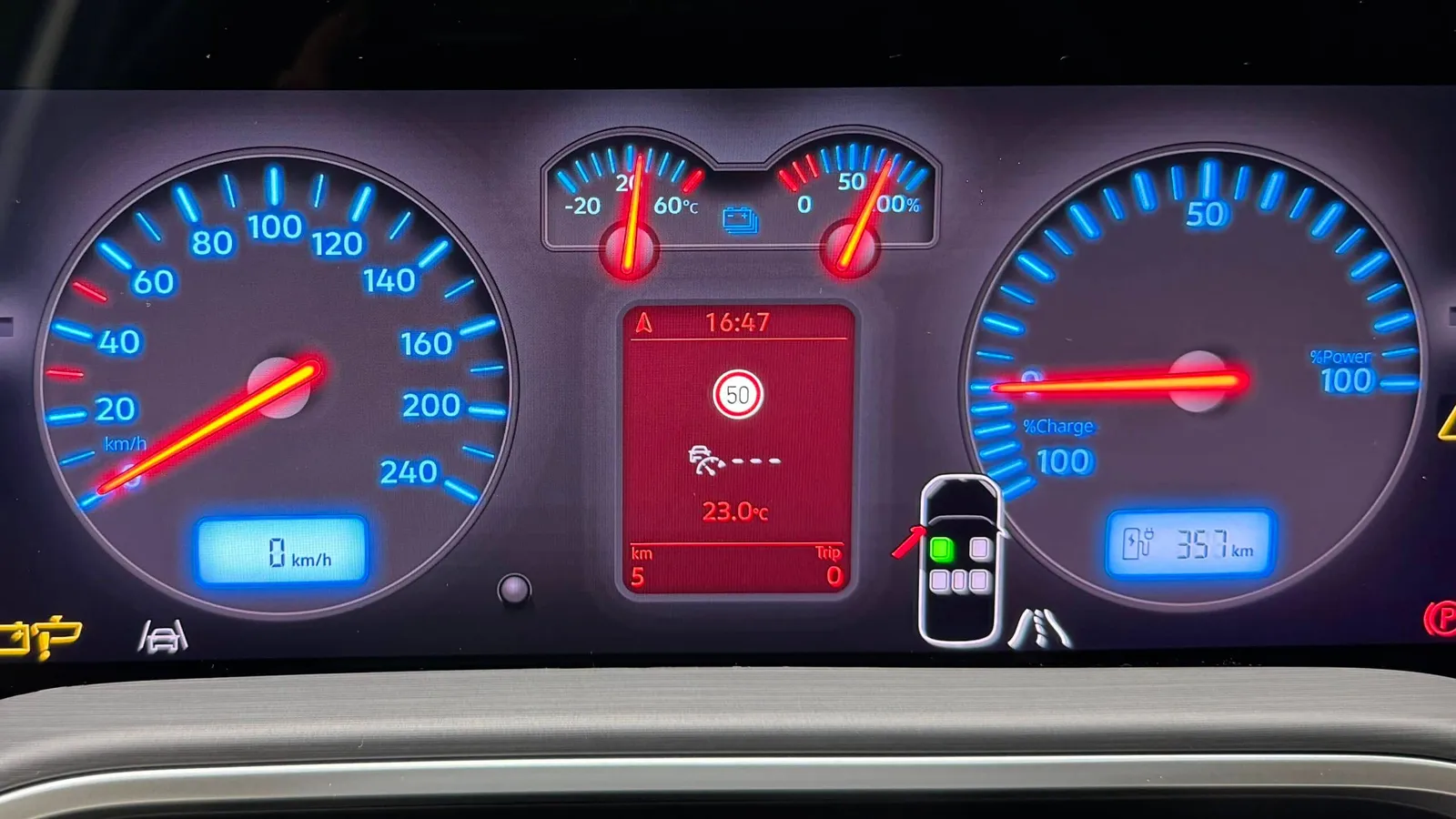
Even the car shown on screen can be switched between different classic Volkswagen models.
It’s nice that they focus on history. That’s probably their biggest advantage over all the new competitors coming from China.
Among the best
VW has moved from being among the least user-friendly to one of the most intuitive on screen. The menus can be customized, and you can add or remove functions as needed.
But perhaps the most important thing are the buttons. Like the ID. Polo, ID. Cross, and ID.3 Neo, the ID. Tiguan features physical buttons instead of the haptic solutions that were previously scattered throughout the car.
You have physical buttons for the windows, mirrors, and door locks. All the toggle switches are standard, and the air conditioning has its own set of buttons.
It’s certainly not as simple and stylish as the rotary knobs they used before, but it eliminates those annoying levers that required time and attention and weren’t even lit up at first.

More like this?
Sign up for our newsletter
– get car news straight to your inbox!
The center console in the ID.4 was open and felt very cheap. It’s organized now. There are two magnetic phone charging ports and two cup holders under a slat lock.
And even better, Volkswagen has gotten rid of the two thin armrests we saw on the ID.4. Now you get a large armrest with a relatively deep space underneath it.
Passenger Screen
The passenger can have their own 12-inch screen.
Here you can display navigation and use media services like Spotify, among others.
A limitation at launch is that only one Spotify user can be active at a time. This means, for example, parents cannot listen to their Spotify while the child uses their account on the passenger screen through headphones. This issue is expected to be resolved later.
The passenger can also use other media and play games. It’s possible to connect a PlayStation controller.
Rear Seat – As Before
When I sit in the back, it’s hard to find any significant differences compared to the ID.4. The wheelbase is exactly the same, and the space feels roughly as good.
Passengers in the back still have their own climate control if the car has three climate zones. It’s also possible to get heating in the rear seats.
The USB-C port is in place, and the floor is completely flat, just as before.
The car can be equipped with Isofix both in the front and back. All four outer seats have armrests in the ceiling, there are solid compartments for the seat belts both when the seats are up and down, and rear passengers will enjoy a brighter environment thanks to the large panoramic roof.
Trunk – now it can hold two tons
If you’ve driven an ID.4, you’ll recognize it the moment you open the rear door.
The top version features a trunk floor with two heights. The rear seats are 40/60 split, and there’s a partition in the larger section.
The trunk holds 534 liters, and when the rear seats are folded down, the capacity increases to 1577 liters.
Beneath the floor, we also find the familiar small space from the MEB platform. It’s often partially occupied by a subwoofer.
But perhaps the most interesting feature for many Norwegian buyers can be found at the back of the car. The allowed payload has increased to two tons for vehicles with the largest battery, 1.8 tons for those with the smaller one, while the tire pressure can reach up to 90 kilograms.
This means, among other things, that you can carry two quite heavy snow chains on the roof.
A Trunk Finally
Another news item that many have been waiting for is located at the front.
The ID. Tiguan now has a trunk. You still have to stand up and fumble a bit with that old-fashioned lid, but it’s unlikely you’ll use it very often.
The trunk actually only holds 34 liters. That’s enough for charging cables and a few bottles of water.
Better on the Most Important Things
It drives just like before, and its practical features are very similar—there’s little to criticize about them.
The exterior now looks much more like what many consider a Volkswagen should look like, and it’s become much more comfortable inside with a simpler user interface.
At the same time, it’s slightly disappointing that we still see the same batteries and rather slow charging speeds. The most powerful version is limited to 165 kW.
Compared to some of its Chinese competitors, this model already starts to seem outdated even before it hits the market.
Nevertheless, the overall impression is positive. For those interested in Volkswagen, I believe this will still remain a very relevant car for many people.
Read also
The post Has it fixed what we didn’t like appeared first on Norsk elbilforening.