
Cheap and eco-friendly graphene from peanut shells: an Australian process utilizes the 55,000,000 tons of this “nut.”
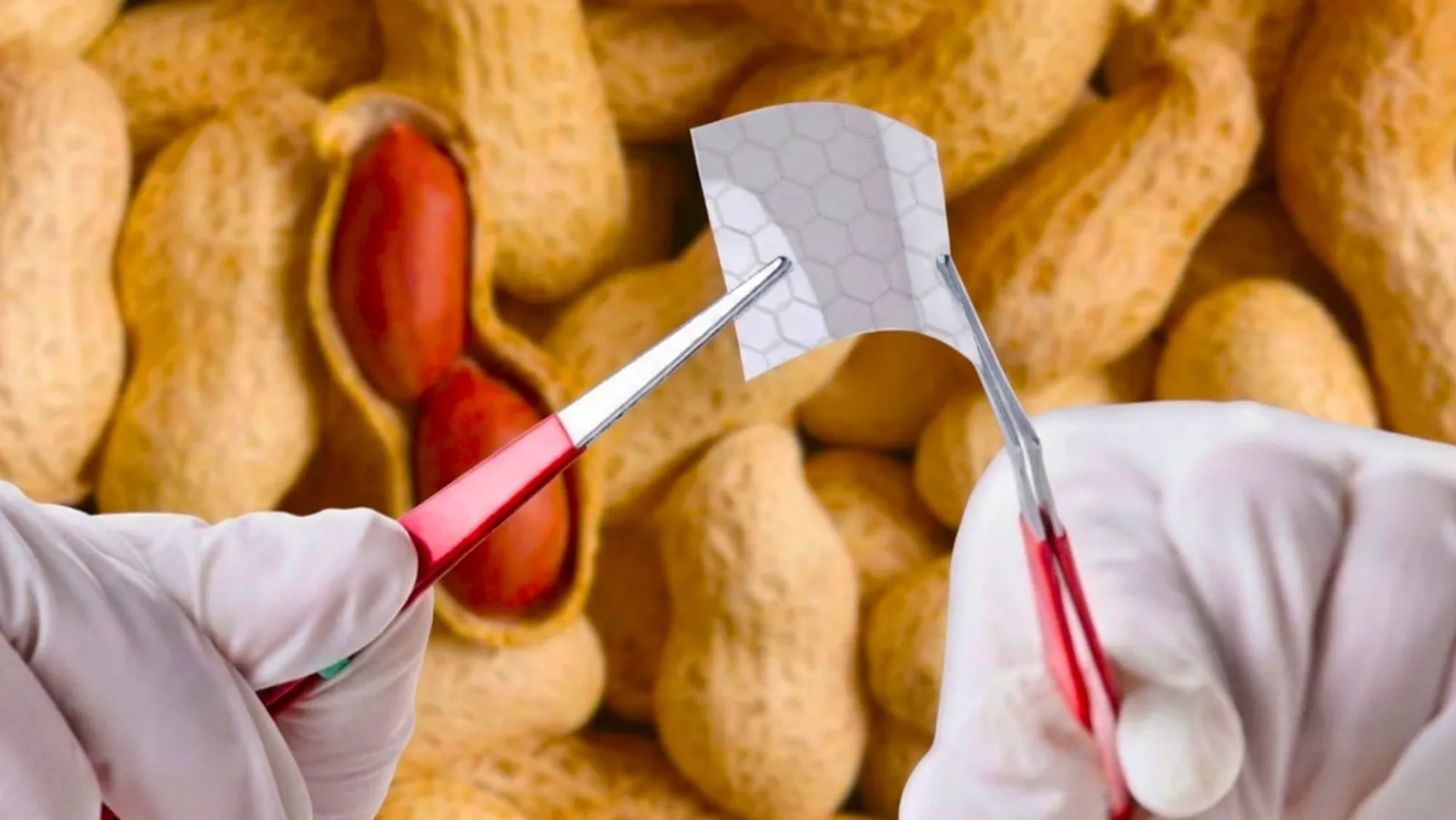
Graphene, a material composed of a single layer of carbon atoms arranged in a hexagonal structure, has become one of the key areas of research for the electric vehicle industry.
Since its first isolation, its combination of light weight, mechanical strength, and exceptional electrical and thermal conductivity has piqued the interest of manufacturers and suppliers.
Graphene and Electric Cars
In the field of electric mobility, its most promising application lies in batteries, where it can function as an additive in anodes and cathodes to improve energy density, speed up charging times, and reduce degradation. Research is also underway on its integration into hybrid supercapacitors, with the goal of providing faster power delivery, which is particularly important in urban environments and vehicles subjected to intense start-stop cycles.
Beyond energy storage, graphene is beginning to find its way into other key components of electric vehicles. Its high thermal conductivity enables the design of more efficient thermal management systems, which are essential for keeping batteries within optimal temperature ranges and extending their lifespan. Additionally, its strength and low weight make it a suitable material for structural reinforcements in body panels and chassis, helping to reduce weight without compromising safety—a critical factor for increasing range.
It is primarily obtained through the exfoliation of graphite, either mechanically or chemically, by separating layers until sheets with a thickness of one atom are isolated—a method popularized by researchers at the University of Manchester in 2004. On an industrial scale, it is also produced via chemical vapor deposition (CVD), where a layer of carbon is grown on metal substrates such as copper or nickel at high temperatures.
Now, the University of Sydney (UNSW Sydney) has introduced a method for converting agricultural waste, specifically peanut shells, into single-layer graphene, a material renowned for its extreme strength and high conductivity.
The research, led by Professor Guan Yeoh’s team, explores how this abundant and underutilized waste can be transformed into raw material for batteries, flexible electronics, and energy storage devices.
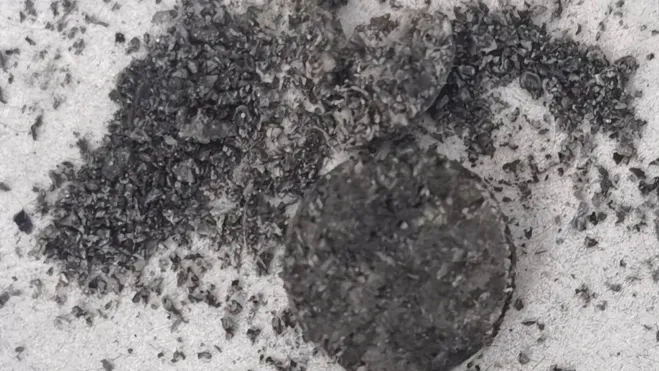
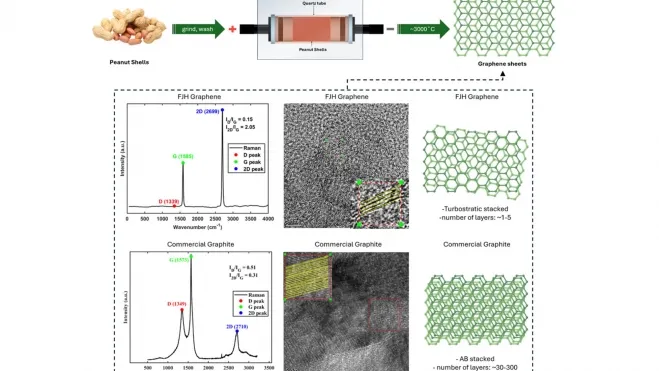
The research begins with a simple observation: peanut shells contain lignin, a plant polymer with a high carbon content. Utilizing this composition, the researchers grind the shells and subject them to a two-stage thermal treatment to obtain a carbonaceous material suitable as a precursor for graphene.
The first stage involves heating the shells to approximately 500 °C for five minutes, which removes impurities and produces carbon-rich charcoal. The second stage employs a technique called “flash joule heating,” in which an electric discharge raises the temperature of the precursor to nearly 3,000 °C in just a few milliseconds; this thermal pulse reorganizes the carbon atoms to form individual layers of graphene.
Unlike many industrial processes, the method described avoids the use of chemicals such as carbon black and reduces the number of steps and energy required to obtain high-quality graphene. According to the authors, the entire procedure can be completed in about ten minutes, making it competitive compared to alternatives that are more time- and resource-intensive.
The study’s authors emphasize that the graphene obtained meets the basic requirements that make it attractive for technological applications: a single atomic layer with minimal imperfections, high electrical and thermal conductivity, and an extremely favorable resistance-to-weight ratio. They note that graphene is “hundreds of times stronger than steel.” These properties position it as a candidate for improving battery electrodes, sensor components, and flexible touch screens.
The team tested the protocol using peanut shells as a case study due to their global availability: it is estimated that annual peanut crop production amounts to around 55 million tons, with most of the shells ending up in low-value applications or as waste. Utilizing this volume as a feedstock could turn a residue into an economically viable input with a lower environmental impact compared to conventional methods based on petroleum derivatives.
The researchers also point out that the key to success lies in “precursor engineering”: the thermal pretreatment of the residue prioritizes the removal of contaminants and optimizes the carbon structure so that high-temperature pulses produce continuous layers of graphene with few defects. This optimization of the precursor is, according to the team, a necessary condition to ensure the electrical and mechanical properties of the final material.
Although current experiments have produced only small quantities (as these are laboratory tests), the authors remain optimistic about scalability. They suggest that with further development, the process could be brought to commercial production within an estimated three to four years. Additionally, they believe other lignin-rich sources, such as coffee grounds or banana peels, could be adapted using the same approach, opening the door to a wide range of biomasses that can be converted into graphene.
The research was made public through a press release from the center and is detailed in an article published in the journal Chemical Engineering Journal Advances. For inquiries regarding the press release, contact Neil Martin, the center’s content manager.
The economic and energy balance is among the most significant findings: the team’s calculations show that the energy required to produce one kilogram of graphene using this method costs approximately 1.30 U.S. dollars. This figure, along with the short processing time (about ten minutes) and the absence of chemical reagents, forms the basis for arguing that this technique is viable from both industrial and environmental perspectives.
