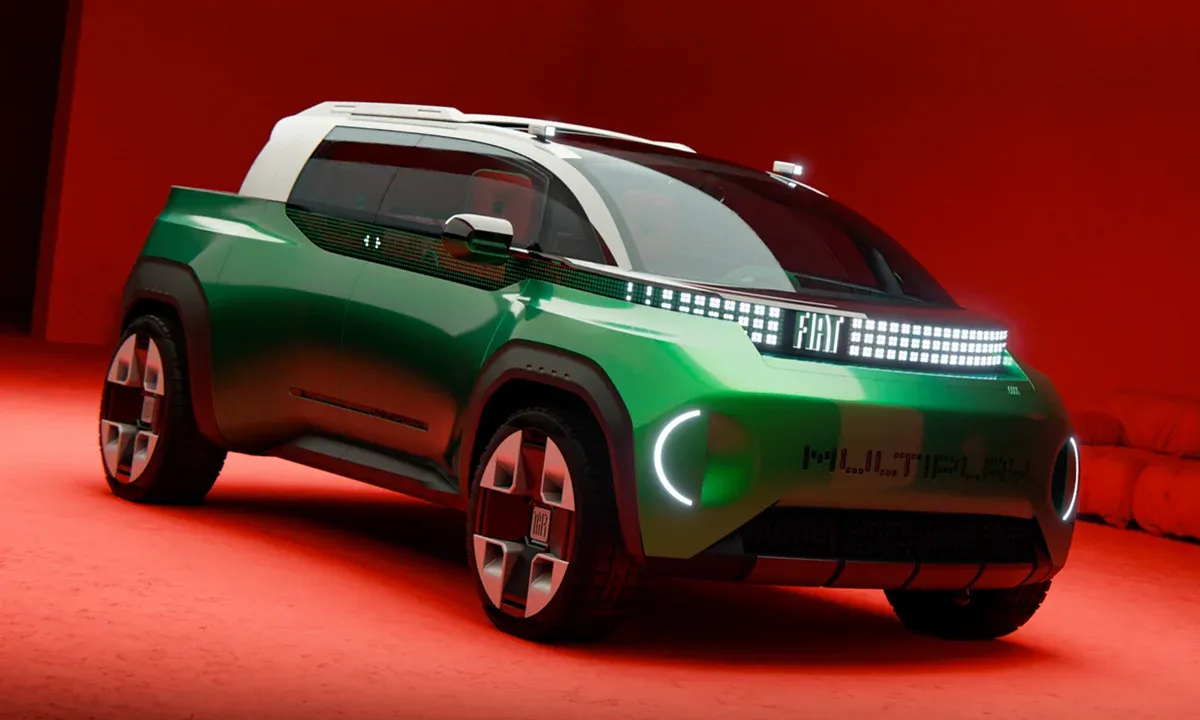
Fiat reinvents the family car with the Multiplay: seven seats and an open cargo area
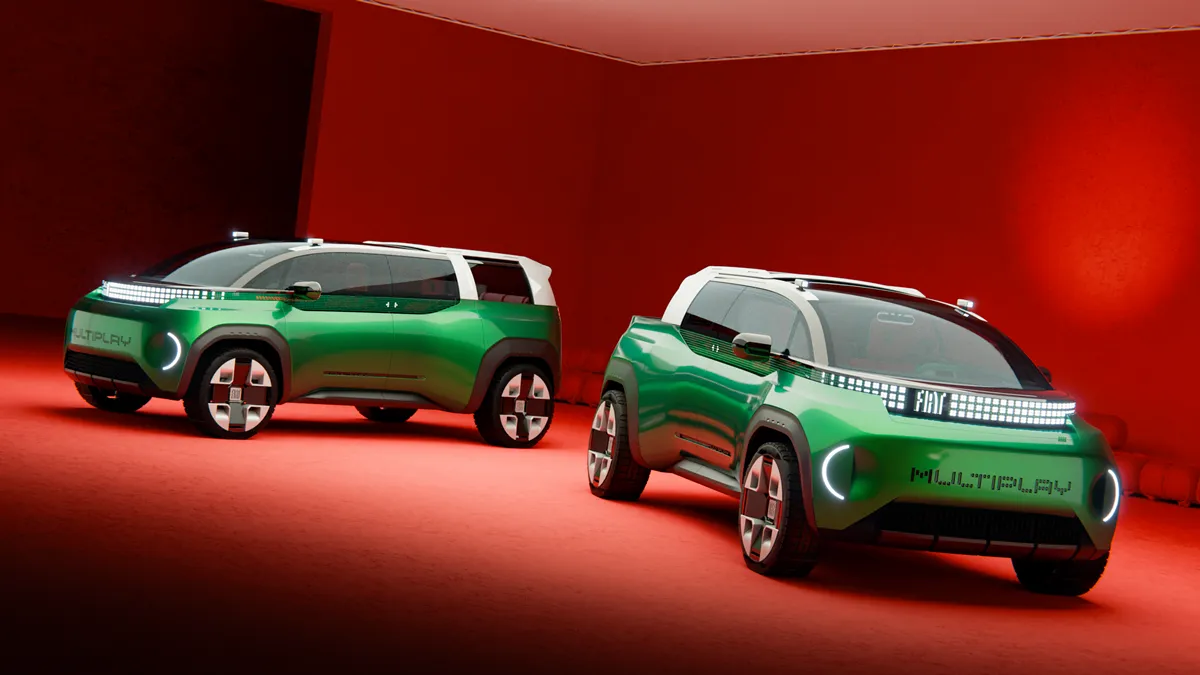
The original Fiat Multipla was one of those cars that proved a vehicle’s design didn’t have to follow established rules. To many, it was one of the ugliest models ever to hit the roads, but few could argue with its immense practicality: it made use of every centimeter to offer a surprisingly spacious interior, with six seats in a car just 4.08 meters long. Now, Fiat is reviving that philosophy with a concept that once again puts functionality ahead of convention.
The Italian brand has unveiled the Fiat Multiplay, a prototype designed to combine in one vehicle the advantages of a minivan, the appearance of an SUV, and the loading capacity of a pickup. The goal is not merely to offer a spacious interior, but to enable the car to switch configurations based on the owner’s needs, from transporting the entire family to carrying bicycles and outdoor equipment.
At 4.45 meters in length, the Multiplay was unveiled at Stellantis’ event in Paris ahead of the opening of the 2026 Auto Show. Fiat describes it as a laboratory for future brand innovations, so it should be clear from the start that it is not an announced production model nor a direct preview of a car that will reach dealerships.
A car that transforms from minivan to pickup
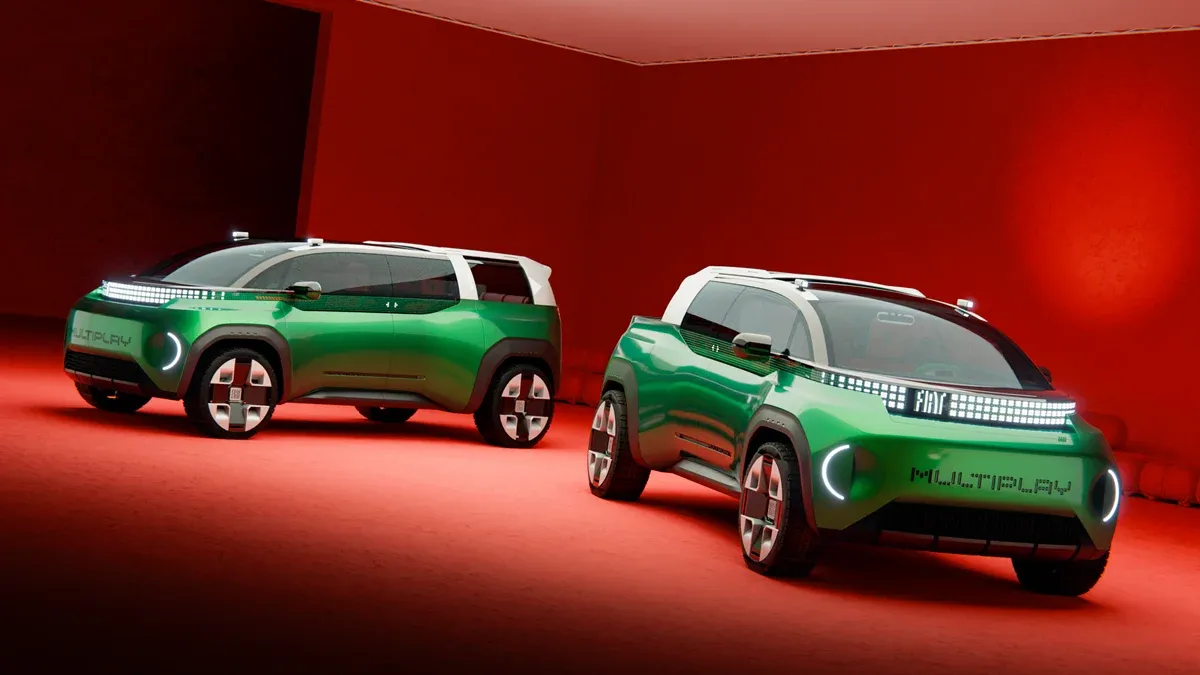
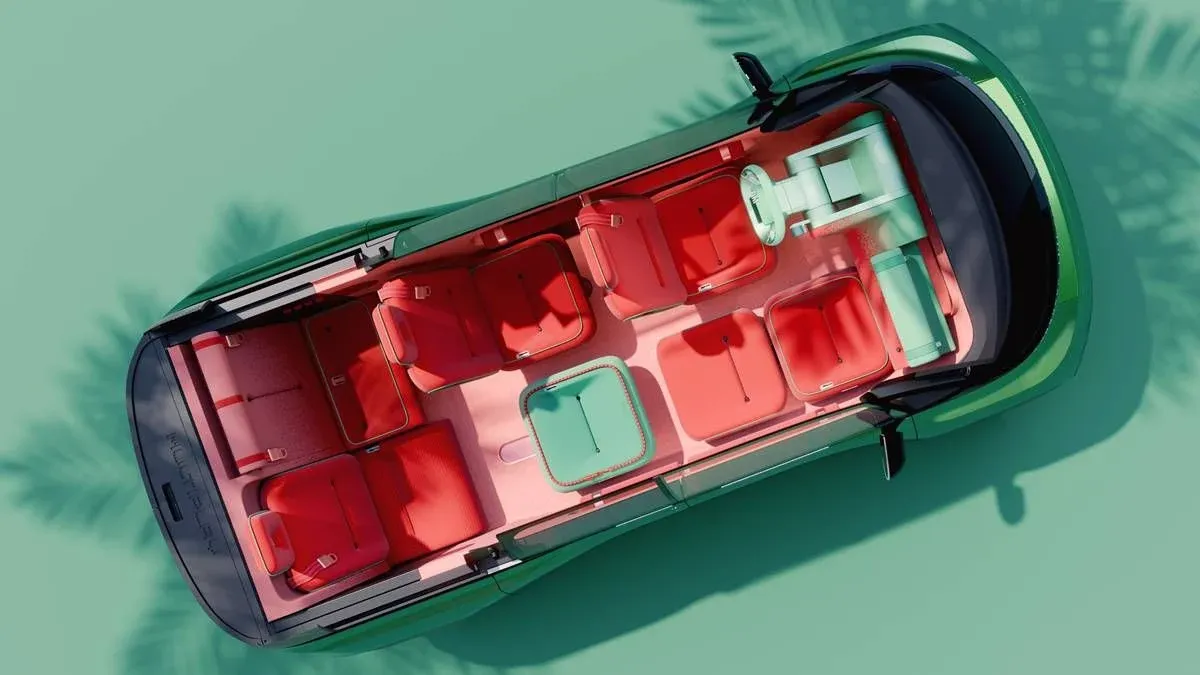
The main innovation of the Fiat Multiplay lies in its architecture, named Metamorfosi. This system allows the rear module to be moved longitudinally using specialized guides to transform the available space. In this way, the vehicle can switch from a family configuration with six seats plus a modular seat to one with four seats and an open cargo area, similar to that of a pickup truck.
In its family configuration, the cabin is designed to accommodate passengers and facilitate daily commuting. When needs change, the rear area can be reorganized to carry bicycles, sports equipment, or bulky items. It is a solution aimed at eliminating the need to choose between a comfortable vehicle for family trips and one that is more practical for weekend outings.
The transformation also affects other elements of the body. The rear spoiler, for example, can rotate to become an integrated bike rack capable of holding up to two bicycles when the car is configured as a pickup. Fiat aims to have a single component serve multiple functions, reducing the need for additional accessories.
The proposal is directly linked to the history of the Multipla. In 1956, the Fiat 600 Multipla already managed to accommodate six people in a body length of about 3.50 meters. Decades later, the Multipla introduced in 1998 once again adopted an unconventional layout, with six seats arranged in two rows and a length of less than four meters. The new Multiplay carries forward this focus on maximizing space, though it now adds the option to customize the vehicle’s configuration.
An interior designed for children, adults, and pets
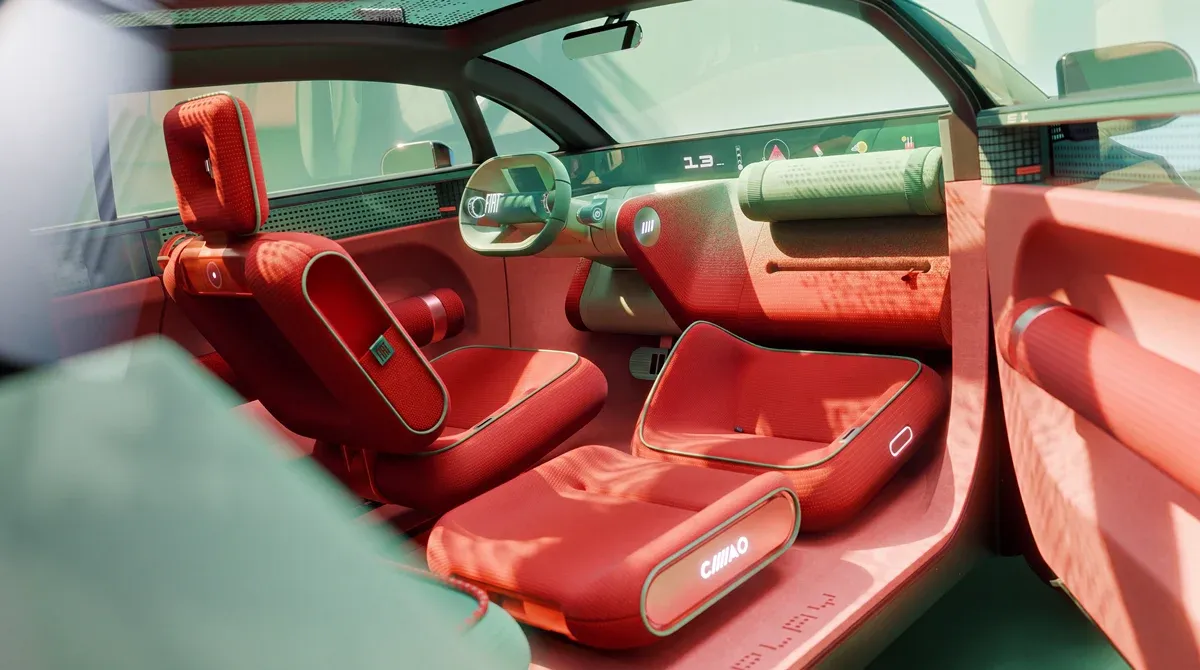
Fiat has also aimed to bring this versatility into the cabin. One of the most notable solutions is the so-called Petsenger seat, a modular element that can be used as a support for a child’s seat, space for a pet, a small table, or a storage compartment. The goal is to allow the interior to adapt to the needs of each journey without relying on makeshift solutions.
The features designed for animals include quite unique details. A section of the cushion can be separated to serve as a strap, while one of the doors has a compartment for storing a foldable bowl. There are also pockets, elastic bands, and other elements intended to keep the items that typically accompany a family on their trips organized.
Another goal of the project is to improve the use of the third row, an area that in many family vehicles ends up being inconvenient for adults. According to Fiat, the Multiplay’s design allows up to two children and even an adult to sit in the back when necessary. The brand thus creates a family space where younger passengers can travel in their own area without being out of their parents’ line of sight.
The passenger seat also has an additional function. With the vehicle parked, it can be rotated to assume a Sunseat configuration, turning the seat into a kind of chaise lounge facing backward. The dashboard serves as a backrest, and the panoramic roof allows natural light to flow in, creating an environment ideal for resting, reading, or enjoying the scenery during a stop.
The large glass surfaces and wide side windows enhance this sense of open space. Fiat presents a car where the cabin is not merely a means of transportation but can also transform into a relaxation area when the vehicle is stationary.
Colors inspired by Italian summer
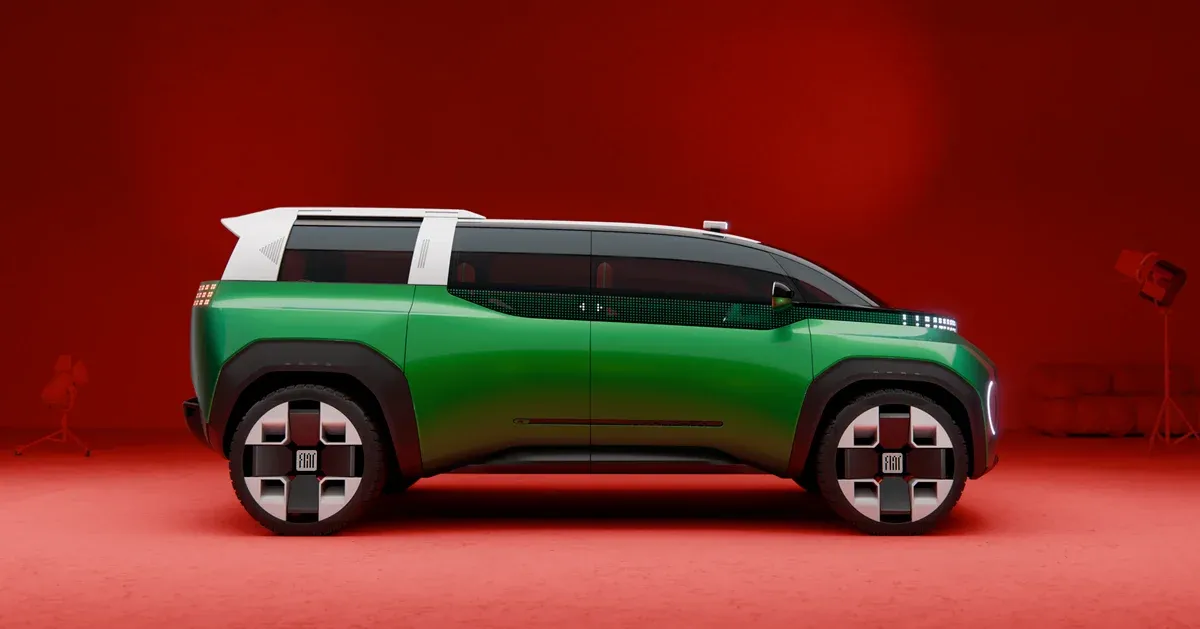
The exterior and interior design of the prototype features a bold color combination. Inspired by watermelons, it has a green body reminiscent of its rind, along with an interior in red and pink tones. Pink flooring and color gradients leading to the child area, with turquoise accents, complete a design aimed at conveying a casual and family-friendly atmosphere.
The materials also offer room for experimentation. Fiat uses single-material fabrics created through a three-dimensional, seamless weaving process to reduce waste and create smooth, adaptable surfaces. Waterproof finishes are used in areas designated for children and pets to better withstand daily use.
The dashboard features a horizontal strip inspired by the Mediterranean horizon, where the sky and sea appear to merge. This visual line connects the colors outside with those inside and helps integrate the screen into the overall interior design.
Indeed, digital technology has been integrated in a subtle manner. The screen disappears when the vehicle is turned off, creating a cleaner appearance and preventing the multimedia system from dominating the dashboard visually. Fiat aims for the technology to be available when needed, without becoming the main focus of the interior.
The Multiplay also supports the concept of a growing importance in car design: a single vehicle capable of performing functions that would normally require several cars or specific accessories. Its modular architecture, multifunctional seats, and storage solutions are part of this approach, though it will take some time to determine whether any of these features make it into a production model.
The launch in Paris also marks a new symbolic chapter for Fiat. Olivier François, strategic advisor at Stellantis, and Arnaud Belloni, head of the Fiat, Abarth, and Lancia brands, led the presentation of the prototype. Belloni described the Multiplay as an idea lab focused on space, versatility, and the Italian character of the brand.
So far, Fiat has not announced a release date, engine options, or price, nor has it confirmed that the Multiplay will be produced in series. Its goal is to demonstrate how far the concept of a versatile family car can go. This philosophy echoes that of the original Multipla: a vehicle whose appearance could spark mixed reactions, but which understood better than most that design should also serve to solve everyday problems.