
Manufacturing in Spain and Portugal will save Volkswagen 600,000,000 €: "in a multi-brand plant, there will only be one standard in the future.
14/10/2026 14:30
Updated to
14/10/2026 14:30
The challenges faced by European manufacturers are significant, with Germany suffering more than any other country. The strategic allocation of plants continues to determine Volkswagen Group’s production. Europe’s automotive industry is struggling while other countries on the continent are gaining strength, such as Spain. Christian Vollmer, Volkswagen’s board member in charge of production and logistics, and André Kleb, Production Director for factories in Spain and Portugal, have discussed why the Iberian Peninsula will be crucial for the group’s survival.
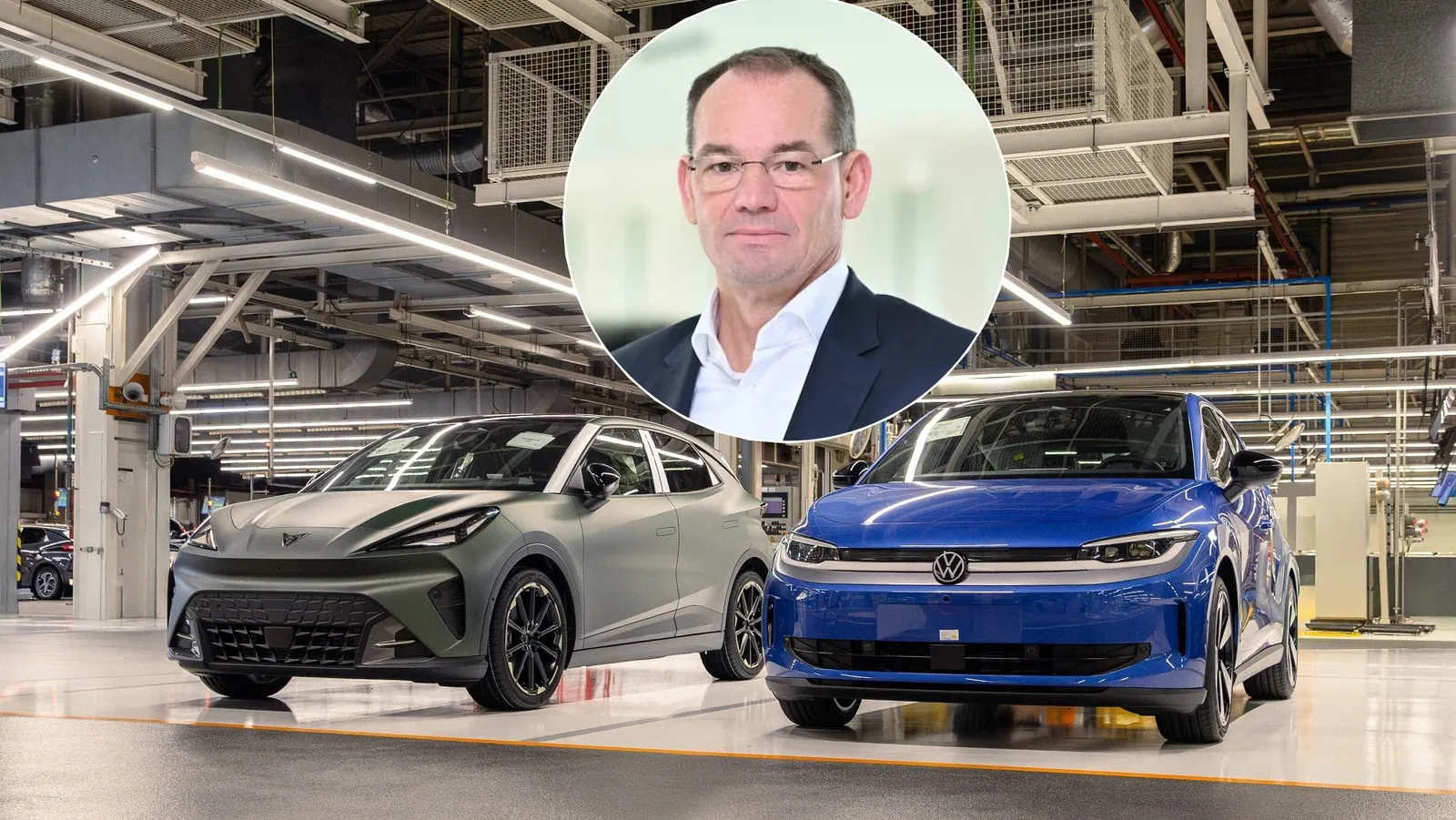
The family of urban electric cars, consisting of four models from Volkswagen, Cupra, and Skoda produced at facilities in Martorell and Pamplona, marks the beginning of a new era. An inter-brand product team made all decisions from the start, and existing structures were used instead of new production plants. Vollmer estimates that savings over the project’s lifetime amount to around 600 million euros. Previously, the joint development and production of the Passat and Skoda Superb also resulted in savings of several hundred million euros.
This requires brands to standardize their technology. Historically, there were different processes for welding and sealing roof seams, for example. “In a multi-brand plant, there will only be one standard in the future,” explains Vollmer.
Why Are Small Electric Cars Coming from Spain?
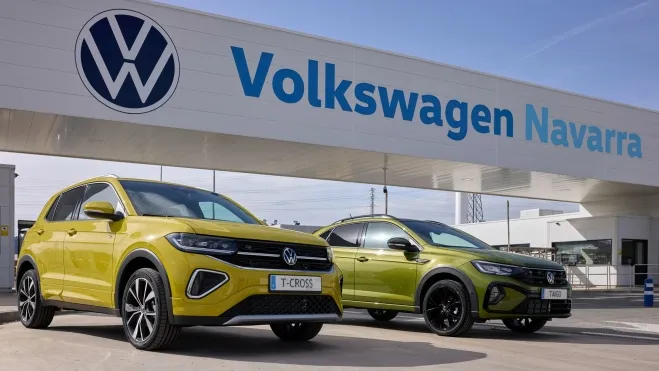
Vollmer explains that the decision to produce the new models in Spain is not based solely on reducing factory costs. Martorell and Pamplona are only a few hundred kilometers apart, which creates synergies and lowers logistics costs. Additionally, both locations have always focused on the A0 segment, with models such as the Seat Ibiza, Audi A1, Volkswagen Polo, and T-Cross. A similar approach could also work in Central Europe, as long as costs, production capacity, and launch timelines align.
Regarding the complete conversion of Emden and Zwickau to electric vehicles, Vollmer says, “With what we know now, we wouldn’t do it that way again.” They expected a much faster transition, and the European Union’s policy guidelines left no doubt on this. Pamplona, on the other hand, allows “alternation between internal combustion engines and electric vehicles” and enables flexible responses based on demand.
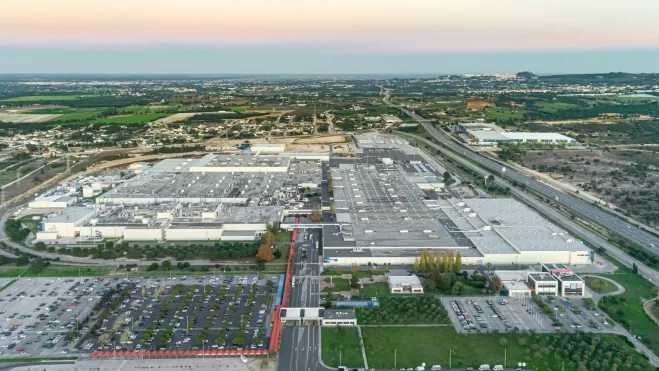
Plants with a single production line manufacture a mix of models until the transformation is complete; for plants with multiple lines, flexibility within the site is sufficient. In Martorell, gasoline-powered cars and plug-in hybrids are produced on two lines, while the third line has been adapted for the ID. Polo and Cupra Raval. Palmela (Portugal) is integrating the production version of the ID. Every1 into the line for the new T-Roc. In Wolfsburg, the Tiguan and ID.3 Neo will be produced on the same assembly line starting next year. If the headquarters reduces its production from four to two lines after relocating Golf production, one of these lines will need to be capable of handling a mix of models.
In the end, it’s volume that matters, not the brand
Vollmer believes that plants dedicated to a single brand only make sense for large production volumes, specifically between 250,000 and 300,000 vehicles per year over the lifetime of a model or platform. Kleb adds that the decisive factors are the expected volume, the plant’s capacity, and the product’s technical specifications, not the logo. Additionally, there are considerations for consolidating platforms regionally, as in the case of the ID. Every1, which is based essentially on the same platform as the Spanish models.
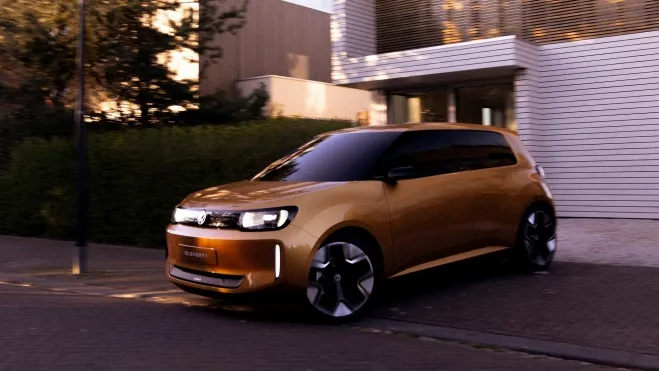
Suppliers are also expected to benefit, as they only need to configure certain systems once thanks to the proximity of the plants and can offer larger volumes at lower prices. The four models differ significantly in appearance, but essentially share a high degree of common components. Even the self-image is changing: one colleague recently introduced himself not as the planning director for Seat and Cupra, but as the planning director for the Iberian Peninsula.
Source: Automobilwoche