
Europe is accelerating toward electric cars: they already account for 33% of sales, and Spain is also seeing strong growth
For a long time, the transition to electric cars in Europe has progressed unevenly. Reliance on intermittent government subsidies, high prices, a still limited range of options in certain segments, and a weak charging network have deterred many potential buyers, while gasoline and diesel engines have held up far better than some had predicted.
But the situation is starting to change. Rising fuel costs due to actions by the United States and Israel in the Middle East, the introduction of smaller and cheaper models, and an increasingly wide range of options are making electric cars less of an option reserved for those with high budgets. Most interestingly, this shift is already becoming evident in some of Europe’s most important markets.
The initial registration figures for September indicate another surge in the share of electric cars, reaching levels that would have seemed unattainable just a few years ago. Figures are not yet available for all European countries, but the markets that have released their data account for over 83% of the continental market, providing a clear picture of what is happening.
In the 12 major markets analyzed, electric car registrations rose by 62% in September, reaching a share of 33%, compared to 22% recorded in the same month of 2025. Over the first nine months of the year, growth reached 42%, with around 2.3 million units and a share of 26%, up from 20% in the same period last year.
The development is particularly noteworthy because it is occurring not only in markets traditionally favorable to electric cars. Rising prices of gasoline and diesel are starting to have a direct impact on purchasing decisions, especially among those who drive many kilometers each year and must bear high costs to maintain a gasoline vehicle.
A study conducted in Germany by insurer HUK-Coburg already pointed in this direction. During the second quarter, 12% of drivers who switched cars moved from a model with a combustion engine to an electric one, more than double the figure at the start of 2026. This data shows that the cost of using a conventional car is starting to have an increasingly significant impact on purchasing decisions.
This is compounded by another factor that has been one of the main obstacles to the expansion of electric cars for years: the purchase price is beginning to drop significantly. The arrival of smaller and simpler models is expanding the potential customer base and allowing many buyers to consider this technology for the first time.
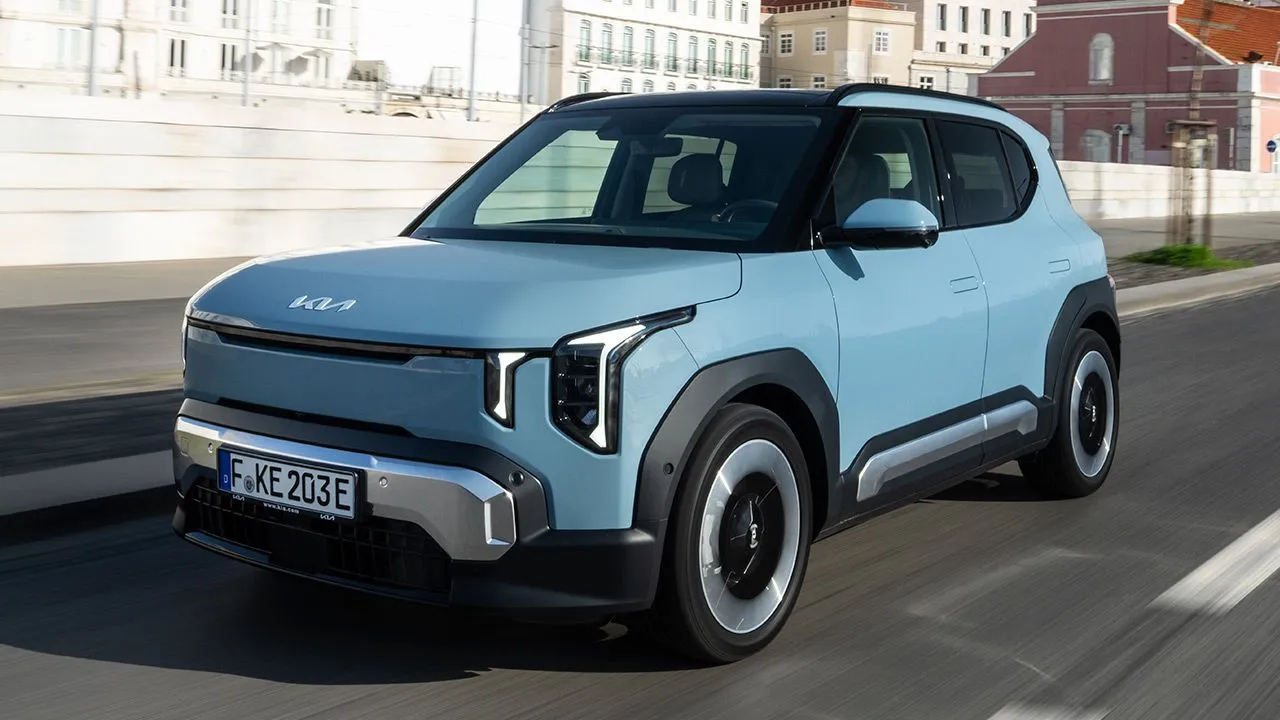
Models such as the Renault 5, Renault Twingo, and Kia EV2 are already among the most sought-after electric cars in the European market. The recently refreshed Renault 5 had sold 59,889 units by August, according to Dataforce. It’s no coincidence that several of these models were designed specifically to target the price segment where electric options have been scarce until now.
France is likely one of the best examples of this acceleration. In September, 65,246 electric cars were registered, accounting for an impressive 41.7% of total sales. The progress over the past few months has been particularly rapid: the share rose from 35% in July to 38% in August, finally exceeding 40% in September. This figure represents double the share recorded during the same period last year, when electric cars made up “only” 20.8% of sales in France.
Germany is also experiencing a very significant change. Electric cars accounted for 34.5% of sales there in September, up from 19% a year earlier. The growth didn’t happen suddenly but built up throughout the summer, with a share of 29% in July and 32% in August.
In the United Kingdom, electric cars accounted for 28% of registrations in September, five points higher than a year earlier. In some smaller markets, the figures are even more striking: electric cars made up 53% in the Netherlands, 51% in Belgium, and 49% in Sweden.
Spain is also starting to accelerate
Spain, which for a long time has been among European countries with the lowest penetration of electric cars, is now showing a much more noticeable shift in trend. In September, 17,650 electric vehicles were delivered, accounting for 18.5% of total sales, up from 10.7% the previous year.
This figure is still below that of France, Germany, or some northern European countries, but the year-on-year growth is significant enough to change the market landscape. Additionally, Spain starts from a situation where price remains a particularly important factor for buyers, so the arrival of more affordable models could have an even greater impact in the coming months.
The data available up to August from ACEA already showed that electric cars accounted for 21.7% of the total in the European Union during the first eight months of the year, compared to 15.8% in the same period of 2025. At that time, 1,641,333 units had been registered, with France and Germany among the markets driving the most growth.
And that may be where the real change lies. Not so much in buyers suddenly deciding to opt for a specific technology, but rather in it becoming increasingly difficult to ignore the electric alternative when it’s time to replace a car.
