
EU reaches agreement with China on hybrid import restrictions
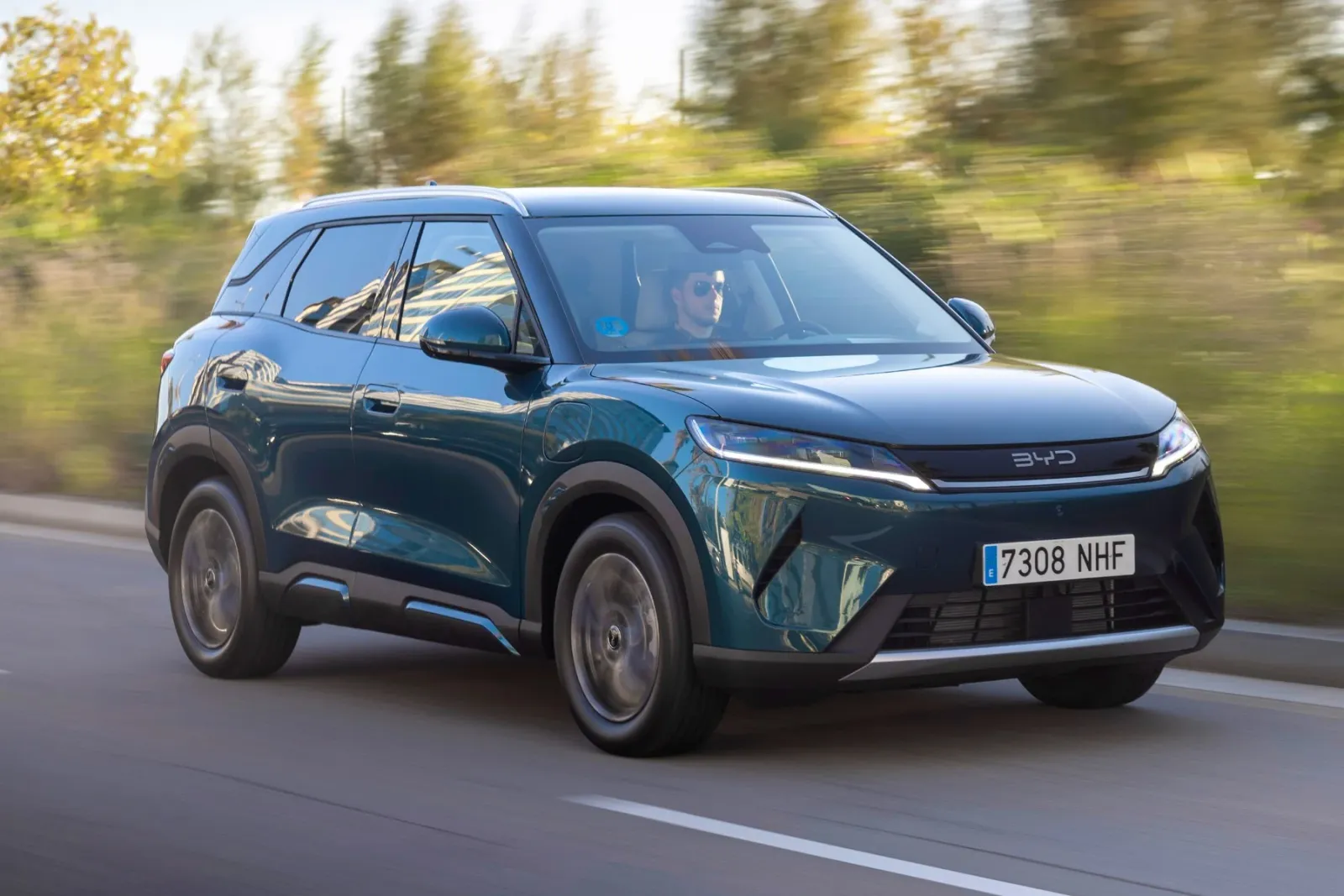
The current trade and investment consultations between China and the EU have led to plans to introduce a sort of brake on the import of Chinese hybrids and plug-in hybrids into the EU. These vehicles have recently flooded the European market. However, the specific rules for this measure are still unknown.
BYD Atto 2 DM-i Plug-in Hybrid Model
Image: BYD
EU Trade Commissioner Maroš Šefčovič announced the agreement on Friday following two days of talks with China’s Trade Minister Wang Wentao in Beijing. The deal is part of a broader package aimed at balancing the trade relationship between the two sides, and it covers more than just the automotive industry. For the EU, it also serves to curb China’s growing trade surplus and protect European industries from additional competitive pressure.
Šefčovič said, “In the case of hybrids and plug-in hybrids, we are talking about reducing exports from China to the European Union by several million cars over four years. I consider this quite significant.” However, the EU commissioner did not refer to today’s import levels, which were recently around 50,000 hybrids and plug-in hybrids from China per month. It is likely that the EU Commission has projected further growth in this segment and aims to cut future volumes in half — but Šefčovič refused to elaborate on this point during a media roundtable. The technical details of the agreement are still pending as well; here, the EU Trade Commissioner said he wanted to inform heads of state and government, EU institutions, and member states first.
EU leaders still need to review the agreement
The agreement comes after a period of rising tensions in the automotive industry. After the EU imposed high anti-subsidy tariffs on electric cars from China in October 2024, on top of the regular 10 percent tariff on cars, hybrid and plug-in hybrid models from Chinese manufacturers gained significant importance in Europe, with delivery numbers multiplying. This is because only the regular 10 percent tariff applies to these vehicles — making their importation much cheaper than that of pure electric cars.
Bruussels therefore saw the risk that competitive pressure on European manufacturers would increasingly shift to this market segment. According to the European Automobile Manufacturers Association ACEA, Chinese brands’ market share in Europe for hybrid vehicles was 14 percent in the first half of 2026 (compared to 2 percent in 2024), and even 25 percent for plug-in hybrids (also up from 2 percent in 2024).
China initially rejected a voluntary limit on its hybrid exports, prompting the EU to consider using the so-called safeguard instrument according to a report by an agency. This allows for measures such as special tariff quotas in cases of a sudden surge in imports of a particular product category that causes or threatens serious harm to European manufacturers. Within a set import volume, the existing tariffs apply, but an additional duty can be imposed beyond that level to curb imports of that product category. However, there was no official confirmation from the EU, and the timing of the agency’s report seemed intended to create public pressure as a bargaining tool in negotiations.
The outcomes of the negotiations with China are set to be assessed by the European Council on October 15 and 16. According to Šefčovič, the Commission intends to initiate the necessary procedures thereafter, provided that EU leaders support the agreement. He emphasized that while the negotiations represent an important first step, efforts to establish a more balanced trade relationship must continue.
The specific details remain to be seen
The European automotive industry welcomed the agreement. The industry association ACEA viewed it as a positive step toward easing trade tensions, but noted that specific details still needed to be made public. “A sudden and drastic destabilization of the European market, coupled with price wars reflecting China’s current market situation, would significantly harm the European economy as a whole,” said Sigrid de Vries, ACEA’s executive director. “Today’s announcement can help ensure a smooth transition into a new era of Chinese presence in the European market, which is in the long-term interest of all parties involved.” It will be crucial to see how the announced export reduction is implemented and monitored.
EU Trade Commissioner Šefčovič described the talks as a first step toward a more balanced trade relationship. The EU and China intend to continue their consultations: another exchange at the ministerial level is scheduled for January, with the next round of comprehensive trade and investment talks set to take place in March 2027. Until then, practical implementation of the hybrid agreement is likely to be a key focus.