
This is how much a company can save thanks to its electric trucks.
For years, one of the main arguments against electric trucks has been their high purchase price. This difference is particularly significant in an industry where each vehicle operates for many hours a day and every euro counts.
But the experience of some fleets is starting to change that perception. The German company Buhck has been adding electric trucks to its operations for four years and has been able to observe in practice how they perform compared to diesel models, which still make up the majority of its fleet. Its findings suggest that the higher initial cost is ultimately offset by much lower operating expenses.
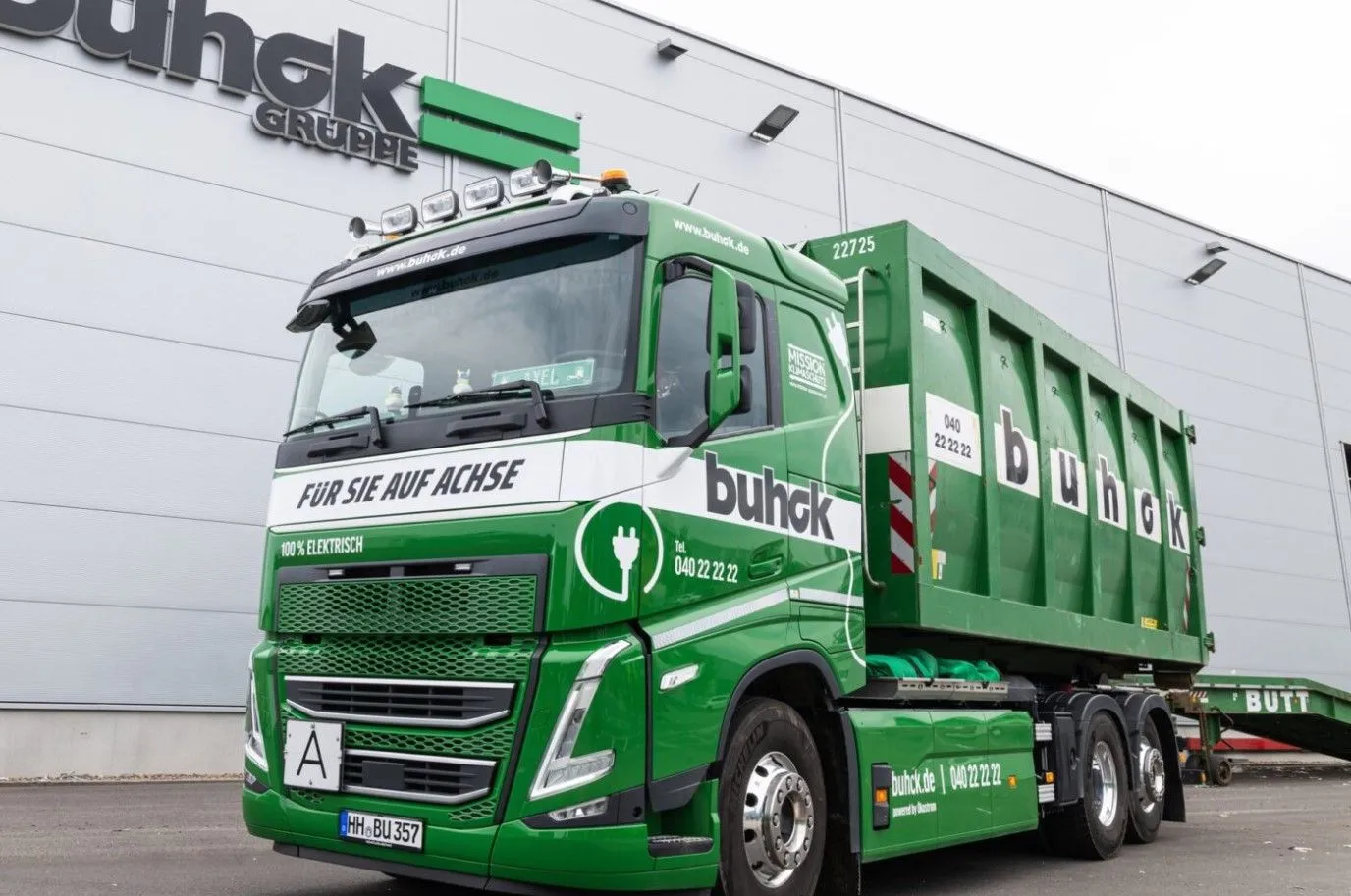
The company, specialized in environmental services and waste management, has its main operations center in Hamburg. It currently operates 53 vehicles there, 14 of which are already electric. These include container trucks, box trucks, and dump trucks with models such as the Volvo FH Electric and Volvo FM Electric, both delivering up to 540 kW (734 HP) of power. Buhck aims to further increase the use of this technology, with the goal of having an entirely electric fleet by 2032 at the latest.
What started as a pilot project has now become a regular part of daily operations. The company plans to add seven more electric trucks this year, an expansion driven not only by environmental considerations. For Buhck, profitability has become the main argument for continuing to electrify its fleet.
In 2025, the company’s electric trucks covered over 500,000 kilometers and, according to their own calculations, helped avoid approximately 550 tons of CO₂ equivalent emissions. But the most striking figure is related to costs. After accounting for all expenses, including the higher depreciation of electric vehicles, Buhck estimates that its electric fleet had average costs 15% lower than those of its diesel equivalents.
Purchase price remains the biggest obstacle
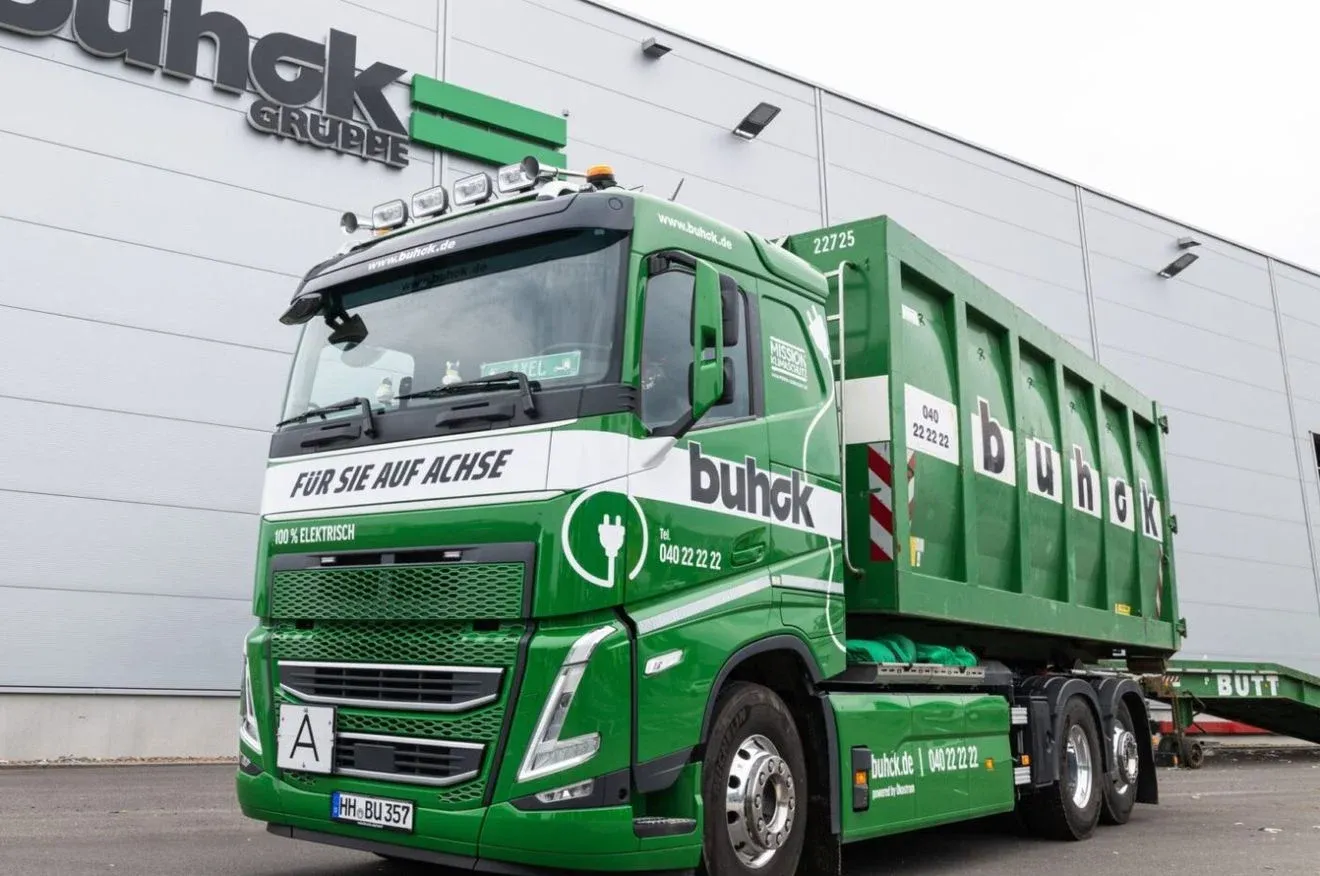
The main issue remains the initial cost. Until recently, Buhck estimated that a complete electric truck, including the chassis, body, and necessary technical modifications to suit its operations, could cost around 370,000 euros. However, prices are falling, and the company claims the market is starting to favor buyers.
Markus Horstkötter, Buhck’s general manager, believes that pressure from European emission targets is forcing manufacturers to increase sales of zero-emission vehicles. He explains that this situation is changing the power dynamics between manufacturers and fleet operators, who now have more leverage to negotiate both the price and specifications of vehicles.
The company has set a target of investing around 250,000 euros per truck this year. It is also changing the way these trucks are acquired. Instead of buying the vehicle, chassis, and various components separately to assemble each unit, Buhck is increasingly opting for complete solutions supplied by a single manufacturer.
The reason is quite simple. In a modern electric truck, the chassis, body, and electronic systems must work together, and any issue can end up affecting the overall performance of the vehicle. By having a single point of responsibility, the company aims to reduce downtime and avoid the usual disputes among suppliers when a malfunction or integration issue arises.
The experience gained so far has been positive. Once put into service, Buhck claims that the electric trucks operate without major problems. And although purchasing an equivalent diesel truck might still be about 100,000 euros cheaper, the difference starts to shrink when considering the daily operating costs of both types of vehicles.
Operational savings of an electric truck
According to the company’s calculations, a diesel truck currently has an operating cost of between 1.70 and 1.75 euros per kilometer, while an electric truck costs between 1.17 and 1.20 euros per kilometer. The difference mainly stems from energy costs and maintenance, as electric trucks eliminate the need for oil changes, exhaust treatment systems, and much of the mechanical complexity associated with internal combustion engines.
Tire and brake wear may be slightly higher under certain conditions, but Buhck claims that the number of visits to the workshop has decreased significantly. With an average daily mileage of 250 kilometers, the company estimates that an electric truck can save around 125 euros per working day.
That amounts to approximately 30,000 euros per vehicle per year. If we consider their 53 operating trucks, a fully electric fleet would result in annual savings of 1.59 million euros. Given the lifespan of a diesel truck, this would be around 14.3 million euros. Additionally, electric trucks have a much longer service life than diesel ones.
There is, however, an important condition for this to work. The company needs to have its own charging infrastructure. Relying on high-power public charging stations regularly would significantly increase the cost per kilometer and reduce much of the economic advantage over diesel.
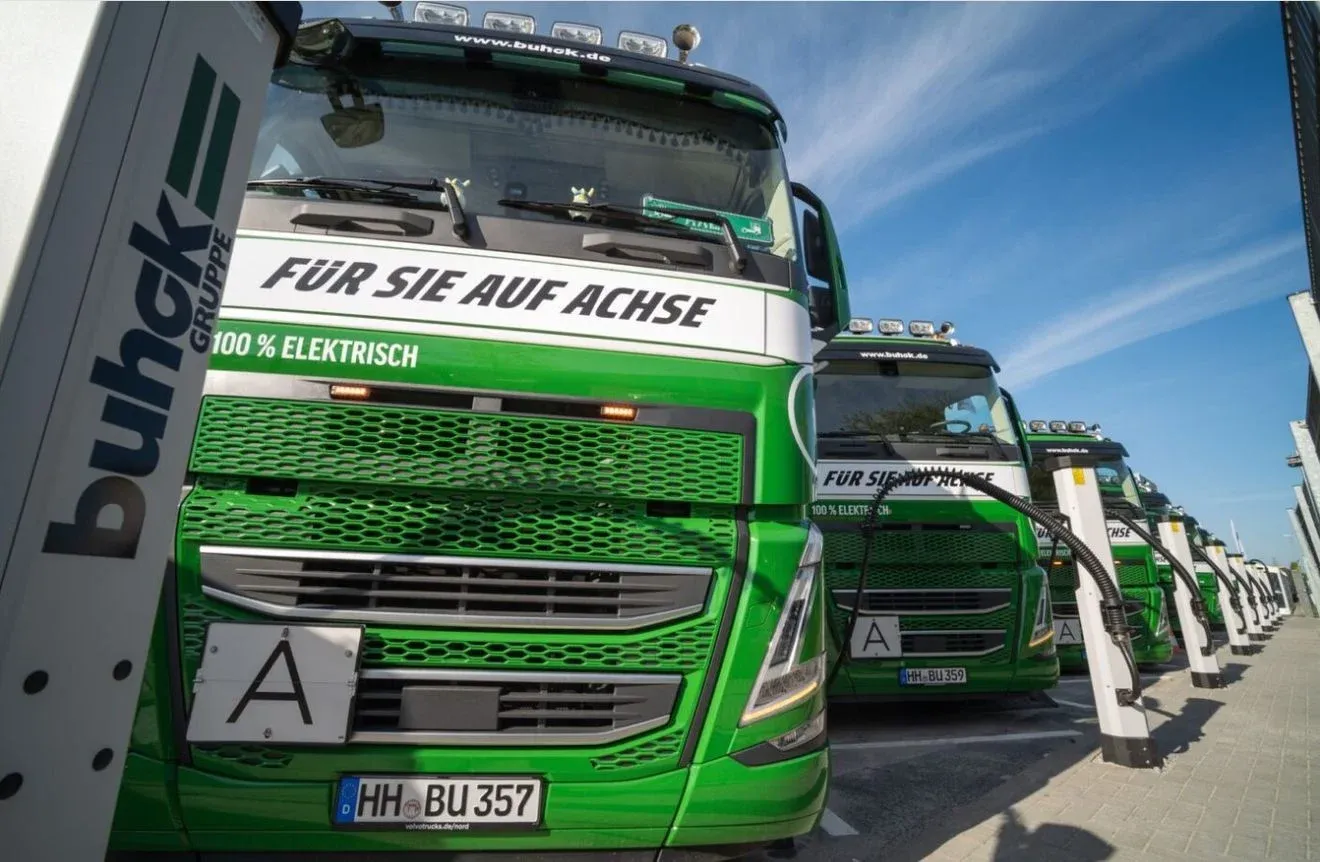
That’s why Buhck has installed 16 high-power Kempower charging stations at its facility, featuring dynamic energy distribution with up to 280 kW per station. The trucks are typically charged at night while they are in the depot, taking advantage of off-peak hours and the lowest charging costs. Additionally, the company has a solar panel system on its roof that allows for partial charging during the day and helps offset part of the energy consumption by feeding excess power back into the grid.
They are also considering other options, such as installing backup batteries to store excess energy, or even trying vertical wind turbines, which are simpler and quieter than traditional ones.
For Buhck, therefore, the electric truck has already moved past the experimental stage. His experience shows that there is still a significant barrier in terms of purchase price, but it also demonstrates that this difference can be offset over the vehicle’s lifetime when there is a dedicated charging infrastructure and the trucks cover enough miles per day.
The conclusion is particularly interesting because it involves a company using these vehicles in real conditions, rather than in a one-off test. When an electric truck operates every day, travels hundreds of kilometers, and can be recharged at its own facility—even using solar power—the economic equation begins to change significantly.
And that could turn out to be a much stronger reason than any marketing argument to accelerate the electrification of heavy transportation.
