
This is the autonomy you truly need in an electric car.
When someone considers buying an electric car, it’s easy to start by thinking about the longest trip they’ll make in a year. Vacations, a family visit hundreds of kilometers away, or that special trip that requires crossing Spain often carry more weight in the decision-making process than the daily commutes we make. And that leads to a much more interesting question: how much range do we really need for our regular use?
Because the everyday use of a car has little to do with that exceptional trip. Most of the time it stays parked, and many trips are short distances. The situation changes when we hit the road, especially in winter, when cold weather and high speeds can increase fuel consumption. That’s when it makes much more sense to focus on the ability to cover distance between charging stops rather than having a huge battery.
Spain also has different usage conditions compared to European countries. We have higher average temperatures, though there are significant differences between regions as well, and a road network that makes long trips a regular part of many drivers’ routines. Therefore, rather than copying figures from other markets, it’s better to first examine how we actually use cars in our own country.
Spaniards drive an average of 33 km per day
According to the DGT, Spaniards drive an average of about 33.6 kilometers per day in their cars. This figure suggests that nowadays, almost any car will suffice for our daily commutes.
But the range needed for daily use doesn’t have to match the range we want for vacations. They are two different needs. A car used for commuting, shopping, taking children to school, or urban trips can go several days without needing a quick charge, especially if it has a charger at home.
The problem arises when it comes to trips of 500, 600, or 700 kilometers. At that point, the rated range remains important, but it’s no longer the only figure we should consider. Temperature, speed, terrain, and actual fuel consumption can drastically change the outcome, turning a car with high WLTP range into one that needs to stop much earlier than expected.
This is especially important in Spain because our long-distance trips usually take place at highway speeds. At 120 km/h, aerodynamic drag increases significantly compared to urban and secondary roads, while the use of heating or air conditioning adds another small energy cost. Over trips of hundreds of kilometers, all these differences accumulate over time.
Therefore, when evaluating an electric car for road use, real range and charging speed should be considered together. A 100 kWh battery may allow driving many kilometers without stopping, but it takes a long time to recharge. Additionally, its weight and cost become less relevant in everyday use.
In winter, range can drop significantly
The tests conducted by ADAC in Germany help explain this phenomenon, though their figures should not be directly applied to Spain. In a test involving 14 family electric cars at 0 degrees with an average speed of 111 km/h, the models traveled between 293 and 441 kilometers before needing a recharge, despite having WLTP ranges of at least 500 kilometers.
The Audi A6 Avant e-tron performance (94.9 kWh) covered the greatest distance at 441 kilometers, while the Tesla Model Y Premium AWD (79 kWh) reached 406 kilometers. The Volkswagen ID.7 Tourer Pro (77 kWh) came in at 360 kilometers, and the BMW i5 Touring eDrive40 (81.2 kWh) at 351 kilometers. The BYD Sealion 7 Excellence AWD (91.3 kWh) covered the shortest distance at 293 kilometers.
This test illustrates something we must also keep in mind in Spain when traveling through cold areas or during winter months: the WLTP figure cannot be used as a guarantee of range on the road. It is an approved reference for comparing models, but real-world conditions can be very different.
In Spain, the temperature penalty will not be the same in Seville as it is in Burgos, nor will traveling in August be the same as traveling in January. That’s exactly why it makes more sense to consider a reasonable safety margin and understand the car’s actual performance rather than focusing on achieving the highest possible WLTP figure.
The heating system also plays a role. When starting a car that has spent the whole night outside on a cold morning, part of the available energy is initially used to bring the cabin to the desired temperature. If the car remains connected to a charger, we can preheat it before heading out, using power from the grid for this purpose instead of drawing from the battery.
The conclusion is simple: for a Spanish driver who mainly makes daily trips, a significant loss in range in winter isn’t as critical as for someone traveling in Northern Europe. If we usually drive only a few dozen kilometers and can charge overnight, we’ll still have plenty of energy. In contrast, for those who drive hundreds of kilometers on the road, the situation is completely different.
That’s where fast charging comes in.
For traveling around Spain, fast charging can be more important than having a huge battery.
According to ANFAC, the Spanish automobile industry association, there were 56,682 public charging points installed by the end of the second quarter of 2026, but it noted that 17,821 of them were not operational, accounting for nearly 24% of the total installed. This shows that for drivers, it matters far less how many points are listed on paper than how many are actually functional when it’s time to use them.
And here, Spain still has a task left unfinished. High-power infrastructure is expanding, but it remains particularly crucial on major intercity routes. During the second quarter of 2026, 1,605 new charging points were added, 337 of which had a capacity exceeding 250 kW. In total, the country reached 2,806 high-power charging points.
For a user on a long journey, this improvement is likely more important than having an extra 10 or 20 kWh of battery capacity. If we can cover 250 or 300 kilometers during a reasonably short stop, the battery size becomes less critical.
ADAC’s fast charging test results show exactly this difference. In their winter test, some models regained enough energy in 20 minutes to cover over 200 kilometers, while others fell far short. The advantage doesn’t come solely from achieving a high maximum power level; what truly matters is maintaining a high power output for most of the charging time.
This difference is especially noticeable on the road. A car may claim an impressive maximum charging power, yet it won’t be particularly fast if it can only maintain that power for a few minutes. Another model with a lower maximum figure might prove more efficient if it can sustain high power levels between about 10% and 60-70% battery charge.
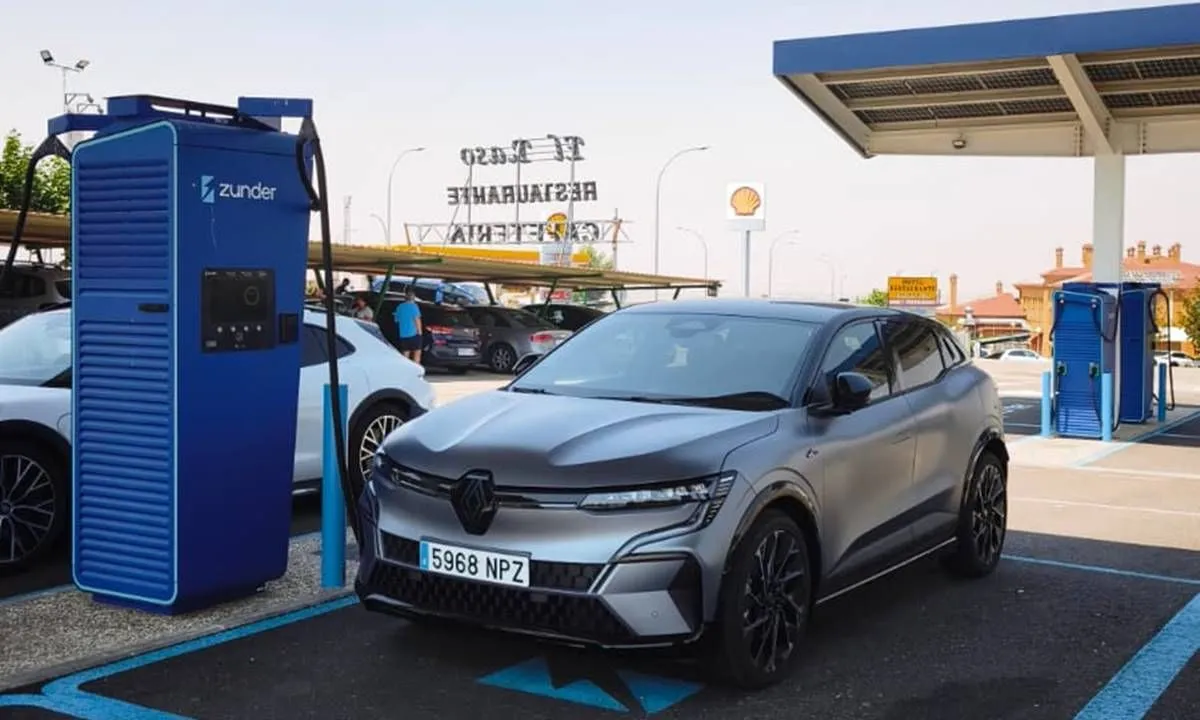
That’s why, when someone is looking for an electric car to travel around Spain, I would first consider the combination of actual consumption, road range, charging curve, and the availability of chargers along typical routes. Battery capacity would come second.
In addition, Spain already has a tool that can be very helpful for planning such trips. REVE, developed by Red Eléctrica, provides dynamic information on charging infrastructure, including location, availability, price, and charging speed.
This makes planning an electric trip less about calculating every last kilometer and more about knowing where it’s worth stopping. And that difference is significant.
Because a giant battery has several drawbacks. It adds weight, increases the vehicle’s cost, and requires more materials for production. If those extra kilowatt-hours are used only a few times a year, we’re paying for the entire lifespan of the car for a capacity that we hardly utilize.
That doesn’t mean large batteries are a bad idea. For those who frequently travel long distances, live in an area with limited infrastructure, or can’t charge at home regularly, a higher-capacity battery can be entirely justified. The problem arises when buying one simply out of fear of running out of range, especially since the car rarely travels more than a few dozen kilometers most of the year.
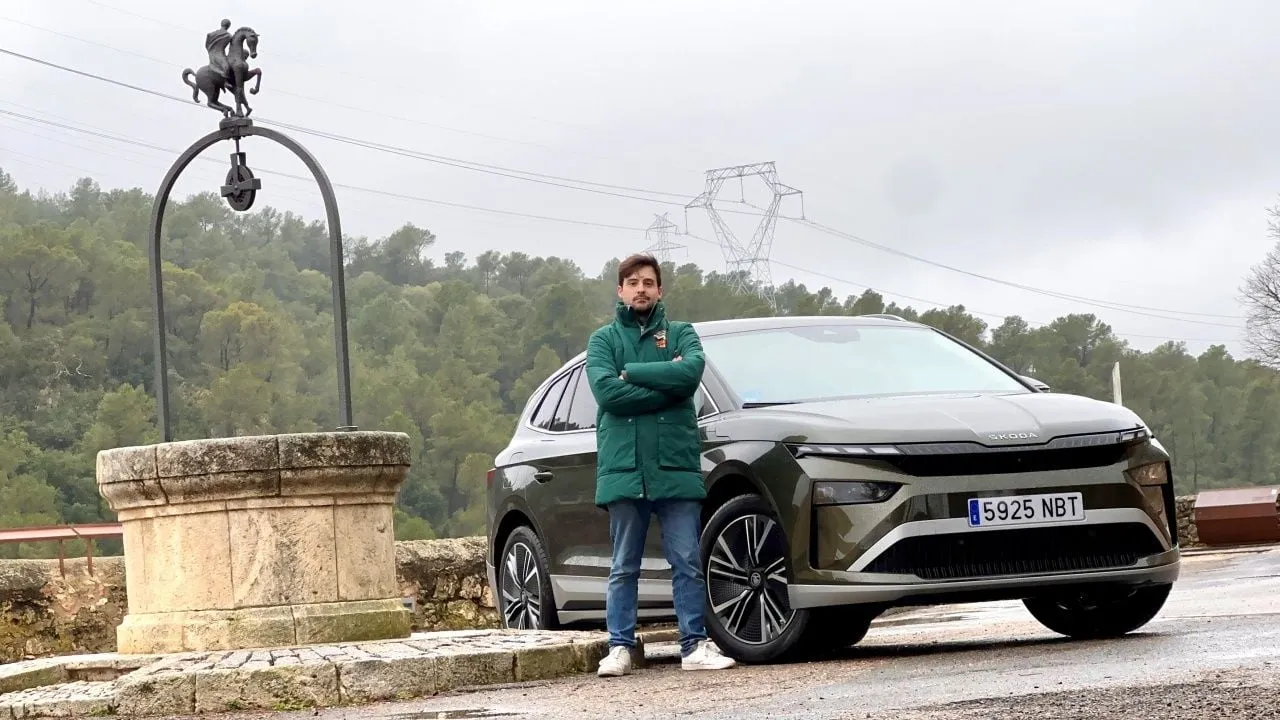
Therefore, the answer to the initial question depends far more on how we use the car than on a universal figure for range. For a driver who charges at home and uses the car mainly in the city and surrounding areas, a medium-sized battery of 50-60 kWh can be more than sufficient. For a family that travels frequently, it is reasonable to seek higher capacity, 75-85 kWh, along with efficient fast charging.
For long-distance travelers, the priority should be even clearer: efficiency, good real-world range, and a fast charging capability that allows them to cover many kilometers in little time. Then there is the question of how long each driver is willing to wait for their car to be ready to continue the journey.
Because an electric car doesn’t need to win a battle over range figures every year. It needs to allow the driver to make their journey without constantly worrying about how many kilometers are left.
In fact, the next major advancement might lie in making better use of the battery during the hours when the car is parked. In Spain, Red Eléctrica already offers a platform to monitor in real time the availability and price of public charging stations, while two-way charging opens the door to using the car as an energy storage unit when it’s parked.
Perhaps the ideal solution isn’t to have an increasingly larger battery, but rather one of the right size, along with a fast charging system and a sufficiently good network to enable much smarter usage of the battery.
