
Long-term test of the Mercedes GLC 2026: 5,500 km to completely forget about internal combustion engines?
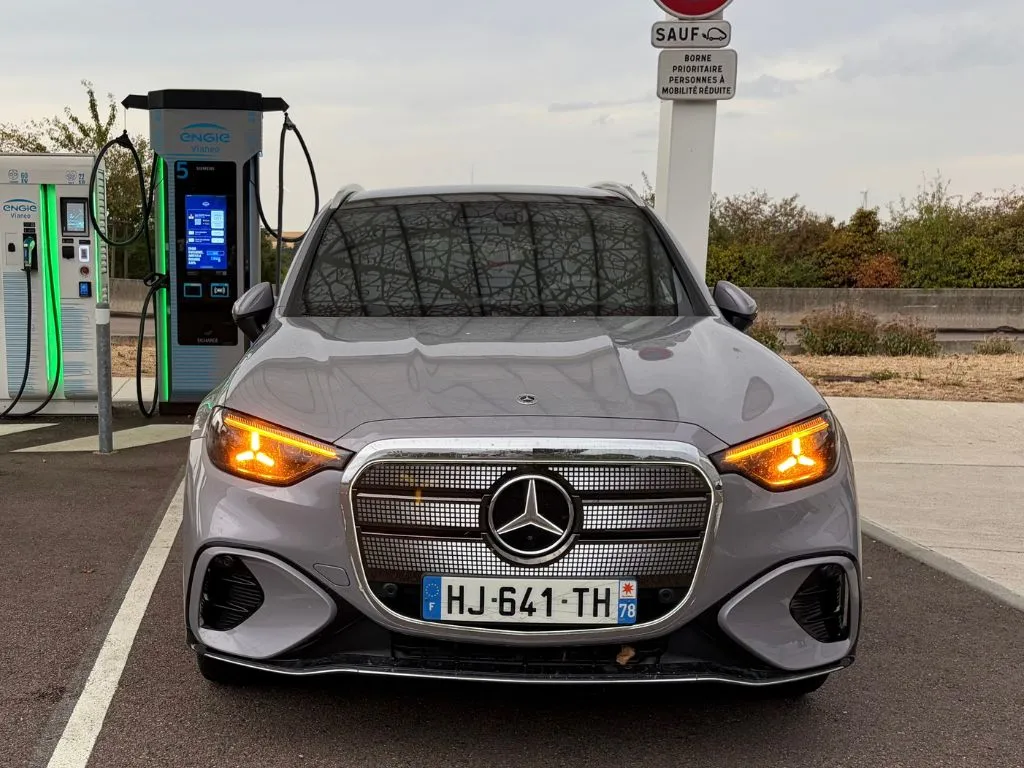
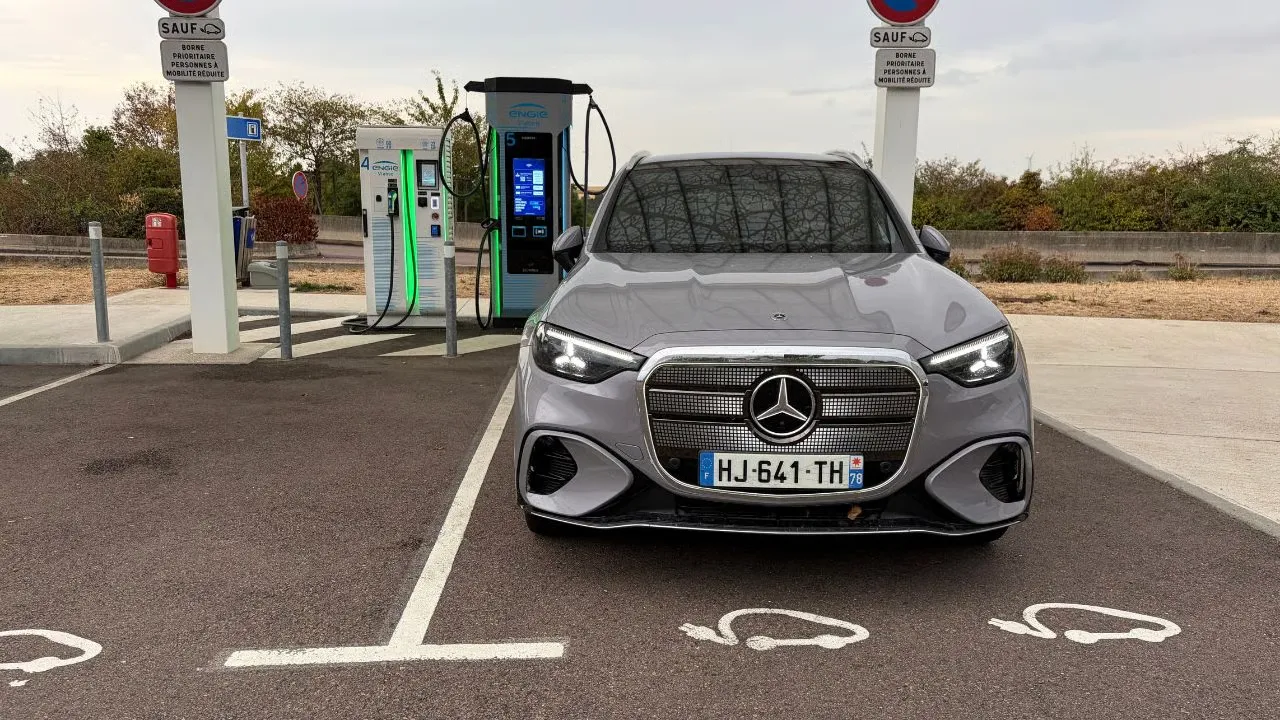
As usual, we took advantage of the summer break to drive around France in an electric car. This year, we chose the brand-new Mercedes GLC 400 4MATIC. It was an opportunity to confirm its strengths as well as identify some shortcomings.
After our first attempt, we had the opportunity to test the Mercedes GLC for a longer period, now available in a 100% electric version. The manufacturer provided us with the top-of-the-line GLC 400 4MATIC model, though rear-wheel-drive versions are also available and better suited for this extended test. At least on paper. Please note that this new article complements our previous review and video available here, which covers aspects such as performance and driving sensations that we will not discuss in this piece.
5500 km behind the wheel of the Mercedes GLC
Smaller than the Mercedes EQE SUV, the electric GLC is still quite large. Yet its size becomes quickly manageable, especially with the numerous driving aids available: narrow streets in Aix-en-Provence and tight parking spaces posed no problem at all due to its dimensions.
Also read
Volvo EX60 review: BMW iX3 and Mercedes GLC under the microscope without any insecurities
In contrast, the interior space is generous both in the front and back. The cabin is bright, particularly with the Sky Control panoramic roof that can be made opaque at will or only in certain sections using an electric control. This control is accessible from the infotainment screen, but once the wow factor wears off, the same setting (opaque since it’s already bright enough) will remain throughout the journey.
If, like us, you struggle with packing light (after all, this is a road trip of over 5000 km), the Mercedes GLC features a trunk with a capacity of 570 liters. This is enough to store several suitcases and some soft bags. The only downside is the lack of additional space like that found in the Tesla Model Y. While there is a double bottom, it’s only suitable for storing items that aren’t too thick, such as a compressor or a small toolbox.
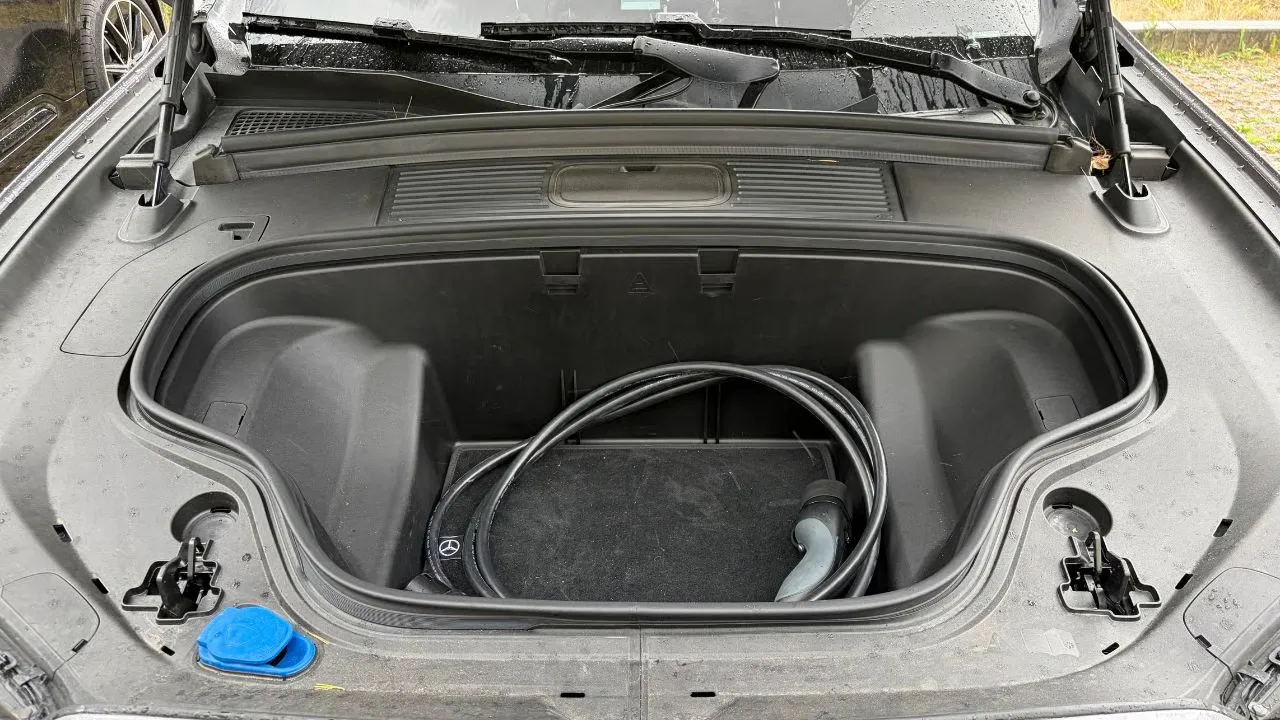
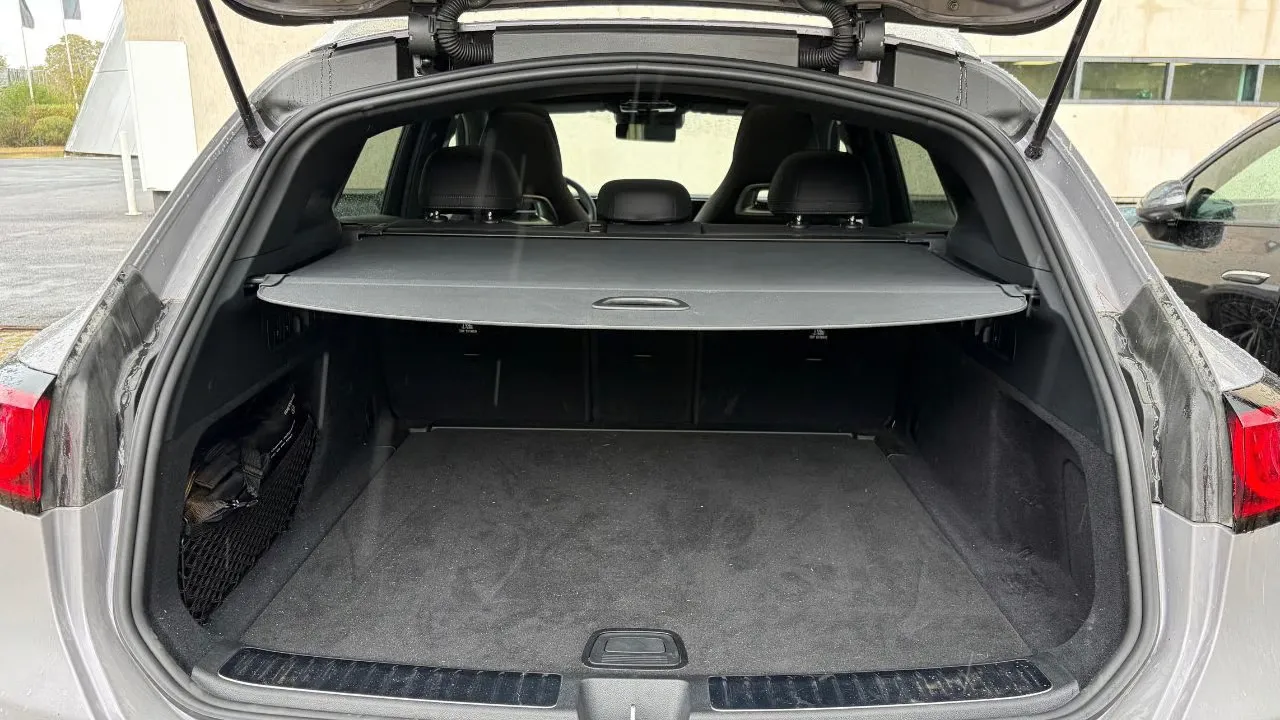
Of course, you’re free to fold down the 40/20/40 split rear seat if no one is sitting in the back to gain a cargo space of over 1,000 liters. If that’s not enough, the GLC also features a very spacious 120-liter frunk under the front hood. It’s extremely useful for storing a Type 2 charging cable, as well as cabin luggage or various bags. In short, we couldn’t do without it, especially since it’s easily accessible without needing to use the touchscreen controls, a handle under the steering wheel, or a mobile app. No — just press the logo on the hood and it’s done.
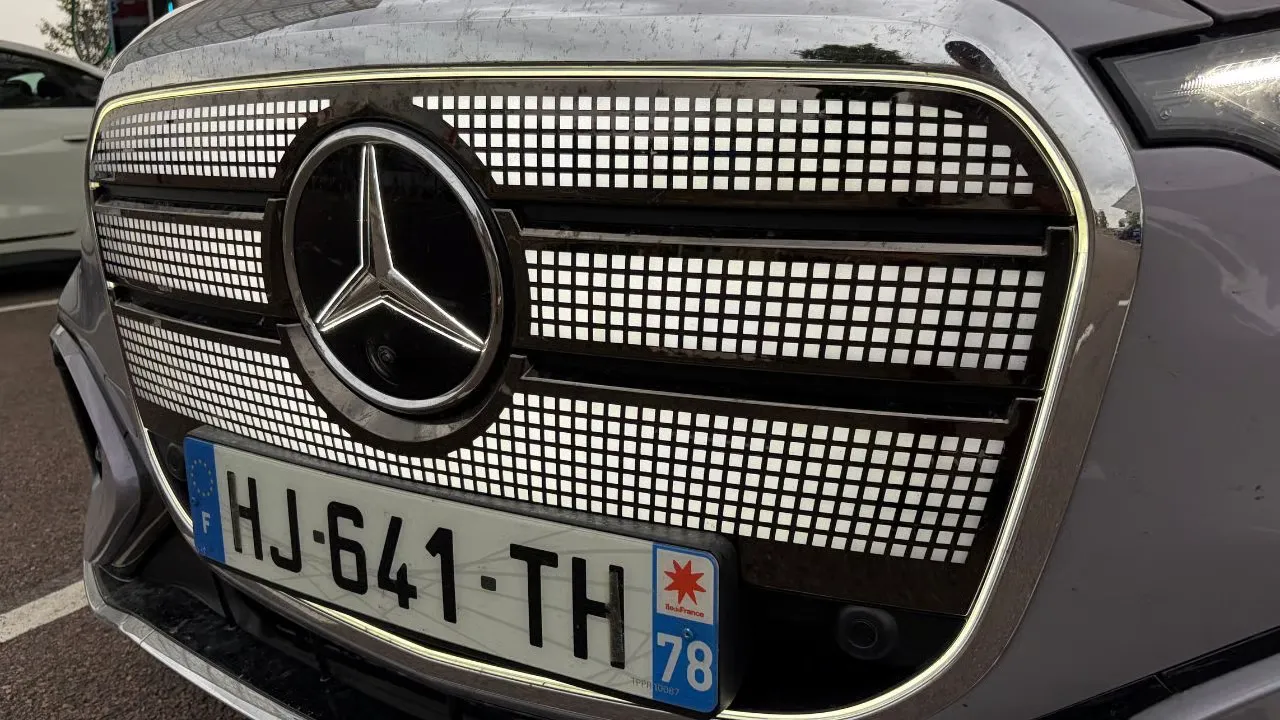
While we’re on the topic of the front end, a word about the lighting and this illuminated grille. For us, the effect is quite successful, even though we were a bit skeptical when we first saw the initial photos of the electric GLC. In any case, it makes a nice impression at night, especially with the lighting display that activates when the vehicle starts. On the downside, we regret the lack of Matrix LED headlights like those found on the EQE SUV, for example. Although the lighting system of the electric GLC is impressive (the high beams have an astonishing intensity), such technology would have provided real additional comfort.
What about comfort inside the Mercedes GLC electric?
Inside, the design is meticulous, featuring illuminated door sills and decorative wooden inlays. It’s a shame that the lower parts are still made of hard plastic while others make an effort to hide it behind felt, for example. That said, the star-brand hasn’t skimped on options for our Mercedes GLC 400 4MATIC. Everything is included or nearly so, including the standard AMG Line sports seats with leather upholstery (2050 euros). There’s nothing to criticize about the seat, which offers adjustments in all directions and memory functions for every situation. Adjusting the seats is easy thanks to the buttons located on top of the door panels. They’re heated and also have a ventilation function (like the two compartments in the wireless smartphone charger), which was very useful to us. It greatly enhances comfort during hot weather.
We met this summer. Add to that air suspension (2,900 € including the rear steering wheels) and first-class sound insulation to create a pleasant little cocoon inside the Mercedes GLC 400 4MATIC. On the other hand, the seat massage function didn’t impress us much, especially with only one preset program available.In addition, with the introduction of the new version of the MBUX system, Mercedes has changed the controls on the steering wheel and, most notably, removed the small touch pad on the right side. That pad allowed navigation through the infotainment system without touching it. That said, it must be acknowledged that the ergonomics are well thought out, and it doesn’t take long to master MBUX.
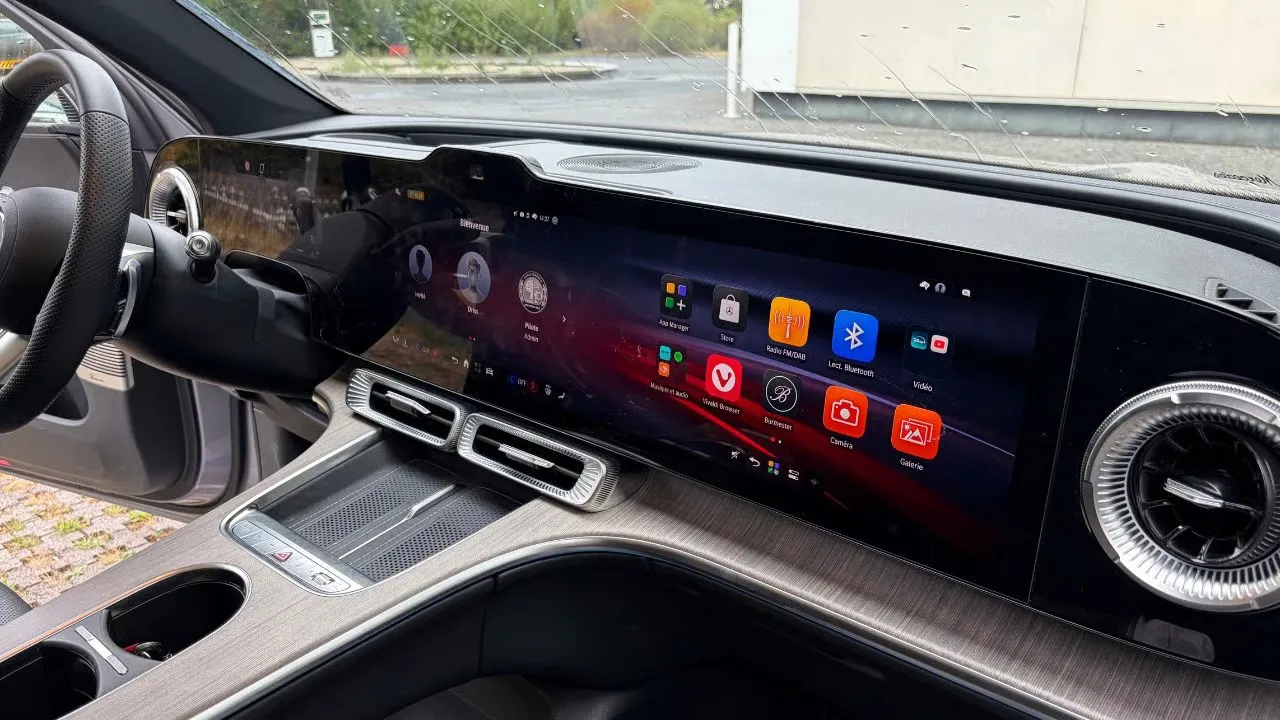
The massive MBUX Hyperscreen is truly eye-catching. It features high resolution, brightness, and contrast ratios. Still, one wonders whether extending it to the front of the passenger seat serves any purpose beyond watching YouTube through a Bluetooth headset.
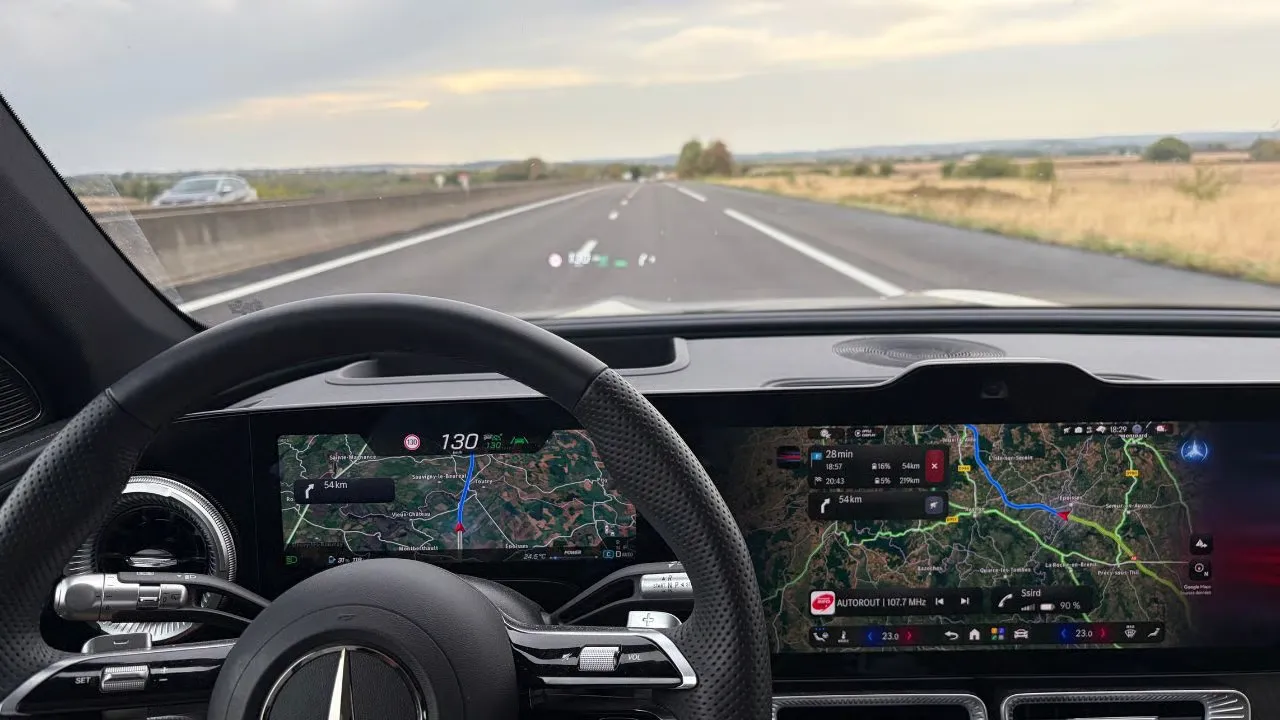
In addition, there’s the head-up display (1300 euros) which shows arrows indicating the path to take at intersections. If you still get lost despite all this, it must be on purpose.
Driving aids: some good… and some less so
During the long highway trips, we relied on the car’s route planner to optimize charging stops. It not only shows the path but also indicates where to stop for charging and any potential traffic delays along the way. Thanks, Google Maps.
It’s possible to set the desired battery level upon arriving at a charging station, as well as when reaching your destination. You can also select preferred charging networks or avoid them altogether. The system is well-designed in that it shows points of interest along the route or at your destination, including restaurants. This is quite useful when traveling with a ten-year-old who already has specific dietary requirements.
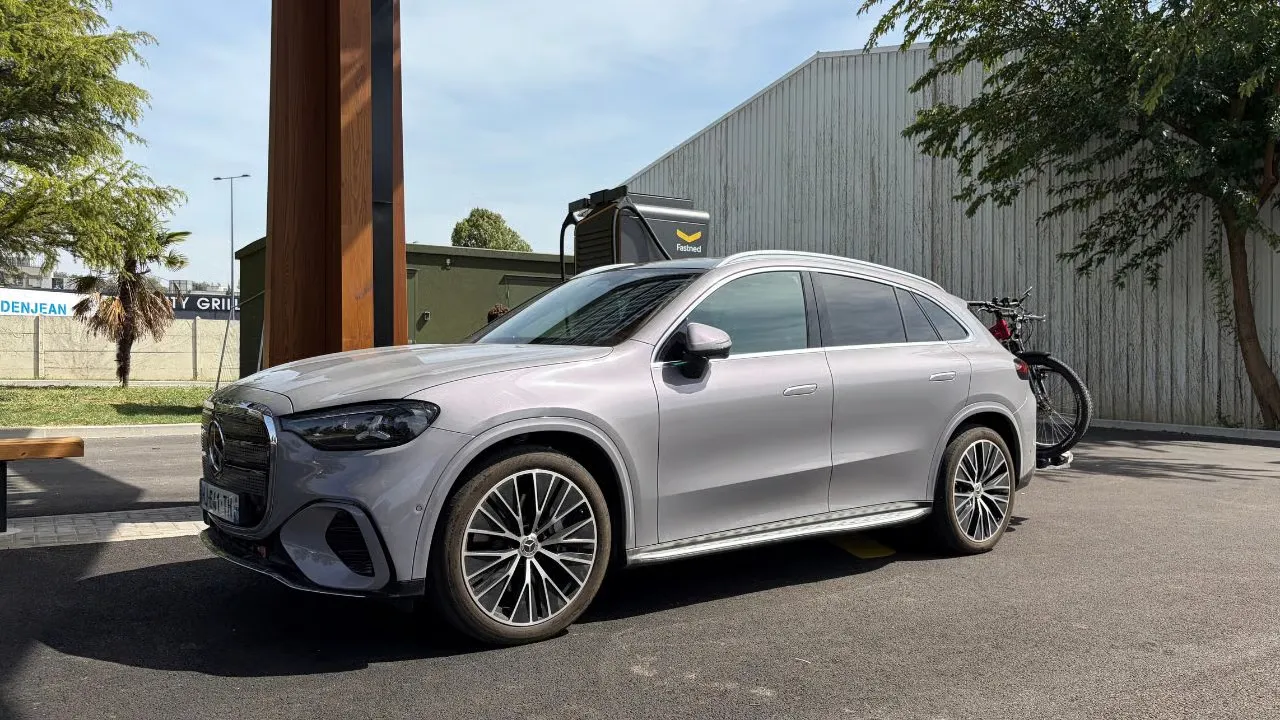
We would like to clarify that our Mercedes GLC 400 4MATIC is equipped with a battery having a useful capacity of 94 kWh. We chose to set the level at 10% both at the charging station and upon arrival, as there was always a charging option nearby. With an average consumption of 19 kWh per 100 km, we can assure you that we never worried about range. In fact, the car is well-suited to handle certain challenges.
Indeed, while the charging network is now extensive across the entire country, there are still a few congestion points during this summer period. Especially on weekends, during meal times, or in certain heavily used rest areas (such as Montélimar). Even with 10% battery remaining, our Mercedes GLC had no trouble taking us to the next charging station when all spots were already occupied at the originally planned one. In fact, feel free to exit the highway. Thanks to MB.OS, we were able to locate nearby fast charging stations to save time both at the charger and in restaurant queues.
As monotony set in with each passing kilometer, we had plenty of time to test the car’s equipment. First was the 4D-Surround Burmester audio system, which delighted our ears. It’s included in the Premium Plus Package (11,150 euros—yes, that gets pretty expensive), which also features various lighting options (grille, ambient lighting), the Hyperscreen, hands-free access, protruding handles, as well as a panoramic roof and heated rear seats. In addition to the various audio settings, the 4D-Surround Burmester includes an activator in both front seats that vibrate more or less to the rhythm of the bass in the music. It’s quite nice and can be completely disabled via the touchscreen.
Additionally, while we particularly appreciated the driving assistance features on the Mercedes EQE SUV, the GLC leaves us feeling somewhat unsatisfied. The adaptive cruise control is effective in all conditions, but there’s no hands-free driving option.
Most importantly, the system reacts violently—with sudden steering inputs or resistance when trying to change lanes, even after signaling. The worst part is the automatic lane change feature. Once it detects no one in the blind spot, the car changes lanes on its own, but the maneuver is still so abrupt that we disabled this function. Another issue is the speed sign recognition system, which automatically adjusts the Mercedes GLC’s speed, often giving incorrect readings. On several occasions while on the highway with the cruise control set to the legal speed of 130 km/h and no speed signs in sight (not even on a truck, who knows), the system suddenly displayed 70 km/h. This happened multiple times, even dropping to 50 km/h right in the middle of the highway. Thankfully, we were vigilant enough to avoid an accident.
Rear-end collision. We contacted Mercedes, who informed us that they were aware of this bug and that it should be fixed through a system update.Most notably, the system sometimes reacts in a somewhat harsh manner, with sudden steering movements or strong resistance when trying to change lanes even though the turn signal is activated. But it’s the automatic lane change feature that poses the biggest problem. As soon as the system detects no vehicles in the blind spot, the car performs the maneuver on its own. In theory, this is great, but in practice, it’s far too abrupt and lacks smoothness. That’s why we chose to disable this feature completely.
We also encountered a strange bug in the speed sign reading system, which is used to automatically adjust the speed of the Mercedes GLC. On several occasions while driving on the highway with the cruise control set to the legal speed of 130 km/h and without encountering any speed signs (neither in front nor behind a truck), the system suddenly displayed a speed limit of 70 km/h. The issue even occurred with a speed limit of 50 km/h right in the middle of the highway. Fortunately, being aware of this problem, we were vigilant enough to react and avoid a potential rear-end collision. We contacted Mercedes regarding this matter. The brand informed us that they were aware of this bug and stated that it should be fixed in an upcoming system update.
The Mercedes GLC 400 also comes standard with the Parking Package. Once stopped, the car detects available parking spaces and displays them on the infotainment screen. You simply choose the desired spot, and the car parks itself. We trusted it, though with some hesitation. In a regular parking lot, automatic parking poses no problems. On uneven surfaces, the results are more variable, as the car often stops mid-maneuver. In any case, the Mercedes GLC 400 is equipped with enough sensors and cameras to prevent damage to the bodywork or the need to replace a wheel. Incidentally, our test unit was fitted with rear steering wheels that make things easier in tight spaces.
One of the best electric SUVs for range and charging
As mentioned earlier, we recorded an average consumption of 19.1 kWh/100 km during our road trip of over 5,000 km, without any eco-driving practices. It was even 16 kWh/100 km in urban areas. Driving from Paris to Aix-en-Provence on a single charge is no longer impossible. This is an impressive performance for an SUV over two tons, especially since we installed a bike rack to make things more challenging.
If you’re used to stopping every two hours while driving an electric car, you might find the wait until the battery reaches a low enough state of charge to optimize charging time quite long. On the other hand, heavy-duty drivers won’t have any excuse to avoid trying electric vehicles, unless they have a bladder that can expand infinitely.
All indicators are also green regarding charging. The Mercedes GLC 400 is equipped with an 800V DC system with a power output of up to 330 kW. Battery preconditioning can be automatic or forced via the infotainment system.
The car’s display and mobile app allow real-time tracking of the charging process, especially helping to identify reasons for lower power output than expected, which are often related to the charging station. We even exceeded the advertised 330 kW several times. On top of that, the charging curve doesn’t drop significantly beyond 50% SOC. As a result, it’s common to charge at nearly 100 kW even when the battery shows over 80% charge. It’s worth noting that results are less favorable with Ionity stations, where charging power never exceeded 120 kW, despite our 800 V electric SUV being equipped with a 400 V converter as an option (700 euros). We didn’t encounter such issues with other providers.
Also read
The new electric Mercedes GLC: production has already been halted due to a battery shortage
The Mercedes GLC 400 4MATIC comes standard with an onboard charger of 11 kW. Our test unit had a 22 kW charger as an option (again, at 700 euros). This is useful for charging twice as fast at an AC outlet, such as when running errands. However, neither the car nor the app allows adjusting the amperage to more precisely control charging when needed.
Conclusion
It’s hard not to be thrilled after driving over 5,000 kilometers in the Mercedes GLC 400 4MATIC. Comfortable and quiet, this electric SUV is built for long trips thanks to its large battery and surprisingly reasonable fuel consumption for its class. With fast charging, there’s barely time to take a lunch break. Starting at 71,900 euros, the base version already comes equipped with a solid standard suite of features. After all, not all options are created equal, as we’ve seen. Some will be available from the start as part of packages that quickly raise the price tag. In any case, traveling as easily in an electric vehicle as in a conventional one is now a reality—provided you’re willing to pay the price.