
Test Lancia Gamma HF Integrale: Real Distinction?
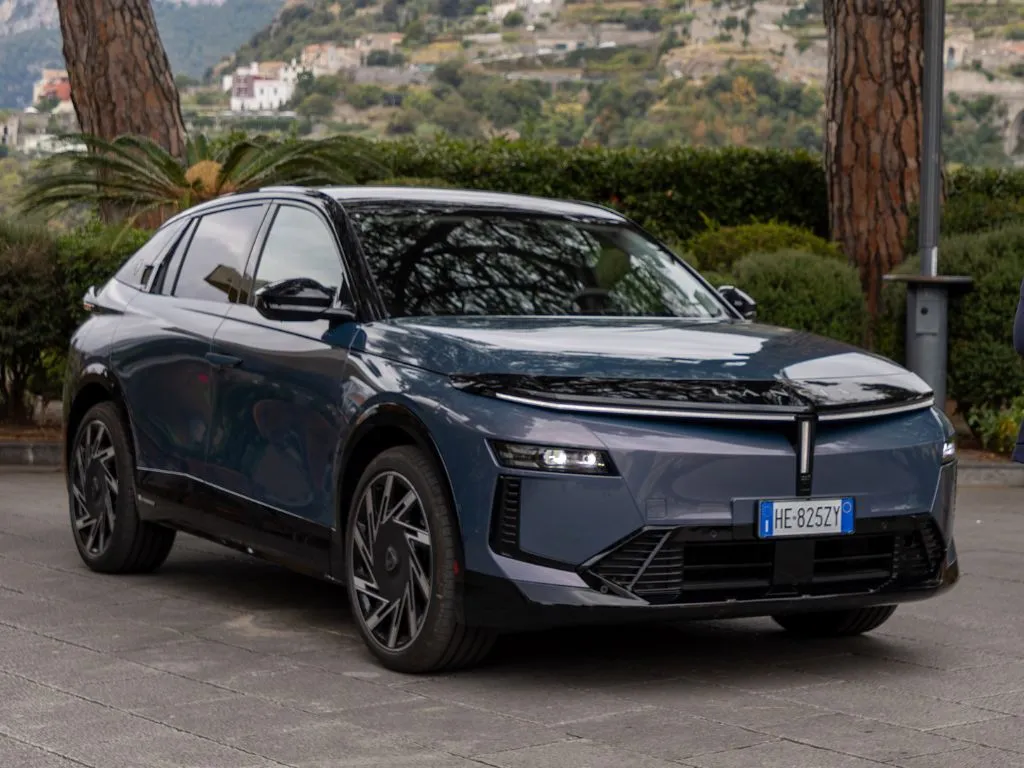
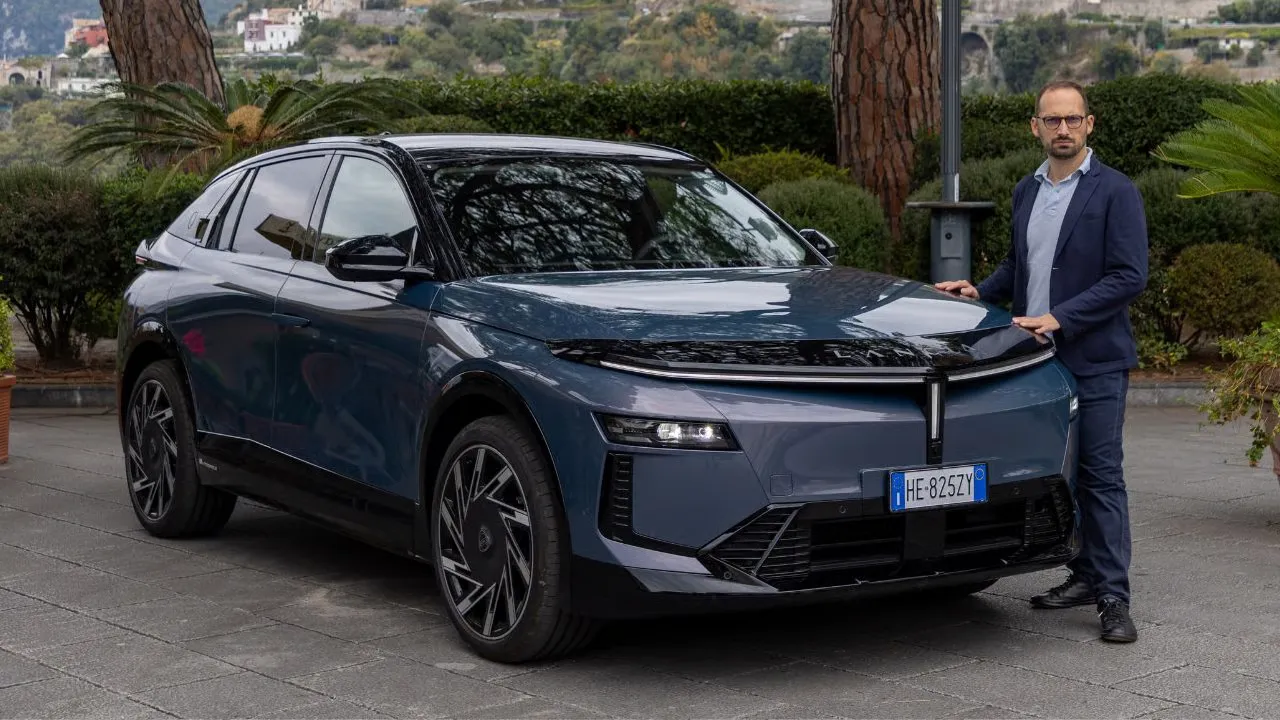
The Lancia Gamma, a sibling to the Peugeot e-3008 and DS 7, strives to develop its own identity. This includes adopting the HF label.
Standing out is no easy task in Stellantis’ vast ecosystem. Accounting for less than 0.5% of the group’s overall sales, Lancia is forced to reuse components, engines, or batteries commonly found elsewhere. Yet it still aims to create an identity that is unique in every sense.
This obviously comes down to design. While the overall silhouette of this coupe-style SUV isn’t entirely unfamiliar, it still boasts a distinct personality. Take a look at the stylistic details: the three converging light strips, the angular headlights positioned below, the black inserts that attempt to create a fastback line around the windows, and the recesses and curves beneath the doors...
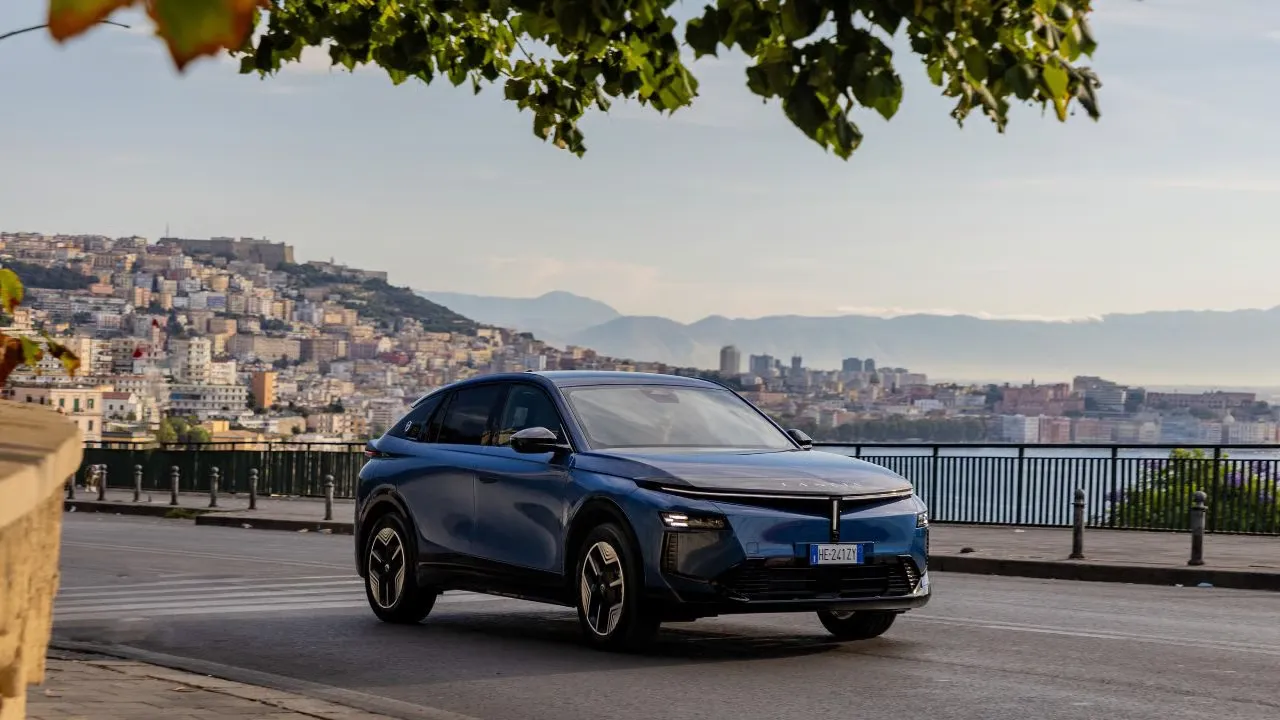
Our test vehicle:
Lancia Gamma HF Integrale
375 hp / 97 kWh / 676 km WLTP / 59,900 euros
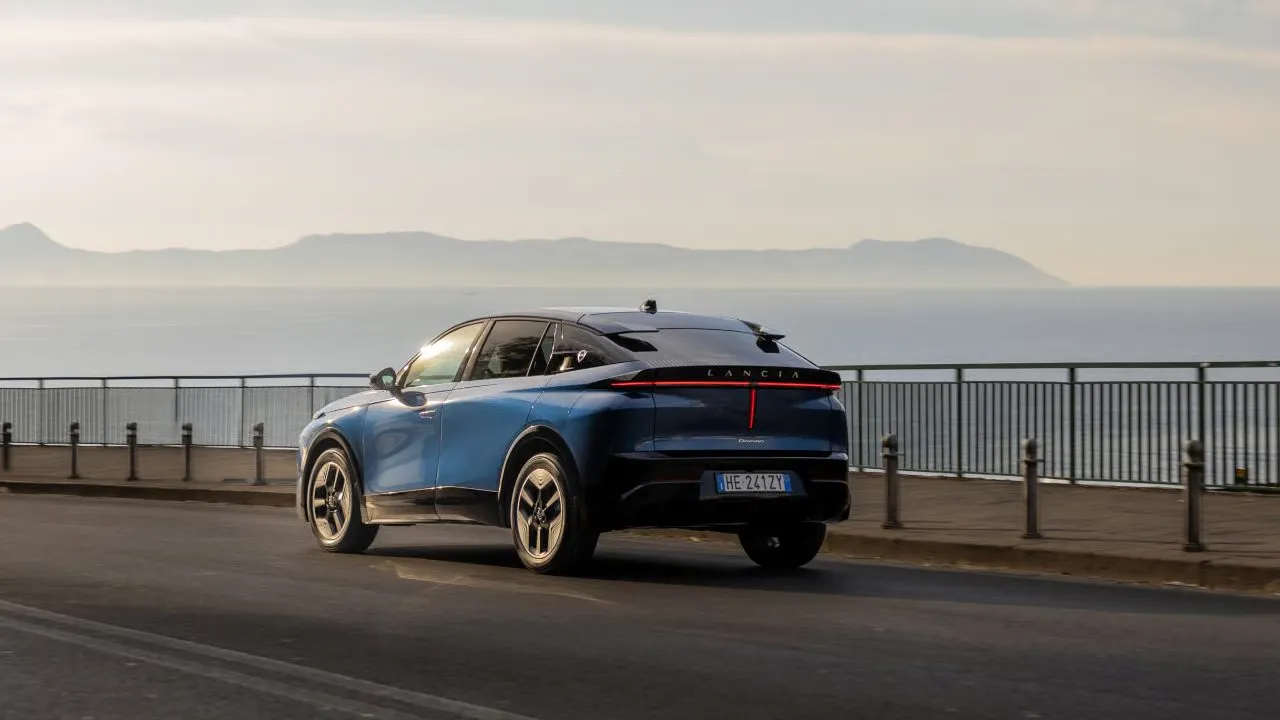
The tilted rear window, the pseudo-spoilers on top of the trunk lid, or the rear door handles integrated into inverted NACA air intakes all contribute to this design effort. Our HF version adds specific wheels (21-inch “forged aluminum” wheels are optional) as well as gray vertical lines drawn beneath the rear window. This is said to be a tribute to the venetian blinds on the Beta HPE.
The dimensions, however, are very similar to those of the recent DS 7. That means it is slightly longer than the most common C-segment SUVs such as the Peugeot e-3008 (4.54 m) or Renault Scénic (4.47 m). The Tesla Model Y or Xpeng G9 are significantly longer.
Dimensions of the Lancia Gamma
Length: 4.67 m
Width: 1.90 m
Height: 1.63 m
Wheelbase: 2.79 m
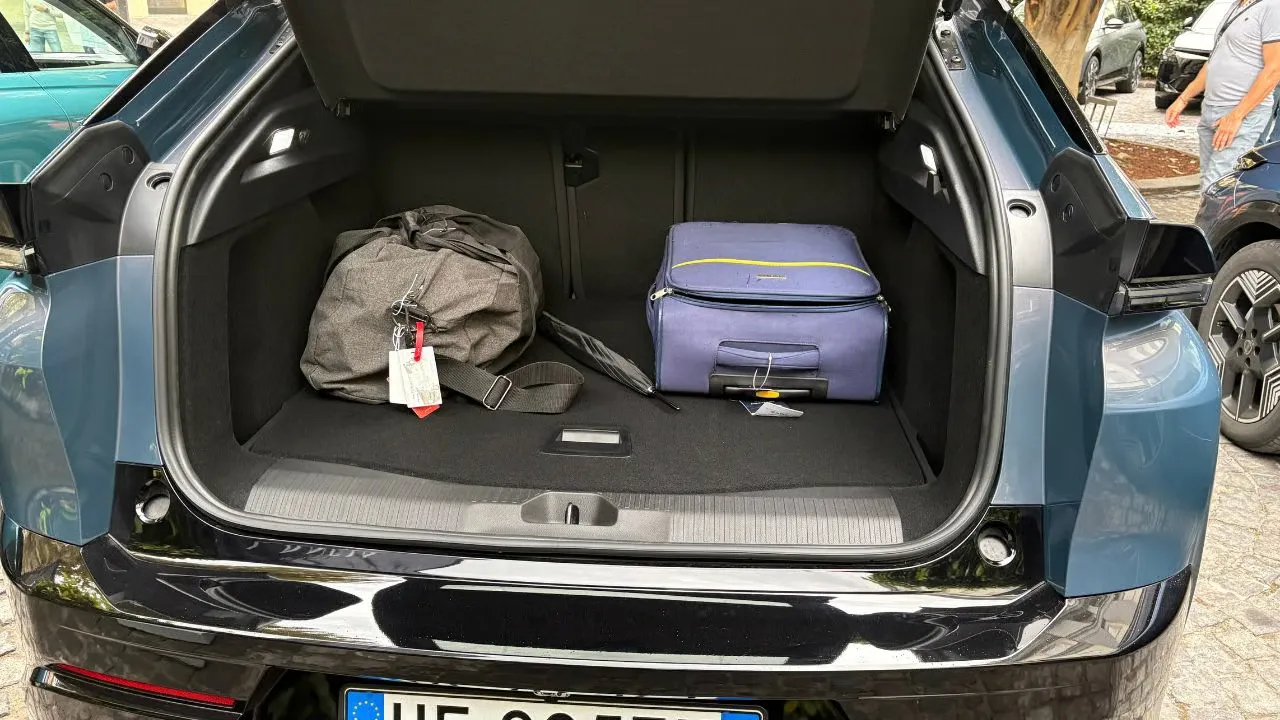
Trunk volume: 560 l
Frunk: no
Interior
Here, it can’t be said to be the same as elsewhere. Lancia’s designers, led by Jean-Pierre Ploué and then Gianni Colonello, created their own design language. At the center is the famous Tavolino, a small semi-circular table that holds your phone. In fact, it’s here — not on the two recessed areas below — that the wireless charger is located. At first glance, one might be deceived.
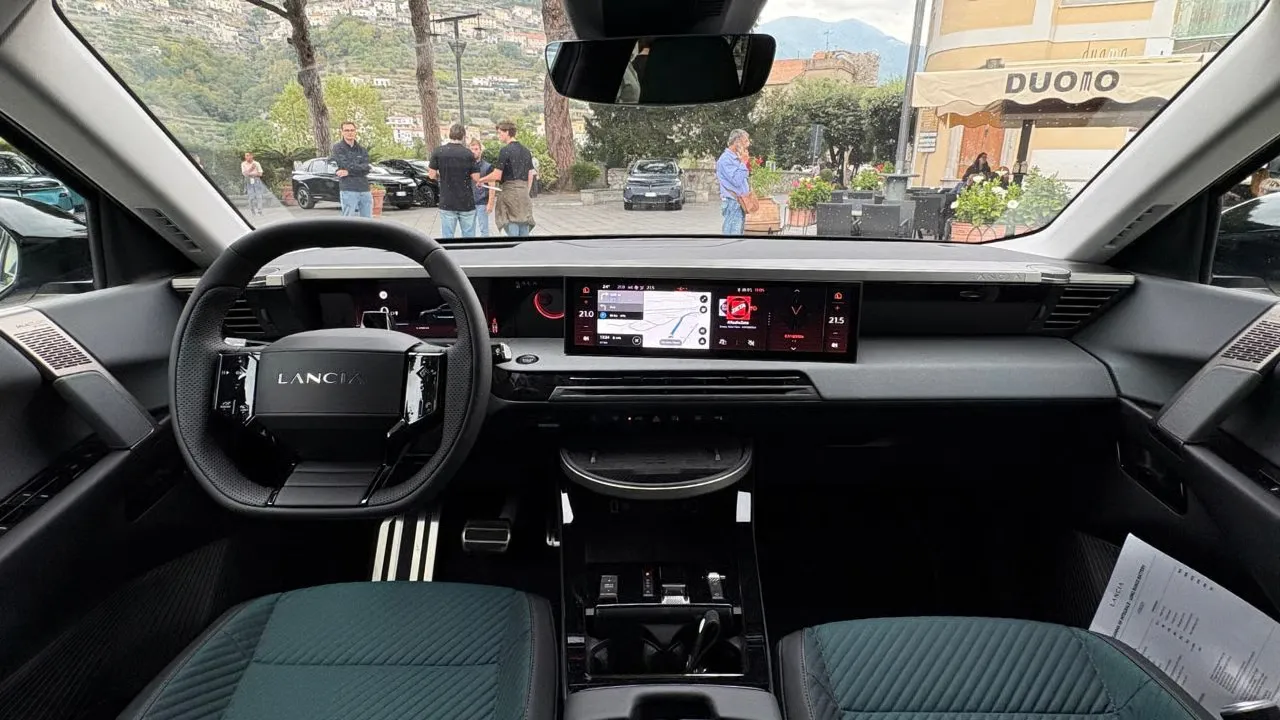
The steering wheel with angular spokes is located downstream of two screens. To the left is the 10-inch instrument panel. In the center is the infotainment screen. What is the purpose of this backlit tube placed between the two displays? The best of French automotive journalism, despite much discussion, has not found an answer. Its function is likely merely aesthetic.
The infotainment touchscreen, advertised as 16 inches but actually very narrow, features the “SALA” design concept. With no buttons, temperature controls remain displayed continuously. Users must swipe—sorry, slide sideways—between various interfaces to navigate through menus. The operating system is not the best in the world, and it’s still easy to get lost trying to find average fuel consumption settings.
Among the passengers, attention is drawn to a massive central console, almost entirely covered in shiny black plastic. It’s a masterpiece of piano black, revealing numerous finger marks, micro-scratches, and tiny dust particles. It also gives prominent space to the drive mode or driving mode controls that have been present since the DS7 Crossback was introduced in 2018.
In terms of material quality, the seats are superior to the door panels or dashboard plastics. They offer the perfect balance between comfort and support. The cannelloni-style upholstery also evokes the creative spirit of 1970s Italy. Overall, the impression remains positive, with some nice smooth surfaces (which give a vacation-like feel) and sharp edges.
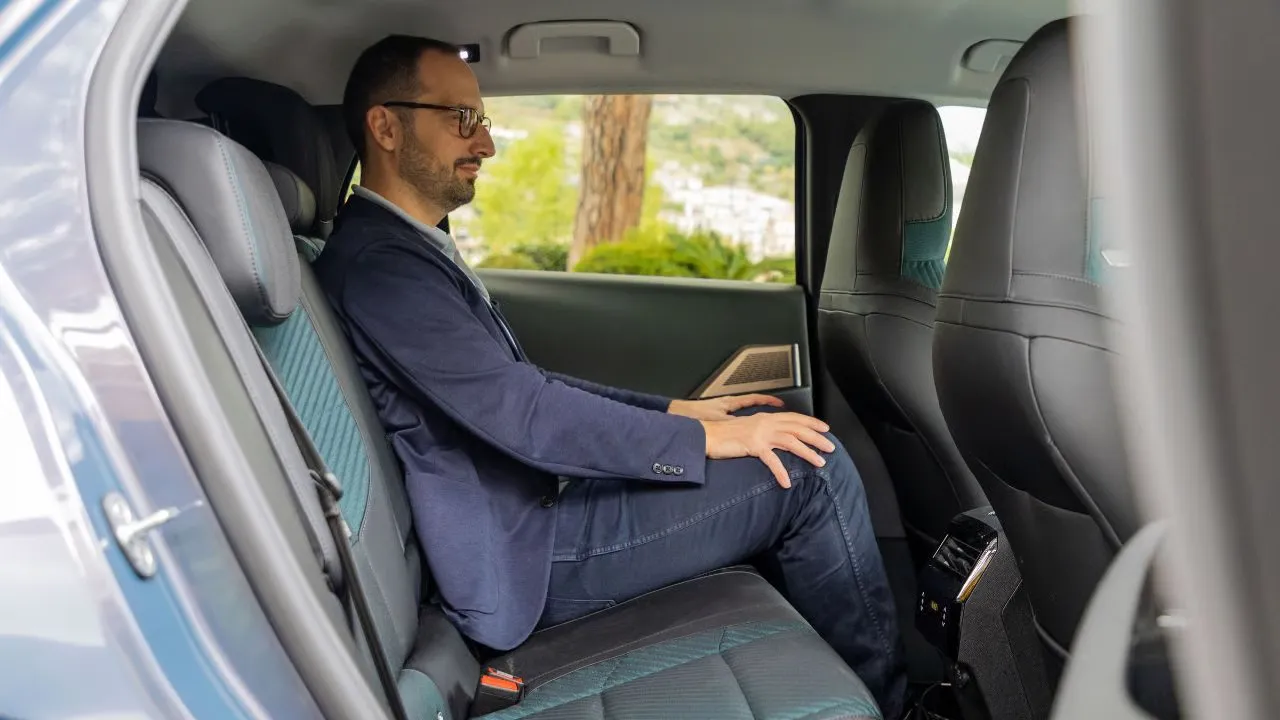
The rear seats are exceptionally spacious. There’s plenty of room in front of the knees, and the seating position is very natural (no overly steep backrest). Despite its fastback design, headroom is more than sufficient even when adults are seated. However, the shape of the seat, which is quite deep near the doors, is confusing. Why such a deep side cut?
In the absence of a frunk, the only trunk space is the boot. It is particularly deep and can hold 560 liters of luggage, groceries, and baby seats (hopefully without the child). This represents about an 8% increase in storage space compared to a Peugeot 3008. Lifting the floor reveals another bottom layer, designed with technical considerations. It’s easy to imagine small items tragically getting lost forever in these gaps.
Driving Experience
In Lancia’s history, this model represents two distinct worlds with separate atmospheres. On one side, there are smooth sedans and luxurious city cars with meticulous design. On the other side, the HF lineup evokes the mud of rally specials. On this Gamma (1), the elephant symbol contributes to performance, but it doesn’t bring any spartan qualities. The SUV accelerates gently and quietly. In urban areas, its width and raised hood require some skillful handling. Its turning radius is better than the average for its class unless equipped with 21-inch wheels. But even with these large tires, it remains more manageable than some modern cars.
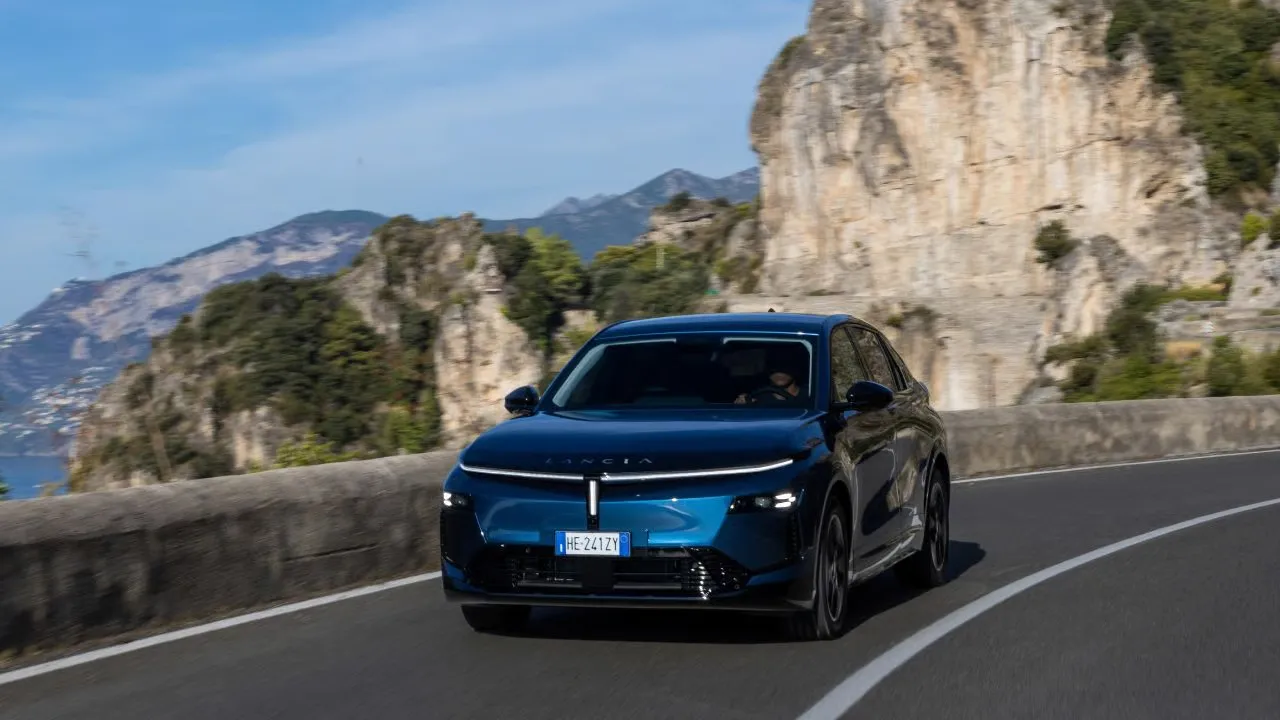
The driving position is relatively low, and the steering wheel is vertical compared to other SUVs. Not as much as the Alfa Romeo Stelvio, but it’s close. The rear visibility is quite satisfactory, with the trunk lid not rising too far back. Your eyes and brain will appreciate it when controlling the blind spots.
The one pedal mode is indeed available. It’s activated by clicking a small button on the center console (which once again makes us admire the piano black finish). The Gamma starts and stops gradually without any disruptive braking. However, there are no paddles for those obsessed with optimization.
At low speeds, bumps, potholes, and road irregularities are smoothed out very easily, without pumping or jolts. This is almost counterintuitive for a vehicle with a sport-oriented finish. An interesting technical detail: the 97 kWh versions—like our HF—come equipped with a multi-link suspension at the rear. Vehicles fitted with “smaller batteries” rely on a semi-rigid axle instead. On top of that, the HF version features adaptive damping. This is evident on winding roads, where body movements are minimized and rolling motion remains imperceptible. The excellent tires (Goodyear Eagle F1 Asymmetric 6) provide remarkable grip, and they also perform very well in wet conditions.
Technical specs: Lancia Gamma HF Integrale
Engines: permanent magnet synchronous (AV + AR)
Power: 375 hp
Torque: 509 Nm
Top speed: 190 km/h
0 to 100 km/h: 5.6 seconds.
Transmission: all-wheel drive, 1 gear + reverse
Tires used in testing: Goodyear Eagle F1, 255/40 R21
Turning radius: 11.45 m (10.93 m with 19-20 inch tires)
Total weight: 2,351 kg
Battery: nickel-manganese-cobalt (NMC)
Supplier: ACC (Douvrin, France)
Brute capacity: 104 kWh
Net capacity: 97.2 kWh
Rapid charging (10-80%): 32 minutes
WLTP range: 676 km
Charger: 7.3, 11, or 22 kW (optional)
Let’s be nuanced. Don’t expect the wow factor of an Alpine A390 that would make you question your assumptions about SUVs. Unlike the Dieppois, it doesn’t have three engines here, so torque vectoring is out of the question. The sharp turns in the Gamma HF often end with understeer. It’s very serious, very safe, very fast, and quite natural. But it’s not breathtaking. One reason lies in the controls. Even when sport mode is activated, the travel distance of the accelerator pedal remains long, and the brake pedal stays soft. The steering provides more direct feedback on the front-end’s intentions, but overall it leans more toward comfort than toward 037-style driving sensations.
The STLA M platform also has its genetic drawbacks, starting with high weight. While there is indeed an elephant on the HF logo, the 2,351 kg reading on our vehicle’s scale seems a bit exaggerated. The vehicle still handles corners swiftly. It claims 0 to 100 km/h in 5.6 seconds, which is faster than a Delta HF Integrale. And its driving performance rarely falters.
Made in Italy
The SUV is based on the STLA M platform. Along with the Peugeot 3008 and 5008, Opel Grandland, Citroën C5 Aircross, Jeep Compass, DS 7 and DS 8. The last three models are actually manufactured using the Gamma platform in Melfi, two hours from Naples, Italy. This further explains the references to the brand’s Italian heritage. Meanwhile, the Ypsilon comes from Zaragoza in Spain.
Since we feel more like a Turin surgeon attending a conference than Markku Alén or Miki Biasion, we head onto the highway and then the motorway. There we experience the acoustic comfort. We measured 69 dB on a very rough pavement at 90 km/h. The figure might seem disappointing. But in reality, the ears are hardly stressed during driving, and wind noises are well contained.
The driving assistance features are in the average range. The lane-keeping system prevents swerving. The intelligent speed regulator slows down without slamming on the brakes when approaching a truck. It even cleverly handled the reckless insertion of a Neapolitan scooter. On the return trip, we still noticed errors in reading road signs.
When Giorgia Meloni shows up…
The author of this article was in a lively conversation with his passenger on the roads near Naples. The topic was Italian politics and the upcoming elections in Italy. Suddenly, the voice assistant interjected: “I understood you were talking about Italian political figures and Prime Minister Giorgia Meloni.” With the strange, staccato enthusiasm of its artificial voice, the assistant delivered a nearly minute-long lecture on the Italian government, using terms such as “stability,” “coalition,” “center-right,” and “slow growth.” Curious about this unsolicited presentation, we asked the assistant, “What do you think of Giorgia Meloni?” The reply: “As an assistant, I don’t have opinions.” Rather than accusing it of malice or political bias, we suggest Stellantis work on improving its voice recognition.
To rule out this surprising interruption. Because we hadn’t activated the system using the command “Hey SALA.” The voice assistant built into this Lancia Gamma is based on ChatGPT and proved more effective with other commands (this time intentional ones) such as “lower the temperature” or “give me directions to Milan.”Charging, Range, and Fuel Consumption of the Lancia Gamma
The Gamma is equipped with a nickel-manganese-cobalt battery pack manufactured at the French plant in Douvrin (Pas-de-Calais). Its raw capacity exceeds 100 kWh, with a net capacity of 97.2 kWh. For the “small battery” version, it uses a BYD battery. This provides ample range. The WLTP range for this HF version, despite having all-wheel drive, is claimed to be “up to 676 km.” During our test drive under favorable conditions, we calculated a total range slightly below 500 km. This offers very comfortable driving range. That’s good news, as this 400-volt battery isn’t the fastest to charge. Theoretically, it takes 32 minutes to charge from 10% to 80%. The manufacturer prefers to highlight a 20-80% charge time of 27 minutes, to bypass the psychological half-hour mark.
We were unable to perform a charge during this trial run. Let’s be cautious. Several colleagues have reported slow charging or erratic behavior when starting the DS9. Lancia promises that things are improving in this regard. According to a well-documented article published by Auto Infos at the beginning of September, the rejection rate in Douvrin would have dropped to between 15 and 20%. We will verify this.
In terms of fuel consumption, it’s a bit high in urban driving. The theoretical WLTP figure is 18.5 kWh/100 km. On the road, we saw numbers closer to 20 kWh/100 km, without eco-driving practices and with some highway driving. This is acceptable given the vehicle’s weight, frontal area, and performance focus. The Alpine A390 GT consumed significantly more electricity. Heavy drivers will likely prefer a version with all-wheel drive and a larger 245 hp battery claiming a range of 705 km (WLTP consumption: 16.4 to 17.2 kWh/100 km). With this setup, Lancia claims it’s possible to drive from Florence to Naples via the A1 highway without recharging. Don’t give us such a challenge.
Price/Equipment of the Lancia Gamma
The micro-hybrid versions start at 39,900 euros. For the electric version, the base price is set at 45,900 euros for a 230 hp drive system paired with a 73 kWh battery. This corresponds to the base LS trim level, which comes standard with wireless Apple Car Play or Android Auto, a rear camera, a 16-inch tablet, and an electric trunk. Adding 2,000 euros takes you to the LX version, which adds a more luxurious interior trim, an inductive phone charger, a driver’s seat with lumbar support, and most importantly, a heat pump.
The Lancia Écoscoré struggles a bit to justify its price compared to a certain American brand. The Gamma range is positioned near the Peugeot 3008 and significantly below equivalent DS models. To have the maximum ACC battery and achieve around 700 km WLTP range, one must pay at least 51,900 euros for the LS version. The LX version costs 53,900 euros.
Finally, our HF version costs 59,900 euros. It comes equipped with a rear engine (consider this a standard feature), a Focal audio system with 16 speakers, heated front seats with programming options, a heated steering wheel, and adaptive suspensions. One can easily add extra packages such as a head-up display or a 360° camera. Or 21-inch wheels for an additional 1,200 euros.
The Gamma, once upgraded in this way, will be more economical than an Alpine A390 GT, which is far more sporty but has extremely high fuel consumption. And since the HF logo features this animal, the obvious competitor is the Tesla Model Y Performance, which costs 1,500 euros less. Yet it will likely be less noticeable in traffic compared to a Lancia.
In summary
A comfortable alternative if you’re tired of the Scénic, e-3008, or Model Y and want to stand out. With the HF logo added, it becomes a fast but not overly sporty Gamma.
(1) We spent some time deciding whether to write LE or LA Gamma. Since it’s an SUV and its competitors are referred to in the masculine form, we chose the former. Sorry for the Gamma (a sedan) from the 1970s and 1980s.