
Hyundai Ioniq 3 Test: Is This an Electric City Car Really Made for Families?
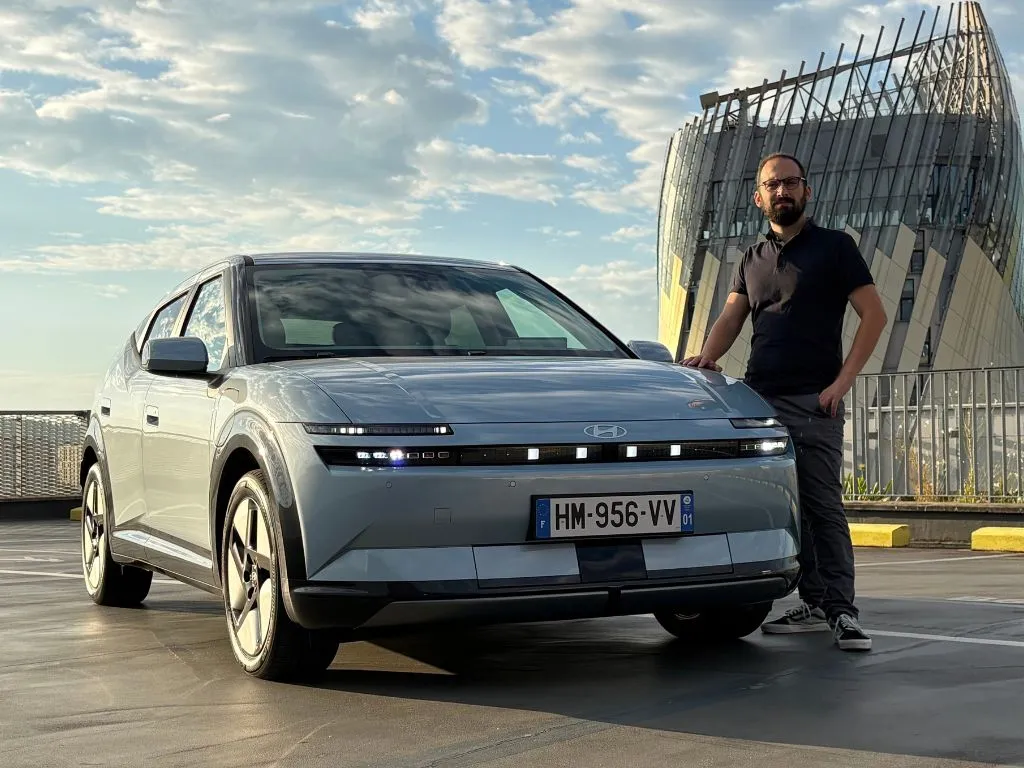
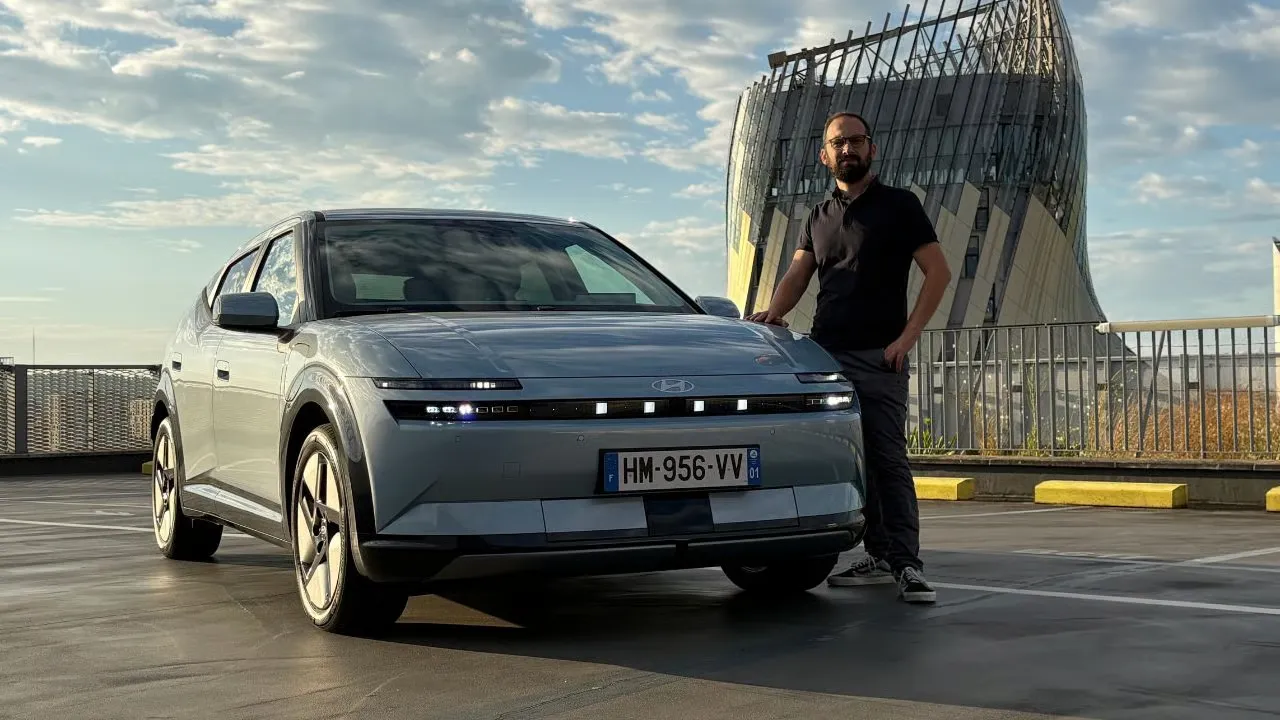
This Hyundai Ioniq 3 fits better in the category of compact cars rather than city cars. Our test drive took place on roads near Bordeaux.
Exterior, dimensions, design
It’s difficult to classify this Ioniq 3. Its length of 4.16 meters puts it close to a Renault Mégane E-Tech (4.20 meters). Yet Hyundai markets it as a city car, so it should be compared to a Peugeot e-208 or a Volkswagen ID.Polo (4.05 meters). In any case, comparing it to a Renault 5 (3.92 meters) is challenging.
Dimensions:
Length: 4.16 meters
Width: 1.80 meters
Height: 1.51 meters
Wheelbase: 2.68 meters
Trunk space: 441 liters (322 + 119 under the floor)
Frunk: no
As usual, the designers share their approach by choosing a catchy name. We’ve encountered enigmatic titles such as kodo, flame surfacing, or opposites united. Here, it’s art of steel (“the art of steel”). This refers to the fact that Hyundai is a chaebol that produces its own alloy. It also alludes to certain stylistic guidelines like bulged hoods, simplified shapes, and sheet metal folds.
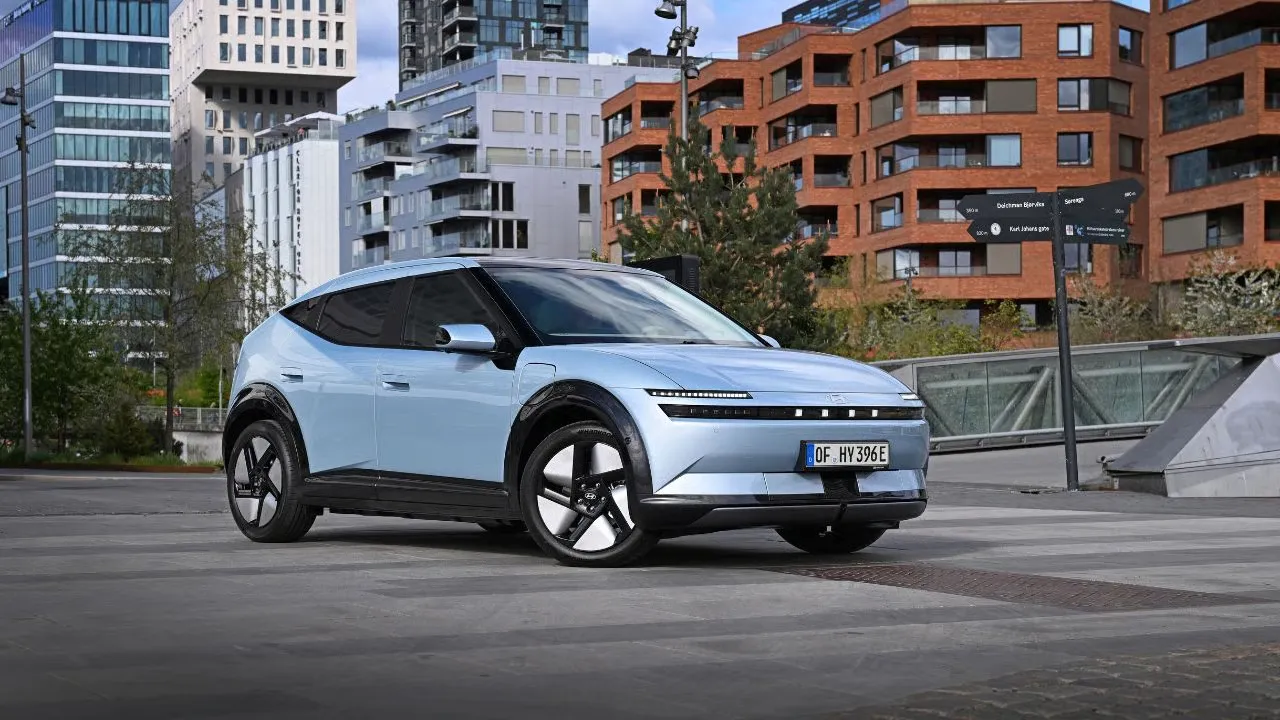
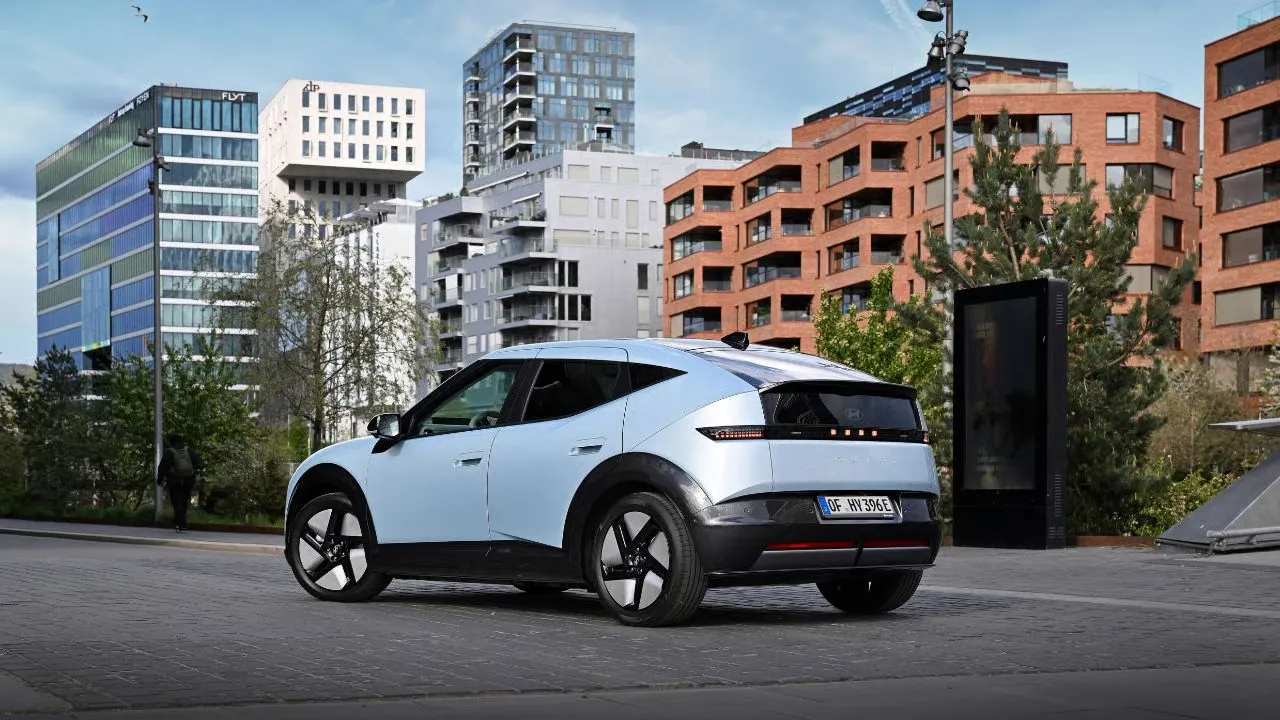
The cutting of glass surfaces and the work on the wheel arches or rims are certainly interesting for even the most experienced eyes. The two-part rear window will evoke memories in those with a strong knowledge of cars (Hyundai Ioniq 28, Honda CR-X, Citroën C4 Coupé…).
Also read
Hyundai Tucson 2027: everything you need to know about this fully renewed best-selling hybrid
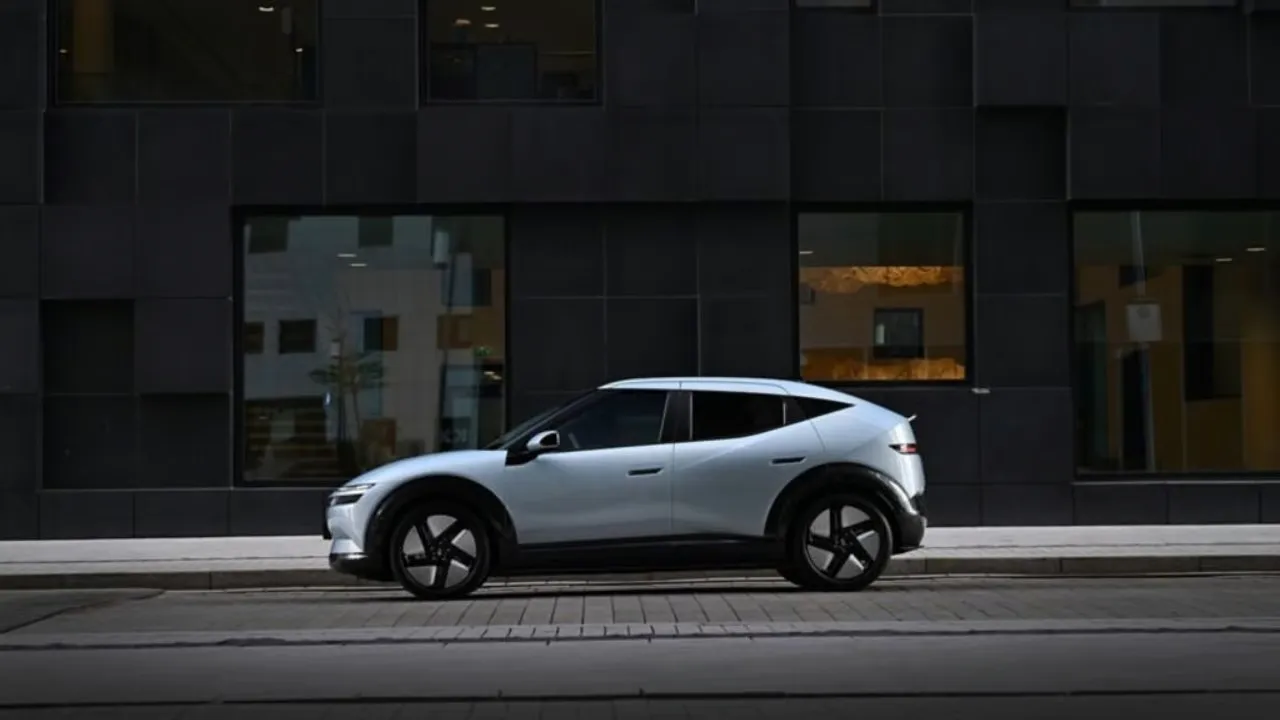
In real life (if such a thing exists), the Hyundai Ioniq 3 appears more sedate and less “tall on its wheels” than in the photos. Thanks are also due to the wheel wells, which have been artificially and thankfully widened using shiny black plastics.
Interior
There’s some new news. Hyundai introduces its new interior layout here. At the center is a large 14.6-inch screen on the N-Line or Prime models. It measures 12.9 inches in our Vision model, which actually doesn’t make much difference for the user.
Our test vehicle:
Ioniq 3 Vision
61 kWh / 135 hp
39,800 €
This screen features the new Pleos operating system, developed based on an Android Automotive framework. Yes, it’s much better than what was available before. It’s smoother, more comprehensive, and presented in a far superior way. The dropdown menu with the vehicle’s main functions will remind Tesla users of familiar features. The planner can schedule a route from Bordeaux to Metz in just over ten seconds — exactly what’s required of it.
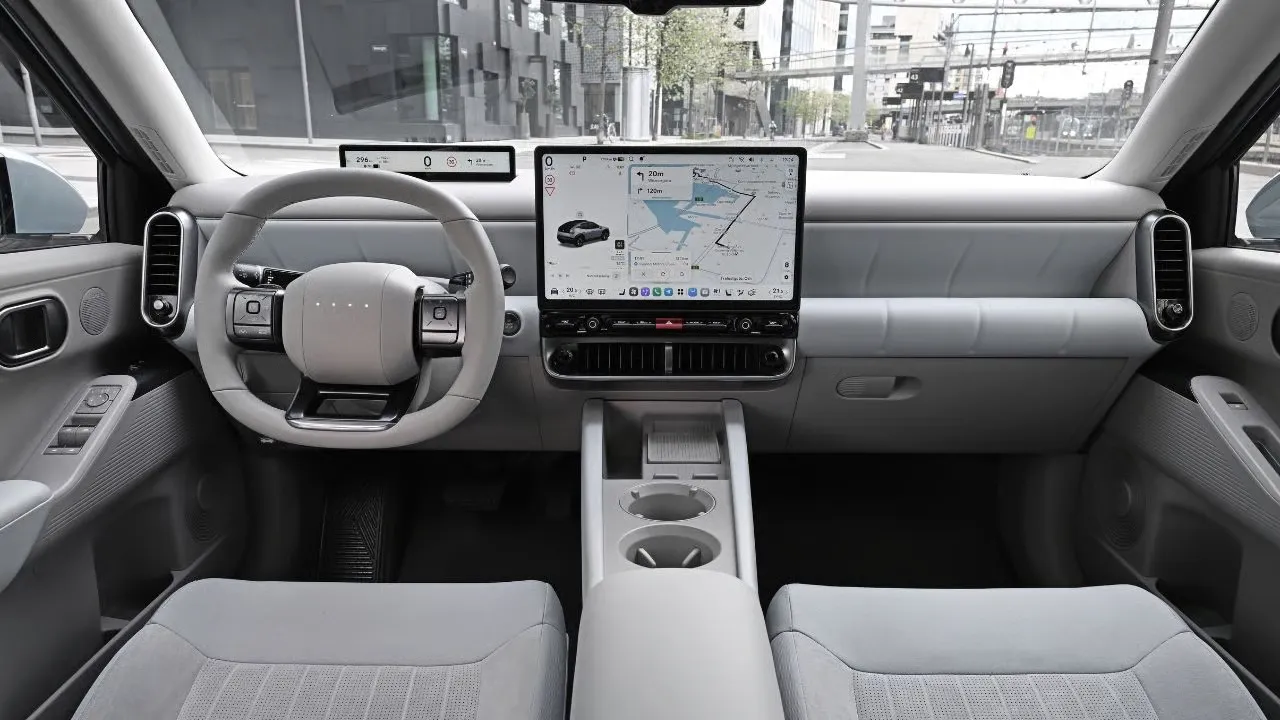
The other innovative feature is the instrument display located at the top of the dashboard. The overall layout bears some resemblance to Peugeot’s i-Cockpit, with a small ribbed steering wheel. Given our driving position, which is quite close to the wheel, reading the instruments has never been a problem.
Not Quite Instruments
This small rectangular screen is not exactly an instrumentation cluster, as it isn’t found in the entry-level trims (Select finish). The “official” instantaneous speed is displayed in the top-left corner of the central screen. Thus, the cluster facing the driver can be customized. For those seeking maximum psychological distress, one can even remove the instantaneous speed from direct view so it must be checked only on the central screen.
We recommend you form your own opinion about this layout by sitting behind the wheel before placing an order. It will also give you the chance to try out the seats. In our Vision finish, they combine fabric with suede; they are soft but provide little lateral support.
The plastics are shaped to mimic real materials, but it’s just a trick of the eye. Let’s touch the padding in front of the passenger seat. No, this isn’t leather stretched with rivets, like those on 1970s Italian concept cars. It’s just rough plastic imitating that shape. To Hyundai’s defense, the design is interesting, the fit is precise, and the materials are less prone to damage. But these days, other brands are rediscovering the advantages of fabric for interior finishes at lower costs and with a bit more warmth.
The center console, equipped with an inductive charger, offers ample storage under the armrest. This compensates for door bins that are too small to properly hold a 75 cl bottle.
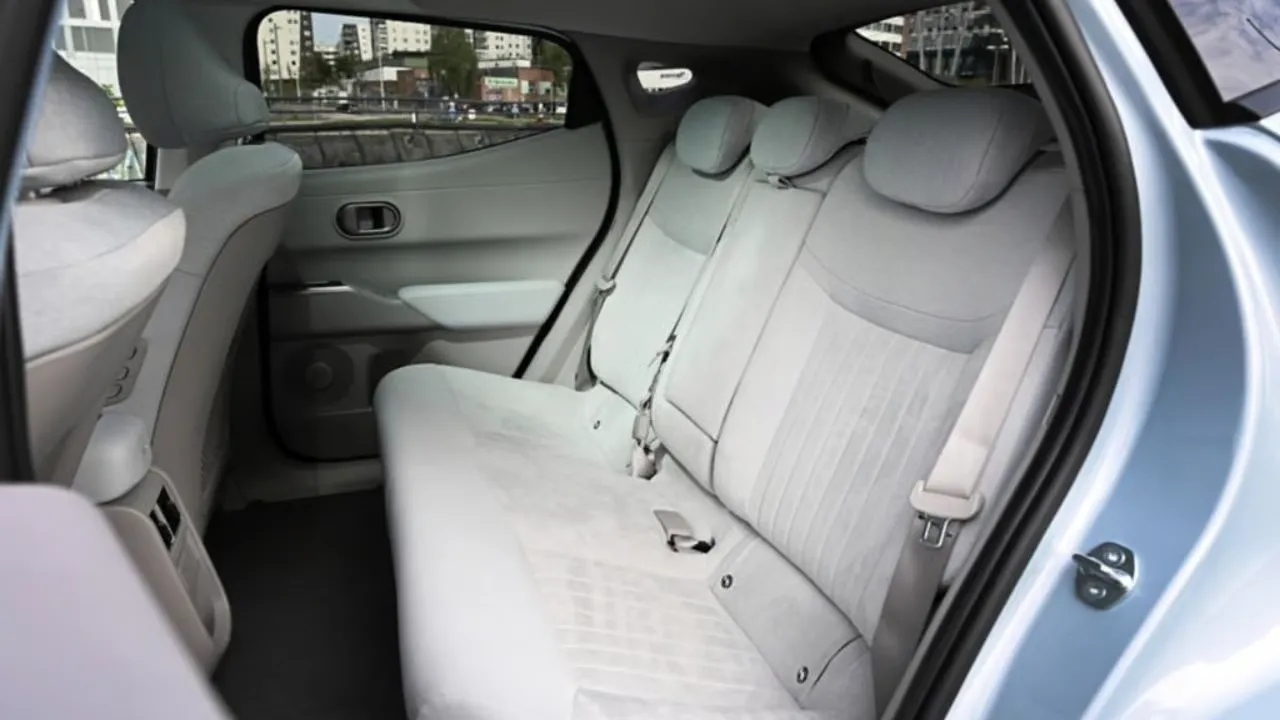
Let’s move on to the rear seats. It’s easy to get in, thanks to a wide door opening and ample swing angle. There’s plenty of knee space, even more than in the recent Volkswagen ID.Polo. The kneecaps remain about ten centimeters away from the front seats. On the other hand, Hyundai had to make compromises on seat positioning to maintain a satisfactory headroom. The seat is positioned too low and the backrest is very steep, which will tire taller passengers over time. Children using seat elevators won’t mind this setup.
What about the trunk? The loading threshold is a bit high. In this regard, a Renault 4 is unbeatable. More importantly, we would appreciate more carpeting on the sides to prevent scratching the plastics every time we go to the supermarket. Fortunately, the trunk space is generous: it offers 322 liters of capacity above the floor panel, along with a large area of 119 liters below. That adds up to an excellent total of 441 liters, making it more suitable for a compact car or SUV than a city car. Incidentally, this is exactly the same volume as the ID.Polo… which is a city car. Sometimes we’re contradictory.
Driving the Hyundai Ioniq 3
Let’s get started. Foot on the brake, button on the right side of the steering wheel, with an introductory music track (we’re talking Hyundai here). The gear shift is now a lever similar to those in Tesla/Renault/Mercedes, offering the same advantages and disadvantages when maneuvering. The Ioniq 3 departs silently, thanks in part to a very discreet climate control system. The long travel of the accelerator pedal helps regulate speed at low velocities. Behind the steering wheel, two levers allow adjusting regeneration between four levels, ranging from “free wheeling” to a highly active engine brake. Pulling the left lever for 3 seconds activates one-pedal driving, which can bring the vehicle to a complete stop. There’s no noticeable sudden braking either.
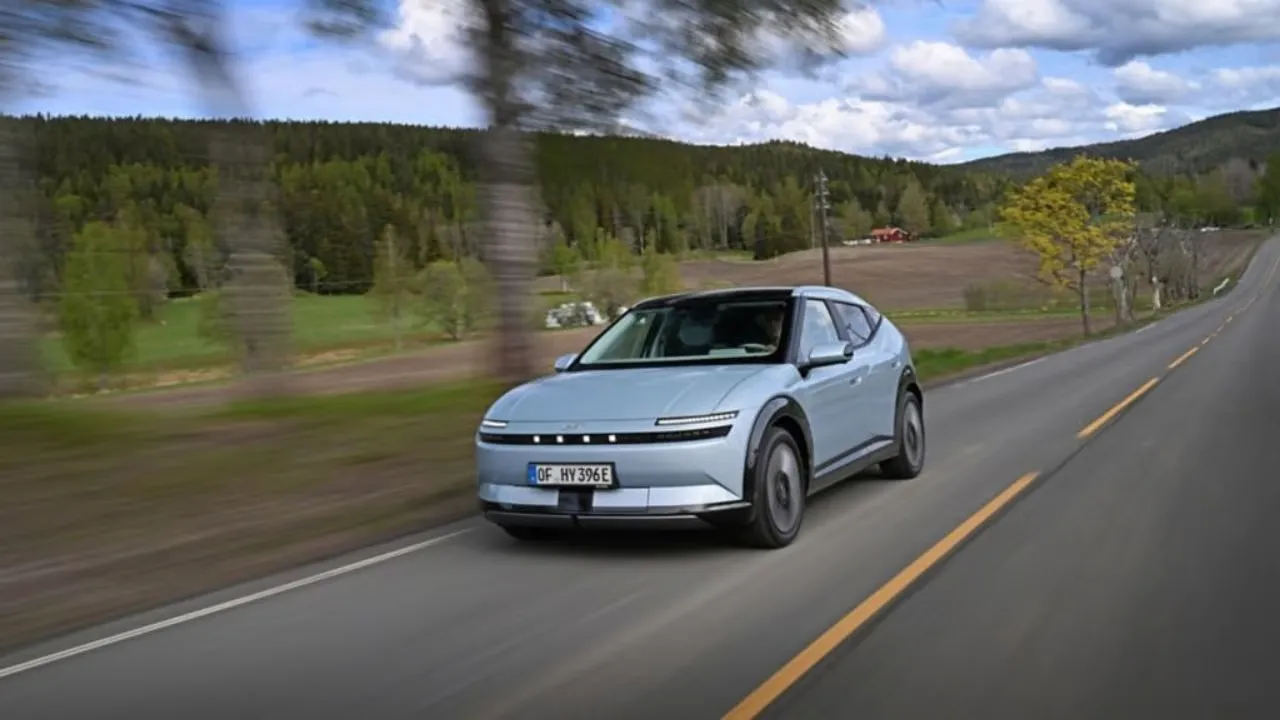
The front 200-degree view is excellent. The roof isn’t excessively thick. Most importantly, the short hood and low trunk line make it easy to find references in a narrow parking space. But just by looking at the car from the outside, it’s clear things get more complicated at the back. The window layout, tiny rearview mirror, and split rear window reduce visibility when looking backward. One can take comfort in the reverse camera on our Vision model (hence the name?). The image is clear but slightly distorted, in a fisheye style. For 360-degree visibility, one will need to opt for a N-Line or Prime model. Huh. The 10.6 meter turning radius is average for a vehicle of this size.
At a gentle pace, it’s easy to pass by the parked police cars. Drive a bit faster on a steeper bump, and you’ll hear your suitcase jolt inside the trunk—indeed, a bit too much. On the road, its suspension is more flexible but less precise than that of the Renault 5 or Mégane. These French models are equipped with multi-link suspensions at the rear, while this Korean car relies on a simple semi-rigid axle with torsion beam. The ID.Polo uses the same setup, but the German car’s handling seemed more refined to us. The Ioniq 3’s “comfort” setting results in some bumping and rolling, but everything remains perfectly safe and stable.
The pneumatic suspension prioritizes efficiency over grip (Hankook iON EV Evo), but the traction is more than sufficient. The city/compact car brakes quickly and effectively in a straight line. Only a spongy pedal could be disappointing. The steering feels flat due to the small size of the wheel, giving an impression of a more direct gear ratio.
Hyundai Ioniq 3 Technical Specs
Engine: permanent magnet synchronous motor
Transmission: front-wheel drive, 1 gear + reverse gear
Power: 135 hp
Torque: 250 Nm
0 to 100 km/h: 9.6 seconds.
Top speed: 167 km/h
Cx: 0.263
Battery: nickel cobalt aluminum oxide (NCA)
Supplier: Panasonic
Capacity: 61 kWh (net)
Weight: 1,630 kg
Front suspension: pseudo-McPherson
Rear suspension: semi-rigid axle with torsion beam
The power output is 135 hp. The 0 to 100 km/h acceleration time is 9.6 seconds. For the N-Line, expect 9.7 seconds — it’s strange, but that’s how it is. The “smaller battery,” lighter but more powerful, reaches this speed in 8.8 seconds. The performance is adequate, but not groundbreaking in the electric vehicle world. It’s a fairly comfortable car — aside from any major flaws — but less entertaining than some competitors. This was inherent in the E-GMP platform’s 400-volt design.
We moved onto the highway. The Ioniq 3 has plenty of acceleration, but the surge isn’t as impressive as in other models. The 250 Nm of torque is sufficient for making all overtakes. Similar to the German models, the top speed is limited to 167 km/h. At high speeds, we noticed noticeable wind noise on our Vision trim. While the Hankook tires are quiet, the wind noise inside the cabin is more pronounced compared to competitors. Acoustic windshield and front windows are available only on Prime and N-Line Evo trims, so not on our vehicle.
When activating the driving aids, we find that the home-built system is indeed well-calibrated. The lane-keeping feature and intelligent speed regulator guide the vehicle with a firm style, which can feel unstable during the first few seconds. But we quickly get used to it because it functions effectively, avoiding unnecessary braking and sudden movements. Let’s remain vigilant: our test car showed a slight hesitation (without braking) when approaching a crest. The software must have wondered what was ahead. In a way, this is reassuring.
On a section of about fifty kilometers of highway and motorway, our fuel consumption was 15.5 kWh per 100 kilometers. But we were far from maintaining a constant speed of 130 km/h due to speed limits of 90 or 110 km/h as well as afternoon traffic.
Hyundai Ioniq 3 Fuel Consumption, Range, and Charging
At the end of our test cycle, the average consumption was 13.8 kWh/100 km without eco-driving practices. The official WLTP figure of 14.1 kWh/100 km for our 18-inch test vehicle takes charging losses into account. This remains excellent, even considering the relatively flat terrain of the Entre-deux-Mers region and favorable weather conditions. With a 61 kWh battery, it’s clear that we can easily cover over 400 km between charges. Even more distance is possible in suburban areas. For reference, WLTP claims a range of 484 km with our 18-inch wheels. This high efficiency is likely thanks to the inverter, whose semiconductors are made of silicon carbide (SiC), helping to improve performance by a few valuable points. Competitors will need to catch up...
In terms of charging, the Ioniq 3 reaches a maximum rate of 110 kW. Another claim is an 80% charge in 29 minutes. This applies both to the large nickel-cobalt-aluminum (NCA) battery and the smaller lithium-iron-phosphate (LFP) battery. It’s slightly slower than some competitors, especially those on Volkswagen Group’s MEB+ platform, but it remains competitive in this segment. Of course, it’s far from the “top-tier” performance of 800-volt platforms like Hyundai’s Ioniq 5 and 6.
Charging information:
V2L: included in the “charging” package at 1,250 €
22 kW cable: included in the “charging” package at 1,250 €
Heat pump: standard on Vision, Prime, and N-Line Evo (optional at 700 € or not available elsewhere)
Price and features of the Hyundai Ioniq 3
Let’s now turn to the price, if you’ll allow it. The prices of the Hyundai Ioniq 3 range from 29,995 to just over 43,000 euros. To have a 61 kWh battery, you need to pay at least 33,995 euros. Assembled in Turkey, this car is not subject to customs duties when imported into the European Union. However, it does benefit from enhanced EU subsidies and corporate incentives.
Also read
Hyundai Ioniq 6 N 2026: our exclusive 600 km test on road and track!
Thus, our unit with the Vision trim level (the only option being a metallic paint at 800 euros) is theoretically priced at 40,600 euros. Depending on your income and the situation in France by autumn 2026, this means a final price between 34,600 and 37,200 euros.
In this category, one could compare a Renault Mégane E-Tech Esprit Alpine with a larger battery but lower efficiency. Or a high-end Volkswagen ID.Polo, which is more powerful but less spacious than the Hyundai. In short, the Ioniq 3 falls within market prices. Assuming Tesla is excluded from consideration, as usual.
It’s cool:
Low consumption and good range
Improving infotainment system
Trunk space and interior volume
It’s less cool:
Material quality
Pricing… at market level
Boring driving experience
