
Thin space again
The Espace has become the E-Space. But for now, it’s only an electric concept version of the original Space.
12.10.2026 15:00
Renault created a sensation when it first introduced the Espace in 1984. It looked nothing like anything else on the market. The fifth generation was discontinued in 2023, as interest in MPVs declined sharply.
But now Renault wants to take it a different direction:
The E-Space Concept is an electric six-seater with enormous seating space, flexible seats, steer-by-wire technology, and a screen that spans the entire dashboard.
This concept car is meant to show how the manufacturer envisions a modern version of its classic “voiture à vivre” concept — that is, a car designed primarily around the people who will use it.
Renault claims they drew inspiration from the first generation. Those who saw it likely won’t agree, as the concept is actually quite iconic.
The E-Space Concept is fully electric, but Renault hasn’t provided any details yet regarding battery capacity, engine, power output, range, or charging speed.
Designed from the Inside Out
The starting point was the cabin before the bodywork. Renault describes the car more as a mobile living space, with lots of glass, six separate seats, a flat floor, and an interior that can be customized based on usage.
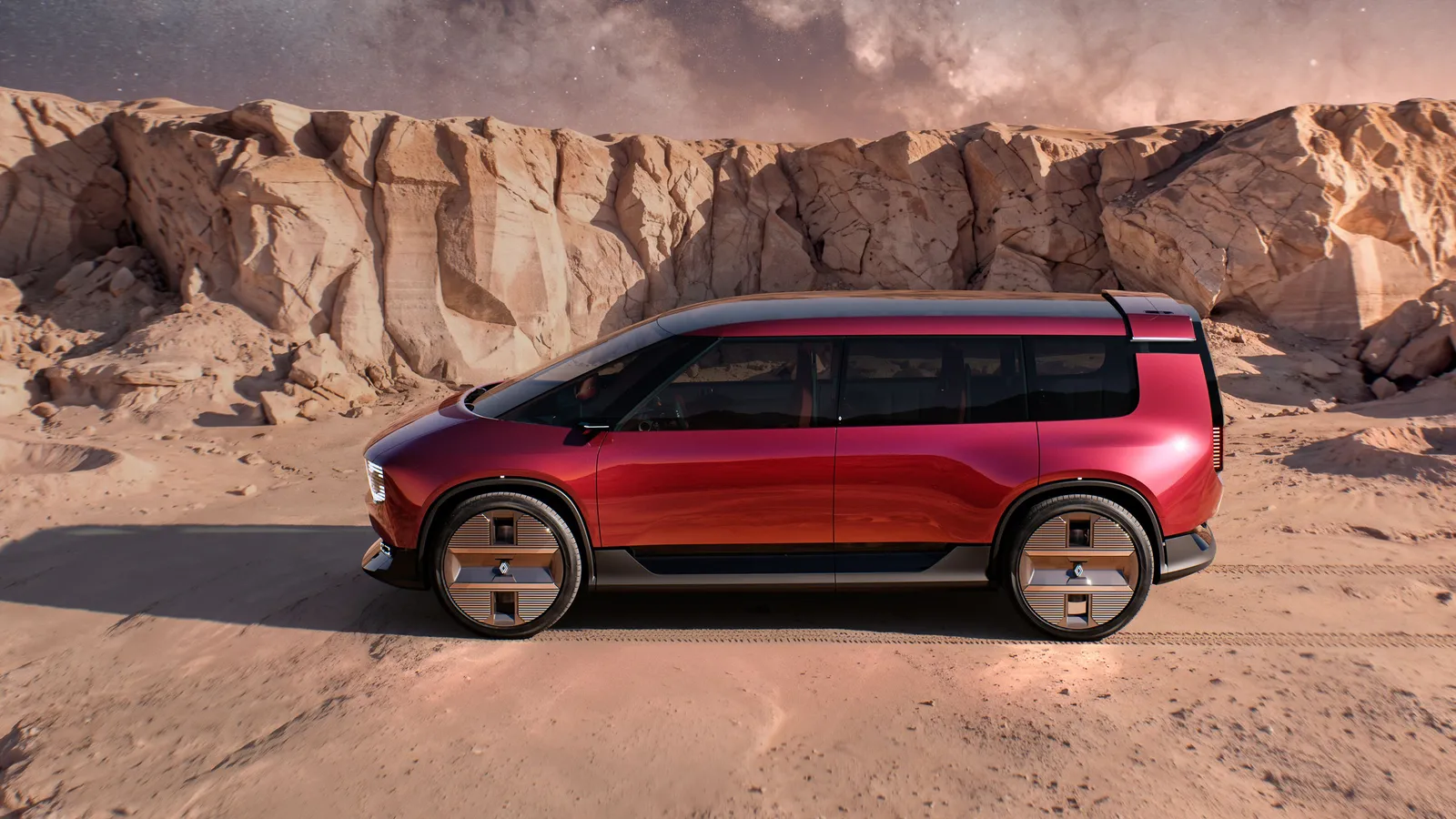
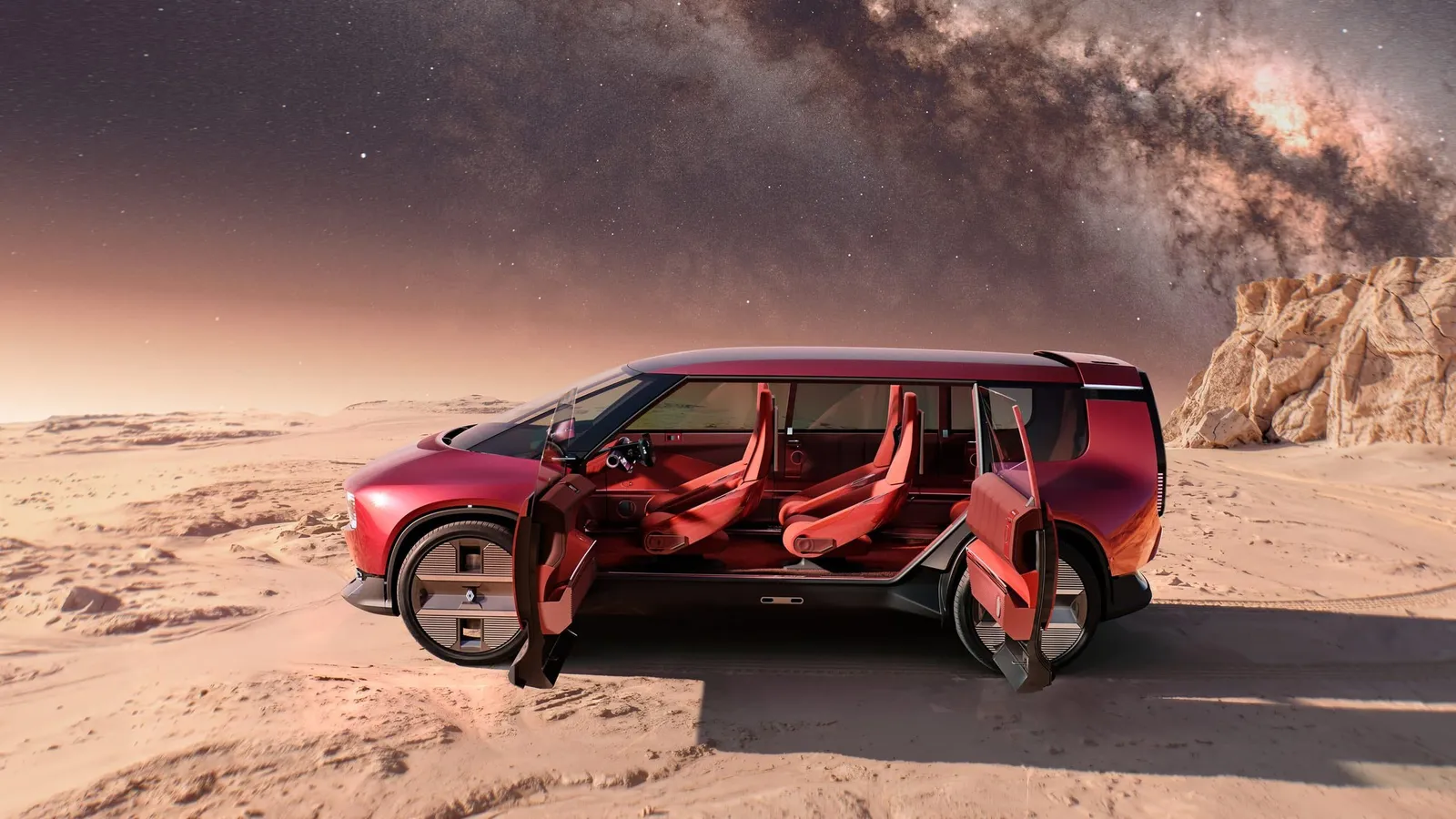
The concept is 4.70 meters long, 2.02 meters wide, and 1.67 meters high. The proportions of height, length, and width are intended to resemble those of the original Espace, but with shorter overhangs and large 23-inch wheels positioned far out at the corners.
The car sits relatively low to the ground and has a low window line. The front bumper continues visually in the same direction as the fenders, aiming to evoke the “TGV profile” of the first Espace.
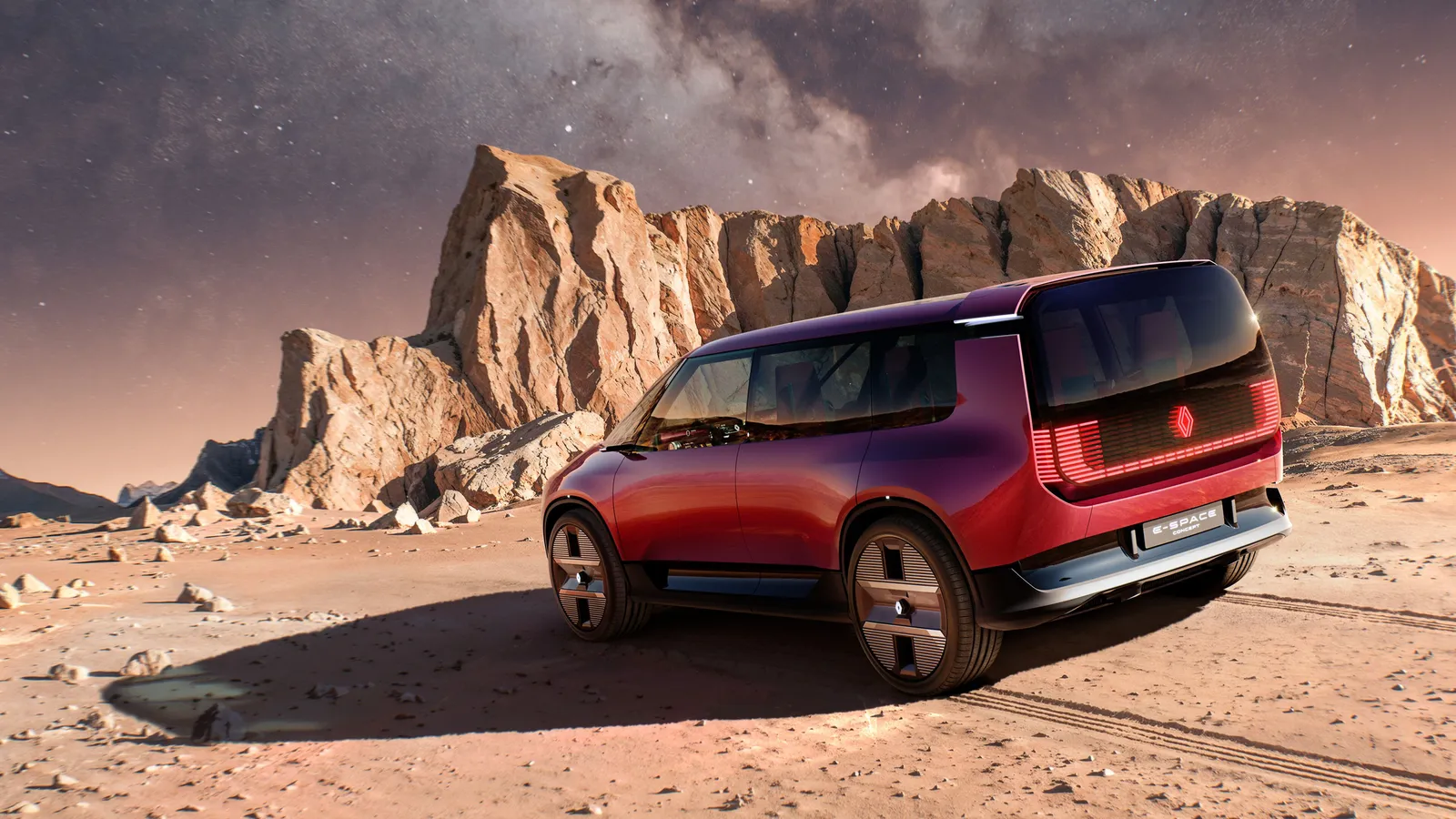
At the bottom of the body, there is a black structure that visually marks the car’s technical platform, including the battery and aerodynamic components. This dark section also references the wide gray protective bars on the original Espace.
In front, there is a movable splitter that can be lowered closer to the road at high speeds to reduce air resistance.
Glass on All Sides
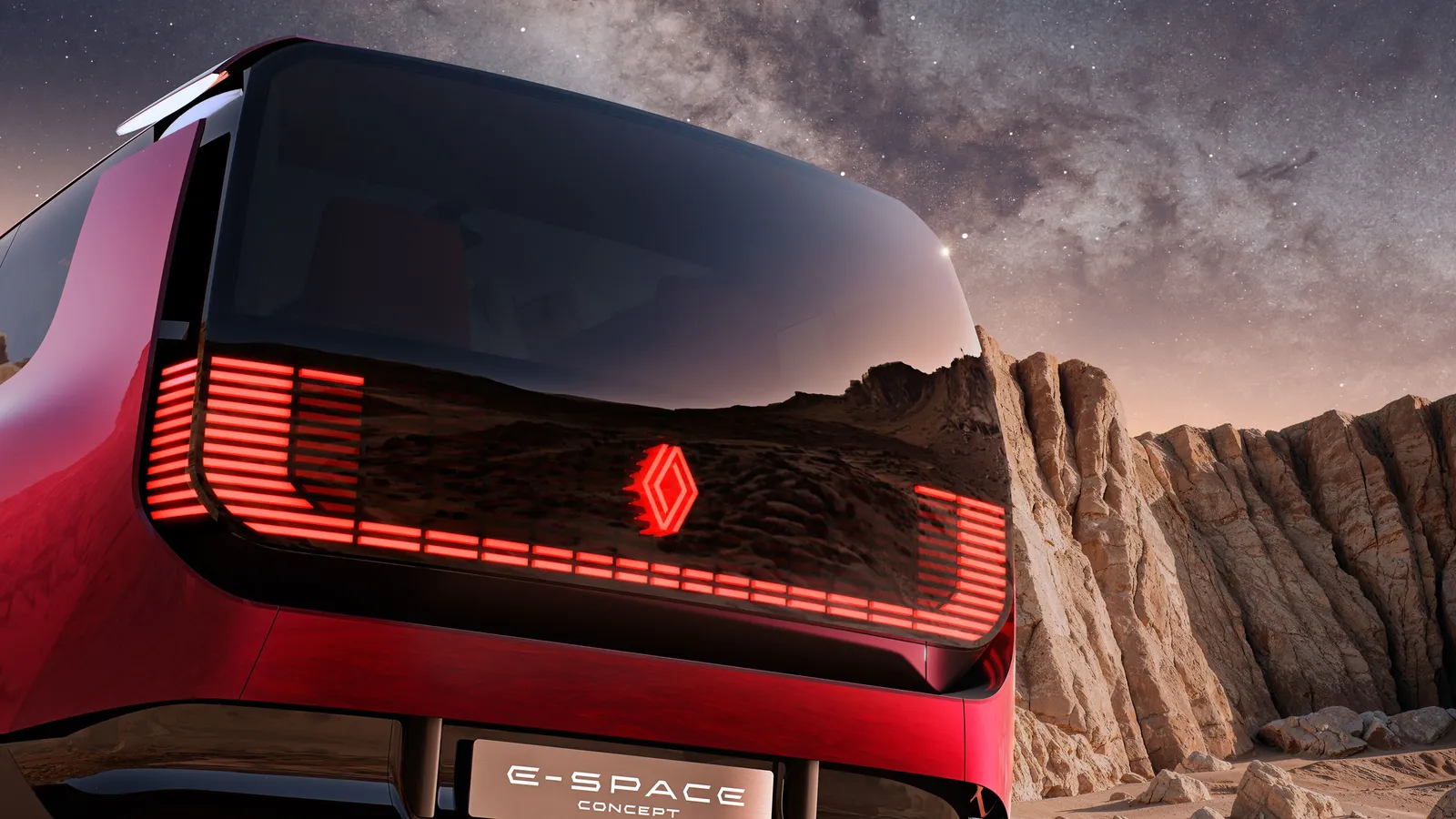
The glass roof and side windows extend far down to the low window line. From the outside, the glass continues behind the body panels to reduce the visual contrast between metal and glass.
The rear spoiler is also designed to appear as if it’s sweeping outward.
The lighting signature is new as well. A glowing U-shaped light runs around the front, while the Renault logo in the center is illuminated and surrounded by pixels. The concept features a similarly new lighting signature at the back.
Six Individual Seats
Access to the cabin is through double, rear-hinged doors. There is no traditional B-pillar between the doors.
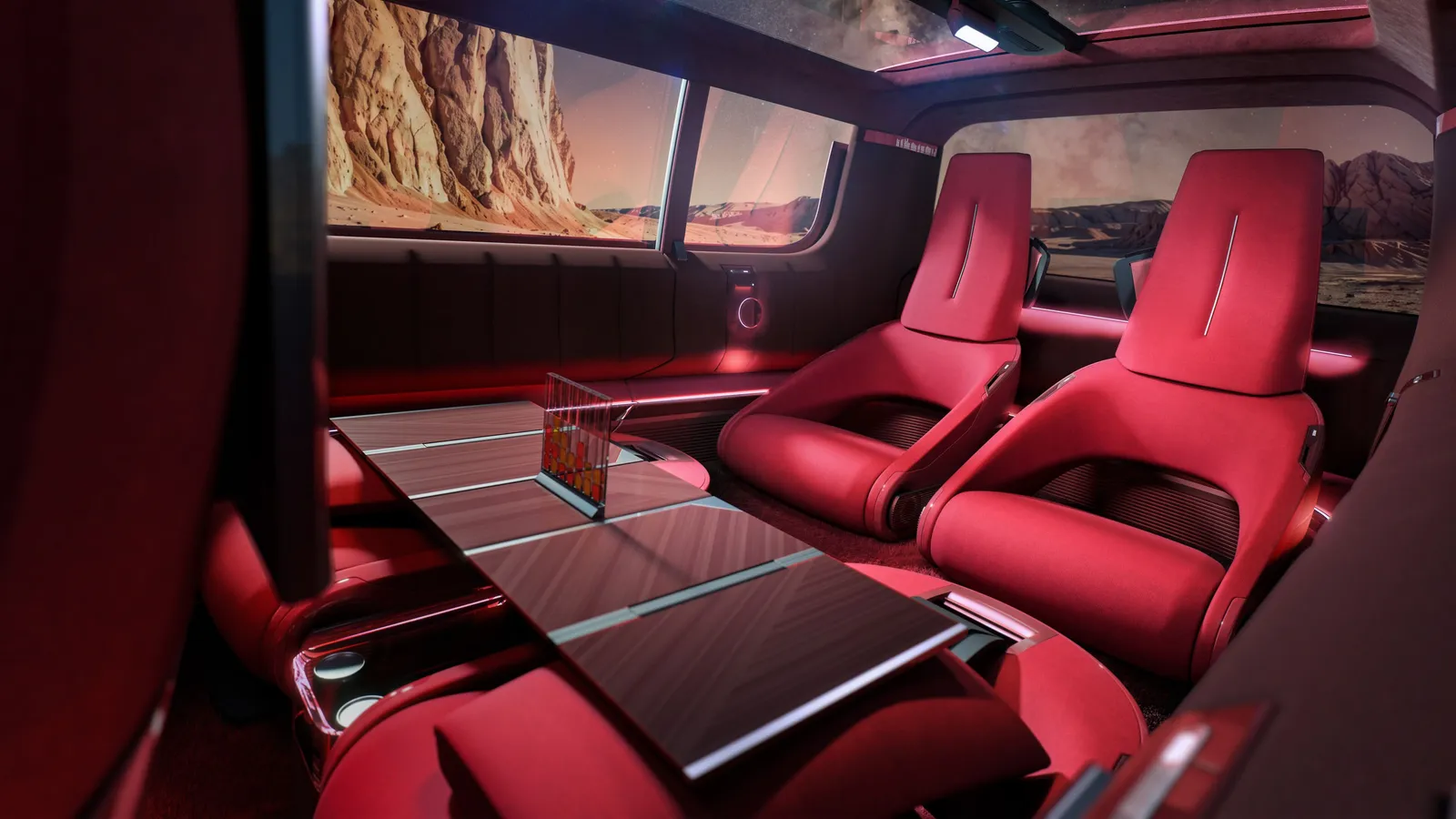
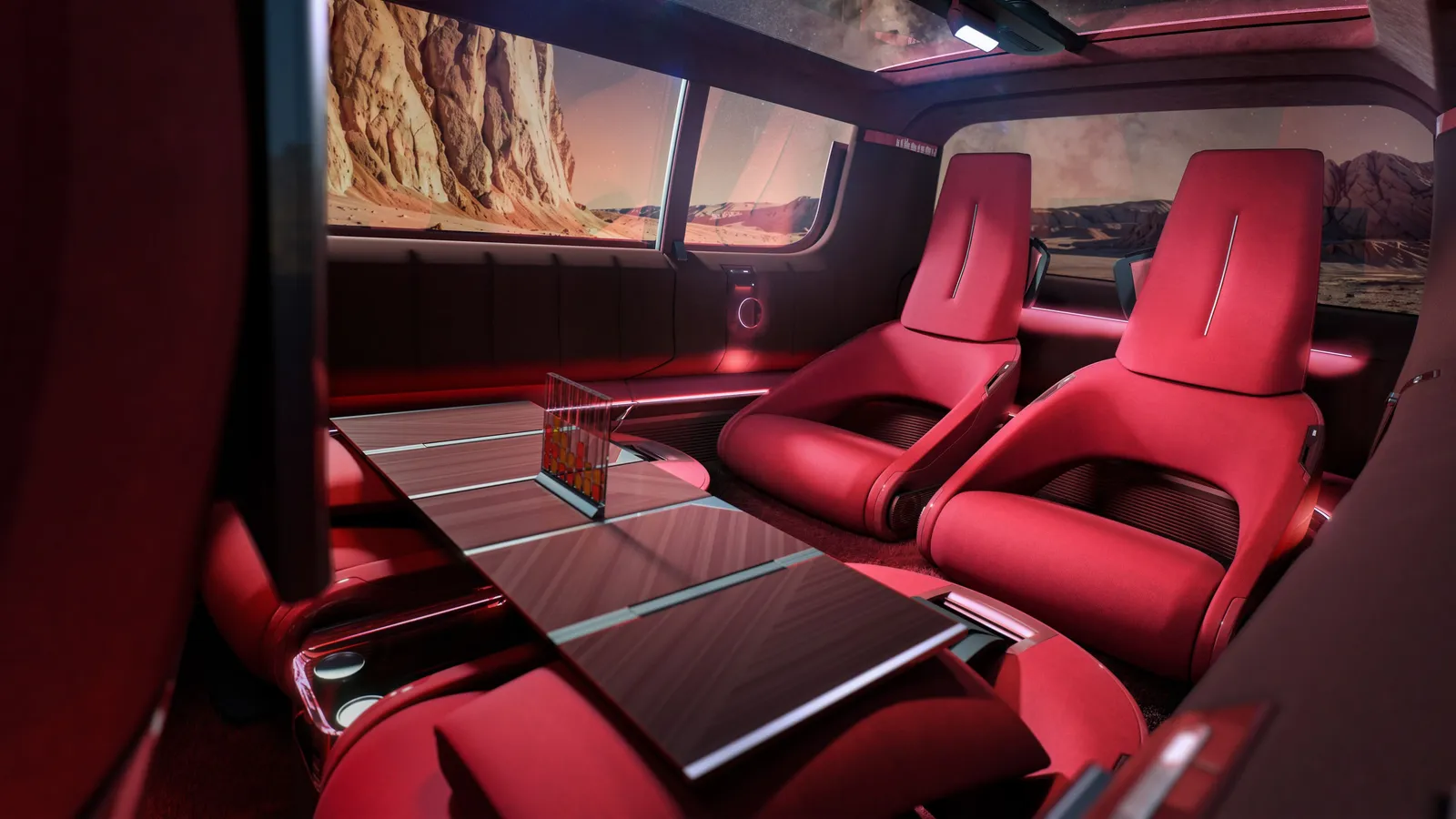
Inside, there are six equally sized individual seats on a completely flat floor. They are intentionally designed to be smaller than conventional car seats and more like furniture, with painted shells and particularly slim upper sections.
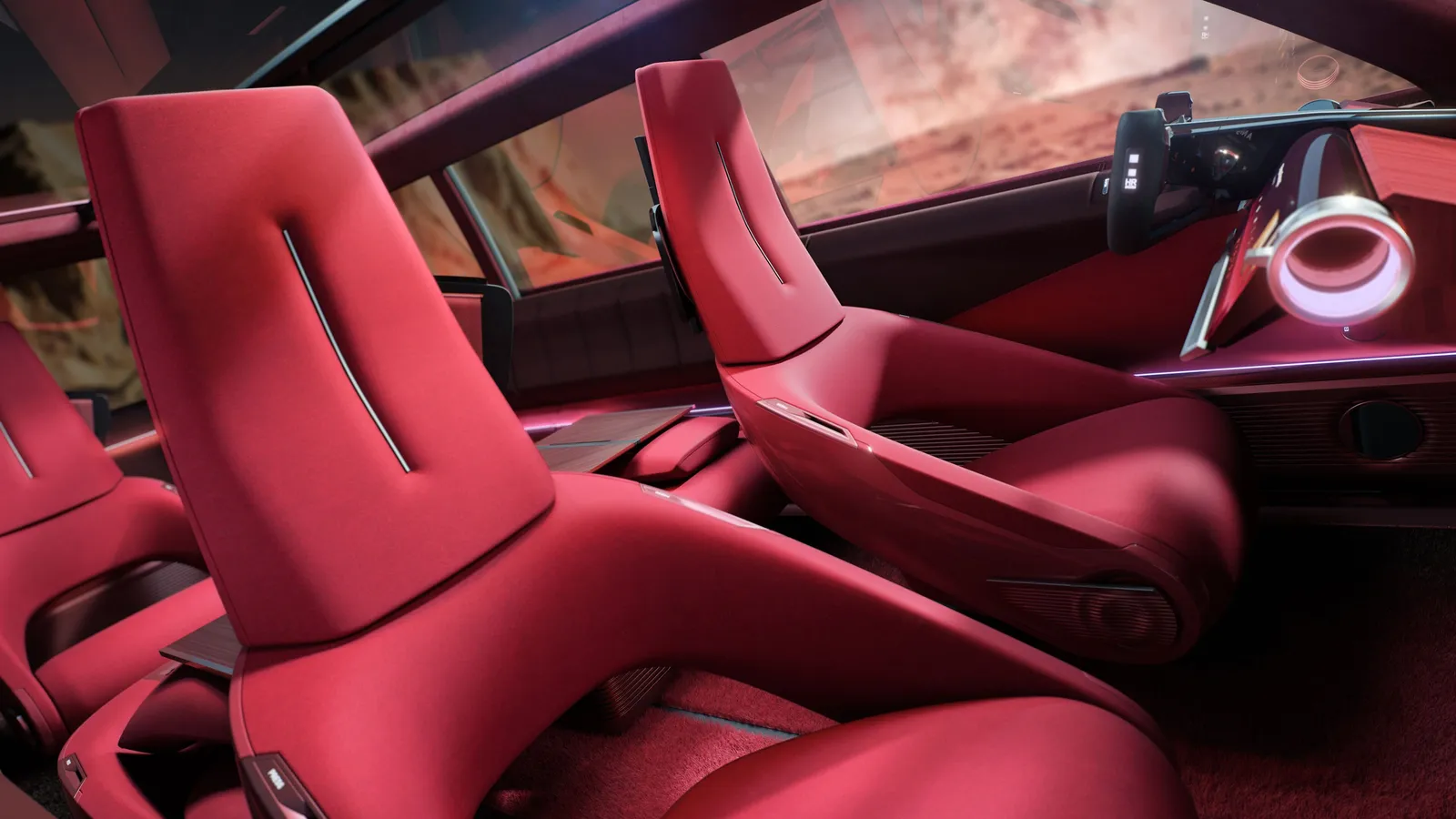
All seats can be rotated slightly to make getting in and out easier. The two seats in the second row can also be rotated 180 degrees so that passengers in the third row face them.
When the other seats are in the normal driving direction, passengers have access to fold-down tables. Behind the front seats are 12.3-inch screens.
The E-Space can also be converted into a four-seater configuration. In this case, the seats in the lower rows are moved all the way down, creating a large table for the passengers in the back row.
A movable console can also be placed along the center of the cabin. Renault plans for this to accommodate items such as air purifiers, a small refrigerator, game controllers, and the physical Connect 4 game.
Screen from side to side
The driver’s area is radically different from that in today’s Espace.
The main screen is called the OpenR Panorama and measures 1130 x 110 millimeters. This curved panel spans almost the entire width of the cabin.
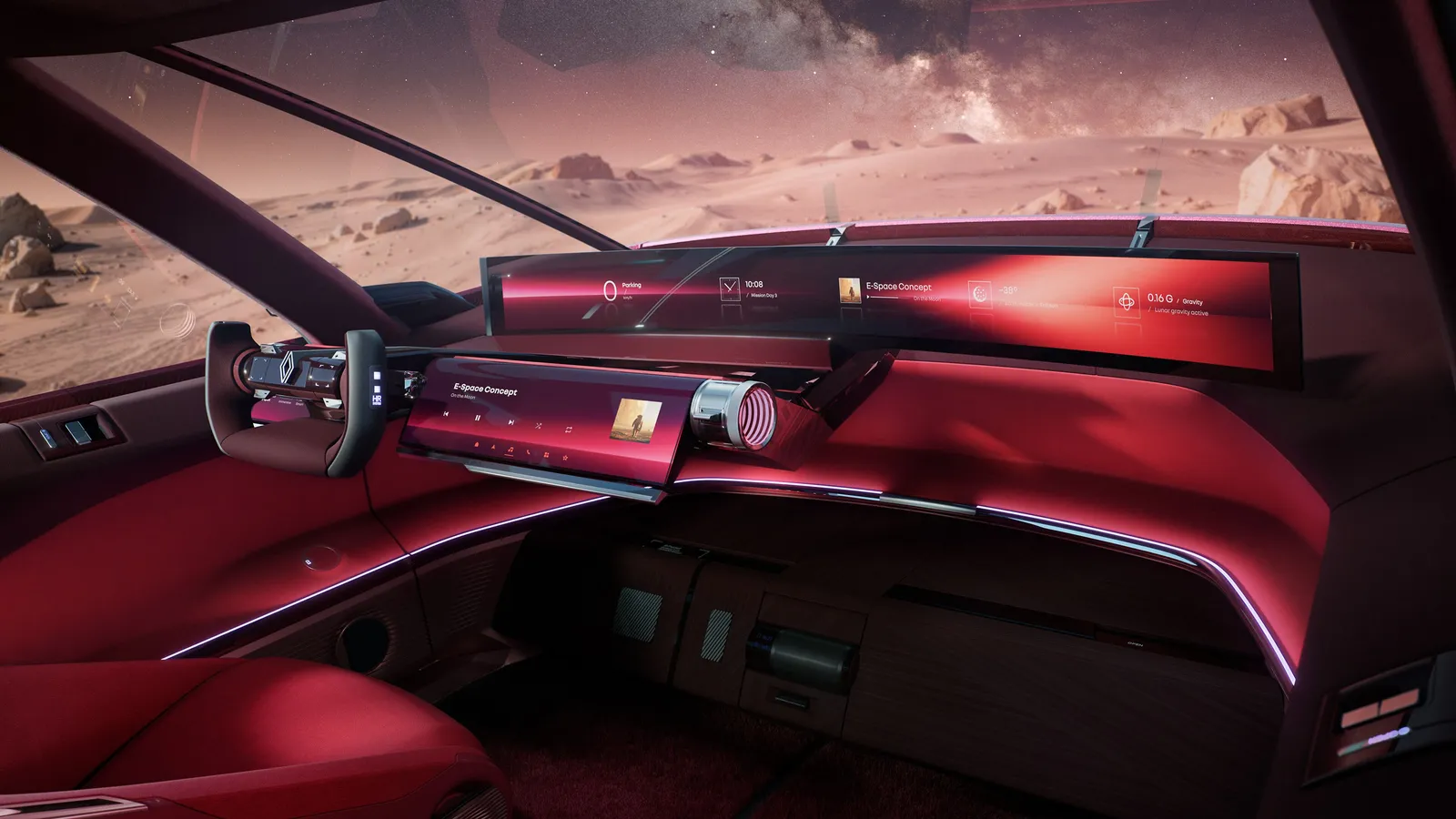
According to Renault, this solution is not intended to remain limited to concept cars only. OpenR Panorama is planned for future models in the brand’s larger vehicle classes, with the next generation of Rafale and Scenic set to feature this technology first.
The panoramic screen itself is not touch-sensitive. It is positioned high and close to the driver’s natural line of sight toward the road, effectively replacing a conventional dashboard.
Control is instead handled via two flexible screens that can rotate around a tubular structure at the steering wheel. The driver can adjust the amount of information displayed as needed.
On the passenger side, there is no traditional dashboard. Instead, a recessed storage solution runs across the entire width of the cabin beneath the main screen. The movable center console is also integrated here. Even the pedal mechanism is concealed.
Steer-by-wire
The E-Space Concept uses steer-by-wire, meaning electronic control without a mechanical connection between the steering wheel and the wheels.
This allows Renault to use a compact steering wheel and electronically adjust steering response and angle. The small wheel also provides the driver with a better view of the panoramic screen.
The steering wheel has a fixed knob and touch-sensitive controls to manage the functions of OpenR Panorama.
Fur, straw, and varnish oil
Renault has also experimented with materials other than those commonly found in cars.
The manufacturer says it already has a goal of using 30 percent recycled materials across its model range, while the E-Space is used to explore possibilities for more bio-based materials.
More like this?
Sign up for our newsletter
– get electric car news straight to your inbox!
Instead of using leather and wood primarily, parts of the interior core are made from dyed straw that is laid directly on the substrate. Straw is also used for inlay work, including on the tables behind the seats.
The floor is covered with a long-haired carpet made 100 percent of wool.
The lacquer used inside the car contains a harpic that is 18 percent bio-based. On the seats, fabric is combined with a material that contains 26 percent lacquer oil and 25 percent organic cotton.
The upholstery contains an average of 19 percent natural rubber.
Red Interior
The color choice also breaks away from the gray and black that characterize many modern car interiors.
Renault drew inspiration from the more colorful interiors of the 1970s. Therefore, the coupe uses various red shades, from scarlet and purple to garnet red.
The three-centimeter-thick wool carpet is coral-colored in the center, gradually darkening toward the edges. The door handles are covered with water-resistant fabric, while several switches and control elements are made of metal.
A light strip along the floor echoes the exterior design theme. In addition, there are smaller ambient lights, night lights integrated into the speakers, and reading lights mounted on a horizontal strip in the middle of the glass roof.
The E-Space Concept thus does not provide any direct indication of when a new electric Espace might go into production. However, several of its solutions are less distant from reality than the rest of the concept.
The OpenR Panorama has already been announced for upcoming Renault models in series production, while the rest of the car primarily shows that Renault is once again exploring multi-purpose vehicles as an alternative to SUVs.
Read also
The post Espace tenkes på nytt appeared first on Norsk elbilforening.