
The issue of housing access also affects the purchase of an electric car, but not due to its price, rather because of the associated charging.
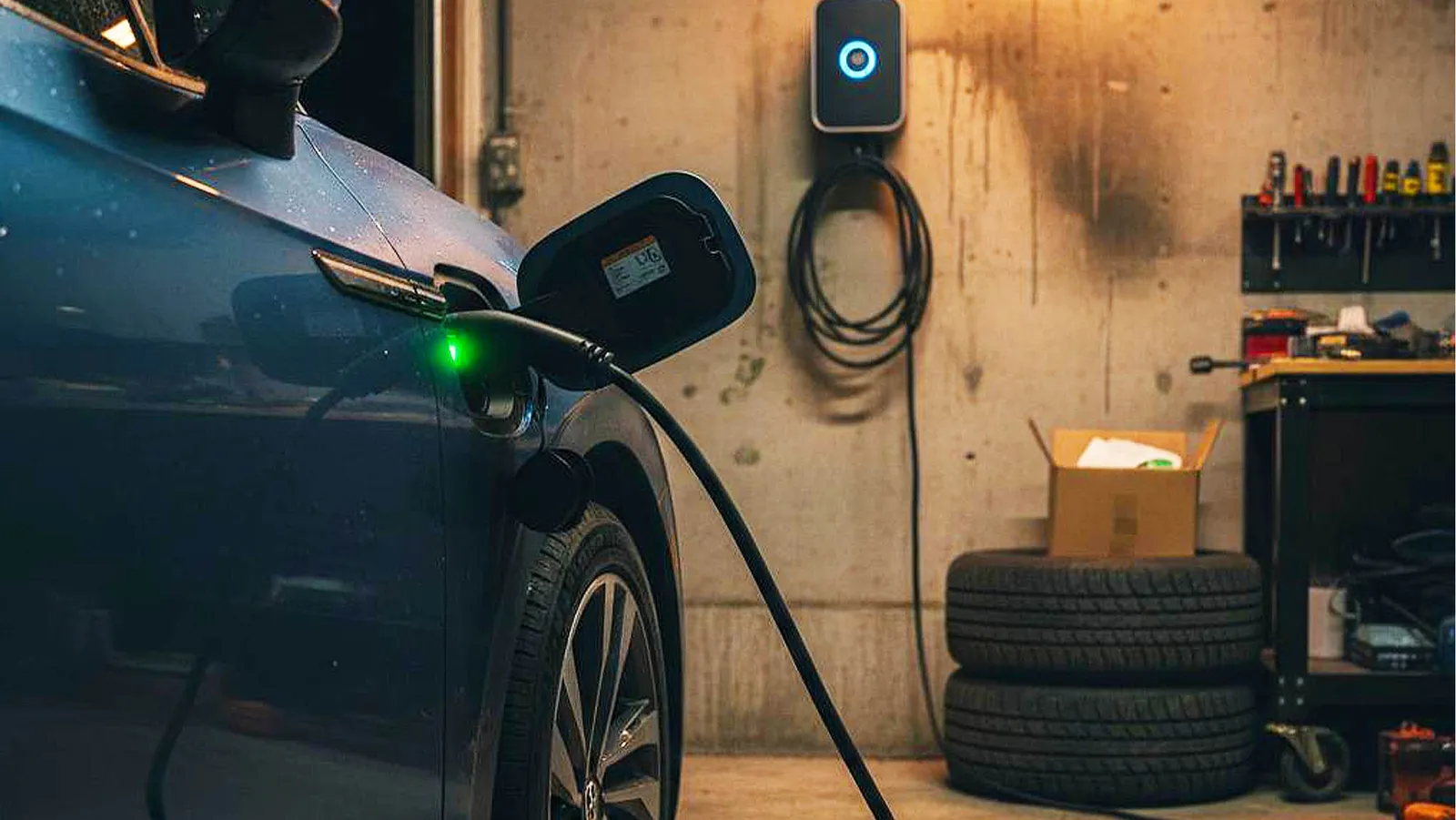
The electric car is no longer an option for just a few people. According to ACEA, in the first half of 2026, battery electric vehicles accounted for 20.7% of new registrations in the European Union, up from 15.6% during the same period in 2025. A total of 1.22 million units were registered, representing a 40.5% increase.
The technology is advancing, and so is the market. But there is a barrier that has little to do with the car itself and is much harder to overcome: where to park and charge the vehicle when it arrives home.
The problem starts before buying the car
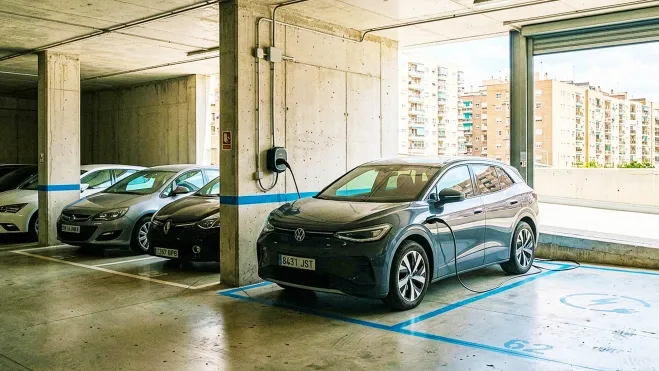
To truly take advantage of the economic benefits of an electric vehicle, it is ideal to charge it during the hours when it is parked. A private parking space with a charging station allows this to be done at night, enabling charging during the cheapest hours, and in some cases, also utilizing electricity from on-site photovoltaic systems.
The problem is that this situation is far from accessible to everyone. Housing prices in Spain rose by 12.2% on an annual basis during the second quarter of 2026. According to INE, used housing, which accounts for a large portion of the residential stock, saw prices increase by 12.9%.
The Bank of Spain estimates that in 2024, a non-owner household needed an income equivalent to 6.8 years’ worth to purchase a home in Spain. According to the Bank of Spain’s data, this figure reached 9.7 years in Madrid and nine years in Barcelona.
The problem affects not only those who want to buy. INE reveals that 44.3% of people aged 26 to 34 were living with their parents in 2025. Among those still living at home, 34.6% said they could not afford to rent a house, and 12.7% said they could not afford to buy one.
In this context, requiring a garage space (one that allows for the installation of a charger) adds another financial barrier.
The garage becomes part of the electric car
For a driver who owns a home with a garage, charging can be seamlessly integrated into their daily routine. The car is plugged in upon arrival, stays parked for several hours, and is ready the next day.
In an apartment without a parking space, the situation changes completely. It’s not enough to have a charger relatively close by. One must travel to it, check that it’s available, and spend time on a process that, with home charging, can be done while the vehicle is parked.
Spain also has a legal framework that facilitates the installation of a private charging station in an individual space within a shared garage. The Law on Horizontal Property states that it is sufficient to inform the community in advance about the installation, and that the cost falls on the interested owner. However, this convenience only solves the problem for those who already have a garage space.
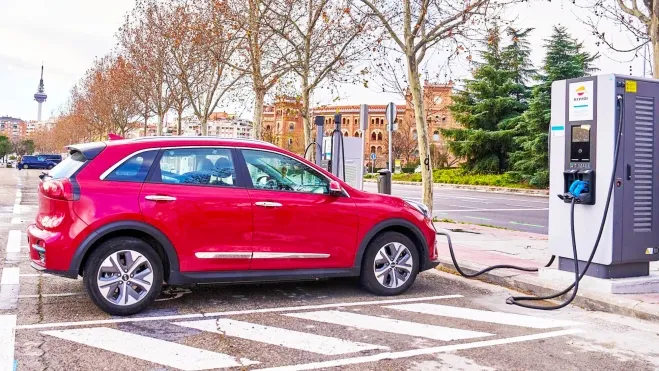
The solution for those who cannot charge at home is public infrastructure. But here, the issue is economic—charging on the street is more expensive.
In Spain, charging stations have significantly varying prices depending on power and operator. For reference, REPSOL currently charges 0.36 euros/kWh for standard charging, 0.48 euros/kWh for fast charging, and 0.56 euros/kWh for ultra-fast charging.
On the other hand, there are specific domestic rates for electric vehicles with significantly lower energy prices. For example, Iberdrola currently offers plans with energy costs of 0.17–0.21 euros/kWh, before taking into account the specifics of each contract and taxes.
The difference can be substantial. A car that consumes 17 kWh per 100 kilometers would cost around 6.1 euros at 0.36 euros/kWh, but approximately 9.5 euros at 0.56 euros/kWh. At home, with a price of 0.17 euros/kWh, it would cost around 2.9 euros. In other words, the economic advantage of an electric vehicle depends largely on where it is charged.
With expensive public chargers, the cost per kilometer can approach that of an efficient gasoline car. This eliminates one of the most important arguments for offsetting the higher purchase price of many electric vehicles.
The challenge is no longer just installing chargers
Expanding the public charging network is essential. According to data from the European Fuel Observatory, Europe’s public charging infrastructure reached over 1.15 million points in July 2026, a 15.2% increase from the previous year. But increasing the number of fast chargers alone does not solve the housing issue.
For millions of drivers, it would be more useful to have slow or semi-fast charging stations in places where cars are parked for hours: community garages, residential parking lots, workplaces, supermarkets, and public parking areas.
The paradox is clear: electric cars perform best when they can charge while their owners are sleeping, working, or shopping. Forcing drivers to go out of their way to find a charger to restore battery range makes the experience increasingly similar to going to a gas station.
The transition to electric vehicles risks creating an unexpected gap. On one hand, there are those who can afford a home with a garage, install a charger, and pay for household electricity rates. On the other hand, there are those who rent, live in an apartment without a parking space, or in an area where there is no residential charging solution.
The problem isn’t that electric cars can’t be used without a garage. It is possible to do so, and the public charging network will continue to expand. The issue is that doing so may be less convenient and, above all, significantly more expensive.
The electrification of cars therefore depends not only on battery prices, range, or charging speed. In Spain, it also relies on something much more fundamental: that a sufficiently large portion of the population can afford a home and a place to park their car, along with a significant reduction in the cost of public charging.
