
The Polestar 5 is here now: 748 horsepower, 678 km range, and a price that challenges its competitors in the same segment
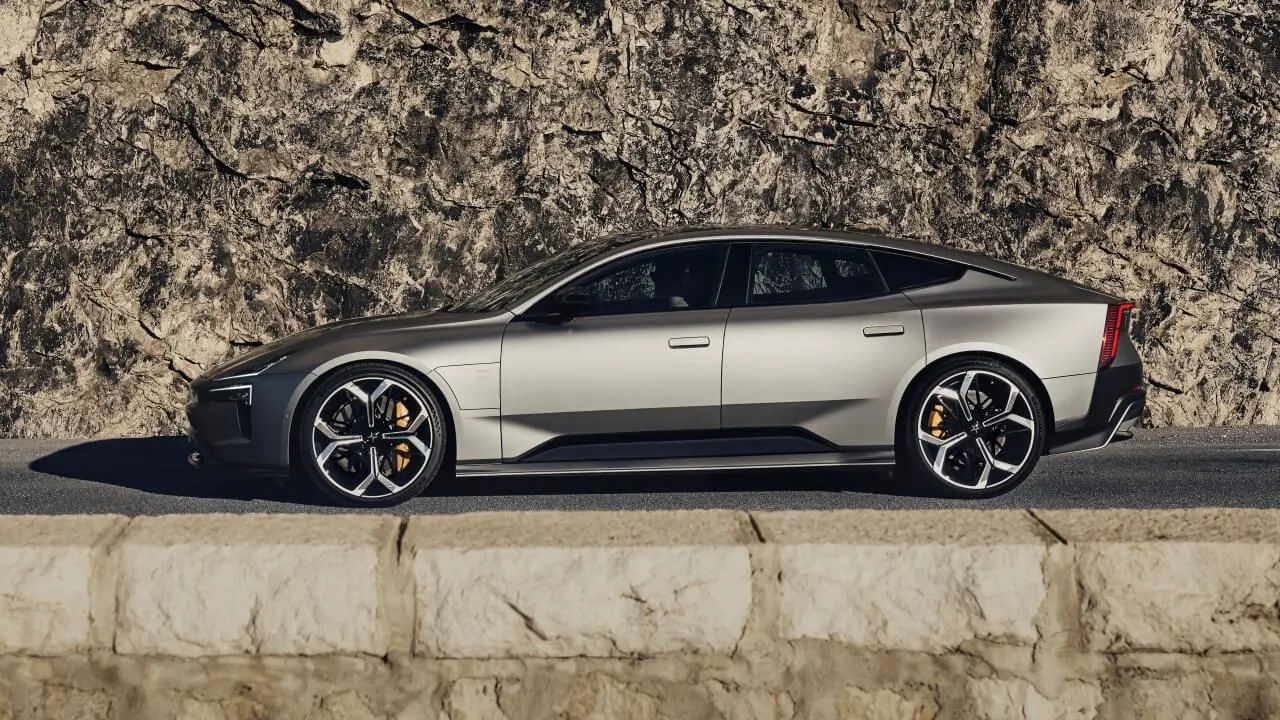
The Polestar 5 enters the market with a mission that is far more complex than simply becoming the brand’s most powerful model. Polestar aims to turn it into its flagship technological showcase and “halo” vehicle—a car capable of competing with models with much longer histories in this segment, such as the Porsche Taycan. To achieve this, it has opted for an unusual combination: an electric sedan of enormous size, a highly eye-catching design, and performance levels that rival those of supercars.
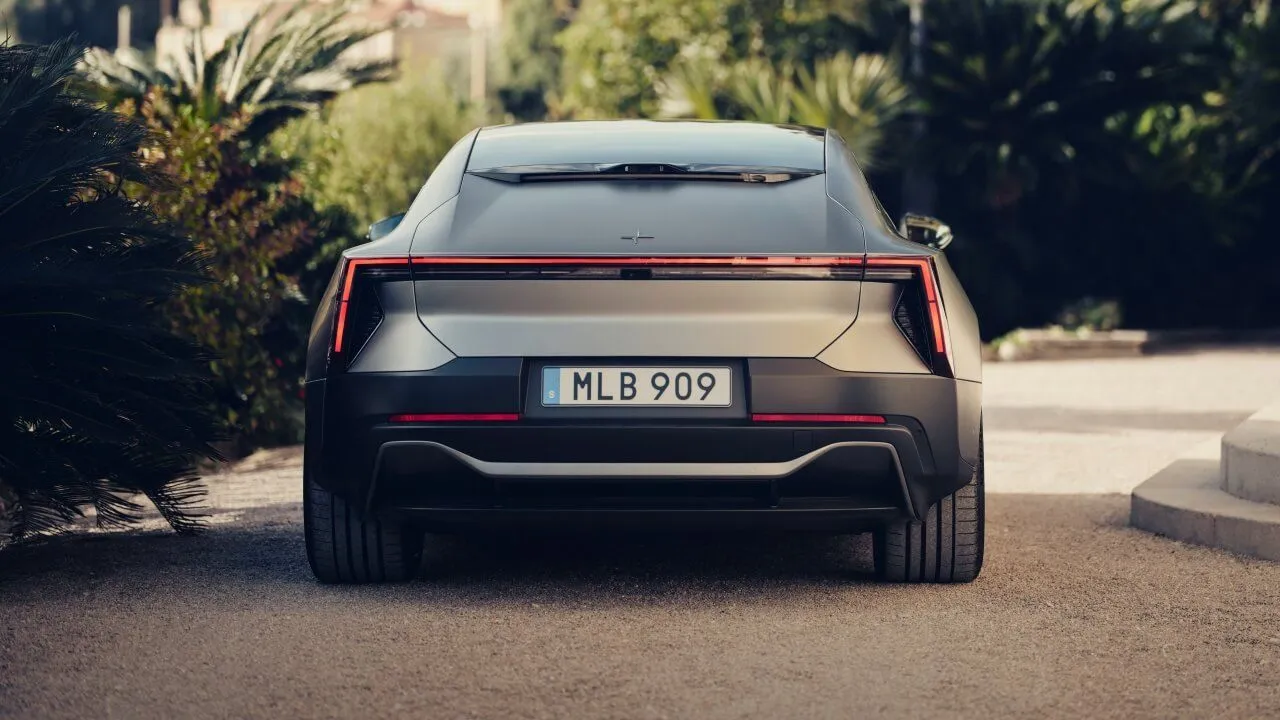
It is not a car designed to go unnoticed. Its bodywork largely retains the philosophy of the Precept prototype, featuring a very low, clean, and aerodynamic silhouette. It also eliminates a conventional rear window in favor of a digital interior mirror—a solution that might raise doubts at first but, according to early tests, turns out to be much less problematic than expected.
The concept also has an interesting aspect: the Polestar 5 isn’t aimed solely at being fast on straight roads. The brand has focused particularly on the chassis to ensure the car can behave like a grand tourer when traveling and like a sports car on winding roads. It is precisely in this latter scenario that the Performance version makes a significant difference.
A huge, fast, and surprisingly agile electric GT
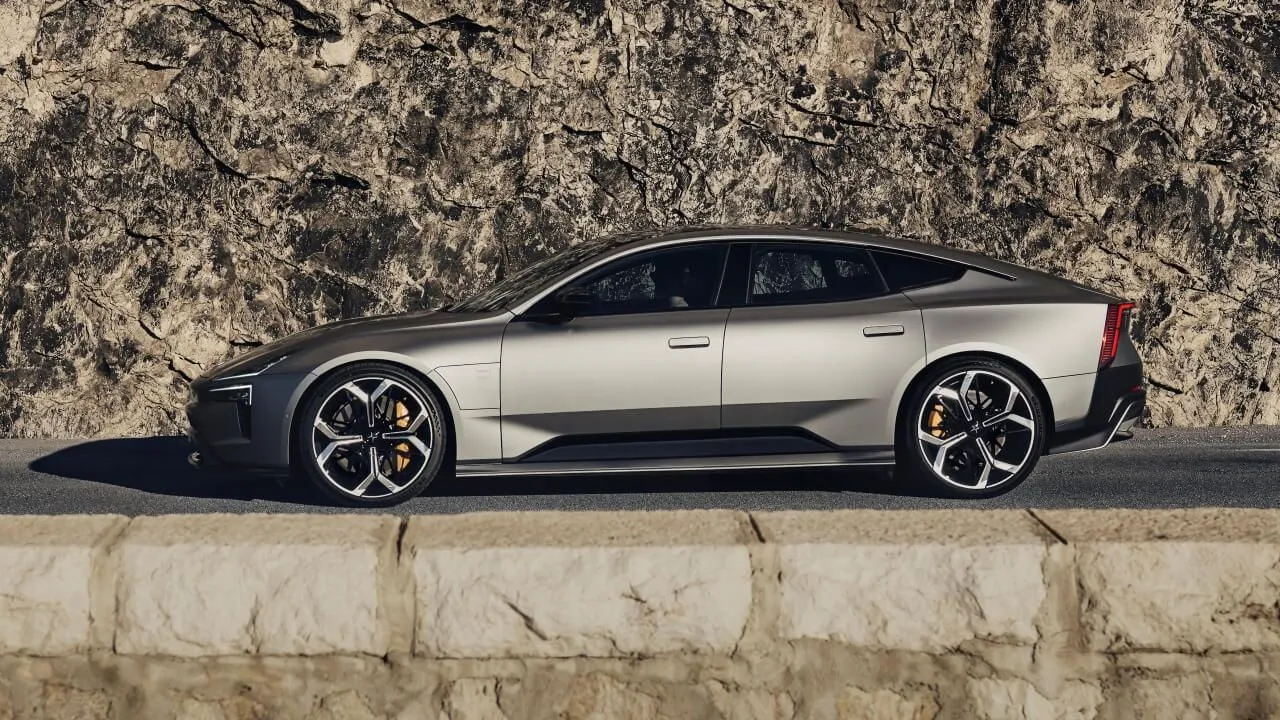
The Polestar 5 measures 5.09 meters in length, 1.98 meters in width, and 1.43 meters in height, with a wheelbase of 3.05 meters. These are substantial dimensions, but testing shows it isn’t as bulky as one might expect once behind the wheel. Its aluminum body and driving position help keep these dimensions fairly concealed while in motion.
The design is likely one of its main strengths. Its low front end, sloping roofline, and lack of a conventional rear window give it a distinct personality compared to rivals such as the Porsche Taycan, Lotus Emeya, or Audi e-tron GT. The Performance version adds specific tires, a slightly lower body, and Swedish Gold accents that further emphasize its sporty orientation.
Inside, the design is equally distinctive. The Polestar 5 features a minimalist cabin with a high perceived quality, featuring a large amount of glass and a panoramic roof that helps create an especially pleasant sense of space. The rear passengers are actually among the main beneficiaries of the extremely long wheelbase, although the fifth seat serves mostly as a symbolic addition.
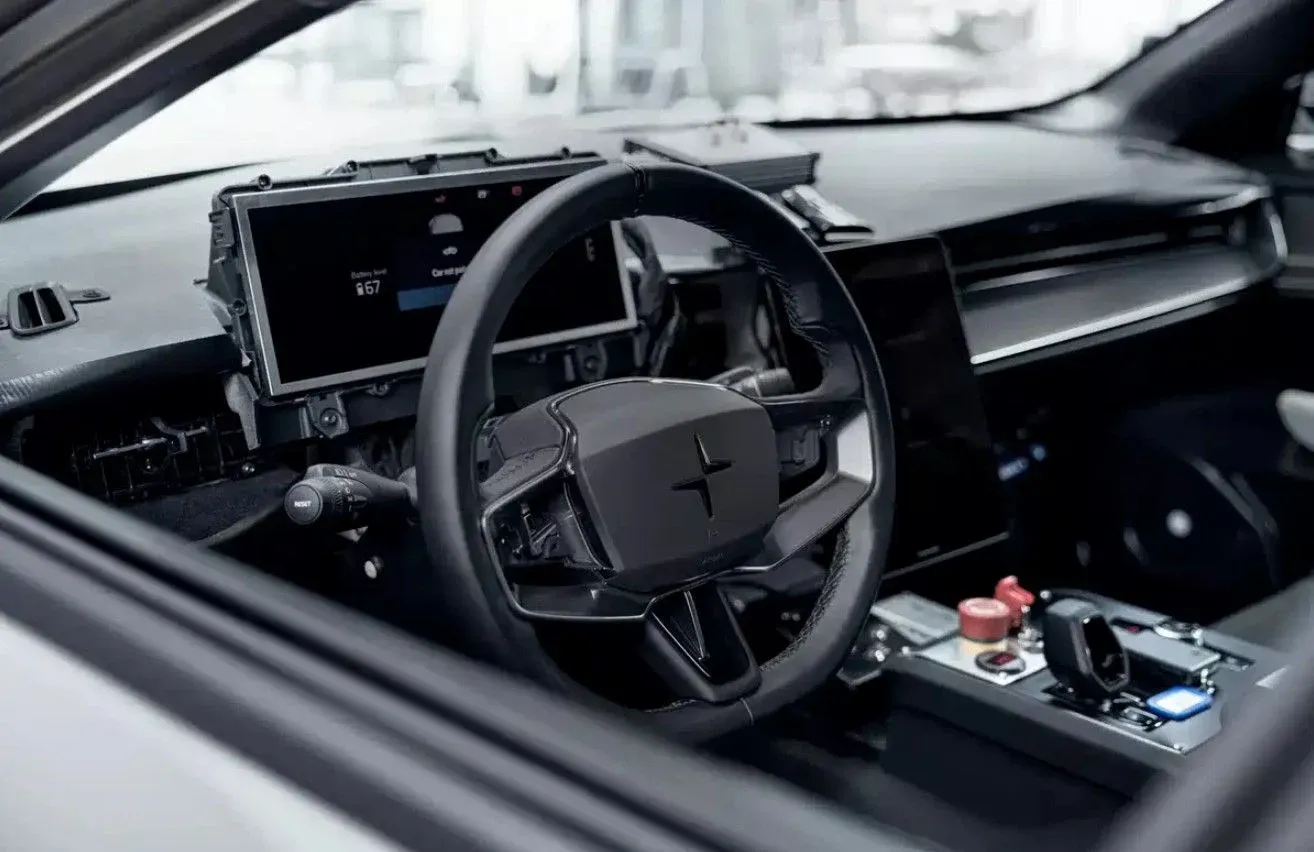
The cockpit focuses many of its functions on the screens. There is a 9-inch digital dashboard, a 14.5-inch vertical central screen, and a front display system, in addition to an 8.9-inch digital interior mirror. The multimedia system integrates Google and offers navigation via Google Maps, Google Play apps, and over-the-air updates. Wireless Apple CarPlay is planned for a future update.
This is one of the few aspects that can become frustrating over time. Polestar has gone too far in eliminating physical controls, forcing users to access the screen for certain operations that should be immediate. Adjusting the mirrors is a good example. It does work, but it’s not necessarily better than a conventional control.
The safety equipment is equally comprehensive. The Polestar 5 features 11 exterior cameras, a medium-range radar, and 12 ultrasonic sensors, in addition to driving assistance systems and a rear camera that replaces the view typically provided by a rearview mirror. The camera delivers high-resolution images, and together with the parking cameras, it enables a 360-degree view.
On the road is where the Polestar 5 truly begins to justify its existence. The Dual motor version delivers 550 kW (748 hp) and 812 Nm of torque, while the Performance version boosts these figures to 650 kW (884 hp) and 1,015 Nm. Both versions use two electric motors and all-wheel drive, though the Performance version features specific chassis tuning, MagneRide adaptive dampers, as well as a more sporty setup.
The results are impressive. The Dual motor version takes 3.9 seconds to accelerate from 0 to 100 km/h, whereas the Performance version does it in just 3.2 seconds. In both cases, the top speed is limited to 250 km/h. These figures place the Polestar 5 right in competition with the fastest versions of the Porsche Taycan and Lotus Emiya.
But what’s most interesting isn’t the acceleration. The Polestar 5 delivers a level of control that’s unusual for a car over five meters long and weighing 2,500 kilograms. The steering is quick and precise, the brakes respond forcefully, and traction control can be adjusted via the screen. With the highest setting, it’s possible to drive almost using just one pedal, while the softer setting provides a response more similar to that of a conventional car.
In the Dual motor version, the suspension is passive, while the Performance model adds MagneRide shock absorbers, which are precisely one of the reasons experts recommend paying the extra cost. In their most comfortable setting, they can effectively filter out road irregularities, whereas the stiffer modes provide better control over body movement when a faster driving style is desired.
And here lies one of the car’s greatest strengths: it doesn’t force you to choose between comfort and performance. The Polestar 5 can be a quiet and comfortable luxury sedan for a long journey, and just a few minutes later, it can transform into a highly efficient car on winding roads. In this regard, the Performance version makes much more sense than its power figures might suggest.
The trade-off lies in the cargo space. The trunk offers only 365 liters, a figure more typical of a B-segment model than of a car of these dimensions, although the capacity increases to 1,128 liters when the seats are folded down. Additionally, there are 62 liters available under the front hood. In other words, the Polestar 5 is much better at transporting passengers than large amounts of luggage.
The battery has a capacity of 112 kWh and uses an 800-volt architecture. The Dual motor version boasts up to 678 km WLTP range, while the Performance version reaches up to 558 km. The difference is significant and once again shows that such high power output comes at a cost when it comes to efficiency.
The charging capability is one of its strengths. The Polestar 5 supports up to 350 kW in DC, and according to Polestar’s data, it can go from 10% to 80% charge in about 22 minutes. In AC, it supports up to 11 kW and takes around 11 hours to complete a 0% to 100% charge.
As for prices, in Spain, Polestar’s official configurator lists the Polestar 5 Dual Motor at 121,900 euros, while the Polestar 5 Performance costs 145,300 euros. These are very high figures, but it’s also true that this is a car in a segment where Porsche, Lotus, and Audi don’t offer particularly affordable alternatives either, which usually cost even more.
The interesting thing is that the Polestar 5 doesn’t seem especially expensive compared to its direct rivals when considering features, power, and technology. The issue is that it still represents a huge amount of money for an electric sedan over five meters long whose trunk isn’t particularly spacious.
Nevertheless, the conclusion of the test is quite clear. The Polestar 5 is one of those cars that manage to justify its existence, even though it seems difficult on paper to find a place for it. It boasts exaggerated performance, a unique design, a finely crafted interior, and a chassis capable of doing things we wouldn’t expect from a car of its size.
If forced to choose, the Performance version is the most special thanks to the MagneRide suspension, but the dual-motor model seems like the smarter purchase. With 748 horsepower, 678 km of WLTP range, and a price 23,400 euros lower, it offers almost everything that makes the Polestar 5 interesting without pushing the electric grand tourer concept to its extreme.
This model is designed for those who want a car that stands out, draws attention, and is hard to forget. It features a very aggressive and futuristic design that breaks away from the usual norms of its segment.
