
The new Xpeng L03 aims to conquer Europe, but it has a problem that undermines its chances.
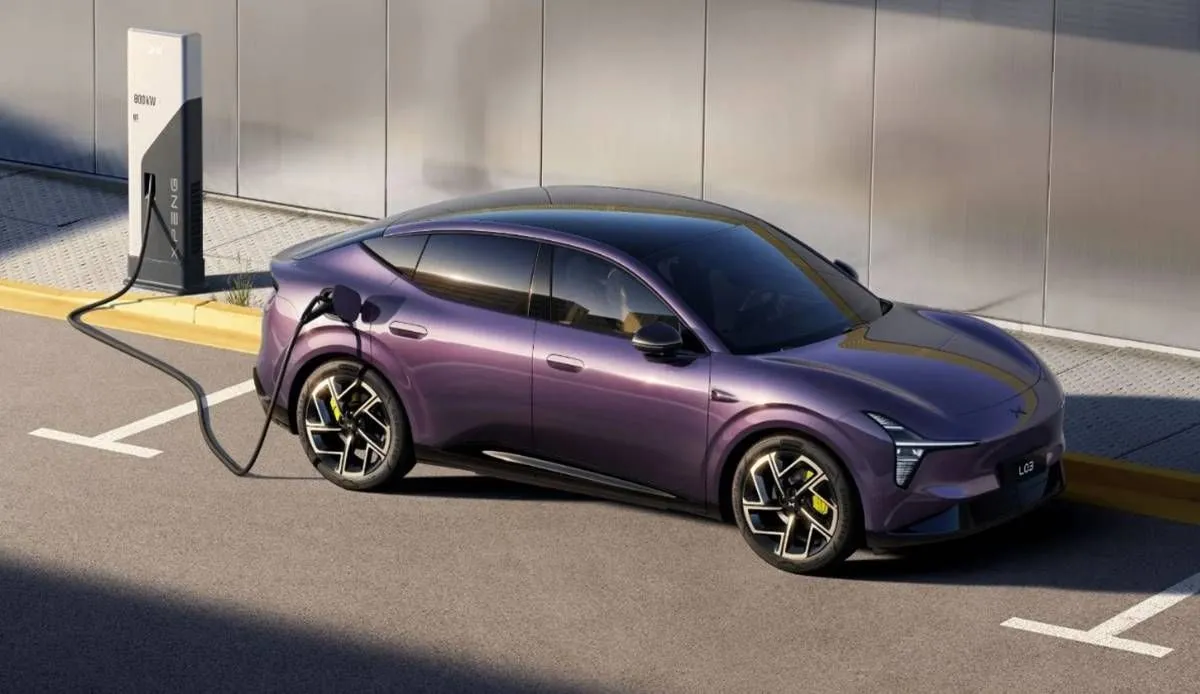
Presented by some as the new “Tesla killer,” the new XPeng L03 arrives in Europe with the aim of attracting those looking for a well-equipped family car, featuring a modern design and competitive pricing. However, the Chinese brand’s offering has some weaknesses that should be considered before considering it an alternative to its American or Chinese rivals.
The French media outlet Cardisiac conducted tests on the XPeng L03, analyzing both its strengths and limitations on the road compared to its main competitors. The conclusion is that, although the new model stands out for its equipment and carefully designed interior, there are aspects of its design that fail to fully live up to the expectations generated around it.
XPeng has carved out a niche in Europe with a strategy different from that of other Chinese manufacturers. While brands like BYD, SAIC, and Chery aim to cover a wide range of market segments, the company has focused on higher-end electric vehicles, emphasizing technology and charging speed. It is one of the few companies able to keep up with Tesla in terms of autonomous driving, at least for now only in China, which adds significant value to its vehicles.
One of the brand’s key strengths so far has been its 800-volt electric architecture, found in models such as the XPeng G6, G9, and P7+. This technology enables power levels unmatched in the industry and charging times so fast that they make us rush to the bathroom. This is not the case with the L03.
The XPeng L03 gives up 800 volts to keep costs down
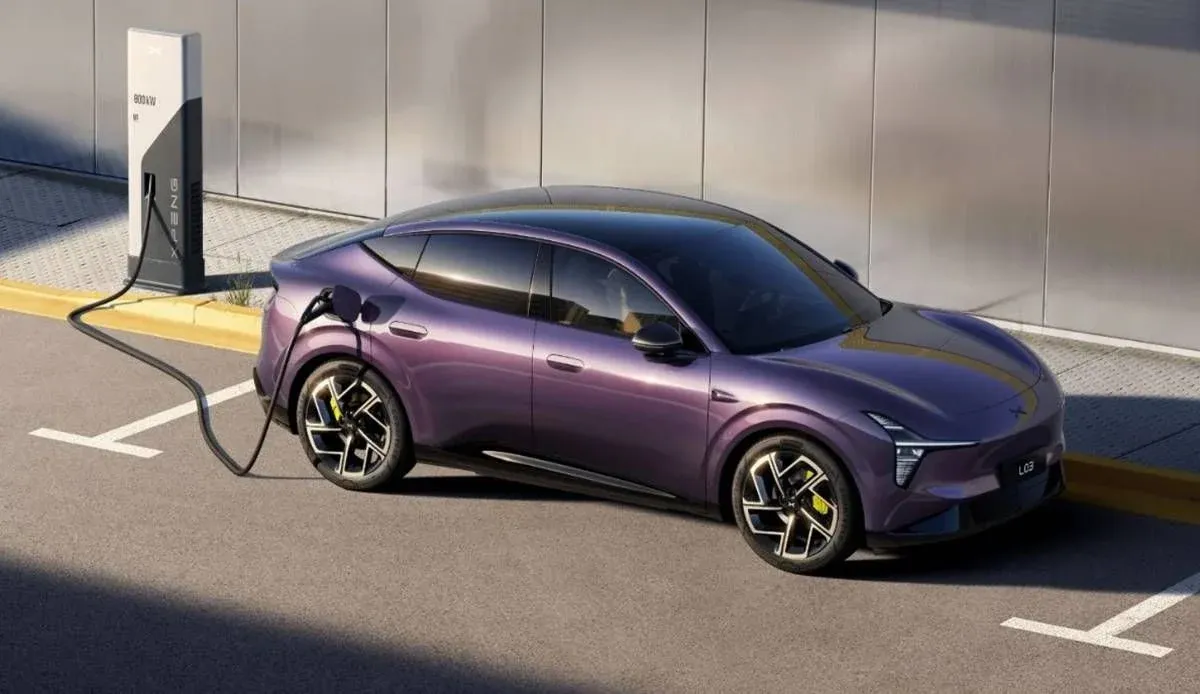
The new XPeng L03 breaks away from that strategy. To offer a lower entry price, the manufacturer has abandoned the 800-volt architecture, a decision that means giving up one of the key advantages that previously set its models apart. The result is an SUV that aims to compete on features and price-to-performance ratio, but it loses some of the technological appeal of its older models.
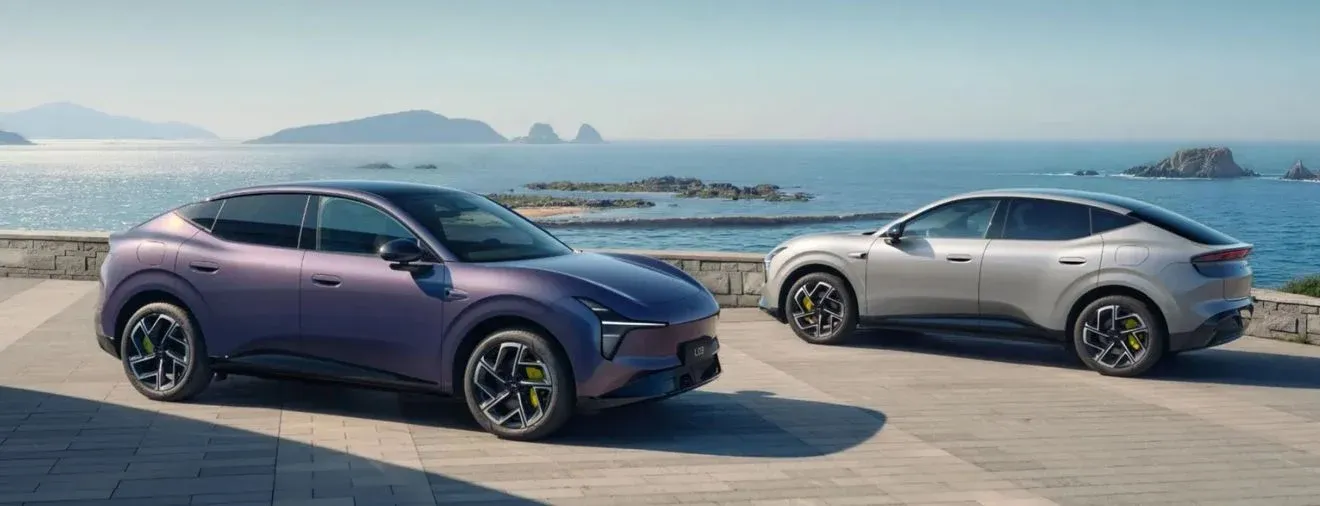
At 4.65 meters in length, the L03 sits somewhere between electric SUVs like the Peugeot E-3008, Renault Scenic, and Volkswagen ID.4 and larger models. Its coupe-style body aims to give it a sporty appearance, though the design isn’t particularly original. The front end resembles Polestar models, while the side silhouette might evoke the Porsche Macan Electric, and the rear shares some visual traits with the Lotus Eletre.
The overall impression is that of a car designed to appeal to a broad audience, but without a very distinct aesthetic identity. This is a common approach in today’s market, where many manufacturers use similar proportions and visual solutions for their electric SUVs. The XPeng L03 fits into this trend, though it also fails to stand out clearly from its competitors.
The interior follows a philosophy that has already spread throughout much of the industry. The central screen handles virtually all functions, while the digital instrumentation located behind the steering wheel provides the basic driving information. The dashboard is 8.8 inches wide, and the central touchscreen measures 15.6 inches, a combination that leaves very few physical controls for managing the vehicle’s various functions.
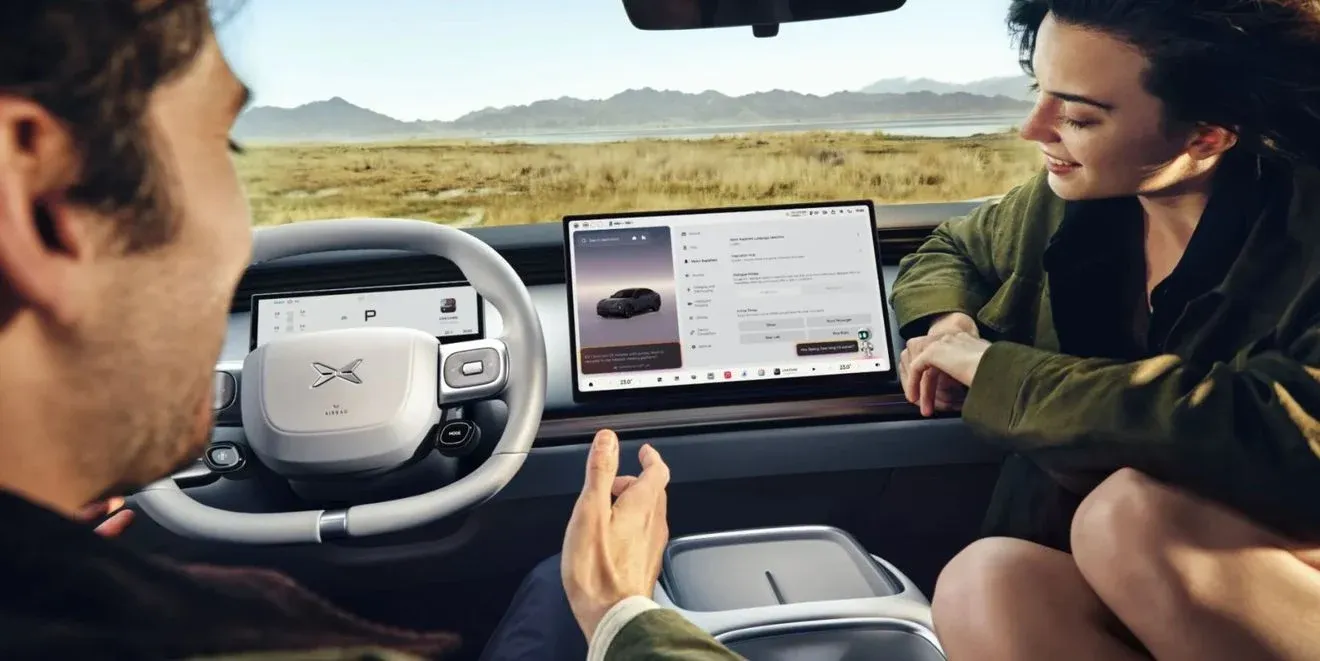
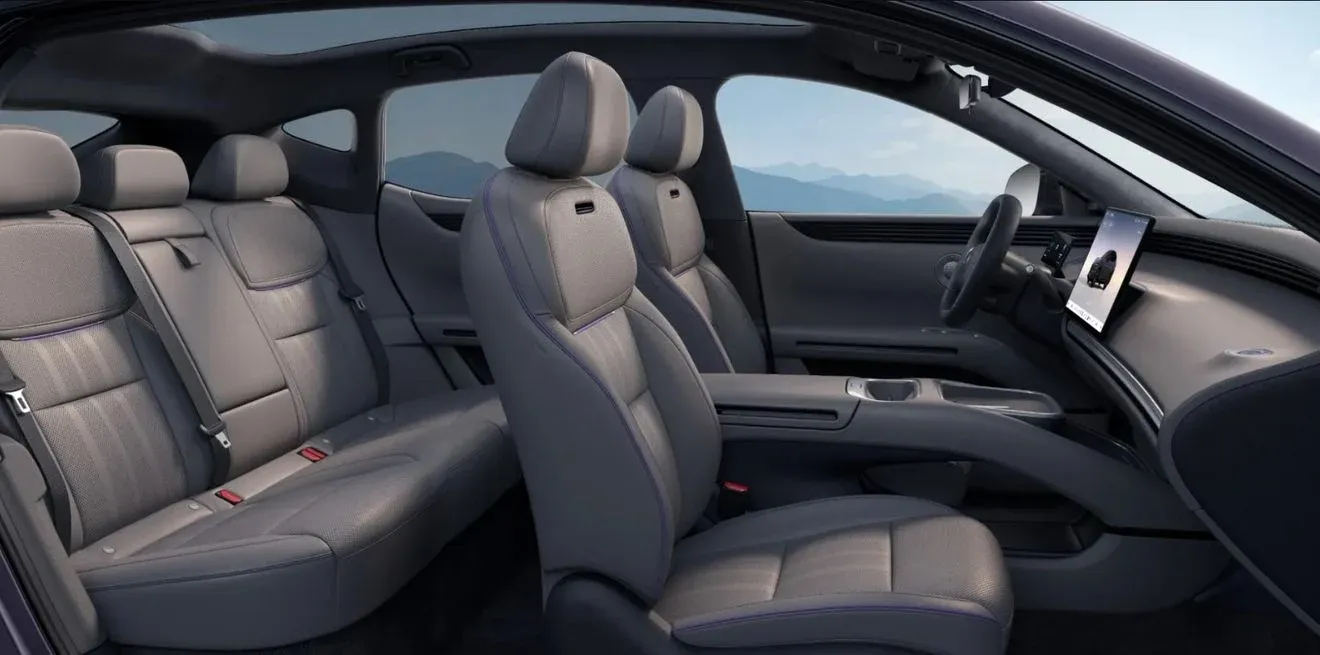
Despite this focus on digitalization, the interior offers a compelling appearance. According to testers, the materials, trims, and the option to choose light-colored upholstery contribute to creating a sense of quality that resembles higher-tier models. This is particularly striking in a vehicle aiming to position itself as the entry point into XPeng’s lineup.
The standard equipment also works in its favor. The L03 can feature electric, heated, and ventilated front seats, a panoramic glass roof, and a heat pump—elements that enhance both comfort and efficiency in cold conditions. The brand has sought to ensure that the entry price doesn’t result in an overly basic interior, and it succeeds in this regard.
Comfortable seating is another of its strengths. The generous wheelbase provides ample space for passengers in the rear seats, a crucial feature for an SUV meant for family use. However, in Europe, customers place less emphasis on rear-seat space and more on trunk capacity. This is where the L03 falls short with its mere 367 liters of storage space. This is a rather modest capacity for a vehicle of this size, compared to the 545 liters in the Renault Scenic E-Tech, which is 18 centimeters shorter than the Xpeng.
The L03 partially compensates for this limitation with an 89-liter front trunk in rear-wheel-drive versions. In the all-wheel-drive Performance variant, that space is reduced to 44 liters. It’s a useful solution for storing charging cables or small items, but it doesn’t eliminate the drawback of having a rear trunk that’s smaller than one would expect in an SUV of these dimensions.
Another area where XPeng aims to stand out is in electronics. The company develops its own Turing chip and has a computing platform designed to manage vehicle functions. This aspect is crucial, as the Turing processor powers Xpeng’s NGA autonomous driving system, the brand’s version of FSD, which, according to its president, will arrive in Europe by 2027. XPeng claims that this processing power will enable the L03 to offer level 3 autonomous driving once regulations permit it in our market.
The bad news, as there always is, is that this complete system is only available in the most expensive and highest-equipped version of the L03, the Ultra.
Xpeng L03: Driving and Autonomy
The road performance is another aspect that calls into question the expectations generated by the L03. The Performance version, with all-wheel drive, offers superior specifications on paper, but testers did not find a sufficiently clear advantage in its driving experience compared to the rear-wheel-drive variant. The additional power alone is not enough to make it a more attractive option for all drivers, especially since it also comes with a higher price and a lower certified range.
Actual range is another important factor when evaluating its potential as a family car. Although XPeng claims up to 520 kilometers according to the WLTP cycle, the Performance version achieves around 440 kilometers under WLTP conditions. On highway driving tests, reviewers recorded an actual range of just 280 kilometers, a figure that requires careful planning for stops during long trips.
And here lies another issue. While high fuel consumption is common among Chinese models, it is offset by their ultra-fast charging systems. The L03 is equipped with a 400V charging system. Nevertheless, it still manages a very good charging curve for its class, managing to go from 10% to 80% charge in 22 minutes during tests.
Nevertheless, the equipment remains one of the model’s most compelling arguments. The combination of seats with ventilation and heating, a heat pump, a panoramic roof, and advanced electronics allows the L03 to compete with cars that, in some cases, require a higher price tag to offer comparable features. The problem is that a good list of equipment does not always compensate for the practical limitations of a vehicle, especially when it comes to an SUV designed for family travel.
In France, the XPeng L03 starts at 34,990 euros, a price that puts it in a competitive position within the electric SUV segment. However, the tested Performance version sits at the top of the range, with a price of 46,990 euros. At this price point, competition is much more intense, making it necessary to carefully evaluate what it offers compared to other popular electric family vehicles.
In Spain, interestingly, only the electric version with extended range, the L03 PowerX Long Range, is currently available online, and it is quite different from the other models.
The conclusion is that the XPeng L03 has strong credentials to make a name for itself in the market, especially thanks to its equipment and the perceived quality of its interior. However, its road performance, trunk space, and departure from the 800-volt architecture reduce some of its advantages in becoming the benchmark we expected it to be in its segment.
It’s an interesting car, but offering a lot of technology alone isn’t enough to stand out in a segment with increasingly many well-executed alternatives.