
The new Citroën 2CV will be electric and is expected to cost around 15,000 euros: here are its key features
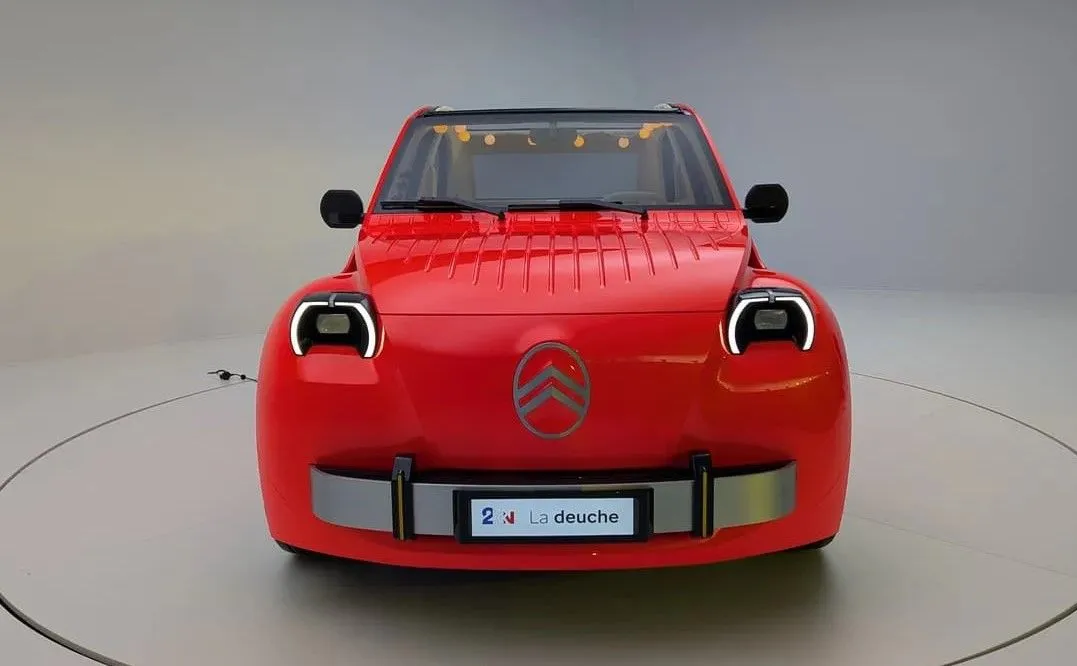
Citroën aims to revive the spirit of one of its most iconic models from its history with a version adapted for modern times. The return of the 2CV will not be merely a nostalgic exercise but an effort to bring back the concept of a simple, lightweight, and affordable car in a market where it’s increasingly difficult to find small vehicles at reasonable prices.
The French brand took advantage of the 2026 Paris Motor Show to showcase a prototype that retains many features of the original model, albeit with a modern interpretation and fully electric mechanics. This proposal goes beyond just design and could become one of Citroën’s most interesting projects in the years to come.
The electric Citroën 2CV aims for production
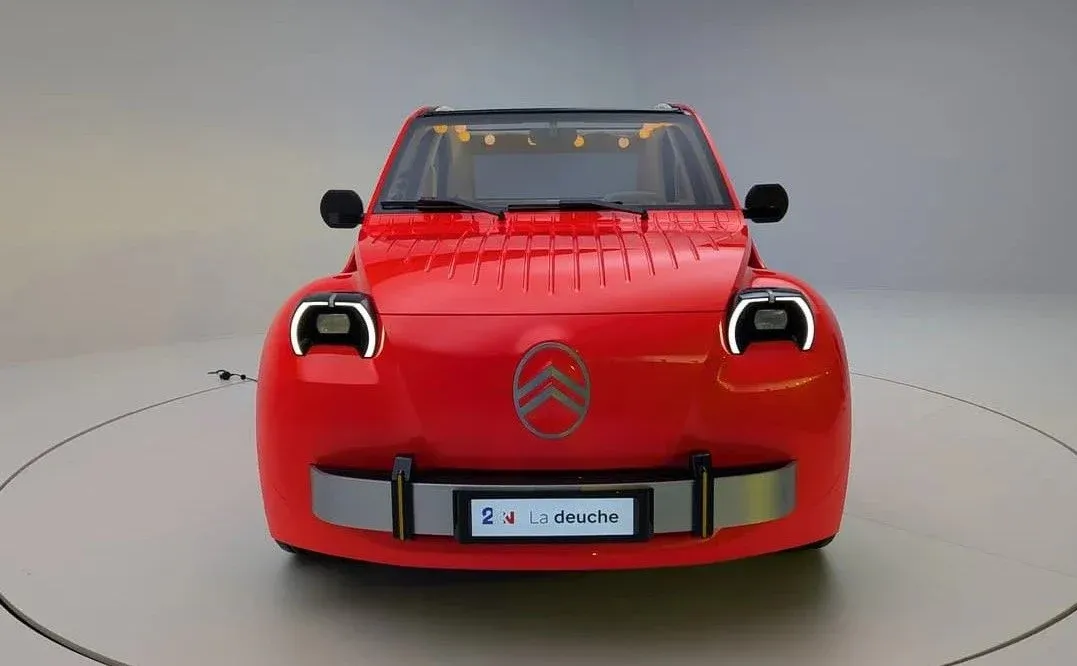
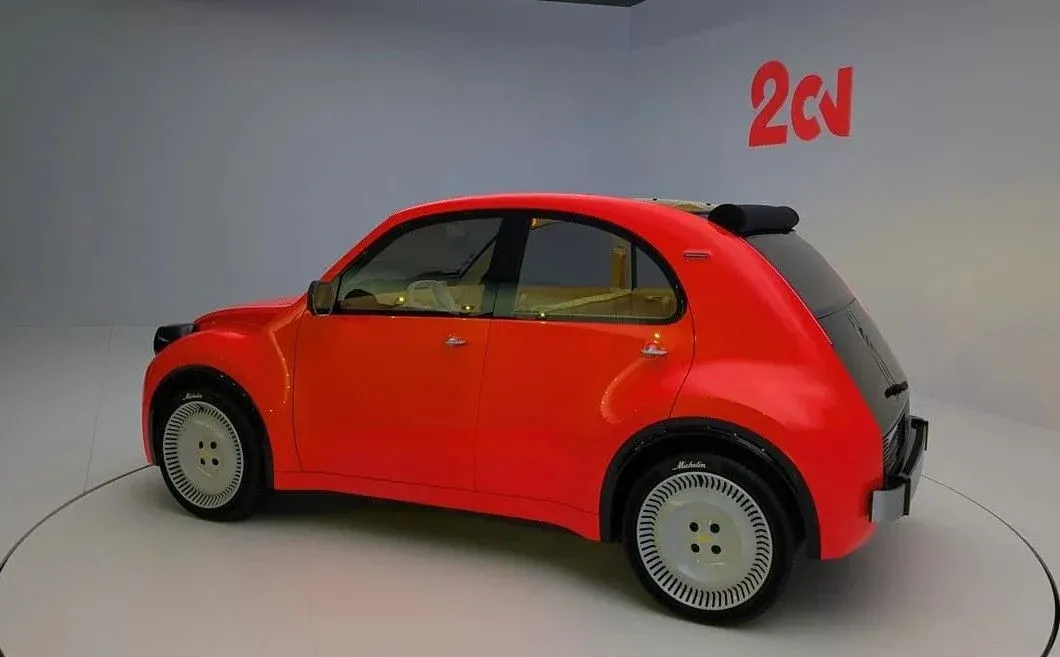
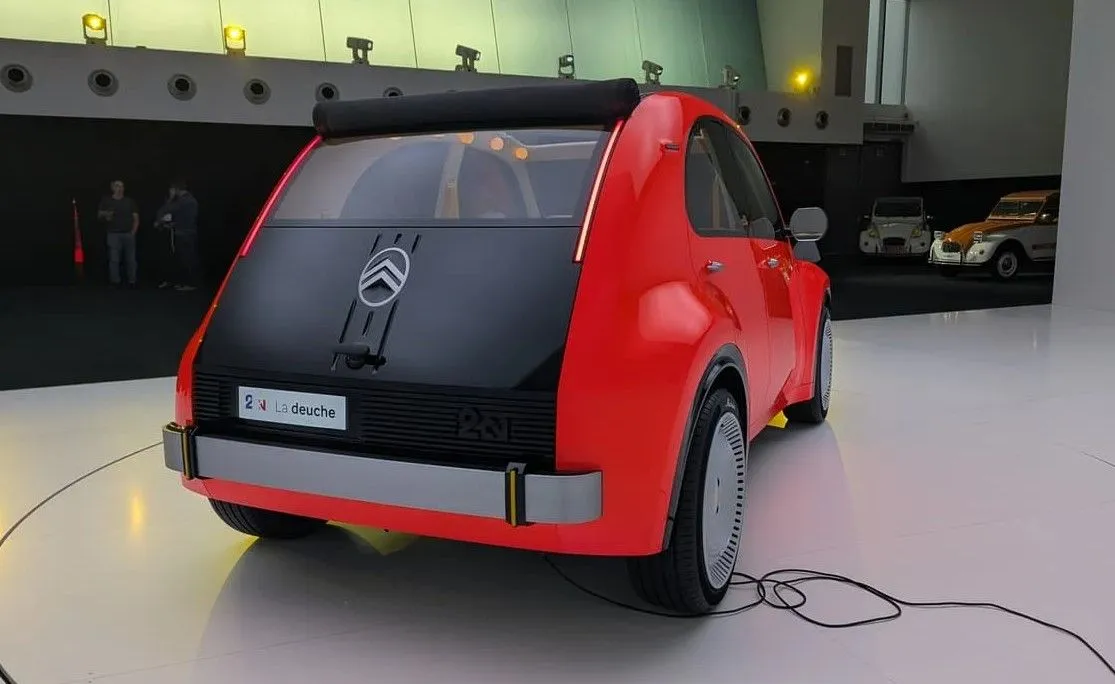
The idea of bringing back the Citroën 2CV has been on enthusiasts’ minds for years. It’s no surprise: the original model sold over five million units and remained in production for 42 years, becoming one of the most recognizable cars in the history of this French brand. Now, Citroën has decided to revive this design with a prototype that retains the distinctive silhouette of its predecessor but is adapted to today’s mobility needs.
The difference from other design exercises is that this project was not conceived solely to draw attention at an exhibition. According to the information released about the prototype, it already features much of what we will see in the final model. Around 90% of the design corresponds to the future production car, whose market launch is scheduled for 2028, provided that the set deadlines are met.
Citroën’s design chief, Pierre Leclercq, has presented the prototype as a proposal with real potential to make it to dealerships. Its striking orange body helps attract attention, but what matters most is the underlying concept: developing a small, lightweight, and affordable electric car that revives the practical philosophy that made the original 2CV a success.
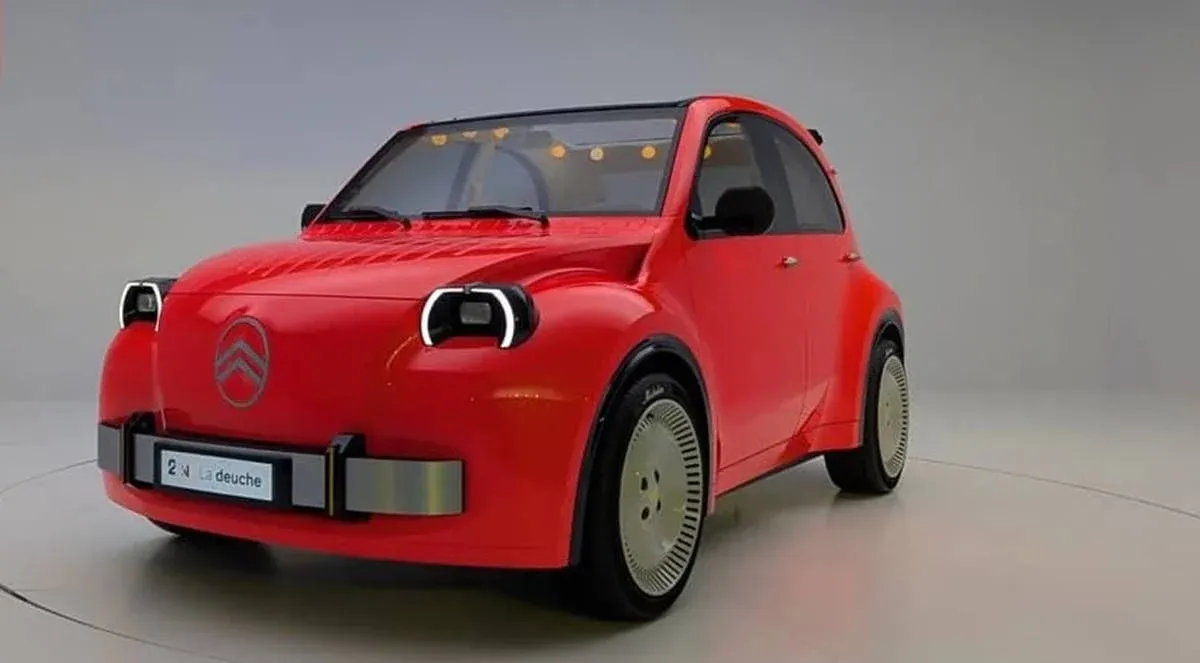
The new model also does not aim to directly replace the Citroën AMI or the Citroën C3. Its goal is to fill the space between the two, offering a vehicle that is more capable than a small urban quadricycle but simpler than a conventional sedan. This position would allow Citroën to provide an alternative for those who need a car for daily commuting but do not want to pay the high prices of many current electric models.
In terms of technical specifications, the figures are still preliminary. The prototype is estimated to weigh around one ton, have a top speed of about 110 km/h, and an approximate range of 200 kilometers. This suggests a battery capacity of around 26 kWh.
The ability to travel at 110 km/h would be particularly important to distinguish it from light quadricycles, whose speed limits restrict their use to specific environments. The new Citroën 2CV aims to be a vehicle that allows one to leave the city without the limitations associated with a conventional vehicle that requires no driver’s license, although its final specifications and approval status remain to be determined.
A simple interior and a focus on affordable electric cars
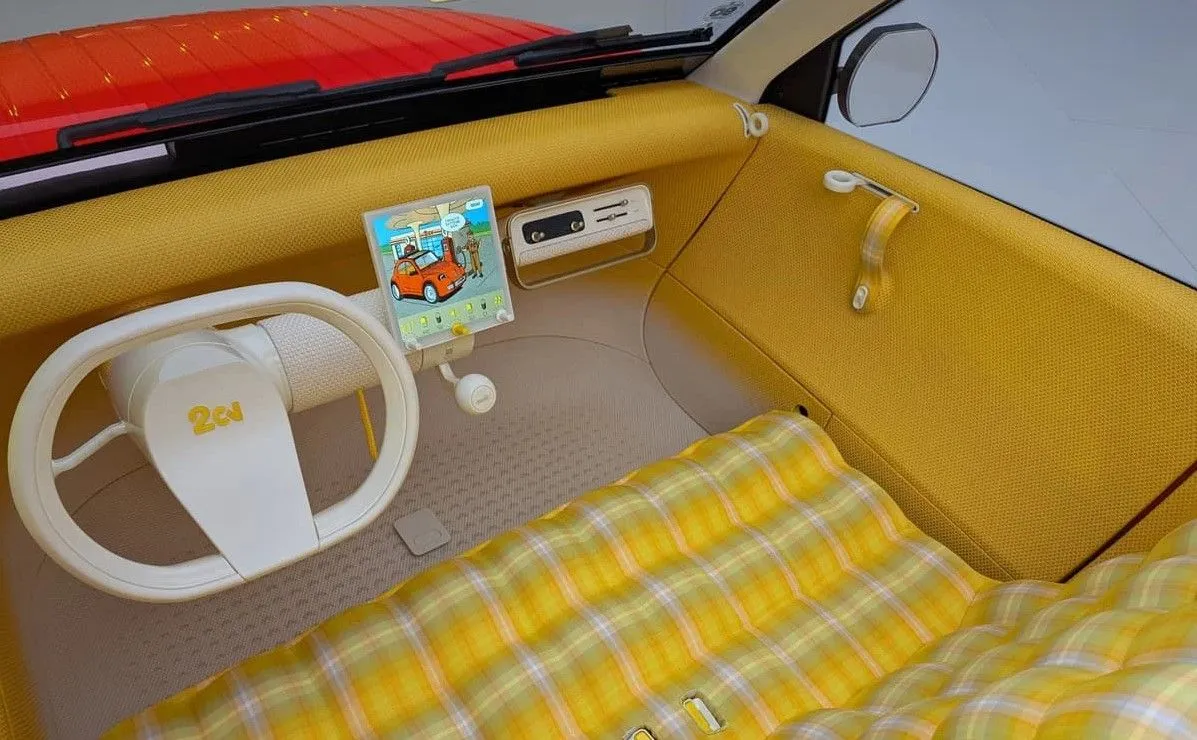
The interior of the prototype is one of the elements that draws the most attention due to its approach. Citroën favors simplicity and making the most of available space, with solutions that reflect the practical spirit of the original model. Some details, such as the decorative lighting and footrests, seem more like design experiments and could change before reaching production, especially those elements that need to meet safety requirements.
The driving position features the iconic single-arm steering wheel, one of the brand’s historical traits, along with a shift selector placed separately. Its design evokes that of the original 2CV, though adapted for an automatic transmission. It also highlights a removable radio and a square touchscreen that breaks away from the panoramic format common in many modern cars.
The ergonomics, material quality, or actual available space have not yet been thoroughly verified, so it’s best to consider these aspects as a statement of intent. In any case, the idea seems clear: to offer a functional and pleasant interior without resorting to complex solutions that would increase the overall cost. This philosophy will be crucial if Citroën wants to achieve its goal of developing a truly affordable electric car.
The project addresses an increasingly evident problem in the European market. The gradual disappearance of small, economical combustion engines vehicles such as the old Citroën C1, Peugeot 107, or first-generation Toyota Aygo has created a gap that is difficult to fill. Small electric cars have improved in performance, but their prices remain a barrier for many buyers looking for a second vehicle or a simple solution for daily commuting.
The Citroën C3 and Dacia Spring represent two different approaches to that market, but the French brand aims to go further with a compact-sized model and a more minimalist philosophy. The goal is to set the starting price of the new 2CV at around 15,000 euros before government subsidies, a figure that still depends on the technical and regulatory decisions made during its development.
To achieve this, Citroën supports the European E-Car initiative, which seeks to facilitate the development of small and affordable cars through a regulatory framework tailored to their characteristics. The proposal aims to reduce certain costs associated with the requirements of conventional cars, including some driving assistance systems, without turning these vehicles into off-road machines or limiting their use to city streets.
The difference between the two categories is significant. Light quadricycles, such as the Citroën AMI, have speed limits and cannot be used on certain roads. A car classified under category M1, on the other hand, must meet stricter requirements regarding safety and equipment, which directly affect the final price. The E-Car initiative aims to find an intermediate solution that allows for the production of small cars at a lower cost while maintaining their status as passenger vehicles.
The timeline will also depend on how this process progresses. Although Citroën targets 2028 for the launch of the production model, any changes in European regulations require time and agreements between authorities and manufacturers. Therefore, both the announced price and technical specifications should be considered initial targets rather than final details of a vehicle ready for sale.
This initiative wouldn’t be limited to Citroën alone. Within the Stellantis group, Fiat might also develop its own proposal based on this philosophy, while Renault is working to regain ground in the small electric car segment, and Dacia has shown interest in creating even simpler and more affordable vehicles through the Hipster concept car.
In that scenario, the new Citroën 2CV could become one of the brand’s most significant offerings if it manages to transfer the spirit of the original to an affordable electric car. Its design taps into nostalgia, but its real purpose is to provide a practical alternative for those who don’t need large batteries, high performance, or unnecessary features.
There is still time to see the final model and determine which elements of the prototype make it to market. If Citroën can maintain a low weight, sufficient range for daily use, and a price close to the target announced, the return of the 2CV could be more than just a nod to its history: it could be a solution to one of the major current challenges facing electric cars—their economic accessibility.