
The Honda e was a failure, but it now has a chance for a second life: it’s already available for less than 17,000 euros.
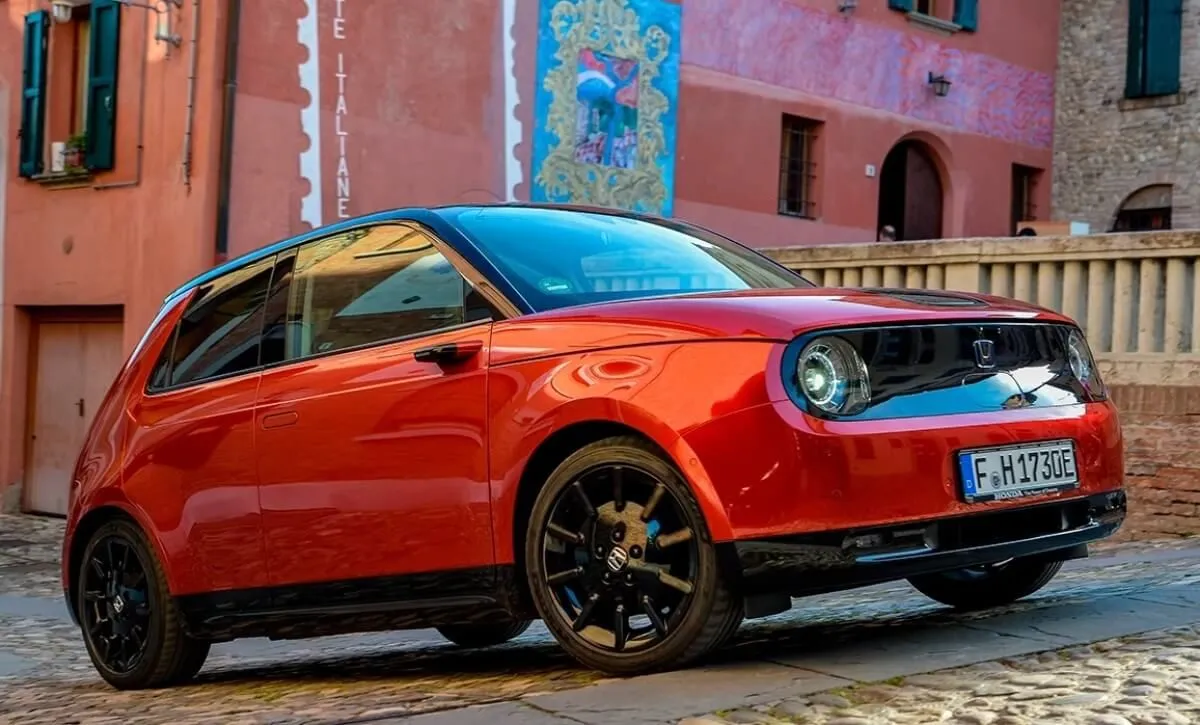
I have to admit that I’ve always liked the Honda e. Ever since I saw it for the first time at the 2018 Geneva Motor Show when the first prototype was unveiled, it caught my attention. It’s a compact car, but spacious inside, with a unique design and, most importantly, a highly technological interior. Something that stood out from the norm.
The problem now is whether anyone still remembers it. Honda went for a completely different design, an impressive interior, and features that still draw attention today. The issue is that it also came with a price that put it in a difficult position compared to much more practical alternatives.
Today, the story is different. The Honda e can no longer be purchased new, and finding one in Spain has become a much more complicated task than usual. Only a few units appear on the used car market, to the point where there are just six listings on various classified websites. There aren’t many more in Germany either, with 22 listings. This makes the small Honda one of the most unique options available these days.
A car ahead of its time, but with a problem that’s hard to hide
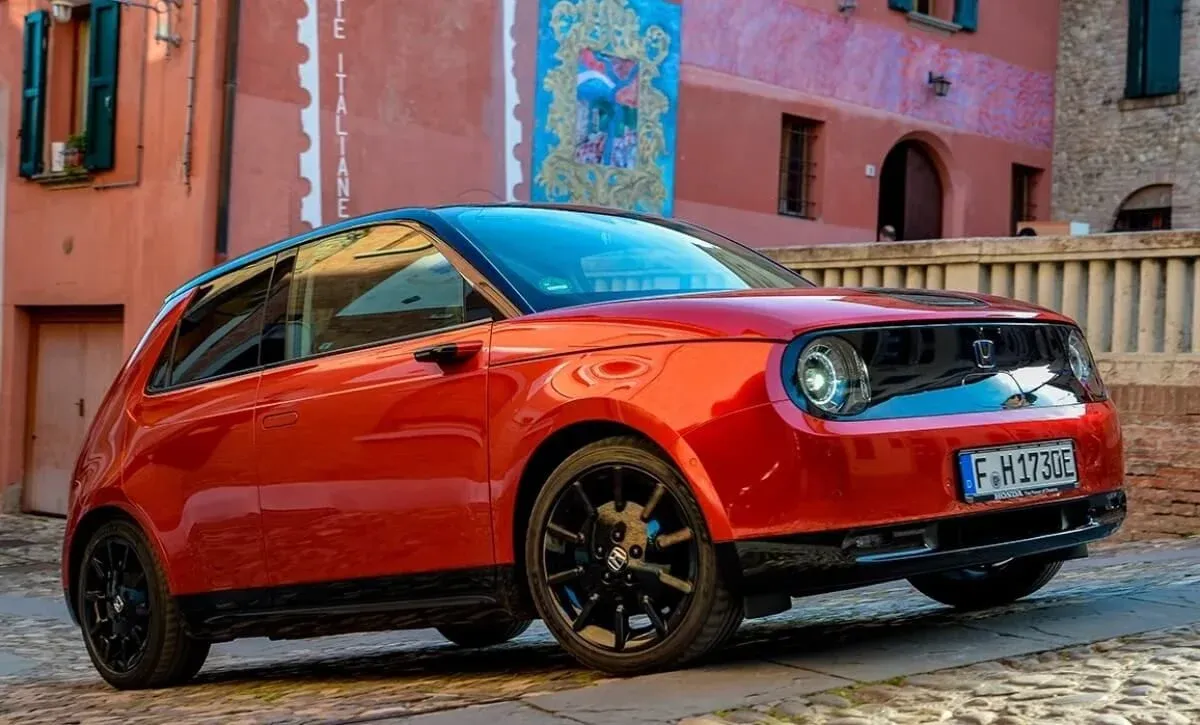
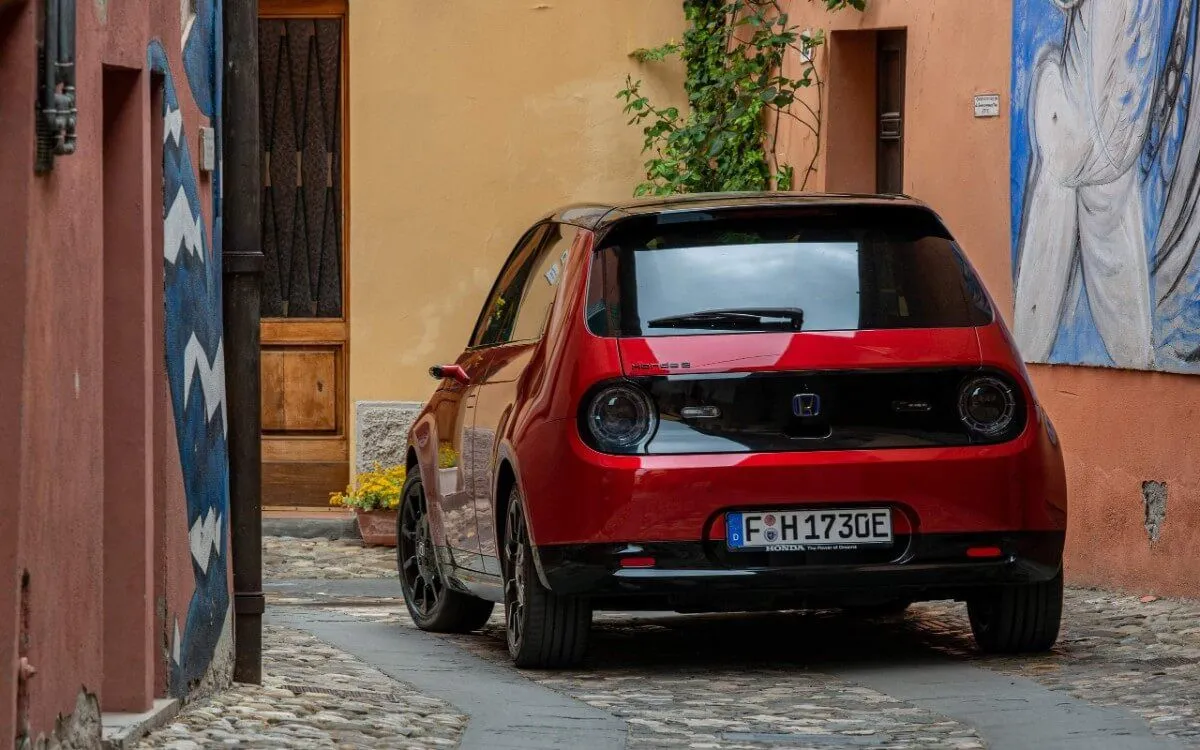
The Honda e was introduced as a modern reinterpretation of Honda’s smaller models from previous decades. Its five-door body, rounded shapes, and circular headlights gave it a personality that few other electric cars of the time possessed. It measured 3.90 meters in length, with a wheelbase of 2.53 meters.
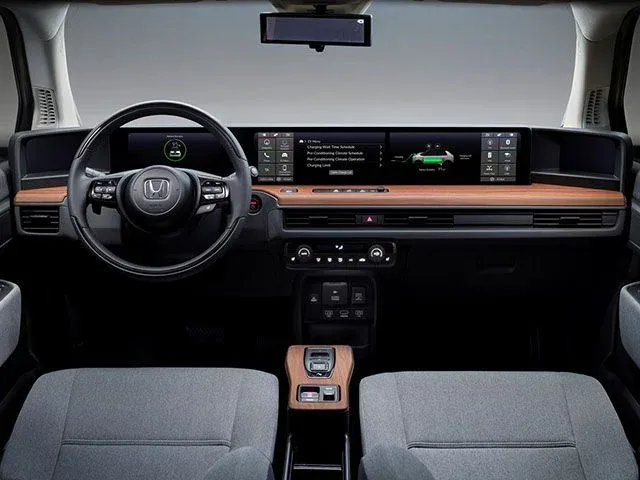
But what was truly remarkable was inside. Honda aimed to turn the cabin into a kind of technology lounge, with a dashboard practically covered in screens. The Honda e featured five screens integrated across the dashboard, several years ahead of Chinese manufacturers, including two large 12.3-inch touchscreens. The exterior cameras could replace conventional mirrors, with their images displayed on two small screens located at the ends of the dashboard.
The Advance trim also featured a panoramic roof, heated front seats, a rear camera, parking sensors, Apple CarPlay, Android Auto, a navigation system, and a higher-quality audio system. The problem was that all this technology came with a trunk capacity of only 171 liters, despite the car being designed for just four passengers. These aren’t insurmountable barriers for an urban vehicle, but they remain barriers nonetheless.
And then there was the factor that ultimately determined its fate: autonomy. The Honda e used a 35.5 kWh battery, and the version with 16-inch tires achieved up to 222 kilometers WLTP range, while the 17-inch tire version saw that figure drop to 210 kilometers. In real-world conditions, the range could be significantly lower, especially outside the city.
In the Advance trim, the rear electric motor produced 113 kW (154 hp) and 315 Nm of torque, enough to accelerate from 0 to 100 km/h in 8.3 seconds and reach a top speed of 145 km/h. Rear-wheel drive, a 50:50 weight distribution, and a turning radius of just 4.3 meters made it an especially pleasant car to drive in the city.
The charging process wasn’t particularly problematic for the intended use. It could handle up to 6.6 kW on alternating current and 46 kW on direct current, restoring 80% of the battery in about 40 minutes. It wasn’t a car designed to cross Spain, but rather for daily commuting in the city and its surroundings.
And that’s likely where the key to understanding used Honda e vehicles lies. New ones were too expensive for what they offered, but used ones might become more affordable. In 2019, Honda announced a starting price of 34,800 euros for the 136 CV version, which sold very little, and 37,800 euros for the 154 CV Advance version.
The difference from the current used car market is significant. In Spain, listings show six units with prices ranging approximately between 19,100 and 22,890 euros, although conditions, mileage, and equipment vary among them. Honda’s own used car network currently lists one 154 CV Advance model registered in 2023 with 90,083 kilometers on the road, priced at 19,100 euros.
In Germany, even lower prices can be found. As of the latest market checks, there are units available for less than 17,000 euros, including a 2020 Honda e Advance with 29,000 kilometers for 16,500 euros.
And it is precisely here that the Honda e begins to find a second life. It certainly doesn’t aim to be an all-purpose electric car, far from it. Its battery is small, the trunk space is limited, and its range requires careful planning for trips. But as a second car for city use, with rear-wheel drive, a design that still looks modern, and an interior that remains distinctive even today, it has advantages that many newer models cannot offer.
Honda eventually withdrew it from the European market after a rather modest sales performance. In Spain, there were years when only a few dozen units were registered, while sales in Europe also fell short of initial targets. In total, barely 12,000 units were produced worldwide, so if you see one, you’re almost looking at a unicorn.
The question is, at around 16,000-20,000 euros, is a Honda e worth it? It’s a different kind of city car — small and fun — with its “exclusivity” being one of its most attractive features. A car with its own personality that it will be difficult for your neighbor’s copy to match.