
The government allocates 612 million euros to eight new service areas with ultra-fast charging
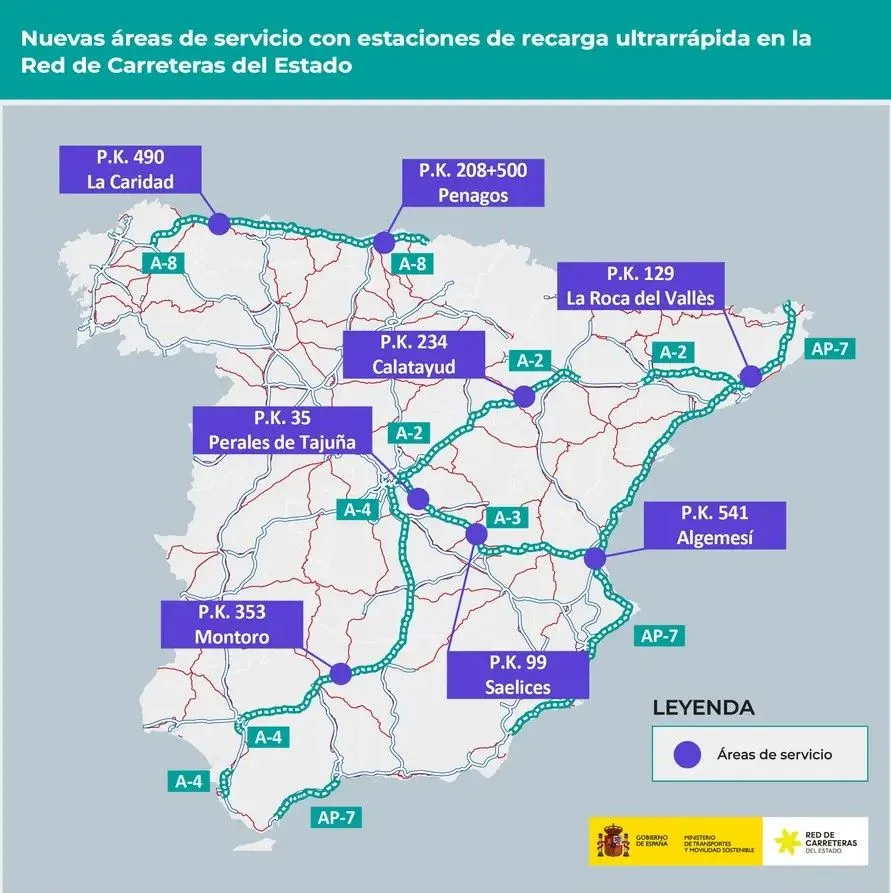
The government aims to improve the services available on Spanish roads and facilitate travel with electric cars. To this end, it has approved a new initiative that includes building eight service areas across several of the country’s main highway routes, equipped to serve drivers who need to stop during their journeys.
The project seeks to attract private investment and make use of publicly owned land that is currently underutilized. The plan is for the winning companies to take responsibility for both the construction and subsequent operation of these facilities, as part of a pilot program led by the Ministry of Transport and Sustainable Mobility.
The initiative has a significant economic impact and will be divided across six concession contracts. The new facilities will be located along five high-capacity roads: A-2, A-3, A-4, AP-7, and A-8, with sites in Asturias, Cantabria, Zaragoza, Córdoba, Madrid, Cuenca, Valencia, and Barcelona.
Eight service areas spread across five major corridors
The locations chosen are La Caridad in Asturias; Penagos in Cantabria; Calatayud in Zaragoza; Montoro in Córdoba; Perales de Tajuña in Madrid; Saelices in Cuenca; Algemesí in Valencia, and La Roca del Vallès in Barcelona. Five of these service areas will have facilities on both sides of the road, allowing them to serve drivers traveling in either direction.
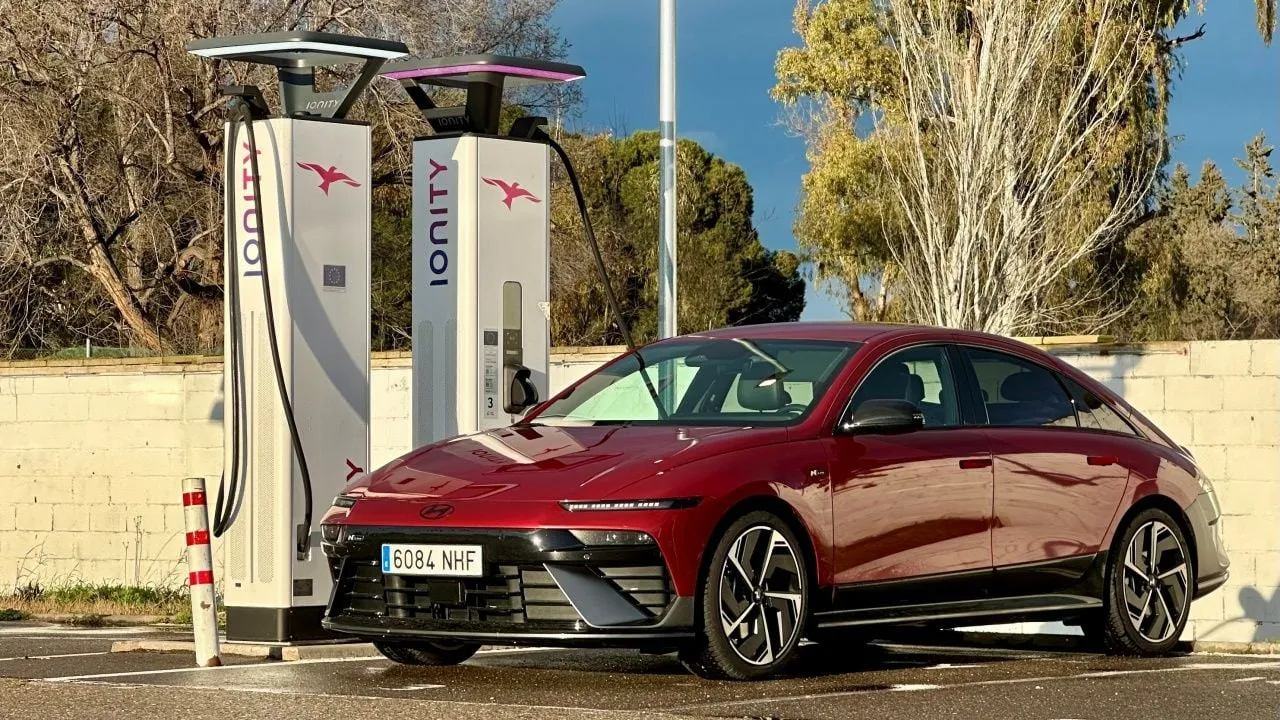
The deployment includes ultra-fast charging stations, though the announcement does not specify the power of the chargers or the number of stations at each location. Therefore, it is still not possible to determine what charging capacity the new facilities will offer or how the equipment will be distributed across the eight service areas.
The ministry presents this project as a pilot initiative to develop charging infrastructure on the state road network. Its goals include reducing transportation emissions, facilitating private investment, and improving services for users of the country’s main roads. This effort also aligns with European objectives for expanding infrastructure for alternative fuels.
The approach chosen will be through project concessions. The winning companies will need to prepare construction plans and submit them for approval by the Road Management Directorate, as well as fund and carry out the construction. Once completed, they can operate the facilities for a period of 20 to 25 years in exchange for paying a fee to the authorities.
An investment of 611.9 million euros
The estimated value of the six contracts amounts to 611.9 million euros, excluding VAT. Of this amount, approximately 78 million euros, also before taxes, is allocated to the works needed to establish the service areas. The remaining estimated value relates to the operation of the concessions over the years specified in the contracts.
The construction budgets published by the Ministry, including VAT, provide an estimate of the cost for each location. The first batch includes La Caridad, located at kilometer 490 of the A-8, with a budget of 5.84 million euros, and La Roca del Vallès, at kilometer 129 of the AP-7, with a budget of 16.40 million euros.
The second batch covers Perales de Tajuña, at kilometer 35 of the A-3, with a budget of 6.66 million euros, and Penagos, at kilometer 208.5 of the A-8, with a budget of 11.20 million euros. The third batch relates to Montoro, at kilometer 353 of the A-4, with an estimated investment of 16.30 million euros.
The fourth batch includes Algemesí, at kilometer 541 of the AP-7, with 15.82 million euros. The fifth covers the Calatayud area, at kilometer 234 of the A-2, with 6.52 million euros, while the sixth is allocated to Saelices, at kilometer 99 of the A-3, with a budget of 15.71 million euros.
Through this program, the government aims to advance the creation of a more comprehensive charging network along major road routes. However, its actual impact will depend on whether the concessions are awarded, the works are completed within the planned timelines, and the charging stations provide sufficient power and availability for long-distance travel.
For now, the announcement specifies the locations, operation model, and estimated budgets, but it leaves important details for users unresolved, such as the opening date of each area, the number of chargers, and the fees drivers will have to pay.