
The upcoming DS N°3 is expected to have a range of over 450 km and a price below 30,000 euros.
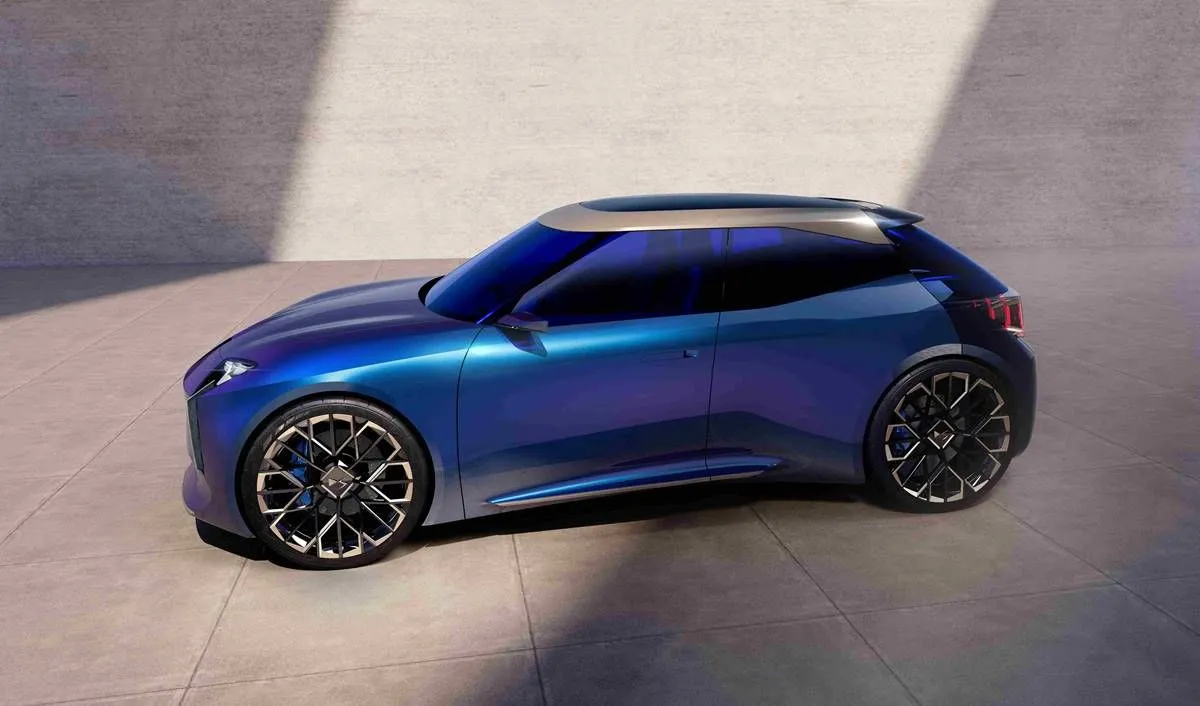
DS is preparing to shift course with one of its most significant models in recent history. The French brand aims to restore some of the personality that made the DS3 a benchmark among premium compact cars, after its focus on off-road capabilities failed to deliver expected results. The first glimpse of this new era has appeared in the form of a prototype.
The DS F3ver Concept previews the overall design of the future DS N°3, a model that will represent a major change from the current DS 3. Rather than continuing with a raised body style, the manufacturer will return to a lower, more stylized format, reviving a design approach that has already proven successful. This concept also seeks to bring the brand to a broader audience without sacrificing the design features that define its models.
The return to roots has a commercial explanation. The first DS 3, introduced in 2009 as the Citroën DS3 and made a DS brand model in 2014, once saw annual registrations of over 20,000 units in France during its best years. By 2020, nearly 500,000 units had been sold worldwide, mainly in Europe. Its successor, transformed into a small SUV, has failed to replicate that success, leaving DS needing to rethink its entry-level model.
The next-generation project has also undergone several direction changes. In 2024, DS was working on an evolution of the current all-rounder model, but the initiative ended up being transformed into a car with a lower body style. Development reportedly stalled temporarily in 2025 before receiving green light again. Now, the F3ver prototype provides a more concrete idea of what the French brand has in store.
DS F3ver Concept: a new silhouette and a more personalized design
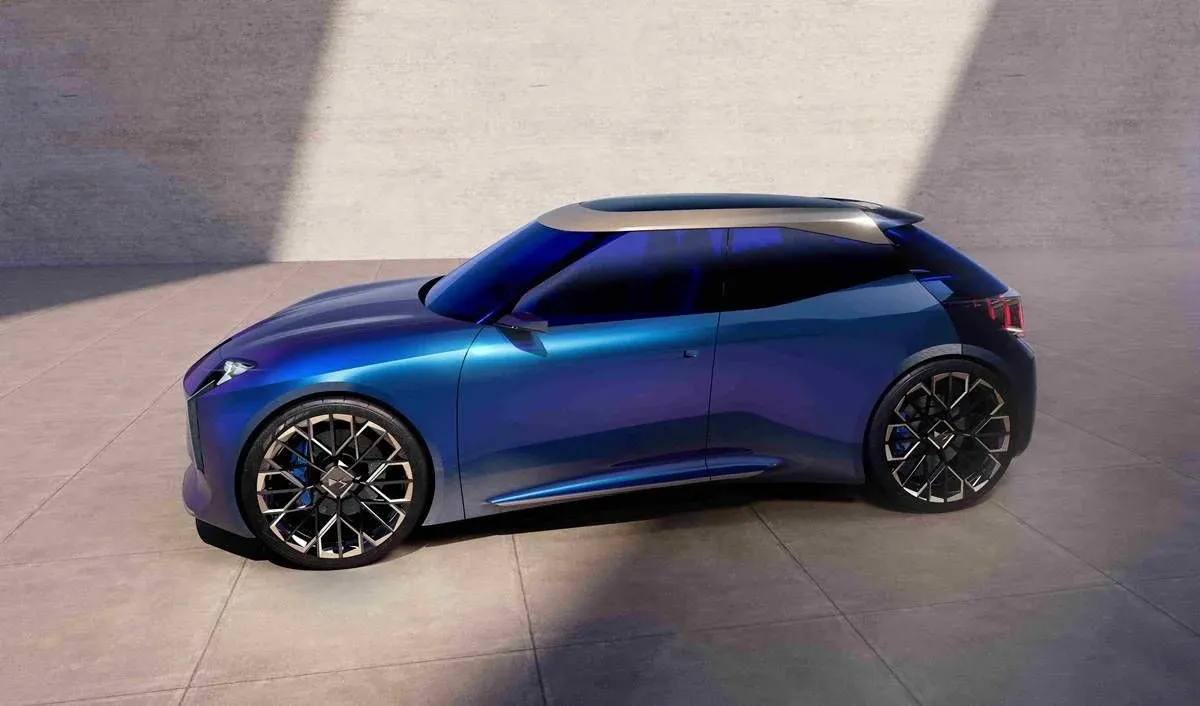
The prototype is 4.19 meters long, 1.84 meters wide, and 1.46 meters high, with a wheelbase of 2.70 meters. These dimensions place it between larger SUVs and compact cars, with a design approach that draws similarities to future competitors like the Hyundai Ioniq 3. Its low body, short fenders, and prominent rear fins enhance its sportier image compared to the current DS 3.
The trunk capacity reaches 400 liters, an impressive figure for a car of this size. However, it should be noted that this is a prototype, and both the final dimensions and available space may change when the production version arrives. The large 21-inch wheels and low ground clearance also serve, at least in part, the aesthetic needs of this design concept.
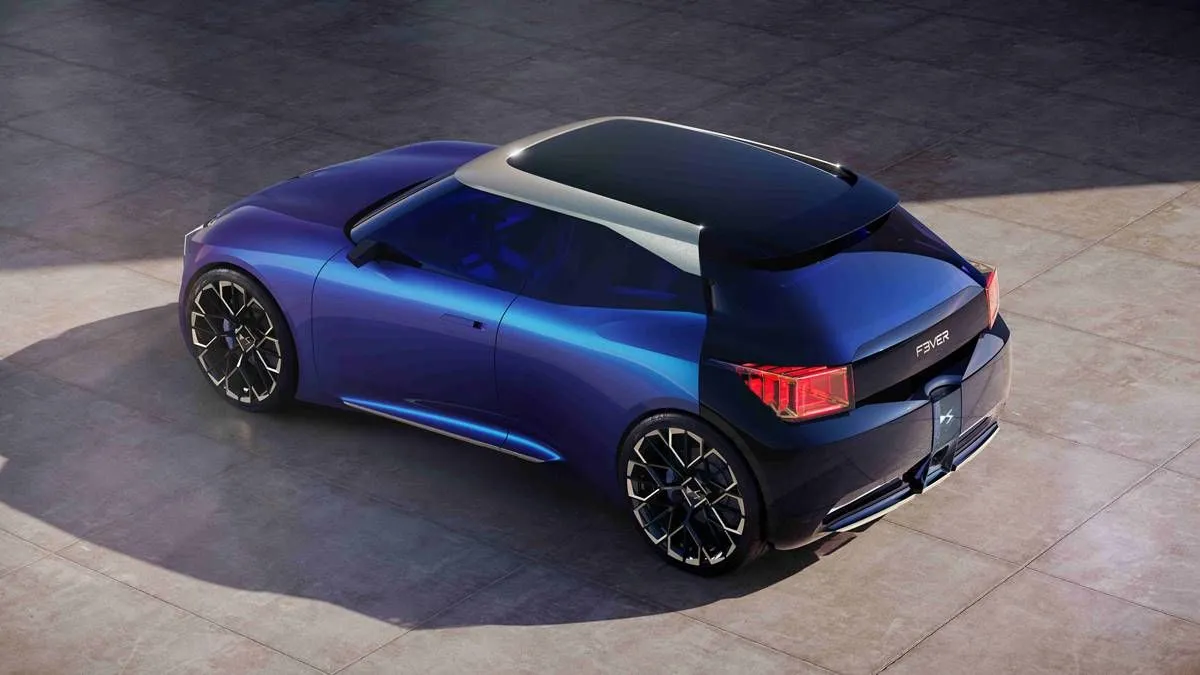
The visual design represents an evolution from the DS models No. 4, No. 7, and No. 8, featuring cleaner surfaces and more distinct body lines. The front end eliminates the traditional grille in favor of a vertical black element called a totem, which incorporates the illuminated logo and conceals cameras and sensors from the driver assistance systems. The front lighting units form a Y shape, with an illuminated signature that extends downward toward the bumper.
DS also aims to simplify the design to reduce the number of components and facilitate manufacturing. The brand calls this philosophy Design Intelligence, a strategy that seeks to combine a recognizable image with a simpler architecture, optimized aerodynamics, and a greater sense of quality. In the F3ver, this approach is evident in the clean surfaces and the decision to omit certain visual elements that have become popular among manufacturers, such as the light strips connecting the headlights.
At the back, another vertical element occupies the center of the bumper. The prototype features a screen that could be used to transmit information to other road users, though its inclusion in the production model seems unlikely. The rectangular-shaped headlights at the ends reuse a graphical element reminiscent of the first generation of the DS 3 after its update. The next DS 3 will also share its technical platform with the future Peugeot E-208.
Personalization will once again play an important role. The F3ver features a paint that shifts between violet and blue tones depending on the light and viewing angle. This effect is achieved using special pigments and previews one of the possibilities DS wants to reintroduce for its new model: offering less common color combinations that allow each unit to be distinguished.
The body design allows elements such as the rear fins and roof frame to be painted in a different color from the rest. This approach expands customization options without overly complicating the manufacturing process, as the parts can be painted separately before assembly. The brand is also exploring the possibility of adding decorative patterns that span multiple panels. For now, DS has not revealed the interior of the prototype, so there is still no specific information regarding the dashboard design or equipment.
A new electric platform with over 450 kilometers of range
DS has not yet provided the final technical specifications for the N°3. According to information published by L'Argus, the model will be developed as an electric car based on the new multi-energy modular platform STLA One, which will debut in the future Peugeot E-208. The wheelbase will allow for sufficient space to install a battery large enough to compete in the European market.
The goal would be to achieve at least 450 kilometers of certified range under the WLTP cycle in the most efficient configuration. This figure is still provisional, as the manufacturer has not confirmed the battery capacity, engine power, or charging performance. For reference, the current DS 3 E-Tense boasts up to 404 kilometers of certified range, so the new model aims to improve this distance without moving up to a larger vehicle segment.
The platform and the simplification of design elements will also play a key role in determining the price. DS aims to keep the model below the 30,000 euro mark, a significant difference from the current DS 3 electric. By doing so, the brand seeks to attract buyers looking for a compact electric car with a distinctive design but who are unwilling to pay the usual prices of premium models.
The commercial positioning will be especially important for a brand that needs to restore its sales volume. The DS N°7 and N°8 models have not yet managed to boost registrations to the expected level, so the future N°3 model will need to play a crucial role in the company’s strategy. The goal is to make DS more appealing to a broader audience rather than focusing solely on a limited customer base.
There is also the possibility that its dimensions could qualify it for the future European M1E category, linked to the E-Car project. This framework might facilitate the production of small and affordable cars by reducing certain equipment requirements, although all its details have not yet been defined. Additionally, any weight or power limitations could affect battery capacity and performance, so it cannot be assumed that the DS N°3 will benefit from these measures.
Regarding its production, the Poissy plant, where the DS 3 has been manufactured, plans to stop making cars by the end of the decade to focus on other industrial activities. According to available information, the future DS 3 could be assembled in Spain, likely in Zaragoza, alongside the upcoming Peugeot E-208. Its arrival at dealerships is expected by the end of 2028, provided that the scheduled timelines are met.
The DS F3ver Concept represents more than just a body style change. The brand aims to restore the personality of its original entry-level model, focus on an electric car with compact dimensions, and set a price point to compete in an increasingly demanding market. The challenge will be to transfer the appeal of the prototype to a production vehicle that retains its design, offers competitive range, and most importantly, addresses the commercial issues of its predecessor.