
BYD’s electric car with a range of 1,100 km makes its debut in Europe, aiming to compete with BMW, Mercedes, and Audi.
07/10/2026 15:30
Updated to
07/10/2026 15:30
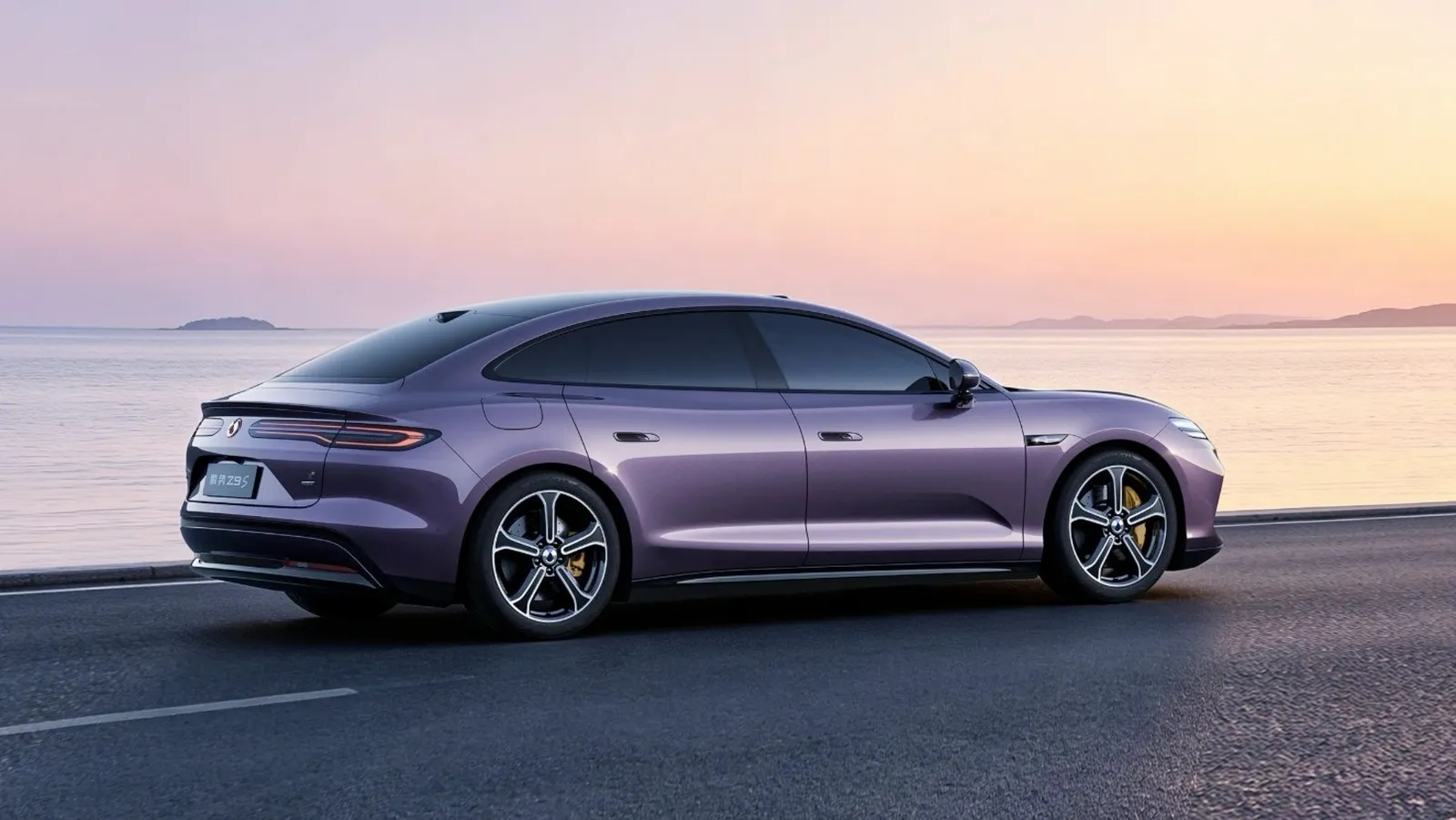
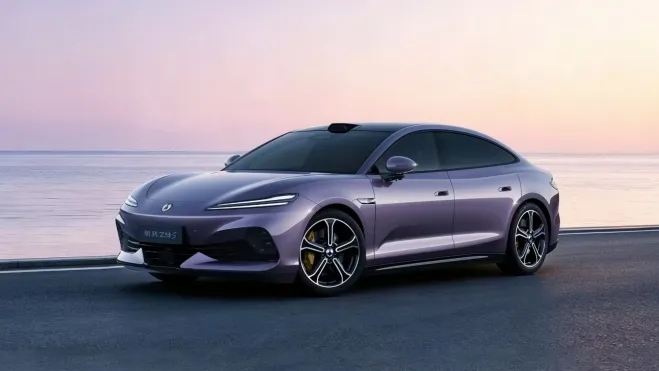
Denza, BYD’s premium brand, is bringing its latest and most impressive vehicle to Europe—a fully electric sedan targeting the D and E segments: the Denza Z9S. It comes with a very clear proposition: high power, a large battery capacity, and a charging speed that until recently seemed like something out of science fiction. BYD’s goal is to continue paving the way in Europe with a brand capable of competing against Europe’s premium trio.
The new model does not replace the Denza Z9 GT. According to the company itself, the Z9S will coexist with it, although both share very similar qualities as standalone electric sedans in the lineup, featuring a more affordable price point aimed at competing directly with one of the best-selling electric cars in the Chinese market. The Z9 GT is already available in Spain for over 100,000 euros. The Z9S is expected to be cheaper.
Good size and many competitors
The Z9S is 5.09 meters long, 1.98 meters wide, and 1.49 meters high, with a wheelbase of 3.025 meters. These dimensions are typical of a luxury sedan with ample interior space. Among its European rivals are notable models such as the BMW i5, Audi A6 e-tron, and Mercedes EQE. Other competitors include the Volvo ES90, as well as the previously mentioned Denza Z9 GT.
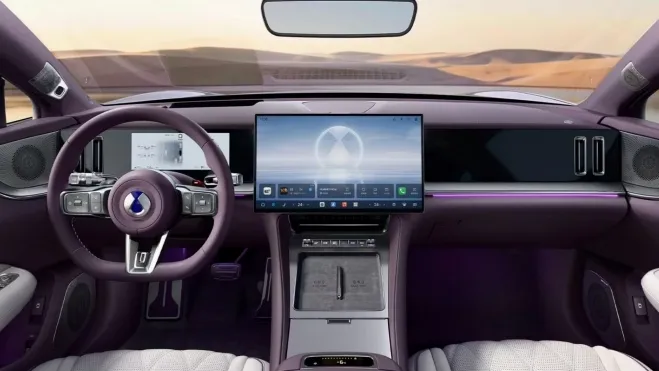
High power and a large-capacity battery
The mechanical lineup starts with a single-motor, rear-wheel-drive version that delivers 503 horsepower, a figure already quite high for a sedan at this price point. Above that is the three-motor, all-wheel-drive variant, which achieves a combined power output of up to 1,210 horsepower. Unlike its German competitors, except for the Porsche Taycan, BYD has created the first high-performance electric sedan in its segment capable of accelerating from 0 to 100 km/h in just 2.68 seconds, a record typical of supercars.
All versions feature BYD’s second-generation Blade battery with a capacity of 102.3 kWh. Depending on the version, the certified range varies from 632 to 891 kilometers according to the WLTP testing cycle. In China, under its own certification protocol, Denza claims a range of between 780 and 1,100 kilometers. Although the range difference is significant due to the change in certification standards, it’s worth noting that the Z9S will become one of the longest-range electric cars on the continent, surpassing even the BMW i3.
However, what matters isn’t just how far you can go, but also how quickly you can regain energy. The main advantage of BYD’s second-generation batteries is that they work together with the company’s new ultra-fast charging systems. Technical specifications indicate that the Z9S can go from 10% to 70% battery charge in five minutes and from 10% to 97% in nine minutes. Additionally, the brand claims that even at minus 30 degrees Celsius, the battery can be charged from 20% to 97% in 12 minutes, a significant feature for those living in cold climates.
Prices and Rivals
For now, BYD has not wanted to disclose the launch prices in Europe. As we have mentioned, the Z9 GT is currently their most expensive model, far exceeding the 100,000 euro mark—specifically 144,500 euros in Germany. If BYD wants the Z9S to be a success and a genuine alternative to its European rivals, it will need to lower the price to around 80,000 euros. In China, the Z9S starts at 255,800 yuan (about 33,254 euros). The higher version costs 275,800 yuan (about 35,854 euros), while the high-performance model reaches 325,800 yuan (about 42,354 euros). Obviously, these figures will be unattainable here, but they can give us an idea of the direction things are heading.
