
Hyundai Europe’s CEO warns about Chinese cars: “If your argument is price and someone cheaper shows up, you have a problem.”
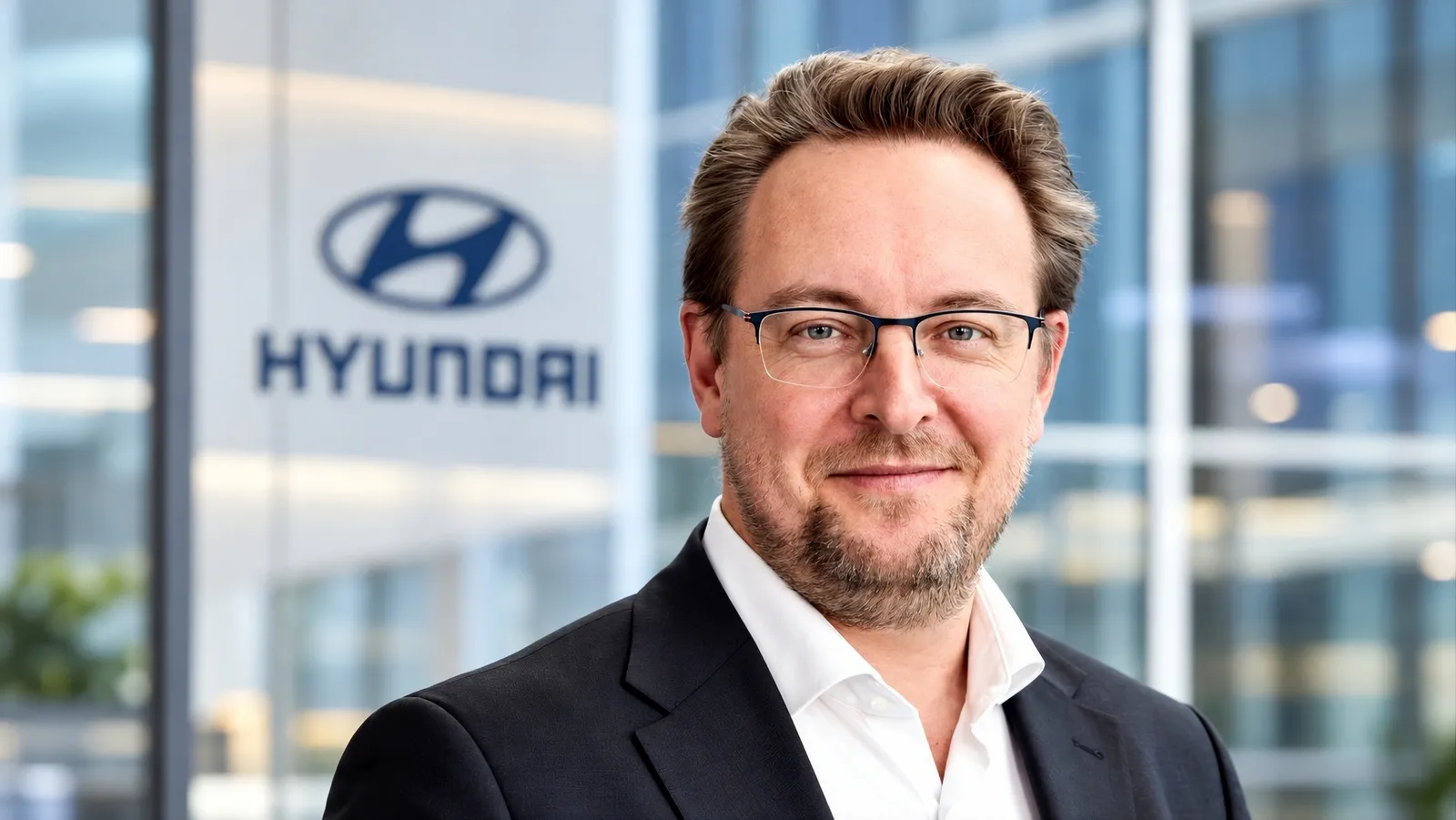
Chinese competition has become one of the major challenges for the European automotive industry, and Hyundai is not immune to this pressure. Its top executive in Europe, Xavier Martinet, has acknowledged that competing solely on price would be a risky strategy against manufacturers capable of offering increasingly competitive products.
Martinet, president and CEO of Hyundai Motor Europe, explained this in an interview with Quattroruote during the Paris Auto Show, which is the original source of these statements. The executive admits that Hyundai must show customers why it’s worth paying more for one of its cars.
The reflection comes at a particularly delicate time for traditional manufacturers. Chinese brands continue to expand their presence in Europe, and according to Quattroruote, they account for more than a third of the companies exhibiting at this edition of the Paris Motor Show.
"If someone cheaper arrives, you have a problem."
When directly asked how Hyundai can compete with Chinese manufacturers, Martinet acknowledges that the price difference must be justified. His argument stems from how the Korean brand itself has evolved over the past 15 years.
"When your argument is price, if someone comes along with a lower price than you, you have a problem," explains Hyundai’s top executive in Europe. The brand no longer wants to base its appeal solely on price and warranty, but rather on other factors that can justify a higher market position.
Martinet notes that customers now particularly value Hyundai’s design and technology. The strategy involves maintaining a price difference that is acceptable compared to Chinese brands, while making buyers feel that the extra cost is worth it for what the product offers.
The executive himself acknowledges that Chinese manufacturers “come with proper products,” so Hyundai cannot rely solely on the brand advantage built over years. The priority is to prevent the price gap from becoming so large that customers stop valuing other attributes.
Hyundai Also Doesn’t Want to Compete Only on the Car Itself
Martinet introduces another element he considers particularly important: after-sales service. Hyundai currently has around 2,200 dealerships in Europe, a network he highlights as one of the key advantages over manufacturers still establishing their commercial structures on the continent.
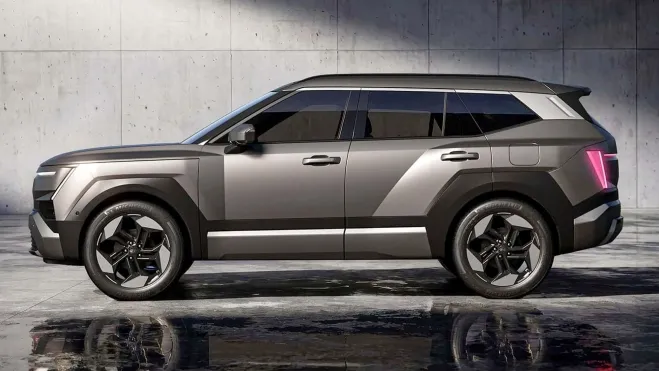
Hyundai’s executive summarizes this idea with another very vivid phrase: the salesperson can secure the first purchase, but it is after-sales service that helps sell a second car. For Martinet, the relationship with the customer in the years following purchase can end up being just as important as the product itself.
Hyundai also claims that 98% of its parts arrive on time at European dealerships. Martinet avoids directly criticizing new manufacturers, but raises the question of what happens when a breakdown occurs or maintenance is needed for a vehicle from a brand with still limited service networks.
The issue is particularly significant because car ownership lasts for many years. Customers may spend months choosing a vehicle, but they then need maintenance, repairs, and support for most of the following decade.
A wider range to regain ground in Europe
The statements come after a difficult period for Hyundai in Europe. Martinet admits the company is not satisfied with its results, noting that sales dropped by about 12% in the first eight months of the year.
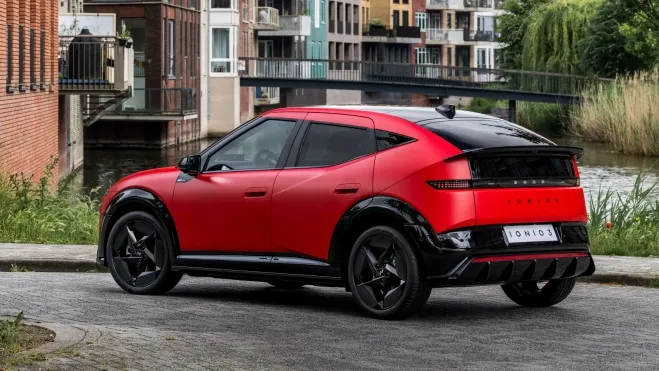
Part of that decline is due, as he explains, to the withdrawal of the Hyundai i10 and certain entry-level engines that accounted for about 15% of sales. This was compounded by more aggressive competition in the European market than the company had anticipated. Hyundai is responding with a major refresh of its lineup. In Paris, it showcased models such as the new Tucson, Bayon, and Ioniq 3, along with technologies related to software, autonomous driving, and robotics.
Martinet also emphasizes that the company does not intend to focus exclusively on electric vehicles. According to his figures, electric cars currently make up around 22-23% of the European market, although in countries like France, Germany, or the UK, that share is approaching 25-30%.
The rest of the market continues to use other technologies, so Hyundai wants to maintain a wide enough range to accommodate differences between countries. The manufacturer’s strategy is therefore to compete with China without necessarily engaging in a race to offer the cheapest car.