
The Chinese electric truck already being manufactured in Europe warns: “The era of internal combustion engines is coming to an end.”
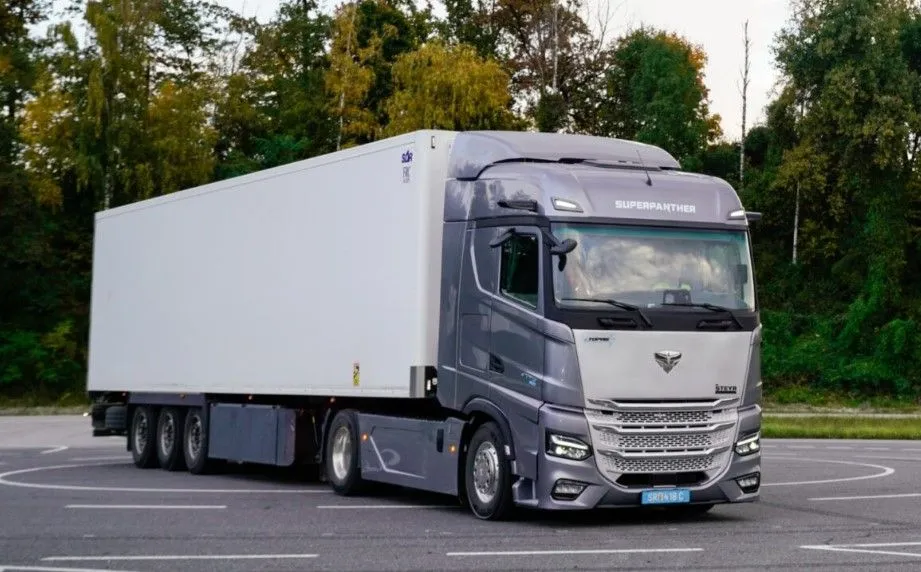
Heavy road transportation is undergoing a transformation that is no longer just a future prospect. Manufacturers are accelerating the development of new solutions to reduce operating costs driven by the relentless rise in diesel prices, while also meeting increasingly stringent emission regulations. In this context, electric trucks are rising rapidly, with a new player emerging: China.
One of the brands seeing the fastest sales growth is SuperPanther, a company entirely unknown in our region that was founded in 2022 by Chao Liu, a executive with prior experience at companies such as Continental, Stihl, and Daimler.
Liu is quite clear about the direction the industry is heading. In a conversation with Edison, the founder of SuperPanther stated that “the era of internal combustion engines is coming to an end,” although the company does not want to present itself merely as another truck manufacturer. Its goal is to position itself as a technology company specializing in software, intelligence, and electrical architectures developed for industrial vehicles.
SuperPanther has decided to focus much of its efforts on electric trucks for long-distance heavy transportation. It is precisely in this type of application that the demands are highest, regarding energy consumption, range, charging times, and total operating costs. According to the company, its technologies have been in use in electric trucks operated commercially by Chinese clients for over two years.
The European strategy also involves working from the start with major operators. DHL is one of SuperPanther’s key partners and has participated in tests of the eTopas 600 under real-world conditions. The collaboration began in 2024, and during 2025 the truck was tested in Austria, including on regular routes between Vienna and Wels. The results prompted DHL Freight to incorporate this model into its business operations in the Netherlands.
The eTopas 600 is already in use across Europe, with a new generation of trucks in development.
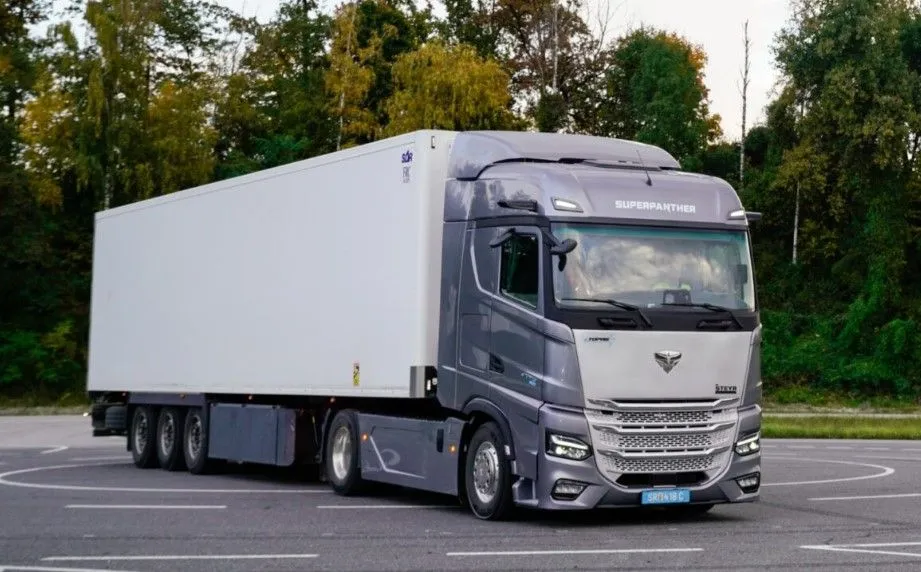
The first major step for SuperPanther in Europe is the eTopas 600, an electric 4x2 tractor head that already has European homologation and has begun serving customers. It is not a project still needing to prove its viability: the first production units have already left the factory and are being used for commercial transportation in several European countries.
The eTopas 600 is 6.48 meters long, 2.55 meters wide, and 3.98 meters high, with a wheelbase of 4.00 meters. It has a dry weight of 10.8 tons and can support a maximum total weight of 42 tons. Its design is aimed at long-distance transportation and features pneumatic suspension, as well as an ABS braking system, stability control, automatic emergency braking, and multiple levels of energy recovery.
In terms of mechanics, the SuperPanther features an electric axle with two motors and a two-speed transmission. The continuous power output reaches 394 kW (535 HP), while the peak power exceeds 692 kW (941 HP). The electrical architecture operates at 800 volts, enabling a high level of power combined with energy management designed to keep the truck operational for long periods.
The battery has a capacity of 621 kWh and uses CATL’s LFP chemistry. According to SuperPanther, it allows for a range of up to 560 kilometers under real-world European driving conditions that are not standardized, including routes with elevation changes and varying load levels. The company also states that it has a lifespan of up to 4,500 full charge cycles, or up to 1.2 million kilometers, or eight years of operation.
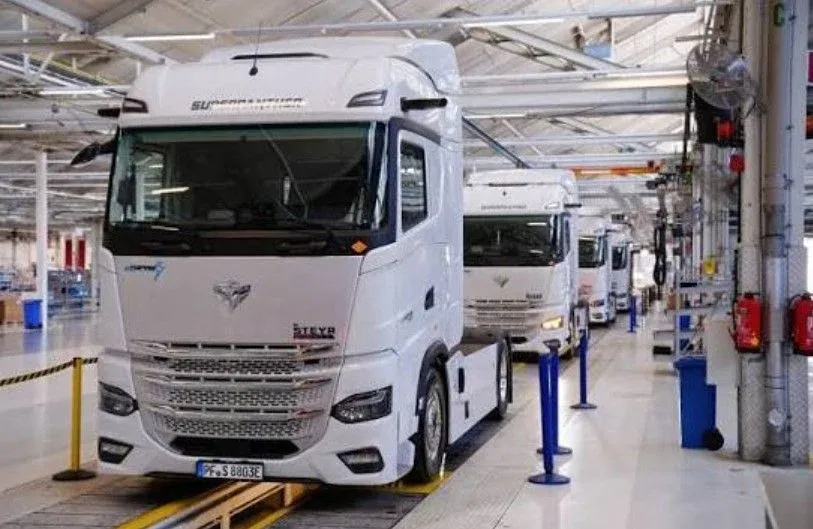
To manufacture the truck for the European market, SuperPanther has chosen Steyr Automotive in Austria. Production is carried out by assembling pre-prepared modules, with the Austrian company handling final assembly, commissioning, and quality control. In this way, the Chinese company aims to combine its technology with manufacturing processes closer to the market where it intends to sell its vehicles.
SuperPanther’s strategy is not to become the cheapest truck manufacturer in the market. Chao Liu advocates for a strategy focused on system efficiency and total cost of ownership. To this end, the company also views trucks as part of a broader energy system and offers V2G capabilities, allowing vehicles to store energy, return it to the company’s grid during peak demand periods, and potentially participate in electricity grid-related services.
The planned growth, at least initially, will be cautious. SuperPanther aims to deliver around 100 units by 2026 and reach a total of 1,000 trucks by the end of 2027. The first units are already in use in Germany, Austria, the Netherlands, Switzerland, Poland, and the Czech Republic, with DHL, Gress, Temmel, and Lontex among its early customers.
But SuperPanther’s project goes far beyond simply replacing a diesel engine with an electric one. The company is developing Truck Brain, a system that uses artificial intelligence to analyze various factors such as the cargo to be transported, weather conditions, terrain, and traffic. The goal is for the system to anticipate what the driver will encounter and help them make better decisions during the journey.
Liu believes that technically it would be possible to develop a fully autonomous Level 4 truck within about three years. However, he acknowledges that technology is not the only obstacle. Regulations and social acceptance still need to progress, so the company is currently focusing its efforts on L2+ driver assistance systems, specifically designed to make highway driving and lane changes safer and less demanding.
The arrival of the eTopas 600 shows that Chinese competition in European heavy transport is beginning to take a form different from what we’ve seen so far with trucks. SuperPanther aims not only to sell an electric truck but also to introduce its own architecture, develop intelligence services for transportation, and rely on European partners to manufacture and validate its vehicles. The ultimate goal is for electrification to be just the first step in a much deeper transformation of road transport.
