
DUH sees significant differences in the electrification of urban bus fleets
A report by Deutsche Umwelthilfe reveals significant differences in the electrification of bus fleets in Germany’s 40 largest cities. While in Mannheim, Freiburg, and Karlsruhe more than half of the buses are already electric, no electric buses were in use in five major cities by the end of 2025.
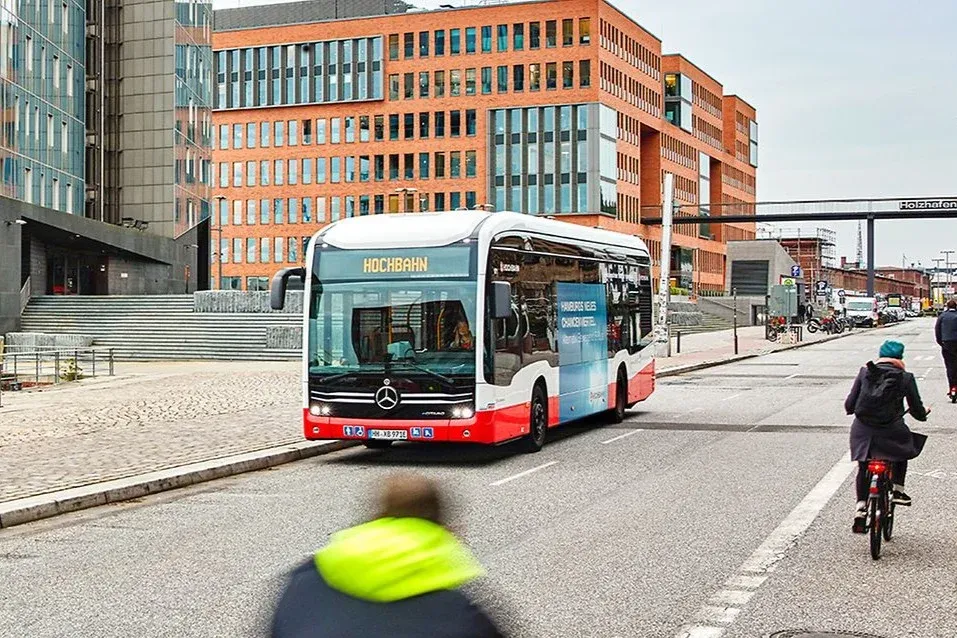
A Mercedes-Benz eCitaro bus operated by Hamburger Hochbahn on a regular route.
Image: Hamburger Hochbahn
The study shows that Mannheim, Freiburg, and Karlsruhe are particularly advanced in electrification. In these three cities, more than half of the buses already run on battery power. They are also the only cities to receive a “Green Card” from DUH in its evaluation. At the other end of the ranking are Augsburg, Essen, Wuppertal, Krefeld, and Magdeburg. According to DUH, as of December 31, 2025, none of these cities had battery-electric buses in service. Overall, 19 of the major cities surveyed received a “Red Card.”
The organization also criticizes the planned new bus purchases. According to its analysis, nearly half of the cities intend to continue acquiring buses with internal combustion engines between 2026 and 2030. For Halle, DUH states that only combustion engine buses are planned for that period.
Almost every second city plans to add more diesel buses
The organization therefore calls for a complete switch of city bus fleets to electric drives by 2030 at the latest, as well as an immediate halt to new diesel purchases. It cites, among other things, the stricter European air quality regulations set for 2030 as a reason.
According to DUH, Oberhausen, Nuremberg, Aachen, Gelsenkirchen, Kassel, and Erfurt still use diesel buses that meet standards below Euro V. Their nitrogen oxide emissions are significantly higher than those of modern Euro VI vehicles, according to DUH.
DUH’s federal executive director, Jürgen Resch, also points out the long service life of city buses. Vehicles often remained in operation for more than ten years. Therefore, new internal combustion engine vehicles purchased by 2030 could still be in use well into the 2040s.
As an addition to purchasing new buses, DUH also proposes retrofitting existing diesel buses. A study published by Empa in the summer identifies significant potential in this approach: according to it, E-retrofitting could accelerate the electrification of Europe’s bus fleet by about 15 years, since city buses typically remain in service for around 20 years. The model calculations also show that producing a retrofitted bus generates only about half as many greenhouse gas emissions as manufacturing a new battery-powered bus. In practice, however, issues related to costs, certification, standardization, and charging infrastructure still stand in the way of widespread adoption.
The DUH also criticizes the federal government for significantly cutting funding for electric buses this year. According to the organization, there is a need for long-term secured financing that covers not only the vehicles themselves but also investments in depots, charging infrastructure, and power connections.
