
The Family at the Center: How Forthing Aims to Stand Out in the European Market
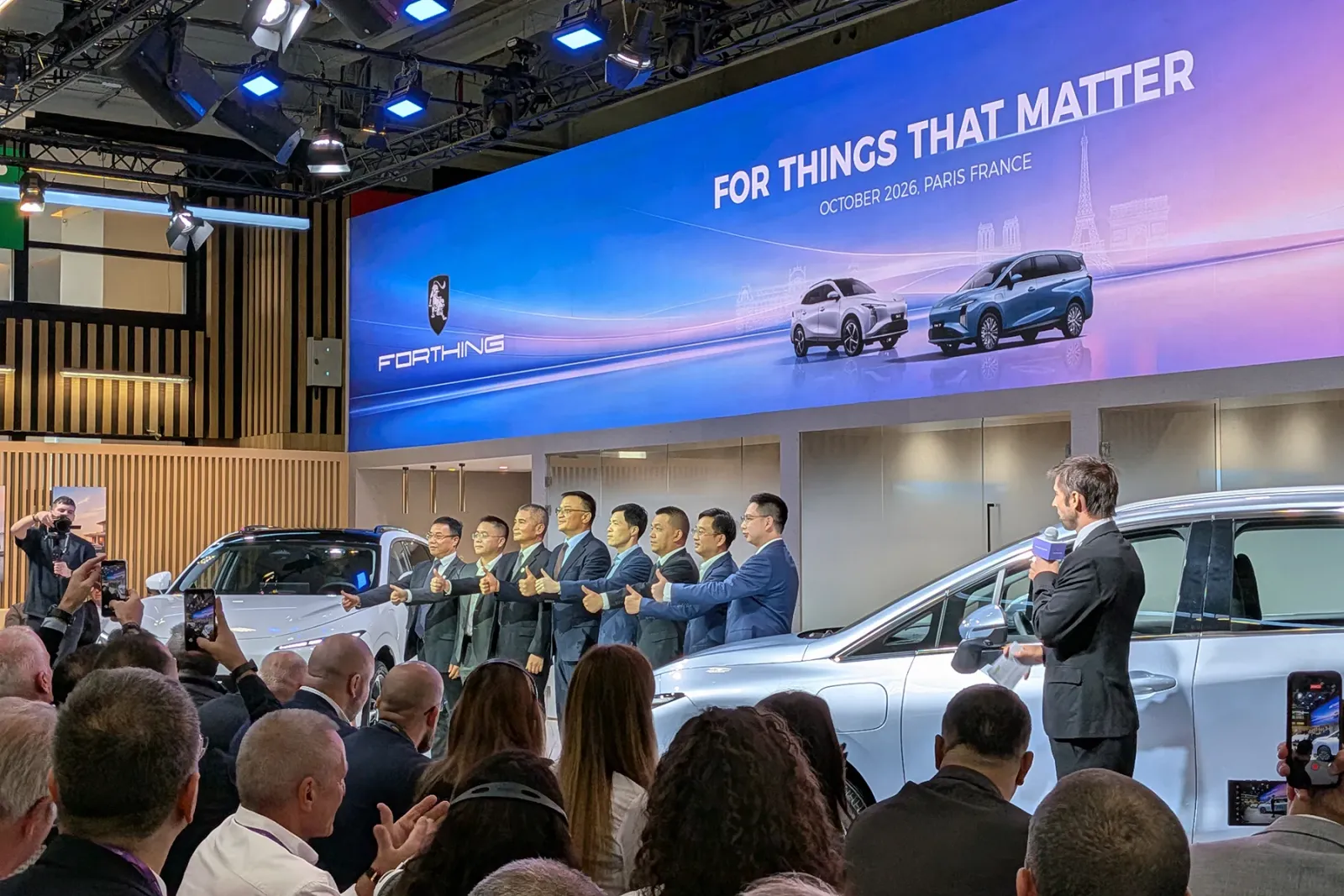
This is the third time Forthing has participated in a Western auto show. Following its debut at the Paris Motor Show two years ago and a stop at the Munich IAA, the Chinese brand is showcasing three models at its third major exhibition appearance, all of which are set to hit European roads soon. By placing a special emphasis on family-friendly features, Forthing aims to distinguish itself from competitors. Its parent company, Dongfeng, is China’s seventh-largest automobile manufacturer. We have summarized the key information about the models presented.
Photo by: Gesine Schurig
TK5: What type of powertrain should it have?
The most interesting Forthing model for Europe is likely the TK5. This mid-size SUV boasts solid technical specifications. The all-electric version features a battery with a capacity of 75 kWh, while the plug-in hybrid version has a 39 kWh battery. Forthing does not specify a charging time for the hybrid model, but it is said to support fast charging. Thanks to 800 volts, the all-electric version can go from 20% to 80% charge in less than 18 minutes. This translates mathematically to an average charging power of 150 kW. This is consistent with Forthing stating only 160 kW as the DC charging power, which seems quite low for an 800-volt model. It is likely that they are following the example of other manufacturers by providing an average power rather than the peak performance.
At the exhibition booth, the vehicle is shown to us in good quality, with electrically adjustable seats even in the second row. In the front, seat heating, ventilation, and an integrated massage function are available.
TK7: One size up
The larger sibling of the TK7 is available only as a plug-in hybrid. With about 29 centimeters more in length, it can accommodate up to three additional seats compared to the TK5. In the version displayed at the exhibition booth, there are only seven seats arranged in an unconventional 2-2-3 configuration: two individual seats at the very front, followed by a three-seater bench in the back. This provides ample space for four passengers, while the rear row is particularly suitable for accommodating three children. A special advantage of this layout is that accessing the rear row requires no complicated maneuvering or climbing, as one can simply pass through the gap between the two middle individual seats to reach it.
V9: China discovers camping
The V9 is a striking vehicle. This plug-in hybrid gives its buyers the choice between four or seven seats, or between passengers and luggage. While the seven-seater offers a more practical compromise for carrying many passengers, the four-seater is designed more intentionally as a campervan. It features a sink and shower curtain, a refrigerator, and additional storage compartments in the rear side windows. What both versions share is not only the rooftop tent and the awning but also a 6 kW Vehicle-to-Load option. A 2,2 kW power supply is available from a 220-volt outlet panel in the interior of the four-seater. Additionally, both models allow for a “double-decker” bed by combining the rooftop tent with seats that fold flat.
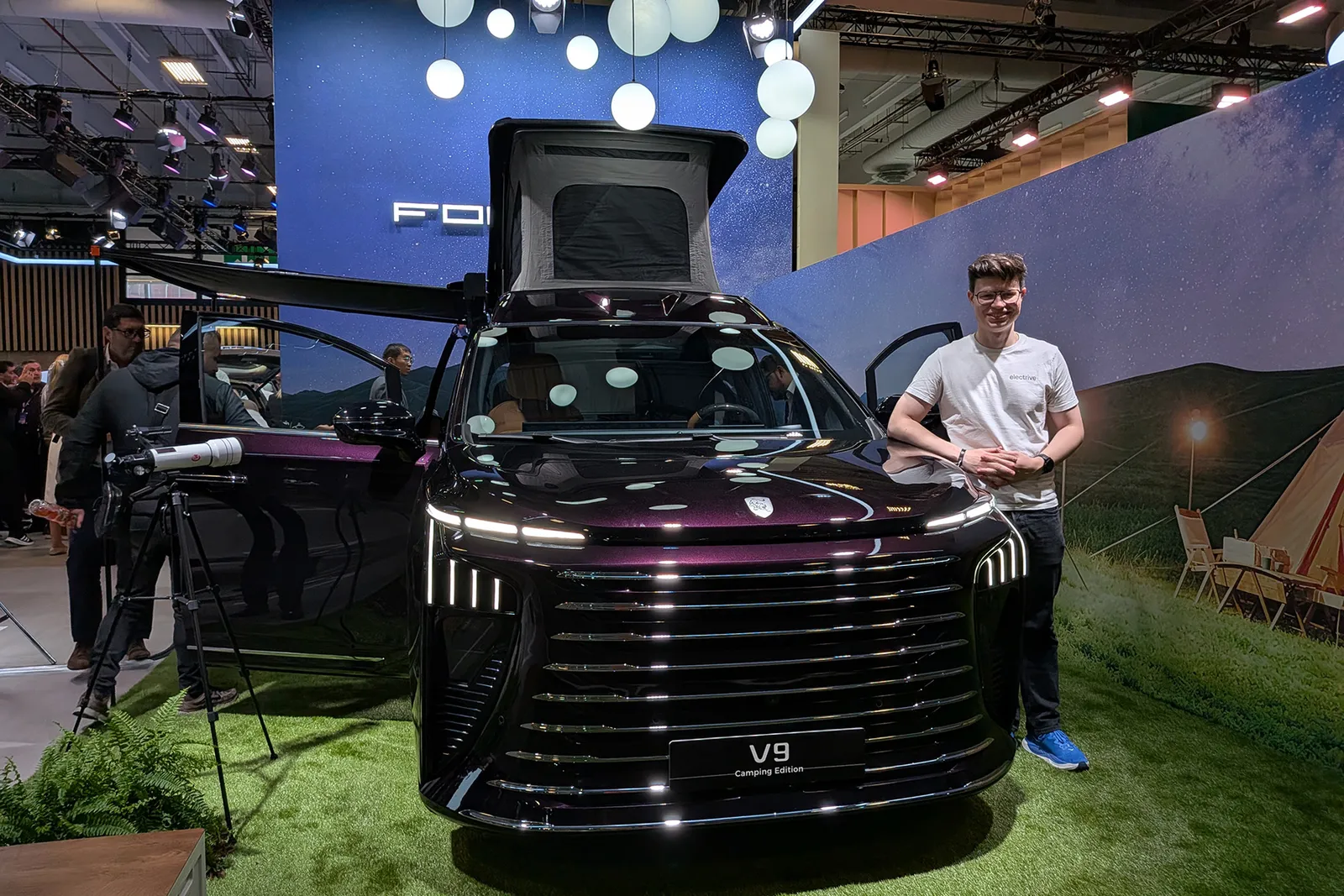
Photo: Gesine Schurig
- 1/2
- 2/2
Family-friendly features as a USP
Dongfeng Forthing has been operating in the European market since 2022 and sold over 10,000 vehicles there in 2025. It has been present in Germany and Italy for longer, with France, Norway, and Denmark set to follow. By focusing on family vehicles, Forthing aims to fill a gap that many other brands are increasingly neglecting. The European launch of the TK5 and TK7 is expected in the coming months, though no prices have been announced yet.