
“Something is going terribly wrong right now”: Fastned CEO Linda Boll on power connections as a bottleneck in expansion
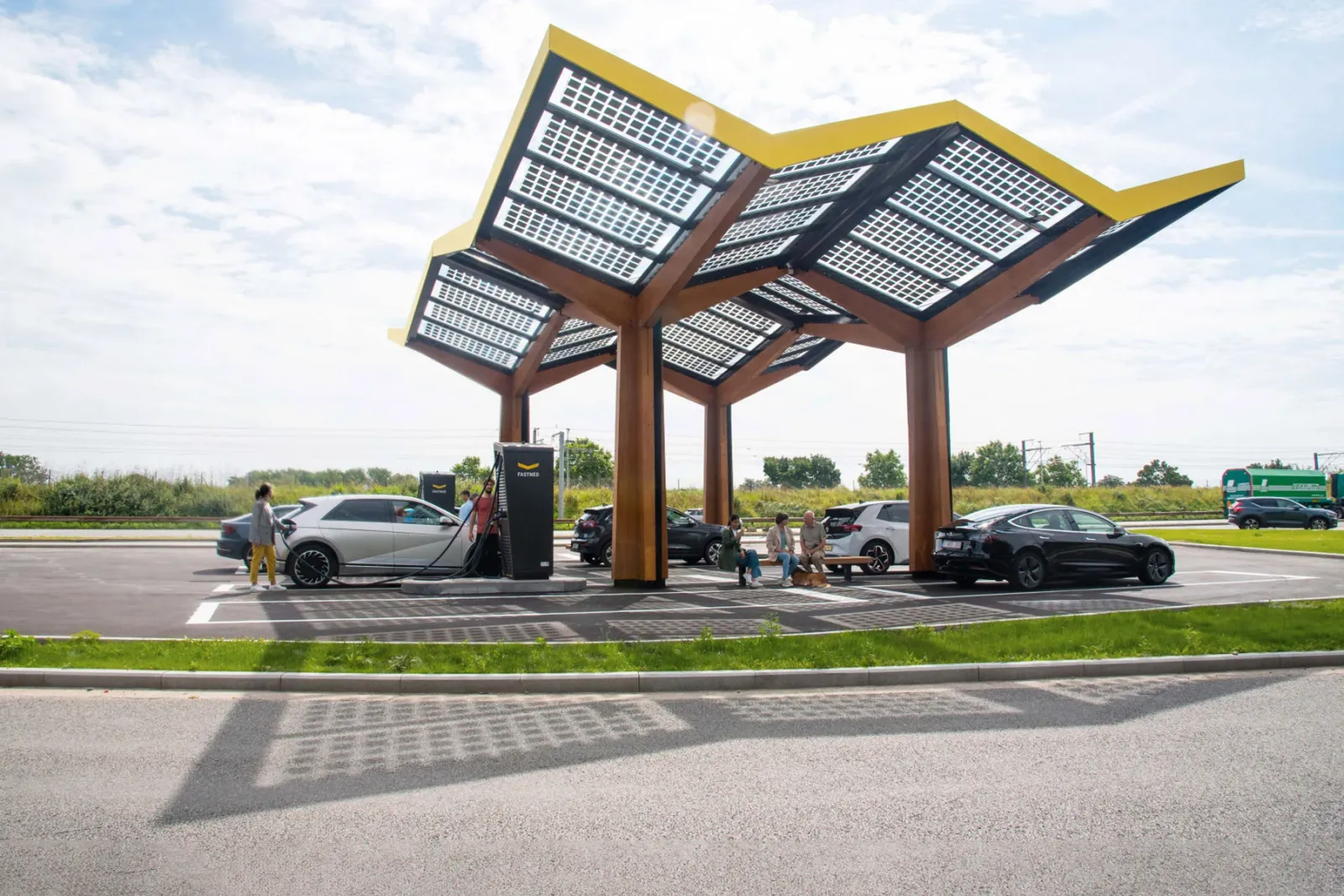
Fastned is among the pioneers in establishing fast charging infrastructure in Germany. Since its entry into the market in 2017, the network operated by this Dutch company has grown significantly, along with competition and the overall market. This has also increased the challenges: land availability, permits, and especially grid connections now determine the pace of expansion. At the same time, Fastned’s lawsuit against the practices used at managed highway service areas sparked a lengthy legal battle that initially slowed down development in those areas as well.
We discussed with Fastned’s Germany head, Linda Boll, a rather contradictory path: whether Fastned has slowed down expansion on highways or ultimately enabled fair competition in the long term. The interview also covers the role of the state in Germany’s charging network and whether Fastned’s German operations are actually profitable. Boll explains why access to charging networks has now become Fastned’s biggest growth risk, why the company prefers large charging parks over many small CPOs, and how Fastned plans to change by 2030. For Boll herself, a new phase is also beginning. More on this in the interview:
Mrs. Boll, I’ll start with a somewhat controversial claim: Fastned, whose mission is to rapidly expand charging infrastructure, has actually slowed down its development on German highways for years through its lawsuits. What’s wrong with this claim?
> It wasn’t Fastned that slowed down this progress. The federal government had the opportunity years ago to launch a proper bidding process for building charging infrastructure. That chance was missed, and they chose a different approach. We, on the other hand, advocated for what we considered the right path.
>
>
> We also didn’t expect the process to take four years. That was never our intention. But in the end, we were right. Therefore, it was clearly correct to resist such actions.
Fastned entered Germany as early as 2017. In retrospect, what was more difficult than expected: securing land, obtaining permits, connecting to the grid, or the low demand at that time?
> Actually, I could mention all of those. Back then, we mainly had the Netherlands as a comparison. There, the issue of land was much less problematic because the government said relatively early on: We will make the available land accessible to the market so that charging infrastructure can be built there.
>
>
> In Germany, it has been and remains more difficult. The land isn’t readily available; we have to painstakingly find it piece by piece. On the other hand, we see somewhat greater potential in Germany’s grid compared to, for example, the Netherlands, where the grids are already very heavily utilized.
>
>
> We are now active in ten European markets, and each market has its own characteristics—whether it’s regarding area, infrastructure, demand, or competition. We keep learning from each market we operate in.
With Hilden and other early locations, Fastned has demonstrated what large HPC parks can look like. What have you learned since then about building and operating such facilities?
> Fastned intends to continue building large-scale installations. We are a business focused on scaling. Once the ground is prepared, foundations laid, a roof built, and a transformer connected, the difference between two and four charging stations in the overall project isn’t that significant.
>
>
> Therefore, we see that it is worthwhile to invest in large charging infrastructure at the right locations. We will continue to pursue this approach and strive to make the sites as large as feasible.
>
>
> In doing so, we often plan from the start for the maximum future expansion level and submit the necessary permits accordingly. Sometimes we first set up just one or two charging stations and upgrade later. This way, we avoid installing too much hardware early on that could become technically obsolete in a few years. This approach has proven effective for us and has been continuously refined over the years.
Fastned has often emphasized in the past that it actually does not need government support for expansion. However, the Deutschlandnetz project has now provided them with an enormous list of potential locations. Did Fastned therefore still need the state to truly grow in Germany?
> I would see it differently. When the bidding process for Deutschlandnetz started, there were around 900 to 1,000 locations at stake. This made it clear that this bidding process would have a significant impact on the market.
>
>
> So for us, the question arose: Should we participate or is there a risk that other market players will secure these locations and opportunities? In the long run, we would have preferred less government intervention. But in this situation, it was clear to us that we wanted to participate because we want to play a role in Germany.
>
>
> The Germany network was so dominant in the market that we said, “Then we’re in — and we’ll continue learning through this process as well.”
Fastned continues to expand aggressively, but it also finances this growth with external capital from time to time. Is the Germany business profitable on its own today, or does Fastned still rely on investors to fund further growth?
> Fastned views its business across all markets. We are now active in ten countries. It’s clear that more established markets like the Netherlands or Belgium initially support younger markets.
>
>
> It’s not our goal to have a profitable Italy business on its own and a completely independent, profitable Germany business right now. The markets support each other.
>
>
> If I look at Germany separately, we aren’t that far off from turning it into a profitable business in Germany, and it will become one.
Does that mean some individual German locations are already profitable?
> We consider this at the network level. We currently have around 70 locations in Germany, and naturally some perform better than others. But our goal is to build a network.
>
>
> I like to compare this to a forest: there are big trees that provide shade and energy for the rest. But the forest wouldn’t function without the smaller bushes and undergrowth either. That doesn’t make those components any less important. Similarly, we view our store network this way. And at this network level, we are on a very good path.
They now have a large pipeline of additional locations. What is currently slowing down implementation the most?
> Right now, we are very focused on the issue of network connections. In Germany, there are over 850 different distribution network operators, each with its own connection requirements. As an industry, we have long pointed out that this diversity does not help us scale up.
>
>
> In recent weeks, the situation has worsened in our view. Some distribution network operators are introducing new connection procedures. In some cases, it is proposed that a request for a network connection can only be made once a year. If such procedures are implemented, we could quickly lose one and a half to two years in expansion efforts.
>
>
The idea behind better managing network bottlenecks and preventing capacity blocking is generally understandable. However, it becomes problematic when projects are prioritized based on their current level of readiness. If an existing construction permit leads to a higher priority, this does not align with our planning processes. We don’t apply for a construction permit until we know if we even have a realistic chance of getting connected to the network.
This is currently moving in the wrong direction in some cases, and it varies greatly among different network operators. This causes us great concern.
> More standardization and digitization would be extremely helpful. We also need greater transparency regarding the condition of the networks. If we knew from the start that there is a bottleneck in a certain location, we could plan accordingly. Today, we often only receive this information through applications to connect to the network.
>
>
> Additionally, finding suitable land remains a major issue—especially in cities. We rely on municipalities making their land available to the market as well, rather than allocating it directly to local utility companies. Competition also helps in this regard.
>
>
> I see progress on the permits side, however. I’ve been working on this for six years now and have the impression that both the industry and authorities understand better what we’re actually building. A charging station isn’t a traditional gas station, so it shouldn’t necessarily be treated the same way in terms of permitting.
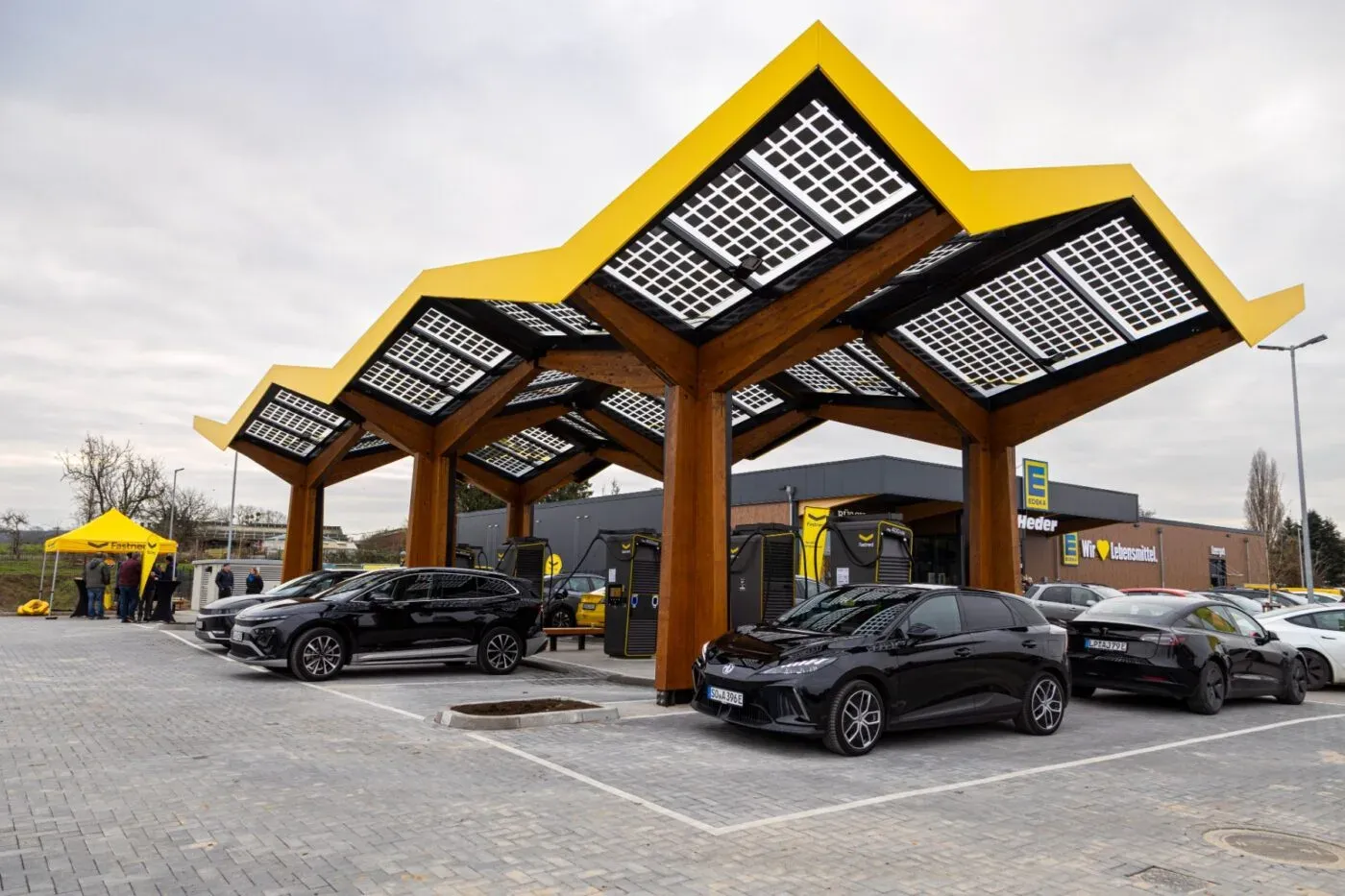
Image: Fastned
- 1/6
- 2/6
- 3/6
- 4/6
- 5/6
- 6/6
There are utility providers who view charging infrastructure along with heating as part of essential services and want to give it priority when connecting to the grid. Would that be a sensible approach?
> That would definitely be a good approach, as it could allow for prioritization. I’m already surprised that this issue is still being discussed at such a fundamental level.
>
>
> In public debates, it’s often said that the lack of charging infrastructure could slow down the development of electric mobility. Gas stations have long been considered part of essential services. Why should it be different with charging infrastructure?
>
>
> In general, anything that standardizes processes helps us. Today, we often have to painstakingly find out from each utility provider how their specific procedures work. And we need much greater transparency regarding available network capacity.
At the same time, competition is visibly increasing. In some locations, several large charging providers now operate right next to each other. Will price alone ultimately determine where customers charge?
> We view this development quite critically. There are now locations with five or six CPOs right next to one another. We have deliberately not participated in such projects and likely won’t in the future either.
>
>
> If competition is defined solely by price, operators invest cautiously. Those who invest cautiously build minimum standards rather than top-tier performance.
>
>
> That’s why we deliberately invest in our locations: more space, traffic flow concepts, canopies, and now also kiosks. Fastned is meant to represent this overall experience going forward as well.
>
>
> In an ideal world, there is one operator at a location who takes responsibility for the charging services and must convince with their overall concept. This is how it works, for example, in France or Belgium. If an offer doesn’t convince me, I drive to the next service station and find another provider with a different concept there.
>
>
> We consider this competition based on the overall offering to be more valuable than having six operators in the same area who mainly differentiate themselves by price.
Speaking of price: There were many promotions and changing rates this summer. Do customers need to prepare for a charging market that remains highly dynamic?
> The more competition and the more providers enter the market, the greater the number of options will be. Competition will also lead to lower prices — we can already see that.
>
>
> At the same time, many companies are still testing different models. The market is developing extremely rapidly, with many new customers joining. These customers sometimes have completely different expectations and little interest in owning ten charging cards and five different apps.
>
>
> Therefore, it will also be our responsibility as an industry not to scare these people off with a multitude of plans and promotions. We need to assure them that electric mobility works seamlessly in everyday life.
There is still a lot of criticism, especially regarding ad-hoc and roaming prices. What is your perspective on this debate?
> I will answer this explicitly from Fastned’s point of view. We invest substantial amounts in our charging infrastructure—around 1 to 1.5 million euros per location. Our goal is to offer very fast charging along with a corresponding overall experience. Naturally, this also gives us an interest in being able to set the price for these services ourselves.
>
>
> At the same time, Germany has a well-developed roaming system. This ensures that more people have access to more charging points.
>
>
> What concerns us is the issue of transparency toward customers: How do you explain to someone that they pay a different price for exactly the same amount of electricity at the same charging station, depending on the payment method chosen? It’s hard to understand.
>
>
> As an industry, we need to address this. At Fastned, mobility service providers generally receive the same price as what a direct customer would pay. Yet the overall system remains complex. I don’t have a perfect answer for this either.
Let’s look ahead to 2030: How will Fastned have changed in Germany by then? More highways, more cities, larger charging parks—or even new business models?
> First and foremost, we want to continue growing. Germany is clearly one of our core markets. We are here to stay.
>
>
> I certainly hope that we will be seen more frequently on highways in the future. It will be crucial to see how things progress with the managed service stations. The announced tender for highway charging infrastructure for cars must come now. Every additional month of delay is unexplainable to drivers.
>
>
> At the same time, we want to expand more into cities. For this, we need to further develop our concept. In addition to our well-known rooftop solutions, there are already other options such as our Wings for traditional parking situations. We are developing additional concepts that fit better into urban areas.
>
>
> Additionally, we experiment with things like kiosks. Anything that further improves the customer experience and makes our locations more attractive is of interest to us.
>
>
> However, our core principle will not change. We’ve done well with this approach so far, and many of our assumptions have proven correct. So, there will mainly be more Fastned locations.
Fastned will also continue to expand during your parental leave. What would be the best news about Fastned Germany that you could read during this time?
> Realistically speaking, I don’t think a decision will be made regarding the managed highway service stations during my absence—even if there’s an auction.
>
>
> But I would be very happy if, over the course of the coming year, there were a concession-based bidding process for charging infrastructure at the managed service stations, with a sentence later stating: Fastned advocated for this, and now this bidding process is finally here.
>
>
> For me, what’s particularly interesting would be how this bidding process is structured. Can operators demonstrate how they plan to meet customer needs and convince with their concepts? Or will very detailed rules require that everything look identical everywhere? It’s in such details that a lot ultimately depends.
Can we conclude from this that Fastned would participate in such a bidding process?
> It is these very questions that are currently being discussed. We have very specific ideas about what such a tender should look like to be attractive—not only for Fastned but also generally for good CPOs.
>
>
> If the tender is structured appropriately, we will certainly participate. That is exactly why we brought this issue up and pursued legal action: to ensure there is a fair competition for these locations in the end.
Thank you very much for the conversation, Ms. Boll.