
From Bologna to the Basque Country: My Electric Journey with BYD Dolphin Surf
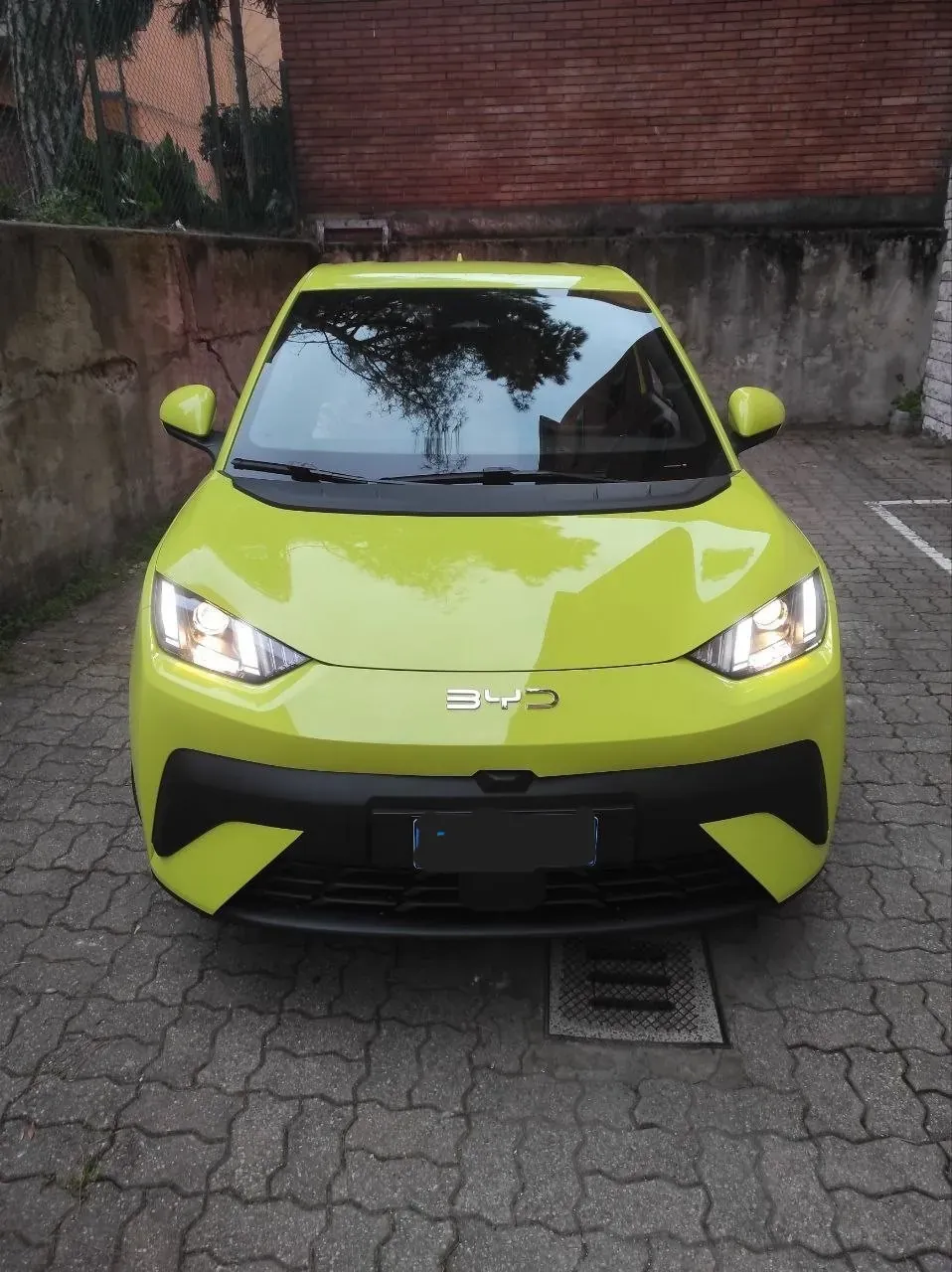
Lorenzo Stagni, 30, a public sector worker from Bologna, has been driving his BYD Dolphin Surf since March and has already covered 20,000 kilometers. He has made two trips to Vitoria-Gasteiz, the capital of the Basque Country (1,500 kilometers away), where his girlfriend works, and back. As he explains how and why, he challenges the definition of a city car for his compact electric vehicle.
by Lorenzo Stagni
When I decided to leave Bologna to reach Vitoria-Gasteiz, the capital of the Basque Country, in my BYD Dolphin Surf, I had two motivations: to help my partner move for work and to see how well a small electric car would fare on a 1,500-kilometer journey. By breaking the trip into several stages and turning it into a vacation, I realized the task was absolutely achievable. But most of all, I wanted to see firsthand just how simple it is to travel electrically, without relying too much on apps or preemptive planning.
From Bologna to the Alps, then through France
When I talk to friends and acquaintances about electric cars, the question always comes up sooner or later: “But how long does the battery last? And how do you recharge it?” This narrative eventually affects even those like me who already own an electric car. I bought the Dolphin Surf in March of this year, and during the first few months, I too was worried about how far I could drive on a single charge. This trip thus became a sort of personal crash test, a way to push myself beyond my limits.
TEST – BYD Dolphin Surf. Under 20,000 € to enter the world of electric cars
I set off without thoroughly researching routes, apps, or charging stations. I wanted to see how an average person, maybe my father, who buys an electric car without any specific technical expertise, would handle the same trip.
With time to spare, I decided to divide the roughly 1,500 kilometers into three stages. Starting from Bologna, I traveled up Italy along the A22 Wine Highway to Turin; then I crossed the Val di Susa and the Alps, stopping for the first night in Briançon, a truly beautiful town. It was one of many places I had the chance to visit thanks to this journey, places I probably would never have seen otherwise.
The next day, after about six hours of driving in total, including stops to recharge, I arrived in Carcassonne, near Toulouse.
Finally, with another leg of 500-600 kilometers, I crossed France from south to north-west and entered Spain via the Atlantic coast, eventually reaching the Basque Country.
Charging on the highway: French surprises
At first, the idea of embarking on such a long journey without planning stops scared me. I wondered what would happen if the battery ran out on the highway. During the trip, I even had to leave the highway to find a charging station. But mile after mile, I realized that the Dolphin Surf’s range was sufficient to reach the highway charging stations along the entire route I had chosen.
In France, in particular, things became much simpler. The charging network along the highways is extensive: practically at every service area I found fast charging stations and indications of the distance to the next charging station. I just needed to check the remaining range to decide whether to stop immediately or keep going.
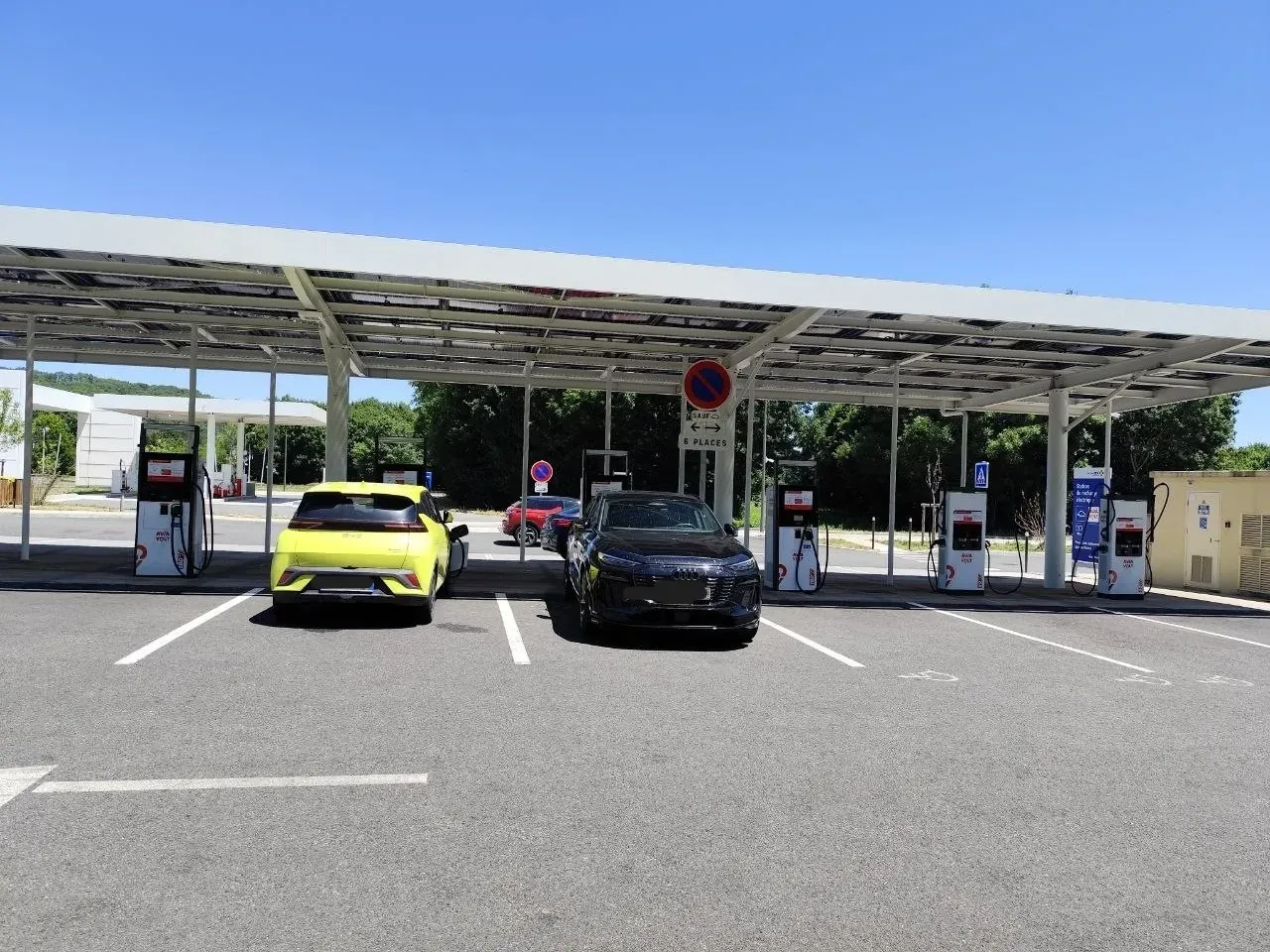
The energy prices also surprised me in a positive way: the rates I encountered in France were significantly lower than those in Italy, offering clear savings compared to charging in Italy.
I often found groups of a dozen charging stations at service areas. One weekend in June, I encountered them all occupied and had to wait a few minutes in line. It wasn’t a big problem, as many electric cars circulate on those roads, including French ones and tourists from across Europe.
The most important thing was that once I became familiar with the system, planning every detail of the trip no longer posed any difficulties. Even in Spain, I found a calm situation, at least in the areas I traveled through: both in Vitoria-Gasteiz and along the highways in the Basque Country, the distribution of charging stations seemed good and efficient.
The return trip: same stops, no time wasted
For the return journey, I followed more or less the same route, maintaining a similar distribution of stops. As can be seen from the attached screenshots, I traveled about 500 kilometers per day, starting with a fully charged battery and stopping every 150-200 kilometers.
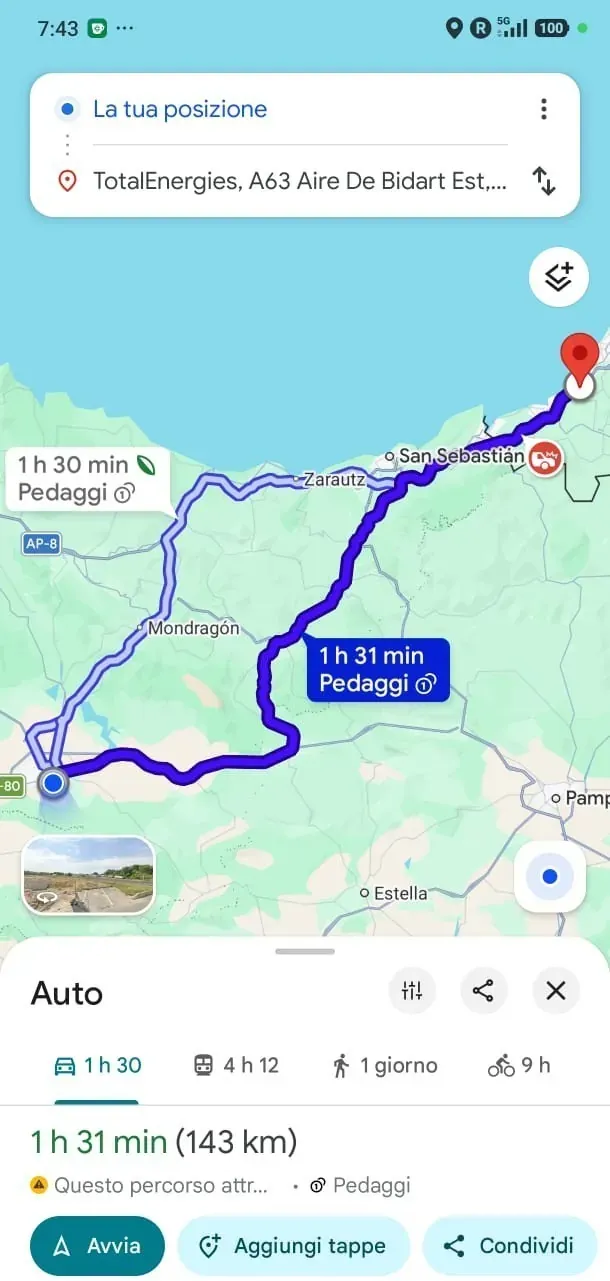
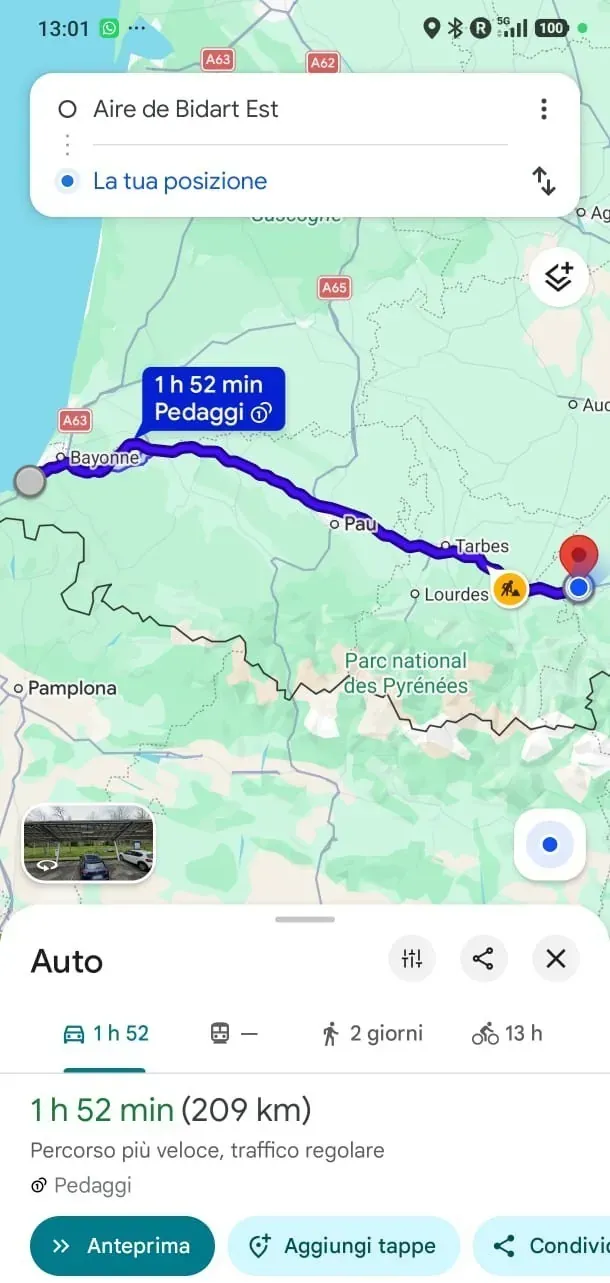
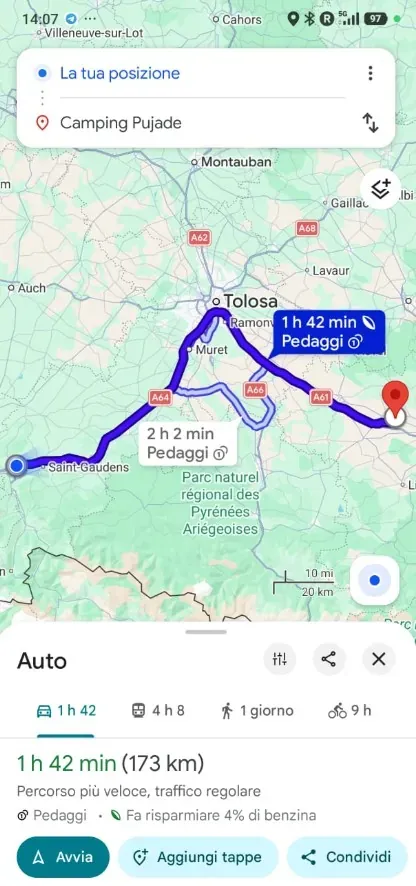
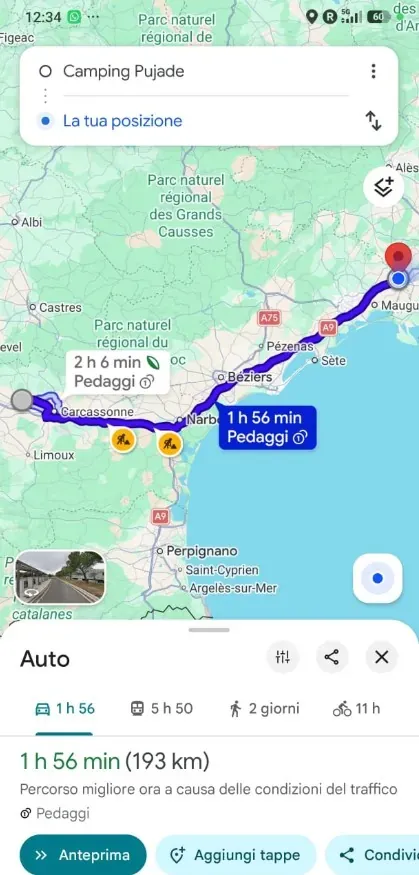
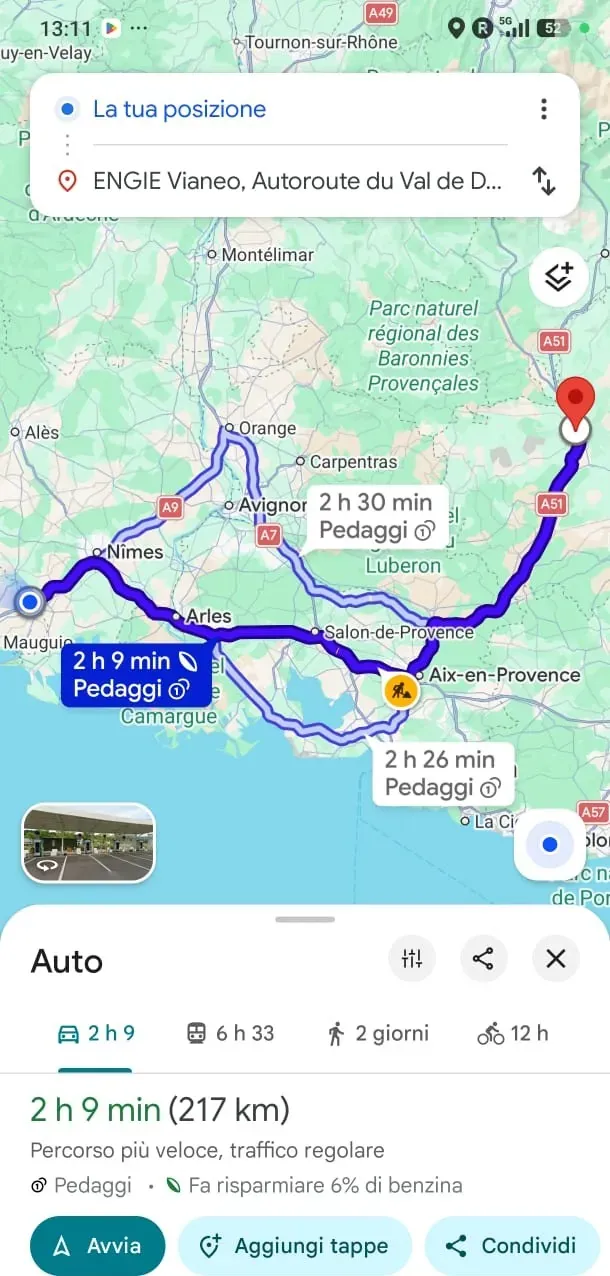
The stops were the same as the regular breaks I would take with a conventional car: half an hour for a coffee, a quick lunch, or visiting the facilities at a service station. I never felt like I was wasting time because of charging. While I ate or rested, the battery recharged with the energy needed to reach the next destination.
I usually arrived in the early afternoon, with plenty of time to explore the surroundings, discover some monuments, and indulge my passion for medieval history. In short, the electric vehicle didn’t stop me from enjoying my vacation.
The gas pump that changed my perspective
One particular incident stuck with me. On the way there, along A22, I panicked at the Crocetta Nord service station: my battery was draining quickly, and I found that the pump indicated by the app was actually in the opposite direction, on the south side of the road.
On the way back, however, I was much calmer. When I saw that the charging stations at Crocetta Sud were also out of service, I wasn’t worried. I still stopped for my usual break, and as I passed by the charging station, I was surprised to see that the display was on.
I connected my car and started charging: everything worked fine. Then I went into the highway rest stop and informed a staff member, who contacted Autostrade to report that the charging station had been restored and asked that the warning sign be removed.
A small incident, but significant: firsthand experience can turn out to be much less complicated than the narrative often associated with electric cars suggests.
Electroverse, Real Range, and Travel Costs
Throughout the trip, I used my usual app, Electroverse, which I really like because it’s compatible with most of the major European charging networks. Even more convenient for me is the corresponding card, which allows me to start charging immediately.
The trip also helped me better understand the actual range of the Dolphin Surf under different driving conditions. The claimed range is 322 kilometers, but when I charge it to 100%, the dashboard often shows up to 350 kilometers.
On the highway, depending on traffic speed, I experienced an actual range of over 200 kilometers: enough to cover more than two hours of driving without worry.
Generally, I would stop when there was about 20% battery remaining, or a little less, never letting it drop below 10%. Every night, I managed to charge it back to 100% using a public charging station near the hotel. Once, I camped and used an emergency charger connected to a regular campground power outlet.
I didn’t keep accurate records of usage and costs, but the consumption seemed consistent with my usual daily commute of about 100 kilometers to work. The cost of charging was significantly lower thanks to the rates in France and Spain, so I didn’t need to constantly look for the cheapest options.
You can make it work even with a small electric vehicle
The trip from Bologna to the Basque Country, which I repeated in September as well, was a success for me. There’s one aspect I want to emphasize: I’m 30 years old, but I’m not a tech enthusiast. I only use technology when it’s necessary and accessible to everyone.
That’s why I consider this experience particularly meaningful. I didn’t plan every stop down to the minute, I didn’t use complicated tools, and I didn’t have to develop special strategies for managing the battery.
My BYD Dolphin Surf, a compact car designed mainly for city use that I find very convenient for daily driving, allowed me to undertake an international trip of 1,500 kilometers without any major difficulties. For me, it was concrete proof that with a bit of flexibility and reasonable stops, traveling by electric vehicle can be a normal, relaxing, and even enjoyable experience.
Watch the VIDEO too
Previous Article
EICMA 2026: Testing Electric Vehicles – Ten Pavilions in the Largest Edition Yet
Next Article
The European auto industry crisis is structural. Italian components at risk