
Citroën will revive the 2CV as an electric vehicle. The target price is 15,000 euros with production in Europe.
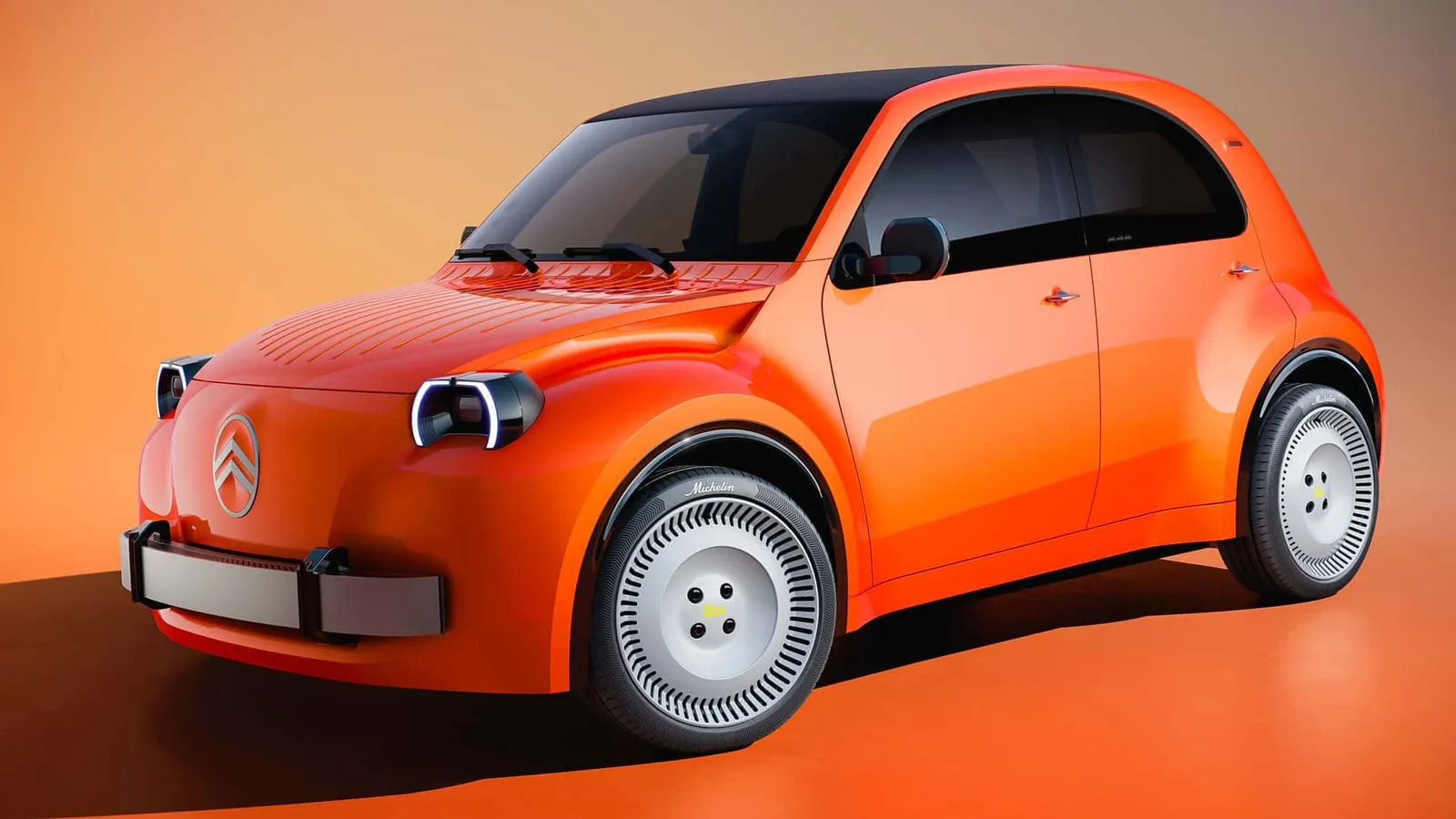
Citroën unveiled an electric concept version of the 2CV on October 11, 2026, ahead of the Paris auto show. The production version is set to hit dealerships by the end of 2028, priced at around 15,000 euros and manufactured in Europe. It sounds ambitious, especially since the price is expected to be about 4,500 euros lower than Renault’s Twingo E-Tech in France.
Table of Contents
Show
Hide
Back 2CV’s return was only a matter of time. Renault has successfully sold nostalgia through models like the 5 E-Tech and Twingo E-Tech, Fiat has leveraged the history of the 500 for years, and Mini has essentially built its modern brand around it. Citroën avoided this trend for a long time, despite selling over 3.8 million 2CVs between 1948 and 1990.
He has changed his mind now. European manufacturers need affordable electric cars that can compete with those from Chinese brands. A distinctive design and recognizable name will help, but price remains the biggest challenge.
Shorter than the Twingo, lighter than most new electric cars
The new concept car is 3.76 meters long, has four doors, and sits between the Citroën Ami and C3. It is 3 cm shorter than the Renault Twingo E-Tech and about 20 cm shorter than the original 2CV. It should therefore feel at home in urban areas.
Specifications
Citroën 2CV Concept
Length
3.76 m
Planned weight
around 1,000 kg
Concept car wheels
19 inches
Target price
around 15,000 euros
Launch of production version
2028
Start of sales
end of 2028
Production location
Europe
Citroën aims for a weight of around 1,000 kg. This is very low for a modern electric car, but the entire project depends on it. A lighter vehicle requires less energy, so it can use a smaller and cheaper battery without a significant reduction in range.
The manufacturer has not specified the battery capacity, engine power, range, or charging speed. Therefore, there is no basis to assume that the production version of the 2CV will be a good car for long trips. For comparison, the basic Renault Twingo E-Tech has an engine with 60 kW of power, or 82 horsepower, and a claimed range of 262 km. This is just a reference point, not an indication of Citroën’s specifications.
The price also needs clarification. The Renault Twingo E-Tech starts at 19,490 euros in France before any subsidies. Citroën mentions around 15,000 euros, but has not yet specified whether this is the list price without additional costs. Therefore, the difference might look different once we see the actual vehicle and its sales terms.
Retro without pretending to be original
The designers didn’t have to search long for inspiration. The concept features separate circular headlights, distinct fenders, a nearly vertical windshield, a rounded roof, and a front end reminiscent of the TPV prototype from which the first 2CV was developed. The folding roof is made of material, and the wipers remain visible.
The silhouette is familiar, but the proportions are much more muscular. The wide wheelbase and 19-inch steel wheels look great on display, though it’s hard to expect such sizes in a car priced at 15,000 euros. The production version will likely be more modest, but Citroën has not confirmed this yet.
The rear is more modern. The black trim on the trunk lid extends down to the bumper, the lights use LED technology, and the turn signals are located on the roof pillars. This is not a copy of the old electric 2CV. The manufacturer retained the most recognizable elements and built a small hatchback around them that meets modern standards.
The cabin lacks a traditional dashboard almost entirely. The steering wheel, switches, and the system called Smart Vision Display are located on a cylindrical module. Information is meant to be displayed directly in the driver’s line of sight, while multimedia controls are handled by an 8-inch square screen. Physical buttons are also retained.
The wide seats feature Citroën Advanced Comfort technology. They can be removed for use while parked, and the front passenger seat allows for more comfortable leg extension. Additionally, there are portable baskets, a detachable speaker, and plastic handles instead of traditional knobs.
The most unusual feature are the pockets on the doors designed for carrying eggs. This refers to the pre-war design concept of the 2CV. The car was supposed to cross a bumpy field with a basket of eggs without breaking the contents. In 2026, such a storage compartment is mainly a joke by the designers, but at least it isn’t another glowing panel.
The price also depends on new regulations
Citroën wants to design a production model with the planned European M1E category in mind. The European Commission’s proposal concerns electric vehicles up to 4.2 meters long. Regulations for this group are set to be frozen for ten years so that manufacturers can create cheaper cars without constantly adapting them to new requirements.
For now, this is a proposal rather than a finalized set of regulations. The price of 15,000 euros depends not only on the battery size and equipment but also on what requirements will ultimately apply to small European electric vehicles.
The production version of the Citroën 2CV is set to debut at the Paris auto show in 2028, exactly 80 years after the original was launched at the same event. It will be only before that time that we’ll know details about the powertrain, range, charging capabilities, and final price. However, the concept clearly shows the direction: it’s meant to be lightweight, simple, and cheaper than the Twingo E-Tech.
LovEV Newsletter
Want more content like this?
Sign up — we’ll send you a weekly preview once the newsletter starts.