
Citroën revives 2CV with electric concept targeting €15,000 price
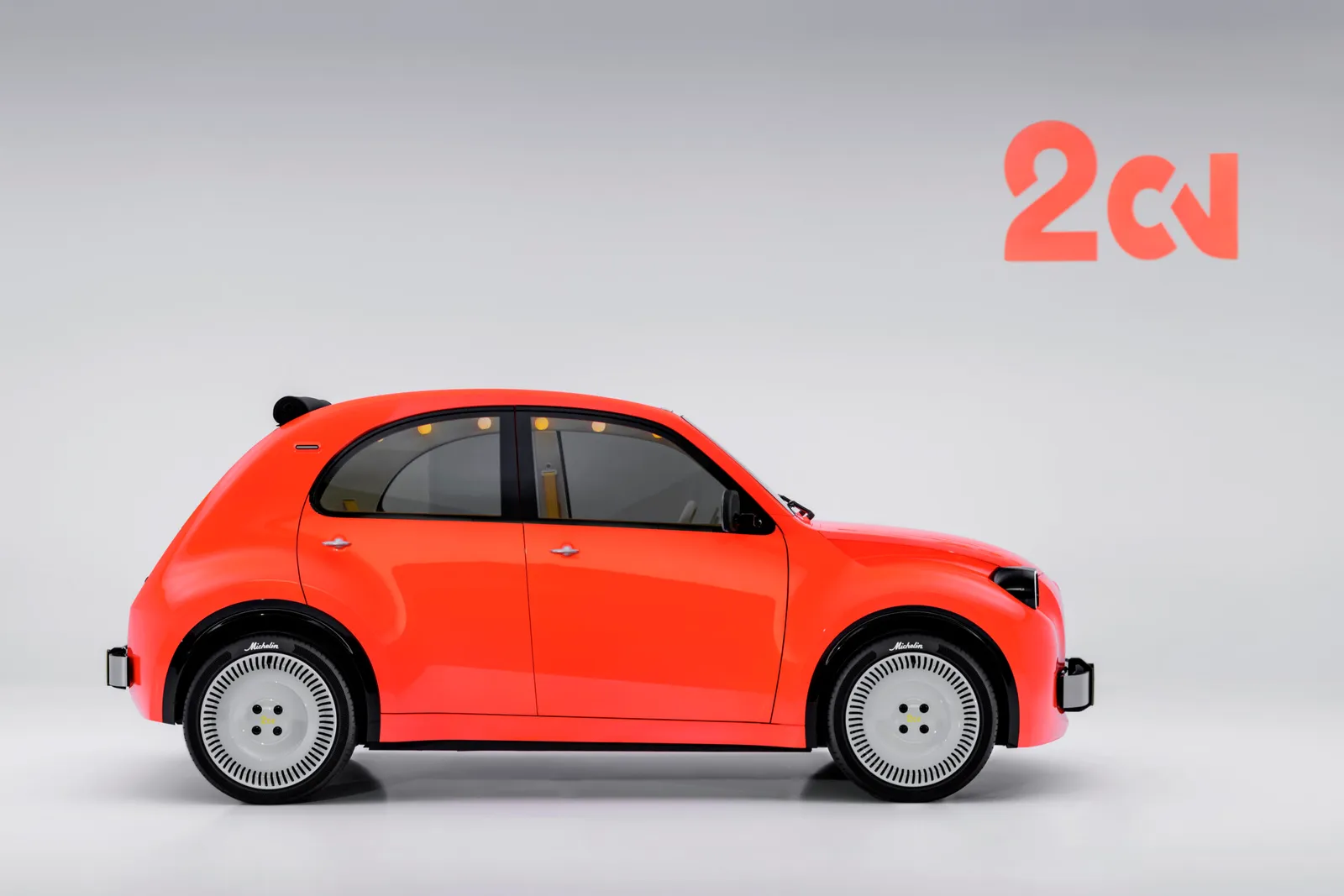
Citroën has unveiled an electric 2CV concept previewing a European-built small car due to join its range by 2028, with a target starting price of around €15,000. Revealed at the 2026 Paris Motor Show, the newcomer combines styling inspired by the original with a focus on low weight, simple construction and everyday practicality.
The 2 CV Concept measures 3.76 metres long and targets a weight of around one tonne. Citroën intends the future model to sit between the Ami and C3, offering an affordable route into electric motoring without following the trend towards larger, heavier cars.
For prospective buyers, however, several crucial details remain undisclosed. Citroën has not announced battery capacity, driving range, motor output or charging speeds. There is also no confirmed UK price or market launch date, while the €15,000 figure remains an ambition rather than an established retail price.
The company says the future car will be manufactured in Europe and comply with forthcoming European E-Car regulations. Its announcement does not explain the regulatory requirements or identify a production plant. The concept therefore sets out the direction for a new model, rather than presenting a finished production specification.
Citroën chief executive Xavier Chardon said: “Reinventing the 2CV isn’t about replicating a car from the past; it’s about reinventing what made it unique: its simplicity, its accessibility and the freedom it offered.”
He added: “With the 2 CV Concept, we’re bringing that spirit into today’s world to make electric mobility simpler, more human and more desirable.”
Affordability is central to the proposal. Citroën argues that reducing mass allows a smaller, less expensive battery, with range suited to everyday journeys and lower running costs. It has not quantified those savings, but the approach places efficiency and modest dimensions ahead of maximum battery capacity.
At 3.76 metres, the concept is shorter than the original 2CV, according to Citroën. The manufacturer says its compact footprint is intended to make driving and parking easier, while retaining the versatility associated with its predecessor. Although the design references both urban and rural use, no technical off-road capability figures have been supplied.
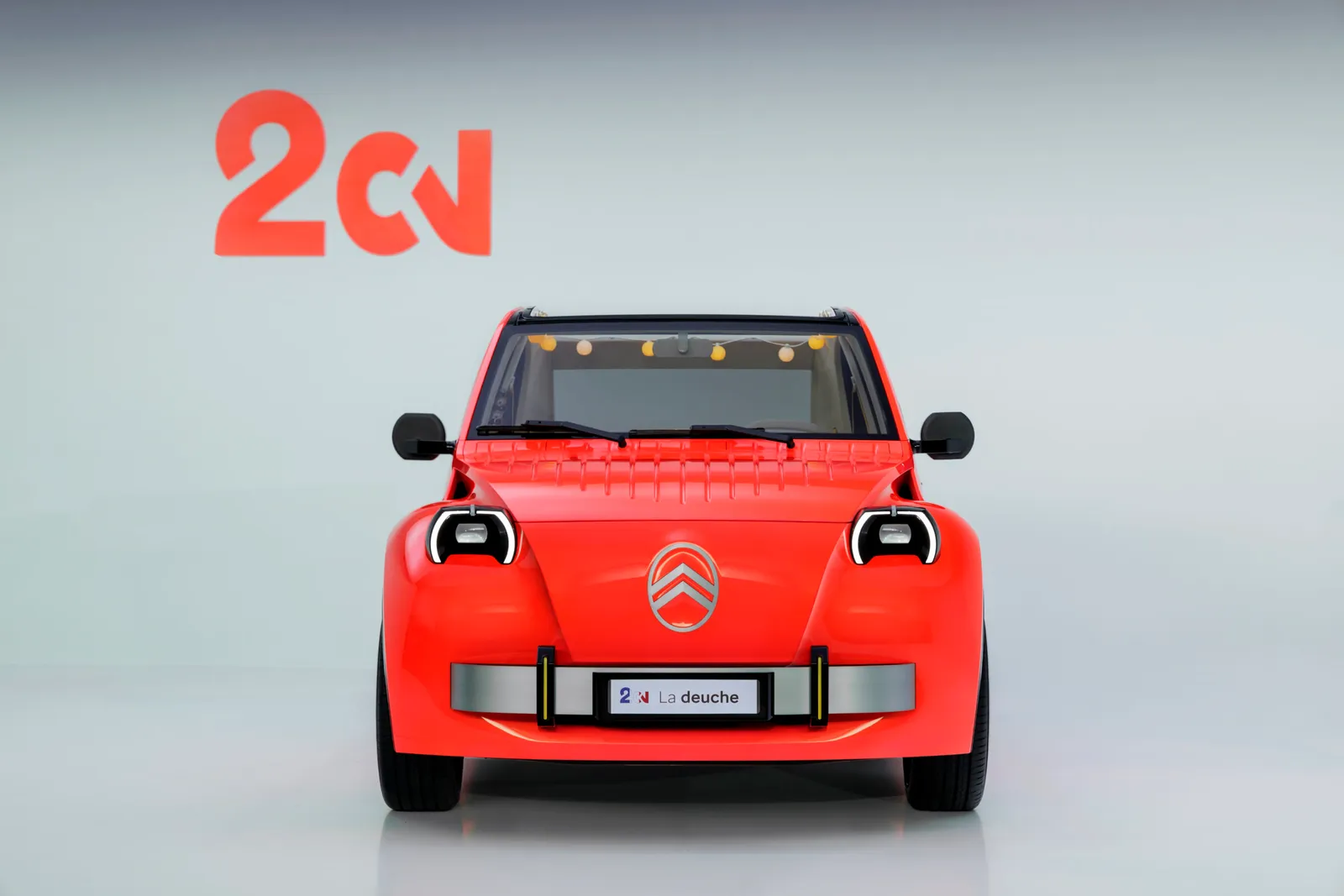
The body also incorporates features intended to simplify manufacturing and repairs. These include flat surfaces, direct air intakes beneath the windscreen and bumpers separated from the surrounding bodywork. The bumpers can be replaced independently, a practical consideration when minor damage would otherwise involve work on a larger body section.
Citroën says these decisions take mass production into account. That matters for a car with such a low price target, although the company has not confirmed which individual features will reach showrooms. The production model’s eventual equipment and specification will determine how closely it follows the concept’s simplicity.
Visually, the connection with the original 2CV is unmistakable. Round headlamps stand apart from the bodywork, accompanied by an LED lighting signature, while the sculpted bonnet, exposed windscreen wipers and rounded wings provide further references. More sharply defined lines give the familiar proportions a contemporary treatment.
The sides combine upright surfaces with a curved roof, contoured door handles and indicators mounted on the C-pillars. Despite the emphasis on compact dimensions, the concept wears 19-inch steel wheels. These are inspired by the original 2CV and fitted with Michelin tyres carrying heritage markings and Citroën chevrons.
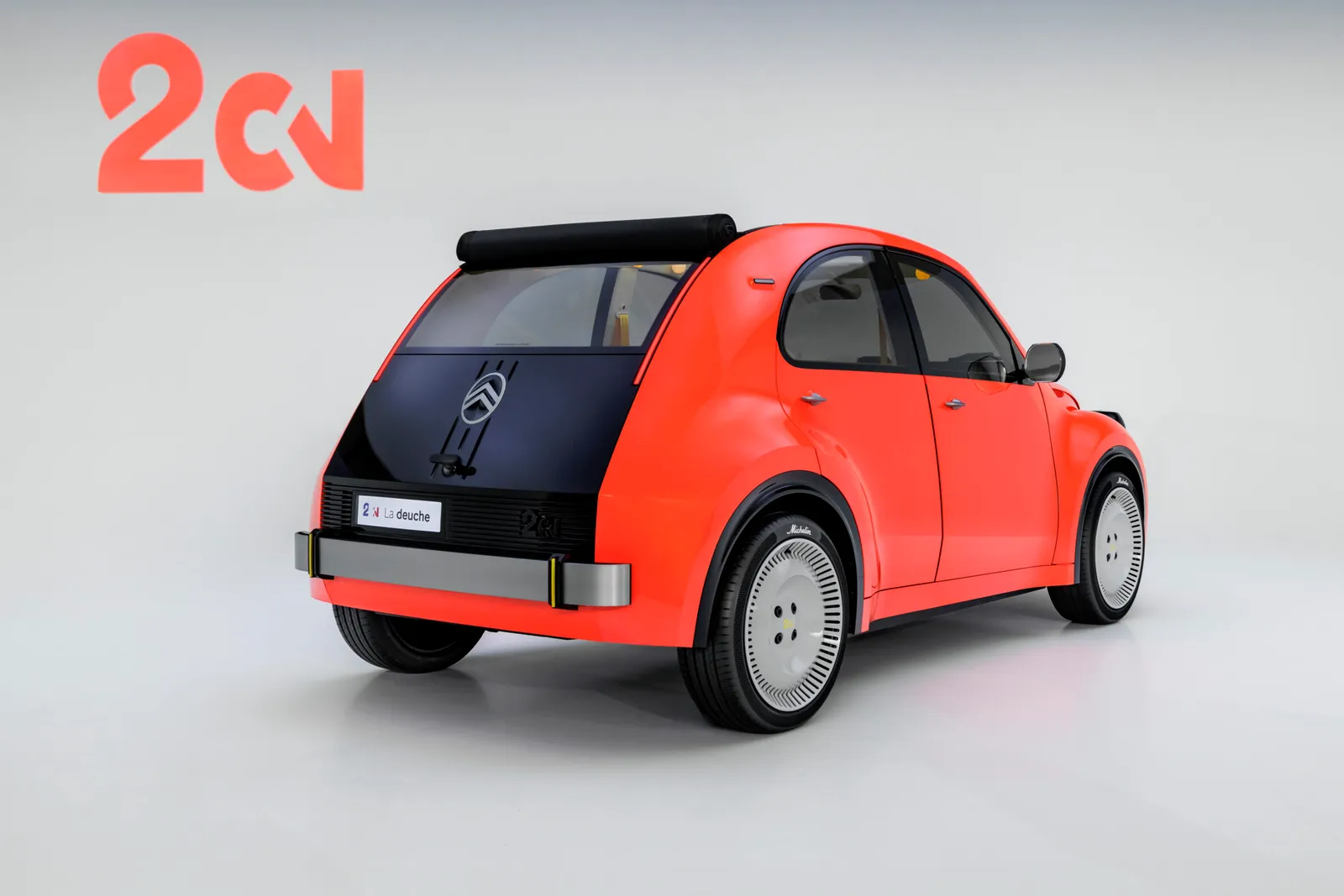
At the rear, a black tailgate extends down towards the bumper, flanked by LED lights. A short overhang, visible tailgate handle and three horizontal stripes complete the design. The number plate incorporates nicknames given to the original 2CV in different countries, underlining the international recognition Citroën hopes to revive.
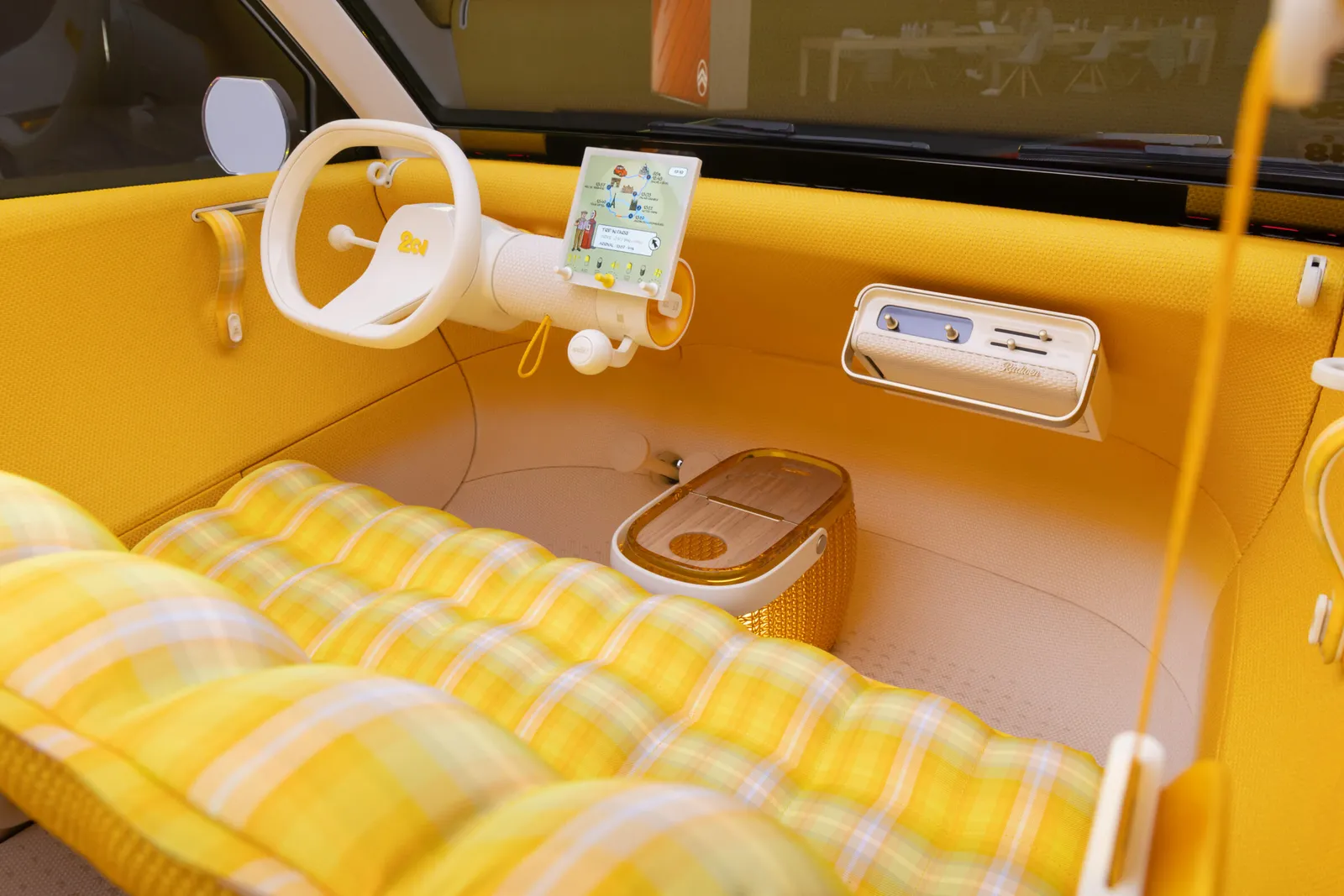
Inside, the concept dispenses with a conventional dashboard. Instead, a cylindrical structure supports a single-spoke steering wheel, a single control lever, a paddle-shift gear selector and Citroën’s Smart Vision display. The latter is designed to keep essential driving information within the driver’s field of vision.
An eight-inch square touchscreen provides another interface, with graphics inspired by comic books. There is also a detachable radio, called “Radioën”, which doubles as a portable speaker. Occupants can take it outside the car, extending the concept’s emphasis on leisure use beyond the passenger compartment.
Practical touches include a removable storage basket in place of a centre console and soft straps serving as door handles. Recessed door panels are intended to free up passenger space, while broad seats use Citroën Advanced Comfort technology. A pull-out front seat is designed to provide somewhere to relax during a stop.
A fabric sunroof adds another clear link to the original, bringing more light into the cabin. Citroën describes an interior shaped around comfort and ease of use, although dimensions for passenger accommodation and luggage capacity have not been released. Those figures will be important in assessing the production car’s usefulness.
The colour scheme is considerably more exuberant than the minimalist brief might suggest. The exterior uses an Infra Red finish, developed from an orange base with yellow and red highlights. Inside, yellow tartan seat upholstery provides a fresh interpretation of a pattern associated with the original 2CV.
Beige details intended to recall Bakelite appear on the steering wheel, controls, instrument panel and seat piping. Textured material inspired by cane and wickerwork features elsewhere, while the storage basket combines wood with 3D-printed bio-based plastic. Wood also surrounds the detachable radio, and yellow clips decorate the light grey wheels.
Michelin’s involvement extends beyond bespoke tyre graphics. Citroën says the concept adopts its partner’s “universal tyre digital twin” philosophy, continuously monitoring tyre condition so the vehicle can adapt its behaviour to its environment. The release provides no further technical explanation or confirmation of how this would operate in production.
Other details are more playful. The horn and electric motor’s start-up sound echo the original 2CV, while the brake and accelerator pedals carry tortoise and rabbit motifs. Door storage compartments are designed to hold eggs, referencing the practical requirements associated with the original car.
Numbers inscribed on the windscreen mark three dates: 1948, when the 2CV was unveiled at the Paris Motor Show; 1990, when production ended; and 2026, the year of this concept’s debut. Heart-shaped stickers and distinctive tyre patterns add further tributes to the model’s history.
For UK drivers, the key unanswered question is how the balance between purchase price, usable range and charging convenience will work in practice. The concept’s unveiling does not yet provide enough information to judge that.
The original was conceived around basic transport needs, and Citroën says that principle is guiding its electric successor. The challenge now is translating the concept’s low weight, accessible price and useful interior into a showroom car. Battery specifications, UK availability and final pricing will establish how much of that promise reaches buyers.