
Citroën 2CV Concept: Electric duck priced at around 15,000 euros
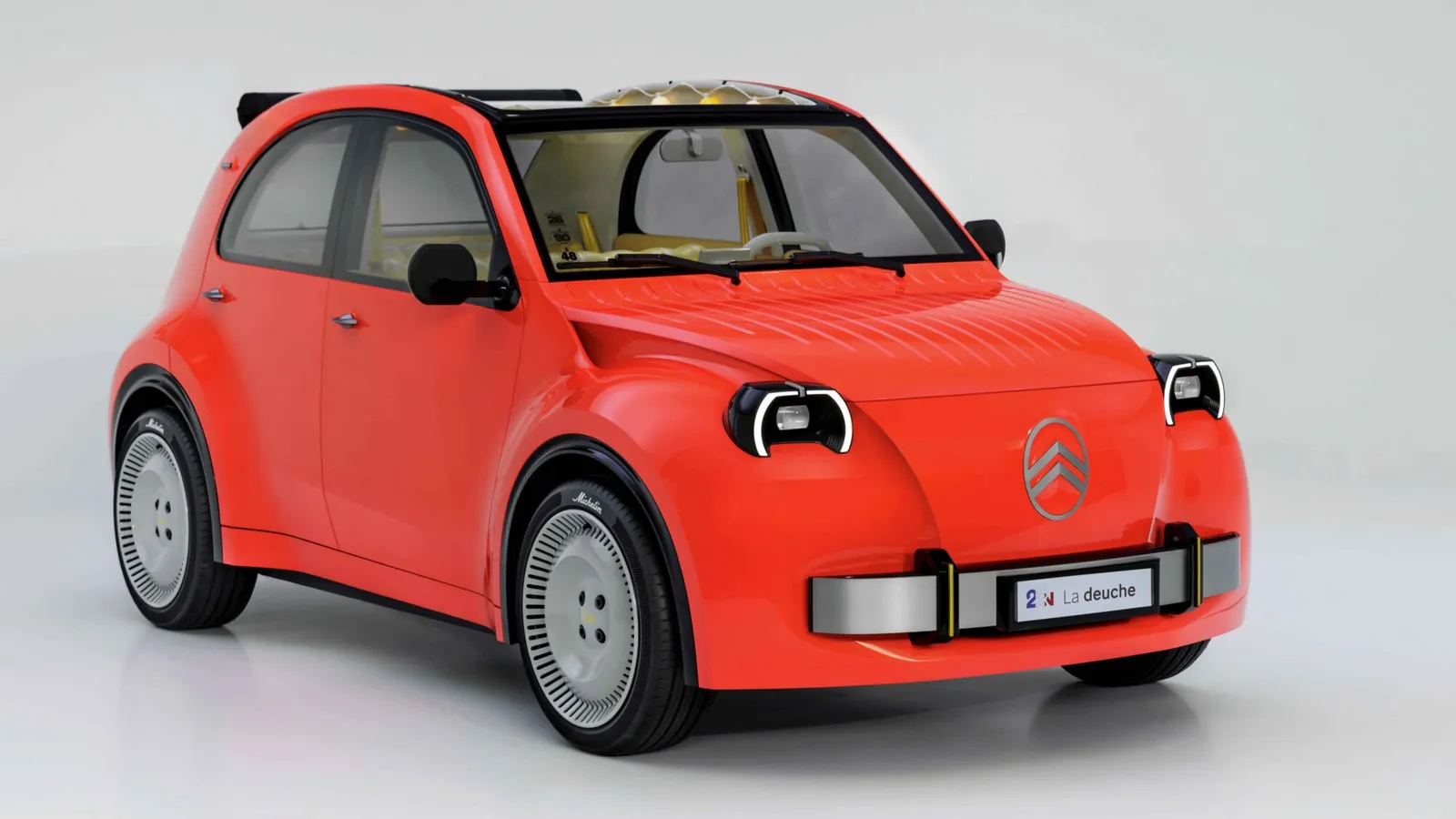
Citroën unveiled the 2CV Concept in Paris, offering a glimpse at an electric version of the vehicle priced around 15,000 euros. The production model is expected to arrive by 2028, be manufactured in Europe, and weigh approximately one ton.
Advertisement
Citroën presented the 2CV Concept at the 2026 Paris Auto Show. This concept car provides a preview of an electric production model inspired by the legendary 2CV, with launch slated for 2028. The manufacturer had previously announced an electric version of this vehicle in May, though without specific details at the time. Now, Citroën has provided at least the dimensions, target weight, and estimated price.
Positioning between Ami and C3
The concept car is intended to sit between the lightweight Ami and the C3 in terms of positioning for future production. Citroën plans to manufacture this vehicle in Europe, targeting a starting price of around 15,000 euros. It is also designed to meet future European regulations for small electric cars, known as the E-Car category.
At 3.76 meters, this concept car is slightly shorter than the original 2CV, which measured 3.85 meters. Citroën cites its compact size as facilitating easier maneuvering and parking in everyday situations. The target weight is around one ton.
Powertrain, Battery, and Range
Citroën still hasn’t provided specific technical details. The press release completely lacks information on engine power, battery capacity, range, or charging speed. The manufacturer only states that the low weight should allow for the use of a smaller and thus cheaper battery. The range is said to be suitable for daily and short-distance use, keeping operating costs low. Since it is an unhomologated concept vehicle, no official fuel consumption figures are available either.
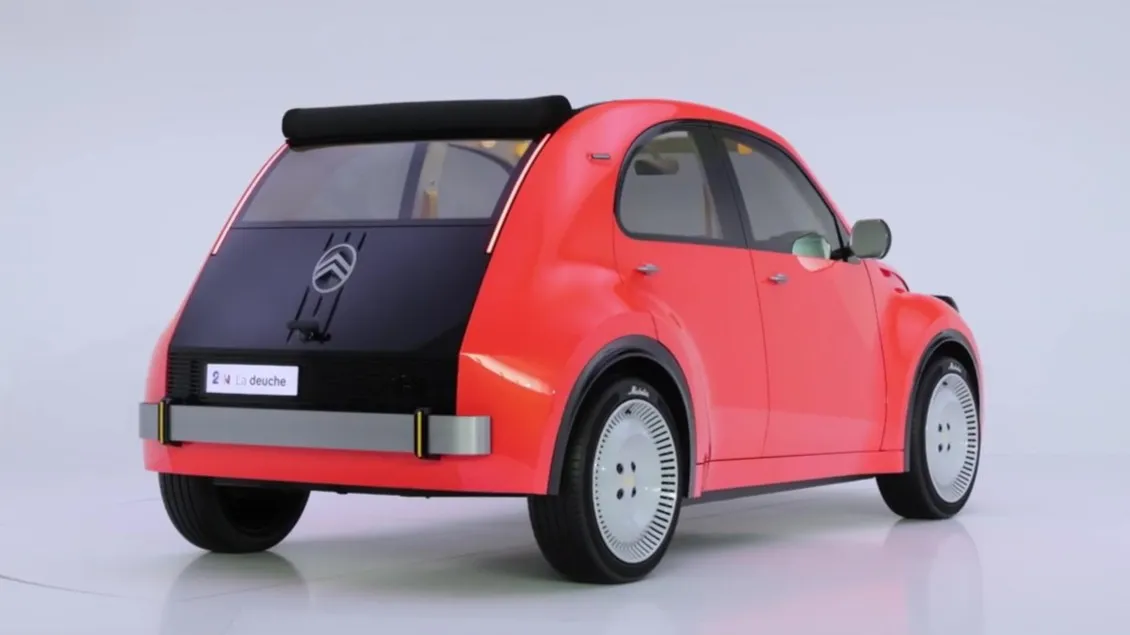
To reduce costs, Citroën relies on a simplified design. Flat body surfaces, direct air inlets beneath the windshield, and bumpers separated from the body are intended to simplify manufacturing and repairs. In the event of a minor collision, the manufacturer claims only the bumper needs to be replaced. Regarding materials, the concept prioritizes recycled and recyclable substances.
Citroën has also developed a so-called digital tire twin in collaboration with Michelin. This system eliminates the need for sensors in the tires and instead analyzes existing vehicle data to assess traction, wear, tire pressure, and load. Based on this, the vehicle is supposed to adjust its behavior to the conditions and alert the driver in advance when a tire change is needed.
Advertisement
Design inspired by the original
Visually, the study draws on the proportions of the 2CV but interprets them with sharper lines. At the front are standalone round headlights with an LED lighting signature, while the hood features grooves inspired by the TPV (“Toute Petite Voiture”) prototype from the 1930s. The windshield wipers remain intentionally visible. On the sides, a steeply set windshield, a curved roofline, well-defined fenders, and turn signals integrated into the C-pillars define its appearance. The concept is equipped with 18-inch light gray steel wheels.
At the rear, a black trunk lid extends to the bumper, with the handle clearly visible. Instead of a traditional license plate, Citroën uses a digital display that can show the 2CV’s international nicknames. The exterior color is based on the historical “Infra Red” shade.
Interior without a traditional dashboard
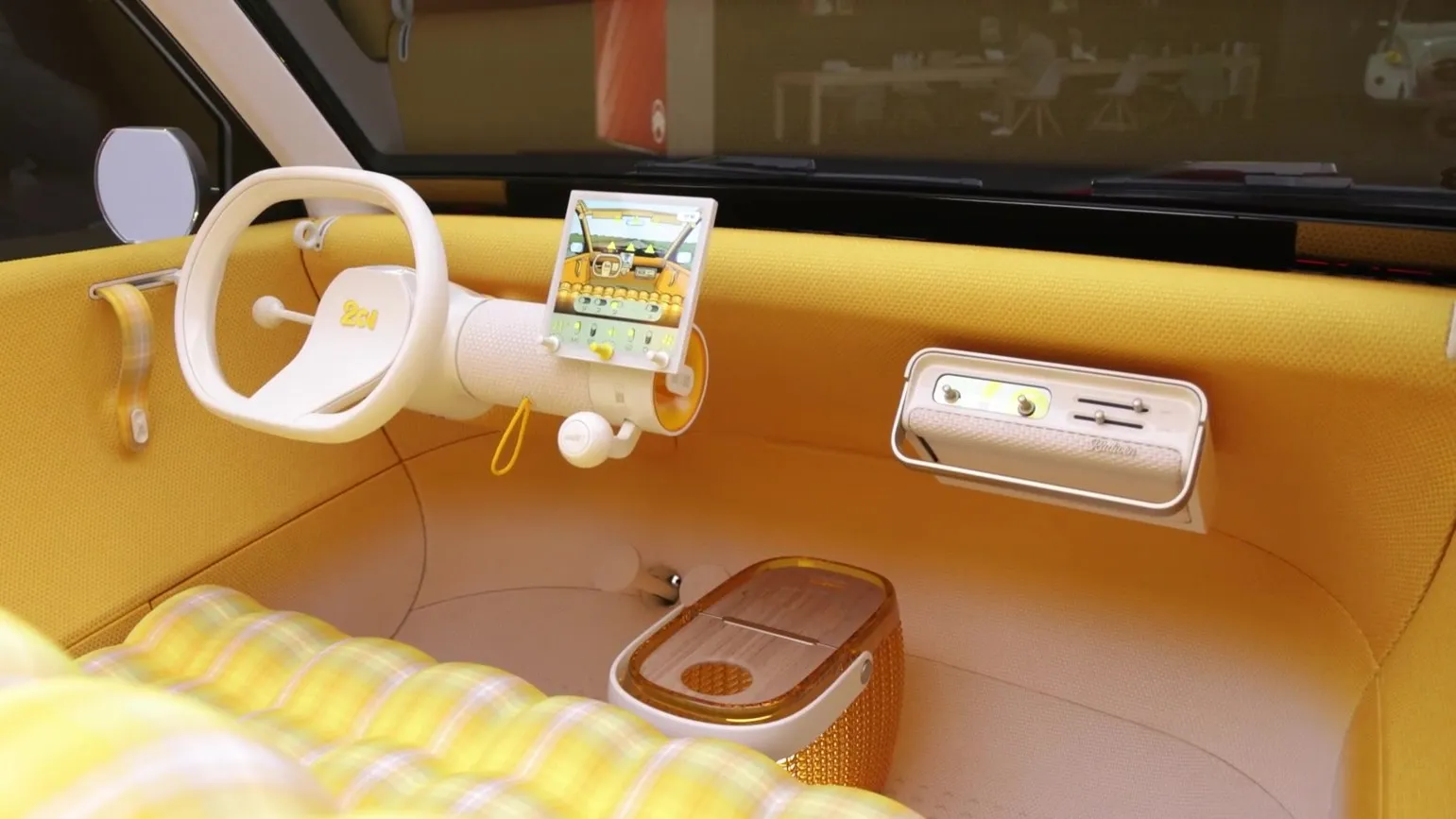
Citroën eliminates a conventional dashboard in the interior. Instead, a cylinder holds the spoke-wheel steering wheel, a single control lever for wipers and turn signals, a gear selector with push buttons along with a start-stop button, and a square 8-inch touchscreen. This screen also features three physical controls for temperature, volume, and fan speed. Key driving information such as speed, battery level, and navigation cues are displayed on the Smart-Vision strip within the driver’s field of view.
There are seating benches for two people each at the front and back, with the front bench being removable like in the original model. Instead of a center console, a removable basket made of wood and bio-based plastic is used. The similarly removable radio named “Radioën” also functions as a portable speaker. A fabric roof that can be rolled up by hand is intended to provide light and openness.
In addition, there are numerous references to the historic 2CV: the horn and startup sound mimic those of the original, the door shelves are designed for carrying eggs, and on the pedals, a turtle symbolizes the brake while a rabbit represents the accelerator. Stickers with the numbers 48, 90, and 26 on the windshield refer to the model’s launch date, end of production, and concept introduction. Over five million units of the original were produced between 1948 and 1990.
Advertisement