
Chinese cars recorded soldiers and gate codes. Where did the data go?
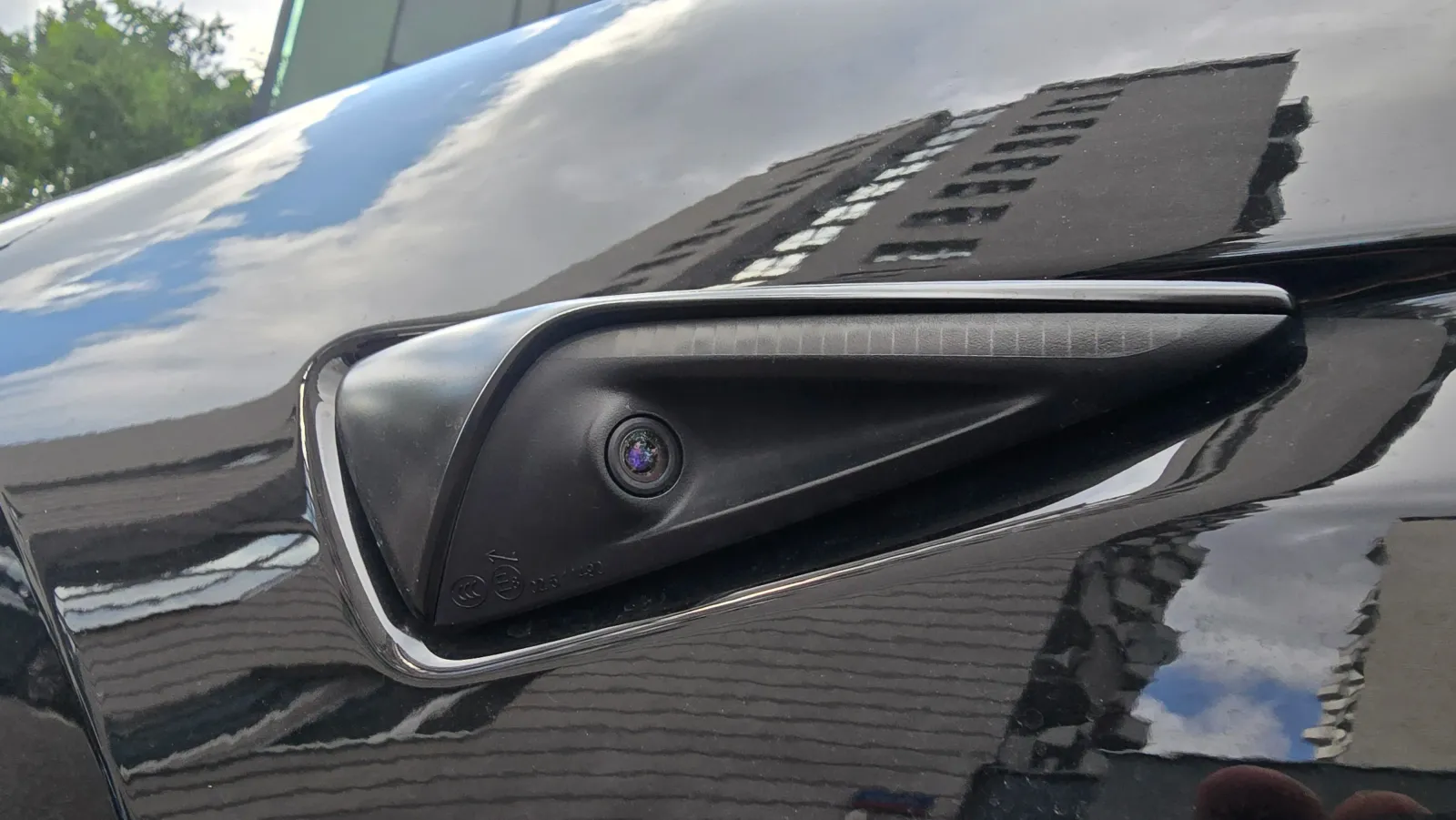
A modern car is no longer just a device that transports passengers from one place to another. Cameras monitor the surroundings, GPS tracks the location, microphones enable voice control, and an internet connection allows for updates and communication with the manufacturer’s servers. In Norway, the capabilities of such systems became evident in a rather unusual situation—during military exercises.
Cars recorded footage during the exercises
The incident was reported by the Norwegian newspaper “Dagens Næringsliv.” It occurred during the Hovedstad 2026 exercises, held in September by Oslo og Akershus heimevernsdistrikt 02, the Norwegian territorial defense unit responsible for areas including Oslo and some of its key infrastructure.
These were the largest exercises by Norway’s Heimevernet in 2026. Nearly 5,000 soldiers participated from September 14 to 18. The exercises focused on protecting authorities, important facilities, and infrastructure, with HV-02’s area of responsibility also including Oslo-Gardermoen Airport.
The military also used rented cars to transport personnel. After some time, the soldiers discovered video recordings stored in the cars’ memory. These recordings allowed them to see people getting in and out of the vehicles, the locations the cars reached, and the time spent at each site.
That’s not all. The cameras were also supposed to record the codes entered by soldiers at the gates and doors of the protected facilities. At least two cars used during the exercises were models from the Chinese brand Deepal, part of the Changan group.
Military leases cars under a major contract
The vehicles came from Hertz. The Norwegian operations of this brand are managed by First Rent A Car Norway, while the company’s ownership chain runs through Volvo Cars to Zhejiang Geely Holding Group. The Norwegian armed forces utilize a large national framework contract arranged by Forsvarets logistikkorganisasjon.
The contract is valid from June 2024 to May 2028, with a maximum value of 350 million NOK (143.8 million PLN). The leased cars are used not only during exercises but also in the military’s daily operations and activities.
Even before the release of the recordings, Norwegian media had raised concerns about the electronics installed in modern cars. The military confirmed at the time that there was no general ban on using vehicles from certain manufacturers. However, individual units could implement their own safety measures.
Did the recordings reach China?
This is the most significant uncertainty in the entire incident: it is unknown. The recordings found in the cars were deleted after the exercises ended. It has not been publicly confirmed whether the files remained only in the cars’ local memory or could be transmitted or synchronized with external servers.
There is therefore no basis to claim that images of soldiers, routes, or access codes were handed over to Chinese authorities. Volvo rejected the suggestion that China’s ownership structure implies Geely has access to the data, stating that information cannot be transferred to the parent company without proper legal grounds.
The case itself is, however, a good example of a broader problem. Modern cars can automatically record information that holds little significance in normal traffic but becomes much more sensitive in airports, ports, power plants, or military bases.
Poland reacted earlier
In Poland, a similar risk was analyzed even before the events in Norway. On February 6, 2026, the head of the General Staff of the Polish Army issued an order restricting the entry of motor vehicles manufactured in the People’s Republic of China into protected military facilities.
The ban is already in effect. Information about it can be found, among other places, in the official rules for entering the Military Aviation Academy, and some military procurement documents explicitly state that the contractor’s vehicle cannot be a car produced in China. The VIN starting with the letter “L,” indicating production in the PRC, can be used for identification. Meanwhile, Polish regulations are broader than a simple distinction between “Chinese” and “non-Chinese” vehicles.
It’s not just about the badge on the hood
The Ministry of National Defense later explained in response to a parliamentary inquiry that the primary risk criterion is whether the vehicle is equipped with advanced communication systems and sensors capable of collecting and transmitting data. Therefore, restrictions may also apply to other vehicles fitted with devices that can record location, images, or sound.
Such vehicles may be allowed into secured facilities after disabling certain functions and implementing safety measures required by the facility’s management. The military has also imposed a ban on connecting service phones to the multimedia systems of vehicles manufactured in China.
The decision to allow a specific vehicle into a protected area is made by the organization managing the security system. Simply arriving at the gate does not mean permission to enter — an appropriate vehicle pass is required.
The problem isn’t limited to Chinese cars
360-degree cameras, driver monitoring systems, microphones, GPS, and constant internet connectivity have become standard even in European, American, Korean, and Japanese vehicles. From the perspective of securing strategic sites, it is important not only for the manufacturer’s logo but also for what specific vehicle can record, where the data is stored, and who can gain remote access to it.
The Norwegian case does not prove espionage or the transmission of information to Beijing. It does confirm, however, that a vehicle equipped with cameras and memory can retain information without the driver’s active involvement, information that the military might not want to document.
Polish safety regulations adopt a similar approach: a vehicle in a protected area is treated as an electronic device equipped with sensors and communication capabilities, rather than merely a means of transportation.
Piotr Sobczyk