
This study shows why Chinese electric cars can quickly become dominant in France.
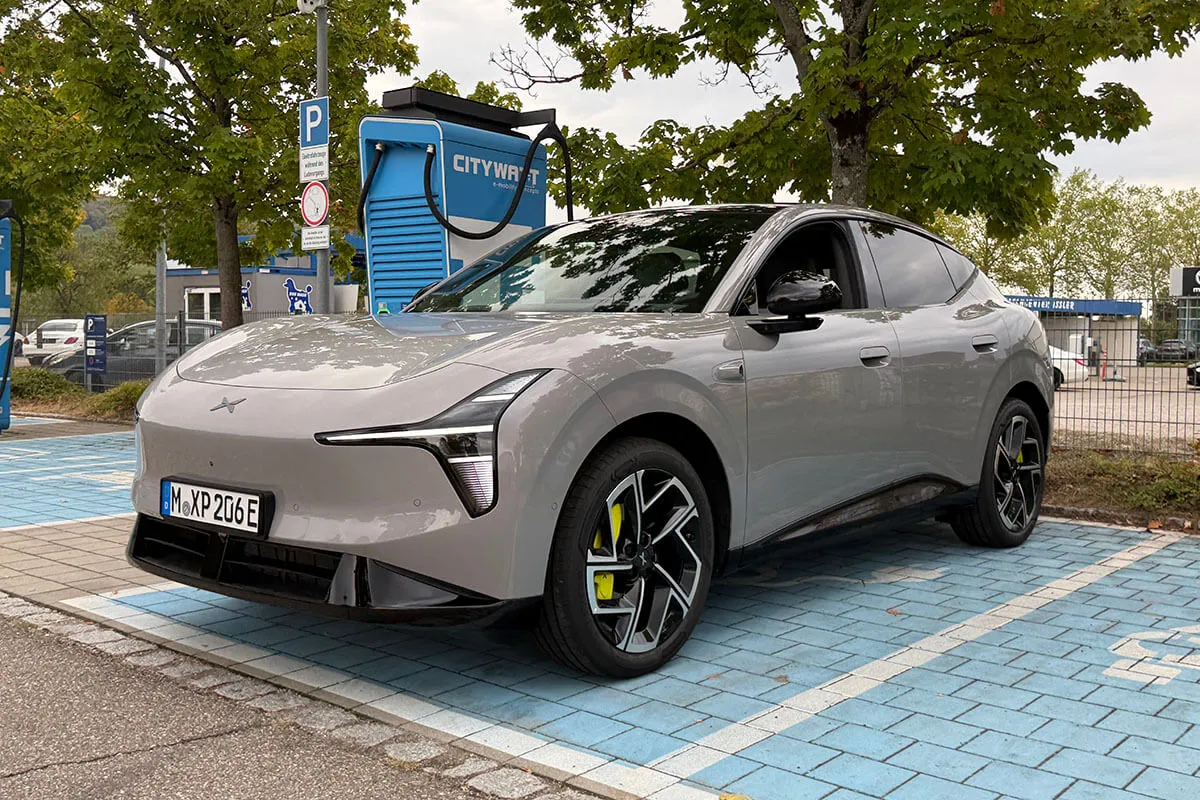

French drivers prefer domestic brands, but this preference often gives way to cost considerations. The latest edition of Cetelem’s Automotive Observatory shows that price can outweigh a car’s origin... A trend that could benefit Chinese manufacturers.
The French automotive industry likes to highlight “made in France,” and more broadly, European production. Buyers seem to share this preference as well. But between intentions and actually placing an order, one factor significantly changes everything: price.
This is one of the key findings from the Cetelem Automotive Outlook 2027. The study was conducted in June 2026 across 13 countries among 15,770 respondents, including 3,151 in France. And the French results indicate a fairly favorable environment for Chinese automakers capable of offering competitive vehicles...

French people prefer French brands, but...
The national instinct has not disappeared. When asked what brand origin they would ideally prefer to buy from, 48% of French people say a brand from their own country. In other words, almost one in two car owners still favors domestic automakers. French people are even willing to spend a little more to support this choice: 77% would accept a higher price for a car from a French brand or one from the same geographic region.
The study notes, however, that overall this financial effort remains generally limited: while patriotic willingness exists, it is not unlimited. This is precisely where things become interesting for Chinese brands.
Also read
Jaguar makes a new start with the Type 01, an electric sedan with a striking design
Automotive patriotism wavers when faced with price
Because when it comes to actually choosing a car, the wallet quickly takes over. The Observatory notes that French people are among “the most price-sensitive motorists.” And 71% of them have already given up on a brand because its cars were too expensive. The study presents a revealing scenario: choosing between two equivalent cars, one from a domestic brand but more expensive, and the other from a foreign brand that is cheaper.
For new car buyers in France, the results are evenly split: 50% choose the more expensive domestic car and 50% choose the cheaper foreign car.

In the used car market, this is even more evident: 60% of French people would choose the cheaper foreign model, compared to 40% who would opt for the more expensive domestic car.

This is probably the most interesting piece of information for foreign brands, especially Chinese ones. A foreign manufacturer doesn’t necessarily need to hide its origins to be attractive. It mainly needs to offer a product that is sufficiently convincing with a noticeable price advantage.
"Electricity is Chinese."
The study summarizes this change with a quite apt phrase: “Strength and quality are German, design is Italian… and the electricity is Chinese.” It finds that across all the countries surveyed, just over a quarter of drivers associate Chinese cars primarily with electric powertrains.
Also read
Hyundai Ioniq 3 review: Is it truly an electric city car built for families?
For manufacturers, this perception reflects a form of China’s “cultural victory” in the field of electric vehicles. In other words, Chinese automakers no longer need to compete solely on price; they also enjoy a reputation for expertise in electric vehicles. According to the study, this reputation can even help them gain market share and reduce the effort required for marketing.
This development is not entirely disconnected from market realities. By 2025, China already accounted for more than half of the sales of electric vehicles among those studied, with 13.4 million electric vehicles sold, including 8.2 million fully electric models. This perception could have an impact in France, where 60% of future buyers say they intend to opt for an electric or hybrid model.
And what about innovation in all this?
It seems the price factor is capable of undermining French automotive patriotism. However, innovation has not yet had the same effect. When asked to choose between a less innovative domestic car and a more innovative foreign one, 56% of French people remain loyal to the domestic model, compared to 44% who prefer the foreign one.
This result slightly softens the overall picture. Chinese automakers cannot rely solely on their supposed technological advantage to convince consumers. On the other hand, when this technology is paired with a lower price, the study shows that the balance tilts much more in favor of foreign brands.

Trends That Could Benefit the Chinese
On one hand, many French people are willing to abandon a domestic brand if a foreign competitor offers an equivalent car at a lower price. On the other hand, China now enjoys an image directly associated with electric vehicles. Brands such as BYD, Leapmotor, and MG exemplify this trend. These three Chinese brands offer affordable electric vehicles that are often cheaper than their French or European counterparts. For example, the MG4 Urban is priced at 24,995 €, while the BYD Dolphin Surf starts at 19,990 €...
Of course, not all Chinese cars are cheaper than their European competitors, and the price gap varies significantly depending on the segment. But the equation outlined by the study is fairly favorable to these new entrants. In short, the main barrier against Chinese brands likely cannot rely solely on the tricolor flag. Faced with an attractive and substantially cheaper electric car, economic patriotism may have its limits.
