
Electric trucks: “More Than Green Marketing, It’s Savings—500,000 Euros in 5 Years”
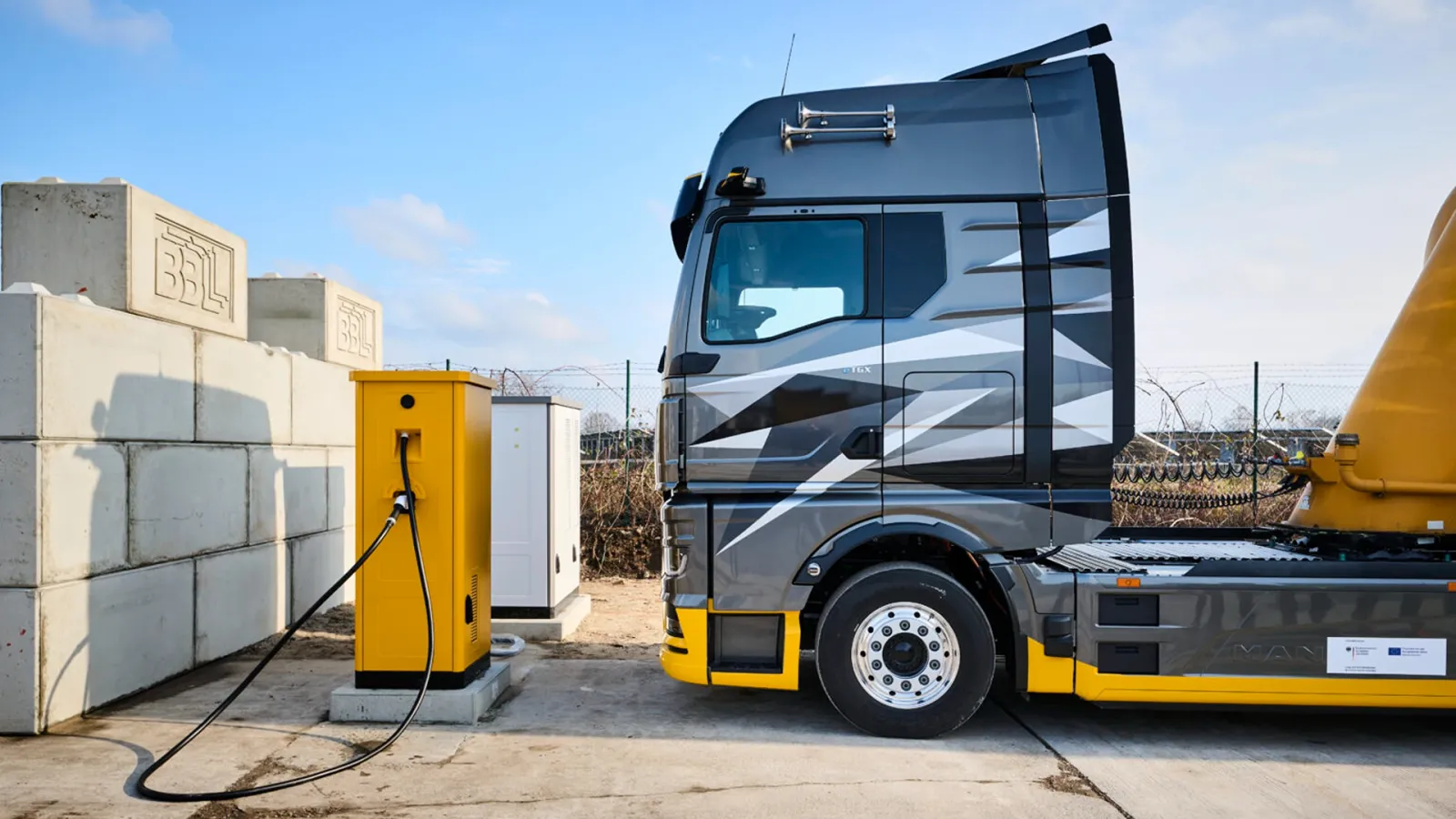
Electric trucks are good for a company’s budget. That’s what a business owner says. Robin Schulze, managing director of Betonwerk Bad Lausick, uses five MAN eTGX trucks and reports impressive figures that are hard to ignore: a TCO advantage of around 500,000 euros over five years. Often, companies add a few electric trucks to their fleets to improve their reputation, for sustainability reports, or to gain visibility. Schulze, however, thinks differently: “I don’t intend to engage in greenwashing. Economic sustainability must come first above everything else.” His stance is one of the clearest among those cited in MAN Truck & Bus’s report titled “Beyond Diesel,” which shows how electric vehicles can not only reduce environmental impact but also genuinely improve companies’ financial performance.
By 2030, electric trucks are expected to account for 15% to 35% of total registrations, with 15,000 already on the roads in 5,000 companies today.
MAN Truck & Bus’ strategic report, “Beyond Diesel,” shows — through three international fleets at different stages of electrification — that innovators and early adopters are gaining a structural competitive advantage. Beyond global and local zero-emission goals, electric trucks are becoming a factor of competitiveness on the road, not just in sustainability reports.
If the estimates from the German manufacturer prove correct, we are witnessing the beginning of an energy transition in heavy transportation. Projections suggest that by 2030, between 15% and 35% of newly registered trucks will be battery-electric. Just five years later, in 2035, 50% of European transportation companies will have at least one electric truck in their fleets.
"Electric trucks are no longer a future technology but an operational reality: over 15,000 eTrucks are already in daily use on European roads, operated by around 5,000 transportation companies." This trend is set to grow, driven by the European Union’s efforts to reduce emissions and an increasing number of clients who now require zero-emission transportation in their bidding processes.
Not only the truck but also the charging station is a source of energy: the cost can drop to 0.16 euros/kWh.
The decisive advantage does not stem solely from the vehicle itself, but from the entire ecosystem that includes the vehicle, charging stations, infrastructure for charging, and energy management. TCO, or Total Cost of Ownership, depends on factors such as energy prices, availability of charging infrastructure, tolls, and costs related to CO₂.
India has a plan: 100,000 electric heavy vehicles within 5 years
According to researchers, charging infrastructure is the key driver of profitability: up to 90% of charging currently occurs—and will continue to occur—in the operator’s own facilities. By integrating photovoltaic systems, energy storage solutions, and smart charging strategies, energy costs can be reduced to below 0.16 €/kWh. Over a five-year period, this translates into a TCO advantage of up to 13% compared to diesel vehicles. For budgets in the millions of euros, this represents a far from negligible savings.
A study of three European fleets, including Italy
The analysts reached these conclusions after examining three real-world customer cases at different stages of transformation:
Foppiani Transport (Italy): a structured approach to electrification.
Betonwerk Bad Lausick (Germany): scalability through smart energy systems.
Schlager Transport Logistik (Austria): end-to-end electrification model.
The family-owned Foppiani Transport company in Milan operates a fleet entirely composed of MAN vehicles for national line services and special transports. It uses an electric tractor, an electric vehicle with a chassis, another upcoming MAN eTGX, charging infrastructure at the depot, and a 350 kWp photovoltaic system. Customer involvement proved to be a key factor: “The added value of electric trucks outweighs the extra costs, as our customers are willing to pay a premium for the benefits they offer,” says Pietro Zanon, Purchasing & Maintenance Manager at Foppiani.
In the concrete logistics sector, the average company Betonwerk Bad Lausick uses five MAN eTGX trucks with six battery packs, supported by a depot energy ecosystem featuring 400 kW charging stations, 1.8 MWp of solar power, and energy storage systems at multiple locations. This setup results in a TCO savings of around 500,000 € over five years. For Managing Director Robin Schulze, profitability is the top priority: “I don’t intend to engage in greenwashing. Economic sustainability must come first above everything else.”
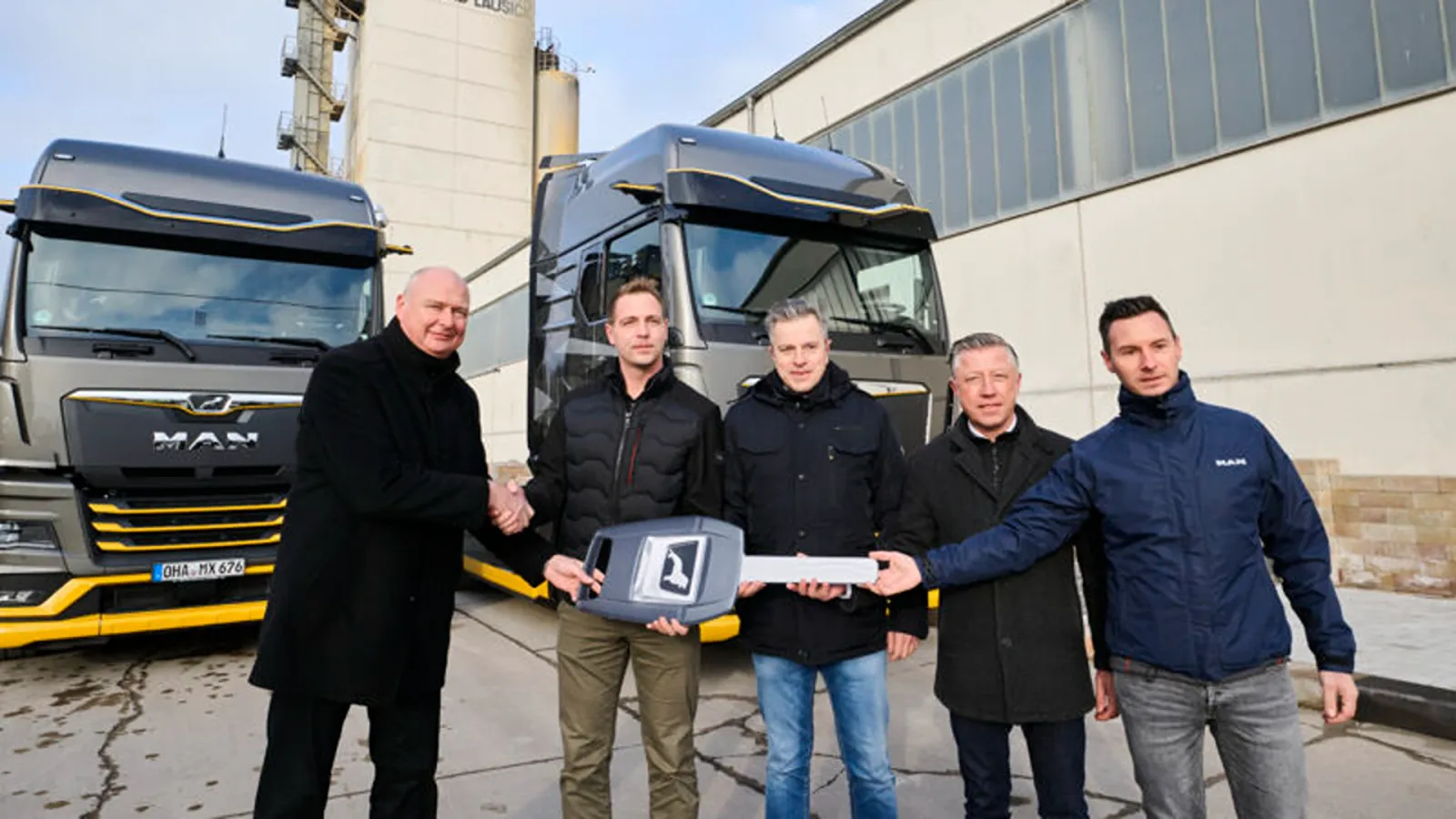
For Schlager Transport Logistik, electrification is an integral part of the company’s strategy. This Austrian long-distance transport specialist already operates a fleet that is 50% electric and aims to become fully electric by 2030. The transition is supported by an integrated energy system at its Saxen depot, featuring approximately 765 kWp of photovoltaic panels and 1.6 MWh of storage capacity. Owner Hubert Schlager initially calculated the business case himself using Excel and concluded, “I am firmly convinced that about half of the commercial vehicle fleets in Germany and Austria can already be electrified in a cost-effective manner.”
Experience confirms the advantages of electrification
"The examples clearly show that electric trucks are already economically advantageous. However, a decisive competitive edge will only be secured for companies that electrify the entire system, including the vehicle, depot, charging infrastructure, and energy management. At MAN, we support new and existing customers as a reliable partner by providing clarity on the current stage of their transformation journey and how they can continue to develop," says Roland Schurig, vice president of Zero Emission Projects at MAN Truck & Bus.
Electric trucks: Will they be more competitive than diesel trucks in Germany by 2030?
The message is clear and emerges from these three corporate stories: all have developed their own internal energy production systems. Self-production and home charging allow for a reduction in the vehicle’s cost disparity, an outcome that is not automatic when energy must be purchased from the market. Even on the road, the Milence consortium, composed of truck manufacturers, offers competitive rates—a vital service for long-distance transportation.
READ ALSO: There’s still hope for charging station bonuses and WATCH the video – Guide to incentives