
BYD addresses a critical battery issue by filing a patent for cells submerged in coolant.
10/10/2026 23:00
Updated to
10/10/2026 23:00
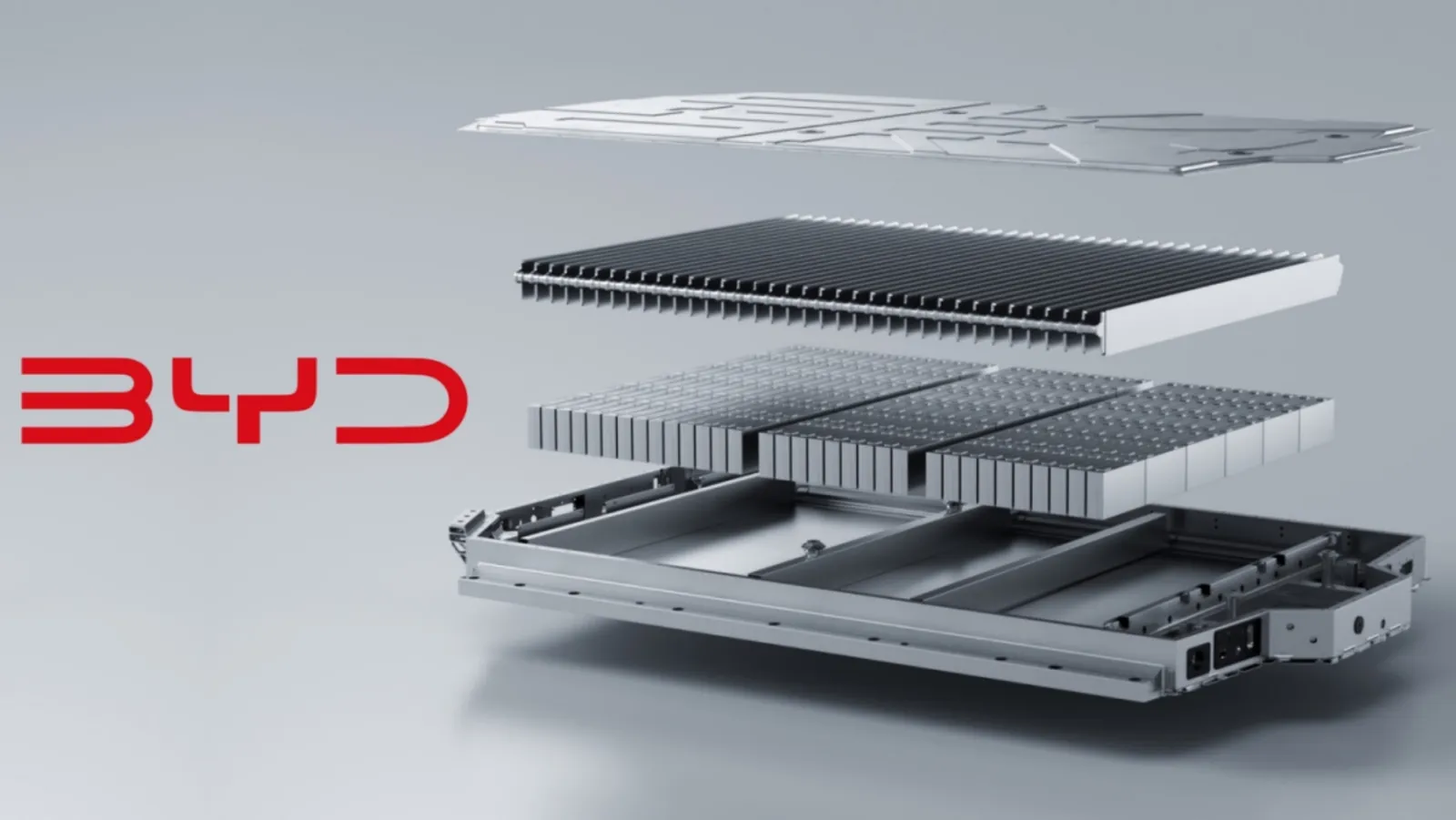
BYD has filed a patent application describing a battery cabinet divided into two compartments. In the lower section, cell modules are submerged in a dielectric fluid. Above it, separated from the lower part, is all the electrical components. The underlying question is simple yet crucial for any immersion-cooled system: how do electrical connections cross the boundary between a dry chamber and one filled with liquid.
The Chinese National Intellectual Property Administration (CNIPA) published the application on October 5, 2026, under number CN 122868832 A. BYD submitted it in March 2025, and it covers battery cabinets and energy storage systems. BYD aims to address battery overheating issues by enhancing the safety of its already robust second-generation LFP batteries. Meanwhile, BYD’s engineers are finalizing the details for the launch of its first solid-state battery, scheduled for next year.
From indirect cooling to direct immersion
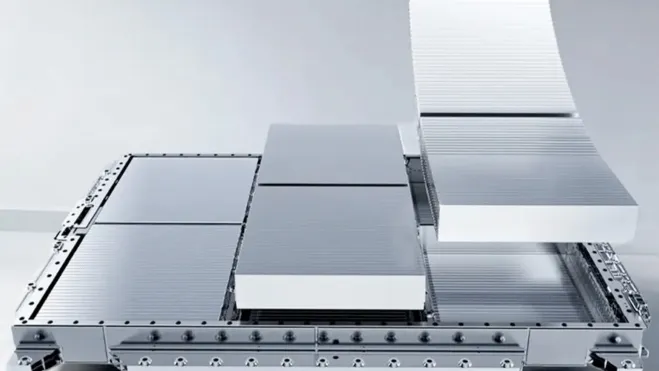
Many current systems use indirect liquid cooling. The coolant circulates through aluminum plates placed against the modules, and heat must pass through the cell casing and other materials before reaching the liquid. This system reduces cell heating but is vulnerable to impacts or module integrity issues.
Dip cooling completely changes this approach: the modules are immersed directly in a non-conductive dielectric fluid, with heat transferring from their wet surfaces to the surrounding liquid. The thermal path is shortened, but the container design becomes more complex. The liquid needs to be contained, and electrical components not designed for submersion must be insulated.
Two chambers and a single top access
The patent divides the cabinet into two isolated chambers: an upper dry chamber containing the electrical components, and a lower chamber with the submerged cells. The connection between them passes through the top part of the liquid compartment. Instead of running power and signal cables through the floor or side walls of the wet area, the design directs them upward before they enter the dry chamber.
The location matters because hydrostatic pressure increases with depth. A sealing point located higher experiences less pressure than an equivalent one lower down. This way, the electronics remain outside the liquid volume without losing connection to the submerged modules, and the design relies on the physical layout of the enclosure rather than just the dielectric properties of the fluid.
Dielectric Fluid and Scope: Stationary Storage, Not Vehicles
The application mentions hydrocarbon- or ester-based dielectric fluids instead of conventional refrigerants. It does not identify any application in passenger vehicles: it describes a stationary battery enclosure cooled by immersion, so the documentation should not be overinterpreted. A patent application does not prove that the technology has entered production; it is still under review, and BYD has not announced plans for commercial manufacturing. For now, the document outlines an enclosure architecture and a specific method for making connections between its dry section and liquid section.