
BYD unveiled the new Tanga and the Yangwang limousine. Fast charging is a common feature of both vehicles.
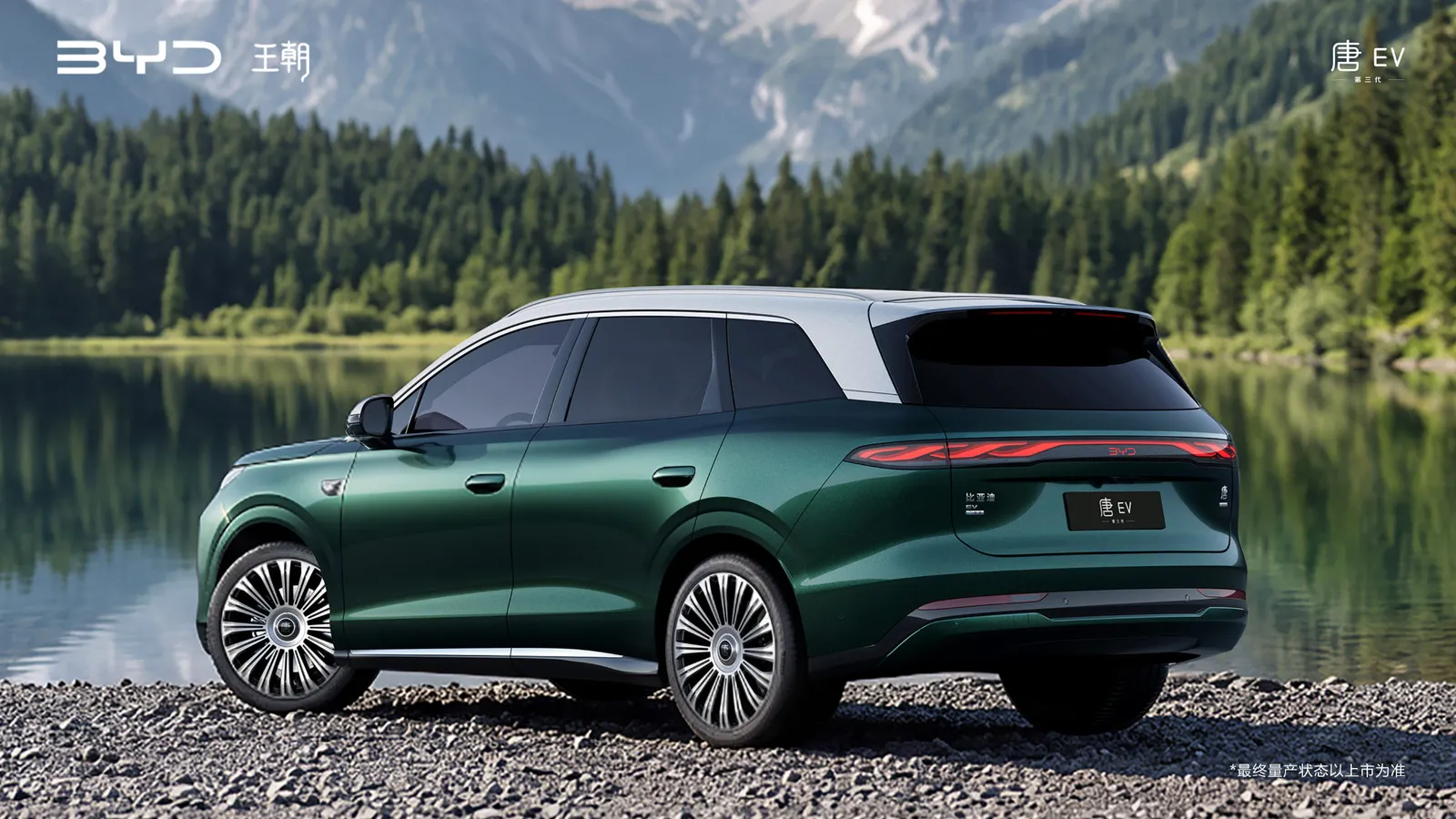
BYD unveiled the interior of the third-generation electric Tang on October 8, 2026, with it set to hit the Chinese market in the fourth quarter. A day earlier, a prototype of the 5.5-meter-long Yangwang limousine appeared on roads, featuring windward-opening doors and potential megawatt-level charging. Both vehicles follow the same strategy: cutting-edge technologies first make their way to the top of the lineup before being introduced in cheaper models.
Table of Contents
Show
Hide
BYD Tang has five seats and screens instead of clocks
The new Tang made its debut on August 21 at the auto show in Chengdu, but it is only now that BYD has revealed its interior. The manufacturer offered two color options: Dune Beige and Amber Brown. Inside, there is leather upholstery with stitching, a panoramic roof, and ambient lighting running along the dashboard and door sides.
The most noticeable change is the screen setup. BYD has used a 35.4-inch display called the far-side display along with another 30-inch panoramic screen. These are meant to replace the traditional speedometer and HUD display. The manufacturer calls the entire system Star Ring, drawing inspiration from spacecraft consoles in science fiction movies. It sounds marketing-heavy, but at least it’s not just another tablet stuck in the center console.
The Tang will be available as a five-seater vehicle. This allows the second row to have over 1000 mm of legroom, and the seats can be reclined up to 130 degrees. This is a distinctly different approach compared to fitting in a third row of seats, which in many SUVs of this size is mainly intended for children.
3rd Generation BYD Tang
Dimensions
Length
5045 mm
Width
1980 mm
Height
1760 mm
Wheelbase
2950 mm
Seating capacity
5
Maximum engine power
300 kW, 402 HP
Battery capacity
88.682 or 105.792 kWh
CLTC range
730, 830 or 850 km
Wheels
20 or 21 inches
The vehicle is powered by the TZ205QYD engine with a maximum power of 300 kW. BYD has announced the second generation of Blade batteries, available in two capacities. The Chinese CLTC range ranges from 730 to 850 km, but these figures should not be directly compared to the European WLTP standards. The car has not yet passed European homologation, so the WLTP range conversions of 591-689 km cited in one source are not official test results.
Five minutes of charging and a road-focused suspension
The new Tang supports BYD Flash Charging. According to the manufacturer, under normal temperatures, charging from 10% to 70% should take about 5 minutes, while reaching 97% takes around 9 minutes. BYD did not provide data on the charging curve or the power output of the vehicle, so a real comparison with traditional 800 V systems will have to wait.
The God’s Eye B driver assistance system is standard across all variants. It is not autonomous driving but an advanced ADAS package that still requires human supervision. The Tang will also feature DiSus-A, which is a pneumatic suspension with air chambers and a function to detect the road surface ahead of the vehicle.
The new generation is meant to halt the decline in interest in the Tang family. However, there is confusion in the original data. The monthly figures add up to 67,278 cars from January to August 2026, or 81,614 units when September is included. This second figure was mistakenly labeled as the result for eight months, and the reported 49.87% decline also does not match the attached table. The overall trend remains clear—the older Tang needed a successor, but precise percentages should be approached with caution.
In China, this model will join the larger Da Tang, which was introduced in June as part of the Series 9 lineup. Overseas, BYD uses the names Atto 8 and Sealion 8 for related SUVs. So far, the company has not confirmed the European debut of the five-seater Tang described here.
Yangwang is going even further. Solid-state remains a rumor.
At the other end of the spectrum, BYD is developing a flagship limousine for the Yangwang brand. The disguised prototype is approximately 5.5 meters long, features a long wheelbase, and has a boxy silhouette reminiscent of the Mercedes-Maybach S-Class or Rolls-Royce Phantom. The car boasts windward-opening rear doors, the first time such a feature has been used in a BYD model.
The prototype was photographed at a Flash Charging station, suggesting support for charging speeds measured in megawatts. An e4 platform with four engines and a power output exceeding 1,000 horsepower is also expected. Yangwang already uses this architecture in its most expensive vehicles, but the specifications for the limousine have not yet been confirmed.
The most exciting aspect is the battery with a solid electrolyte. Chinese reports suggest the limousine could be BYD’s first vehicle to use such cells, but the company has not announced this. BYD Vice President Stella Li only mentioned a solid-state car for 2027. FinDreams plans to start limited production of sulfide cells by then, with larger-scale production expected around 2030.
If the new battery does make it to the Yangwang, it is likely to be used only in the most expensive version. Other models might rely on the latest Blade LFP cells. However, this remains a hypothesis, as does a price exceeding 2 million yuan, or nearly $300,000.
The official debut of the limousine is still expected in October. By then it will become clear whether BYD will indeed showcase production-ready solid-state batteries, or if the four engines, megawatt-level charging, and impressive doors will remain the main attractions for now.
LovEV Newsletter
Want more content like this?
Sign up — we’ll send you a weekly roundup once the newsletter starts.